
![[+]](https://www.futuretimeline.net/images/buttons/expand-symbol.gif)
|
|
|
|
|
|
2060-2100
Global political and economic systems are in a period of immense transition
As the final decades of the 21st century unfold, humanity faces a crisis unparalleled in its history. Where previously had been resource scarcity, climate change has taken centre stage as the most immediate threat to world peace.* Natural and human systems alike face the prospect of permanent collapse. Of the nine planetary boundaries, three – biodiversity, climate change and nitrogen levels – had already been passed by the year 2000.* Now humanity has shot past its limit on land use, freshwater and ocean acidification, as well.* Population, having peaked, is now going into decline as millions perish due to war, starvation and environmental disasters. New and terrifying threats have also emerged, such as nanotechnology terrorism.** The global economy, already undergoing rapid change, has entered a period of intense disruption, with traditional free market capitalism beset with problems it is structurally incapable of addressing.* Corporations which have operated for many decades seem to disappear overnight, unable to adapt. So too will governments have to change, as increasingly angry and frightened citizens pile pressure on world leaders to either adjust or step down. Every organisation and institution survives or falls according to its response to this crisis. By 2100, the world will be unrecognisable compared to its earlier status. Political, economic, social, technological and environmental change will have hit so swiftly that these four decades will appear unlike any other period in history.
Much of the world in the 2060s has moved into a rapidly degrading geopolitical situation. Driving this crisis is the seemingly unending stream of climate refugees attempting to cross national borders.** Throughout this period, increasing numbers of equatorial countries are reclassified as failed states, with collapsed governments and directionless populations. Civil war is becoming common in many regions as a result.** For many of the countries adjacent to these equatorial regions, this is leading to severe political and social strife, as desperate measures are introduced to either keep refugees out or try to adjust.* This is a particular problem between Europe and Africa. The Mediterranean has become highly militarised – with Italy, Spain and Greece especially hard hit, resulting in hardline, nationalistic governments coming to power. Many European countries are in political deadlock over food and water sharing. At the other end of Africa, the previously stable country of South Africa is being overrun by refugees from Botswana.*
Similar problems are proliferating in Asia as well. Bangladesh is slowly being emptied of its populace, with many fleeing to neighbouring India. The latter, however, is unable to support this surge. As a result, vast shantytowns have formed along the Bangladesh-India border, home to many millions of people. Lawless, overcrowded, and with disease epidemics spreading rapidly, this region has become one of the most dangerous in the world.* China too is facing a political crisis as divisions grow between coastal areas and the eastern plateaus. The country's population has fallen into steady decline as many people move northward to more stable climates.* Russia is now negotiating with Beijing to stem this tide of Chinese refugees, further dividing the region. Meanwhile, much of the Middle East has been reduced to a wasteland of anarchy, with only a few semi-stable countries remaining.*

North America has seen a dramatic shift in power. The United States and Canada have established a system whereby American citizens are employed temporarily in Canada – similar to the Mexican-American bracero program utilised over a century ago. This is due to both America's disastrous economic situation and Canada's ongoing rise* as a superpower. In any case, large numbers of Americans are moving to Canada permanently whether legal or not. This is creating a great deal of friction between the two countries. Canada's rise has prompted some to call for more aggressive action by the United States, possibly even war. Though not widely supported, the situation is exacerbated by growing violence originating in American enclaves throughout Canada.
At the southern border, the situation is much more pressing. A massive flow of immigrants from the Central American countries, but primarily Mexico, is entering the United States, radically shifting the demographics of southern states. This is encouraged to a certain extent, in response to the loss of American labour to Canada. However, the loss of jobs through mechanisation and the limited regional food production is now forcing American authorities to close off the flow of immigration, leaving a large population of Mexican Americans displaced. The fact that the majority of these people are stuck in the southwest only makes the situation worse. This area is now one of the most destitute in the country, with food and water rationing required almost permanently. Combined with often violent methods used to seal off the border, deep regional and cultural divides are erupting in the United States, the likes of which have not been seen since the Civil War.* American anti-immigration has grown in response,* and by now has reached extreme levels. Previously confined to the more radical ends of the Republican Party, numerous off-shoots have sprung up, with new parties supporting extreme nationalistic and neo-fascist ideals. In light of the turmoil America is experiencing, some of these groups in recent elections have come closer to the presidency than any third party has before.
South America is in even worse shape. Though Brazil and Argentina have managed to retain a degree of stability, the mountainous northwestern countries are facing collapse through extreme drought. Some – like Peru and Bolivia – have degraded into a set of armed camps, each protecting their own respective water supply.** Because of geographic barriers, the vast majority of refugees move northward. However, endless droughts and civil wars found throughout Central America mean that only a small portion of these people actually make it to higher latitudes.*
Many of the islands in the South Pacific and Indian Ocean have been completely abandoned. Most of the survivors have moved to Australia.* Several new political organisations have formed out of the remaining island nations, attempting to get their voice heard on the world stage. On Papua New Guinea, shifting populations have led to hundreds of unique languages and cultures dying out.
Geopolitical power has seen a drastic restructuring on a global scale. With the United States focusing on its own internal problems, and China and India having stalled in the face of deteriorating environmental conditions, a new group of countries is emerging to take over. The most prominent are those few nations who have seen moderate benefits from climate change – such as Canada, Russia, Iceland and the Scandinavian countries.** These are developing into relatively prosperous eco-technological societies, with some even able to accommodate significant numbers of refugees. The United Kingdom,* New Zealand* and Japan* have stabilised by cutting themselves off from the continental mainland and becoming largely self-sufficient.
In the harder-hit regions, countries that have been able to adapt have found themselves in new positions of power. Mexico, for example, has attained some degree of stability thanks to mass deployment of desalination technology and the use of salt-tolerant biofuels. This is largely thanks to American efforts in earlier decades to control and stabilise Latin America and, by extension, its southern border. Turkey is another example, having escaped the worst of peak oil relatively unscathed due to its large oil and natural gas reserves. It is now a major regional power,* sealing off its borders and hiding behind a shield of nuclear weapons. In many cases, countries have been split into both stable and chaotic regions. Examples of collapsed regions include southern Mexico, southern Italy, and northern India. As a result of all this change, and the collapse of many of their members, organisations such as the UN and NATO have either disappeared entirely, or lost all of their influence. New coalitions are forming based around the rapidly evolving power structure.
While geopolitics has evolved immensely, political practice is undergoing its own revolution. The children and grandchildren of the Baby Boomers are now entirely in control of the political and economic systems, and it is obvious that neither system is functional. Being born in a rapidly degrading world, most of these new world leaders are openly acknowledging the failure of older methods, and are actively seeking a new path forward. The traditional growth economy – still clung to in the 2050s – is finally abandoned during this period, though the transition is long and difficult.** The emergence of the new regional powers to the north – for now seemingly immune to the worst effects of climate change – is creating a more cooperative international community in this part of the world. For the remainder of this century, the world enters into a vast mobilisation of green technology and geo-engineering in the face of disastrous climate change. In terms of scale and effort, it is greater than the industrial output seen during the World Wars, and involves an unprecedented degree of government intervention, in ways that would have been politically impossible in the past.* As the World Wars had proved, resistance to such action quickly evaporates in a life or death situation. Humanity from the 2060s onward is in survival mode.
The growth of AI and robotics – in parallel with bio- and nanotechnology – is offering some hope, making the crisis more manageable than it would otherwise have been.* Human-like AI, previously confined to more strategic and planning roles, is now shifting into more direct control of the world's governments and corporations. With vastly greater capacities for foresight and detail, while lacking human emotions or prejudices, these artificial beings prove an integral part of the adaptation effort.* As well as coordination, they are also used to develop new technologies and to model future climate patterns (along with their social/demographic effects) to ultra-high levels of accuracy. The soaring influence of AI causes public concern early on, many people still viewing such entities with suspicion. However, the more immediate threat of climate change soon overshadows this fear. The fact that humans are upgrading and merging in various ways with AI has made the average person more receptive to their existence than before. Indeed, global warming is offering a path towards wider acceptance of AI in general, now that they are needed in order to sustain civilisation. By the end of this century, their influence will have greatly surpassed humanity's.
Altogether, the new stock of politicians, the emergence of strong AI, the changing geopolitical map, and the sheer difficulty of overcoming the climate crisis, are mobilising whichever countries are able to do so to both address the immediate concerns of global warming and to fix the root underlying problems in the political and economic system. Generally, there are two responses over this period.* The first is the old economy trying to apply traditional mechanisms and assumptions in order to adapt some new form of capitalism to the world. This stance, taken mainly by the old corporate interests, and the more endangered governments, attempts to leverage existing political and market action to try and combat the looming threat of climate catastrophe. The second response is a more radical departure from traditional thinking, looking to reshape the basic fabric of society. This stance – taken by the younger generations, more dynamic corporations, relatively stable governments, and vast majority of AI programs – focuses on long term action and shifting to an entirely new type of economic paradigm.
The first proves to be the dominant response in the early years of this transition, as most countries do not have sufficient energy or resources to address both the immediate effects and underlying causes. Many still incorrectly believe that older economic models could continue if only they were decoupled from CO2 emissions. For now though, a government-regulated, World War II-scale industrial mobilisation proves the best at addressing such a rapidly growing problem in the short-term.* Efforts to address global warming had of course been pursued since the beginning of the century. These measures proved to be woefully inadequate. Now however, action is stepped up by an order of magnitude. Since human CO2 output has dropped to insignificant levels, work is now directed towards geo-engineering to reverse the damage done by emissions in earlier decades and centuries.*
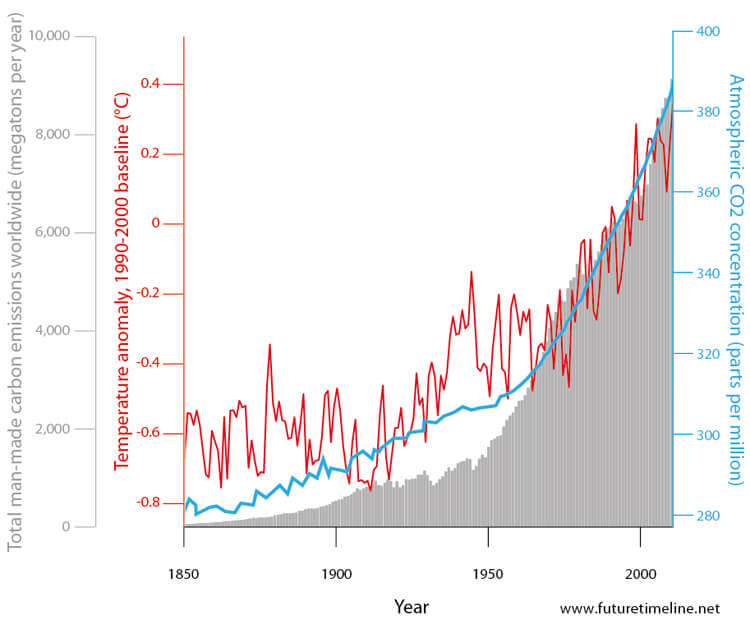
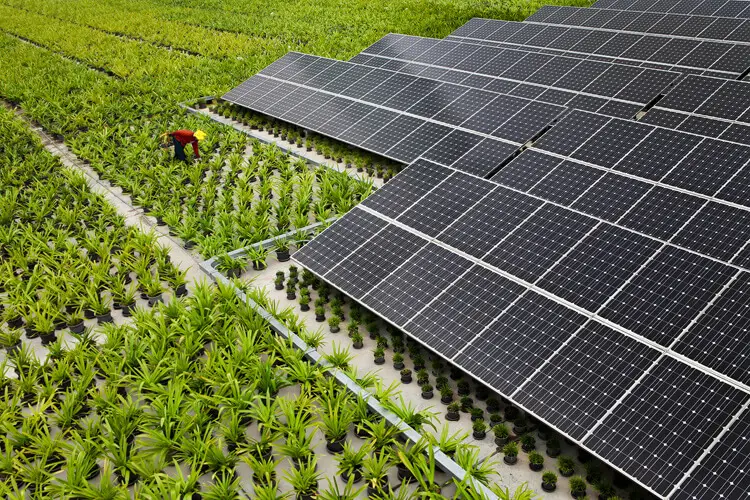
The survival response to global warming is originally confined to the more stable countries, but quickly follows in almost every other country that can. Because of the time lag between deployment of clean energy and a slowdown in warming, the carbon itself must be addressed.** A variety of methods are used. Carbon sequestration, which began to get underway in the 2020s, is now deployed on scales large enough to remove billions of tonnes of CO2 each year.* This is often done in conjunction with food production, offering a controlled supply of CO2 gas for plants.* In addition to removing carbon, some geoengineering techniques are undertaken that directly address the temperature rise, but not the CO2 level itself. The most common is painting roofs or large open spaces white, thereby reflecting more sunlight and lowering temperature (darker colours absorb more heat).
Other more radical methods are employed. One involves seeding marine stratocumulus clouds with water droplets or nanotechnology particles, making them more reflective to incoming light. Another emulates the cooling effect of volcanic eruptions through the deliberate release of sulfur dioxide into the stratosphere. This is so potent that a single kilogram has the potential to offset several hundred thousand kilograms of CO2.* These approaches caused much debate in earlier decades, due to unpredictability about effects on rainfall.* The science has since improved, however, while simulations provided by quantum computers have removed any lingering uncertainty over the best methods and locations to use.
Other problems are tackled. Ocean acidification is now wreaking havoc on marine environments, with potentially deadly results. The gradual disappearance of algae, for example, threatens a significant loss in oxygen production,* while fishing has become almost non-existent. One answer to this is the introduction of ground-up olivine rock into certain areas of the ocean, which binds to carbonic acid to form bicarbonate. This actually fertilises coral while reducing overall acidification.* Lime is also used in a similar way, on a large enough scale that it actually reverts some parts of the ocean into carbon sinks.* Along with natural means, artificial substances and synthetic organisms together with nanotech are utilised to even greater effect. Despite this, the sheer scale and speed of the problem means that it will be decades before humanity gains full control over the situation.
As the equatorial regions are gradually depopulated, the more stable northerly nations are moving in to develop land for renewable energy and carbon sequestration projects, as well as resource recovery. Farmland is also taken advantage of, though with controversy over whether doing so actually benefits the remaining local population.* Along with mining of asteroids and the Moon, fresh metal and mineral supplies are now becoming available on Earth, thanks to advances in nanotechnology which enable machines to perfectly separate each individual substance out of a rock sample. Phosphorus reserves, for example, are secure now, since even the abundant low quality sources can be mined. Recycling is expanded yet further during this period, reaching 100% in some countries,* once again thanks to nanotechnology. Entire cities, abandoned due to climate change, can in a sense be "recycled" via swarms of automated robots programmed to extract and process useful materials from decaying infrastructure. Landfill sites are particularly rich in this regard.* An additional factor in the easing of resource scarcity is, of course, the collapse in economic demand as the old "growth" paradigm finally grinds to a halt.**
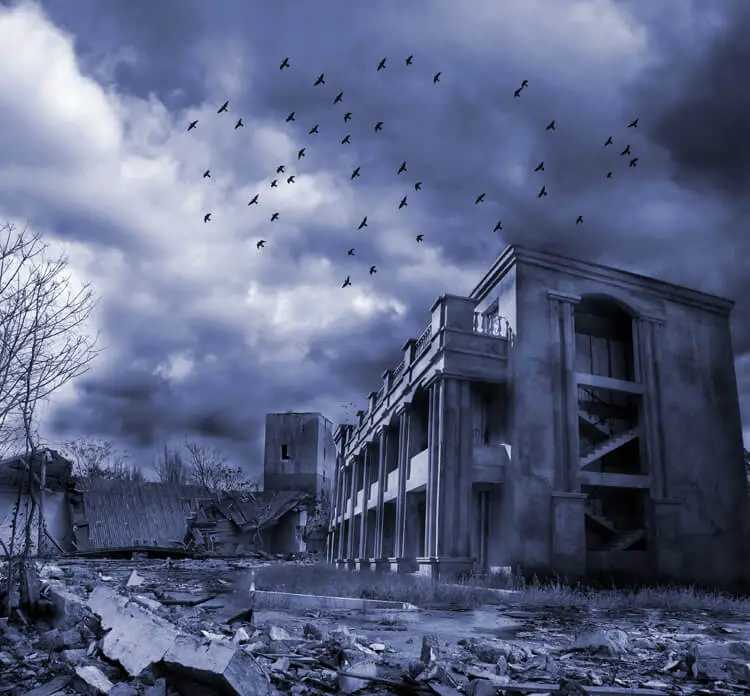
As this effort continues, the second response to the disruption – which supports an entirely new and different kind of socio-economic system – begins to take hold.* Though it had a slower start than the more traditional approach, by the final decades of the 21st century this second view inevitably comes to dominate. The older model proves again and again unable to yield a sufficient long term solution, despite the ruling elite doing everything in its power to maintain the status quo. Many countries have to endure violent revolutions and periods of semi-anarchy before genuine progress is made, but a new zeitgeist begins to solidify, aided by the spread of information technology. Though not yet advanced enough to wholly reverse climate change, humanity is able to establish an equilibrium, preventing a worst case scenario and avoiding a collapse of civilisation. Meanwhile, the refugee problem eases during the 2080s, since most have either reached their destination or died trying. With those nations able to save themselves having already done so, and with few nations left to fail, the world enters into a kind of chaotic peace; humans confined to stable northern enclaves amid a ruined and devastated environment.
With this relative stability, the final transition unfolds. Efforts to assign blame for the catastrophe mark this period, with surviving corporate and political figures targeted by members of the younger generations. Most of the worst affected countries see the original industrial nations as the source of their misery. Those which have maintained a coherent government demand to be compensated. As debates rage over a permanent solution to future progress, many call for drastic reform of the global monetary system, or even the elimination of money itself. It is clear that the economy must be based on physical or human capital, rather than assumed value. GDP is gradually dropped as a measure of a nation's wealth, replaced by more genuine markers of human well-being and success. One such model adds life expectancy to overall life satisfaction and divides the result by the ecological footprint, giving an idea of the current generation's quality of life and its effect on the quality of their children's lives.* Artificial intelligence now takes on even more advanced roles – fully controlling the guidance of farming, mining, manufacturing and energy production in order to maximise efficiency and minimise environmental risks.*
The end result of the first response was a form of steady state economics* in the developed world. In light of material constraints and increasing automation, people were buying less, working less and paying less. The effects of this transition are now causing a shift in focus – away from materialism, to more altruistic concepts of family, community and creativity. This is undermining the older established view that money and individual success are vital for happiness.** People have more leisure time and consume far fewer resources. Technology is helping this trend in myriad ways. Virtual reality, for example, allows people to use goods and services that have little or no impact on the real world. Governments are beginning to establish limits on inequality, recognising the drain it has on society,** made clear by AI and quantum computers running simulations and forecasts in precise demographic detail. The basic necessities of life are becoming a shared commons. Crime, poverty and other social problems are gradually being reduced as a result.
The world is far from a utopia, of course. Global warming and sea levels remain a significant threat,* and progress does not occur at the same speed everywhere, or in the same way, due to the differing cultures around the world. There are still many challenges to overcome, but civilisation as a whole is proving more adaptable and innovative than it once was – thanks to the ongoing march of science, which is greatly expanding humanity's intellectual and educational base. This transition continues beyond 2100, culminating in a true model of sustainability.*
2060-2080
The next Nankai megathrust earthquake occurs
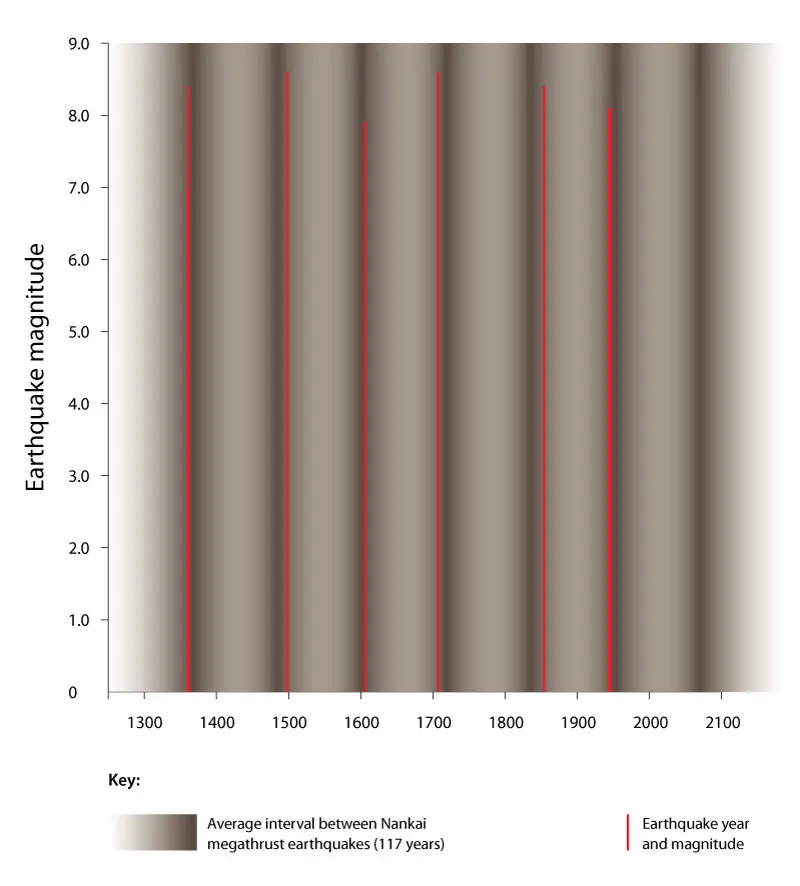
At some point during this period, the next Nankai megathrust earthquake occurs. Its origin – the Nankai Trough – is a submarine depression located south of the Nankaidō region of Japan's island of Honshū, extending about 900 km (560 miles) offshore. An underlying fault, the Nankai megathrust, is the source of devastating "megathrust" earthquakes, which can reach up to 8.6 in magnitude.
Sometimes, the earthquakes occur in pairs, where a rupture along part of the fault is followed by a rupture elsewhere; notably the 1854 Ansei-Tōkai earthquake and the 1854 Ansei-Nankai earthquake the next day, and the 1944 Tōnankai earthquake, followed by the 1946 Nankaidō earthquake. However, if counting these pairs as single events, the megathrust earthquakes occur with an average interval of approximately 117 years.
Historically, all of these great earthquakes have resulted in major tsunamis, which are particularly damaging due to the Japanese population being concentrated on the Taiheiyō Belt, especially the coastal cities of Tokyo and Osaka, the two most populous in the country.
Arriving on schedule in the mid-to-late 21st century, as expected, the next of these megathrust earthquakes is no less prodigious than its predecessors. Shockwaves ripple across a vast swathe of the country – with magnitudes of 8 or higher near the epicentre in the south, but hitting 5 on the Richter scale even as far as the northern coast. Waves of up to 35 m (115 ft) in height are triggered, lashing a stretch of land spanning nearly 1,000 km (620 miles) – from the southwestern island of Kyūshū, to the Kantō region where Tokyo is located in the northeast. The surge front travels for several kilometres inland.
In earlier decades and centuries, the casualties and economic impacts resulting from such an event would have been enormous. Following the Tōhoku earthquake of March 2011, the Japanese government conducted studies and made contingency plans for likely future earthquakes. It was estimated that a megathrust quake in the Nankai Trough could leave up to 230,000 people dead – 15 times as many as Tōhoku – and cause 220 trillion yen (US$2 trillion) in economic damage, nearly 10 times the losses of that earlier quake.
However, while the mid-to-late 21st century event is disastrous, the impacts are mitigated to a certain extent by the many preparations and developments that have occurred beforehand. Earthquake prediction techniques, for example, are significantly improved by now, especially thanks to the involvement of powerful AI, which allows people to receive timely warnings beforehand. AIs can also advise on the most optimal routes for evacuation. Many buildings and other structures utilise new, super-strong materials. Meanwhile, fast and automated transport, such as passenger-carrying drones, can whisk people away to safer areas. In the aftermath and recovery operations, a range of technologies can be rapidly deployed to help the survivors. Orbiting solar satellites can beam down electricity to precise locations, for example, while portable devices can filter water, print food, or self-assemble into temporary shelters.
2060
Level 5 autonomous cars are ubiquitous globally
By 2060, Level 5 autonomous cars have become standard across much of the world, transforming road travel. These vehicles operate 100% independently under all driving conditions without human input, making manual driving increasingly rare and viewed as a niche hobby or luxury activity. Many Level 5 models are now built without steering wheels, pedals, or any traditional driver controls, offering interiors designed entirely around passenger comfort and entertainment.
Level 5 cars utilise highly advanced artificial intelligence, robust sensor arrays, ultra-precise GPS mapping, and ubiquitous high-speed connectivity to safely navigate complex urban streets, rural roads, and motorways in nearly all weather. Road accidents and fatalities are exceedingly rare, and journey times are significantly shorter due to optimised traffic flow managed by integrated AI systems.
Environmental benefits are substantial, as autonomous vehicles now almost exclusively use electric or hydrogen fuel cell technology. Urban air quality has improved dramatically, congestion has plummeted, and the need for parking spaces has greatly diminished, freeing up valuable land for other purposes.
By now, even many developing regions such as those in Africa, Southeast Asia, and South America have seen the widespread adoption of autonomous vehicles. This resembles the earlier mobile phone revolution, when handsets – initially expensive and rare – became substantially cheaper and more accessible throughout the 2000s and 2010s, leading to their proliferation across much of the Global South. With safer roads and a steep decline in fatalities, many countries are now even banning human-operated vehicles from certain routes or urban zones.
However, global adoption has not reached absolute ubiquity. Some countries, particularly those with a strong automotive heritage, such as Italy, Germany, and the United States, continue to allow limited use of traditional vehicles, especially vintage or classic models, in designated areas or events. Car enthusiasts and collectors maintain these vehicles for cultural and historical preservation, meaning full global adoption of autonomy remains elusive.
The nature of car ownership has also fundamentally changed, with private car possession declining significantly in favour of on-demand, subscription-based transportation services. Autonomous taxi fleets and mobility-as-a-service providers now dominate urban transport, offering convenient, efficient, and affordable travel options. This shift has further reshaped urban infrastructure – reducing the need for private garages, driveways, car dealerships, automotive supply shops, expansive parking lots, and multi-storey car parks.
Back in the early 2040s, the world reached a pivotal milestone, with over half of all new passenger cars featuring Level 3 or higher (L3+) autonomy. At the time, Level 5 cars had only just begun emerging in limited pilot programmes. In the two decades since, these technologies have evolved rapidly and matured into the fully integrated, globally scaled systems now standard across most regions.
Overall, the transition to fully autonomous cars – alongside other vehicles such as trucks, buses, and delivery vans – has transformed cities, economies, and lifestyles worldwide, marking one of the most profound societal changes of the 21st century.

Flood barriers are erected in New York
Sea level rises* and storm surges have begun to threaten even the business, financial and cultural heart of America. By 2060, what used to be a once-in-a-century type of flood is becoming a regular occurence.* This has led to the construction of sea walls, breakwaters and locks to the south of Manhattan, including one very big lock at the harbour entrance. JFK Airport and other parts of the island are receiving protection too. This is one of the largest public works projects in US history, and comes at huge cost. However, the costs of not acting would have been unimaginably greater. Many other cities around the world are enacting similar measures now.
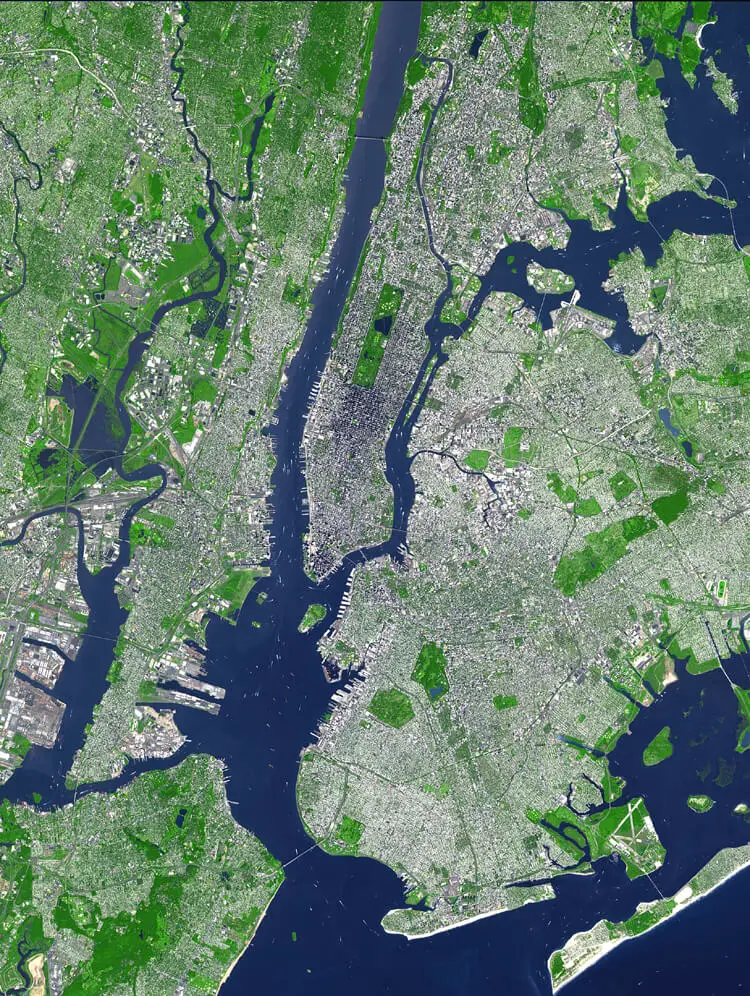
Credit: NASA
Tropical cyclones are wreaking havoc in the Mediterranean
Until now, the near-landlocked Mediterranean Sea was largely immune to the more violent forms of ocean weather. The worst storms that the sea experienced were the so-called "Medicanes" – comparatively tame versions of the much larger and more destructive Atlantic hurricanes. The most notable example occurred in 1995, when a storm created a hurricane-like spiral for a short period of time, complete with an eye.
By 2060, however, normal weather patterns around the world are evolving drastically as a result of climate change. With global temperatures having passed the 2°C mark and heading towards 3°C (5.5°F) above the 20th century average, the Mediterranean is now home to a prolific hurricane basin.** Warming seawater, combined with increasingly common low pressure systems, is turning the region into an ideal incubator for tropical cyclones. These are now devastating coastal communities throughout the southern coast of Europe and the northern coast of Africa.
These areas were already facing collapse due to heatwaves, chronic drought and sea level rise. Much of Venice has been abandoned, after failed attempts to save it from sinking.** Cities such as Athens, Barcelona, Tripoli, Tunis and Alexandria will soon be following.

Global extinction rates are peaking
Environmental destruction is reaching its apex now. Tropical forests are being especially hard hit, with 0.5% of animal and plant species going extinct each and every year – nearly ten times the rate seen in 2000.*
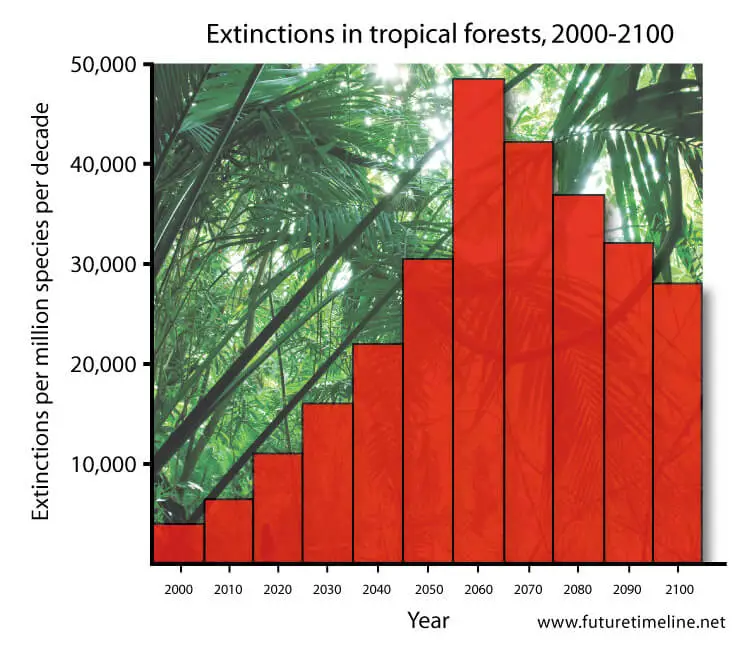
An aging population
In the early 21st century, around one in five of the European population was aged over 65. This meant that the pension costs, public health and transportation needs (and sometimes the housing and social-welfare requirements) of each senior citizen were supported by taxes and other deductions from the incomes of four working-age people (aged 15 to 64).
However, birth rates stayed low throughout the first half and into the second half of the century, whilst longevity was extending through better medicine, gene therapy, nanotechnology, improved lifestyles and so on. This meant that the ratio of young to old began to shrink dramatically. By 2060 there are 50m fewer workers and 67m more seniors, so the ratio is changed to one in three. In other words, only two working-age people to support each senior.
This has impacted hugely on government budgets, leading to a radical overhaul of social welfare. A similar pattern has emerged in other parts of the world. Japan has faced the biggest change of all, with 40% of its population now aged over 65, double the figure in 2006.

The ozone layer has fully recovered
Chlorofluorocarbons (CFCs) were invented in the 1920s. They were used in air conditioning/cooling units, as aerosol spray propellants prior to the 1980s, and in the cleaning processes of electronic equipment. They also occured as by-products of some chemical processes.
No significant natural sources were ever identified for these compounds – their presence in the atmosphere was found to be almost entirely due to human activity. When such ozone-depleting chemicals reached the stratosphere, they dissociated by ultraviolet light to release chlorine atoms. The chlorine atoms acted as a catalyst, each one breaking down tens of thousands of ozone molecules before being removed from the stratosphere.
The ozone layer prevents most UV wavelengths of sunlight from passing through the Earth's atmosphere. In the late 20th century, huge decreases in ozone generated worldwide concern. It was suspected that a variety of biological impacts – such as increases in skin cancer, cataracts, damage to plants, and reduced plankton populations – resulted from the higher levels of UV exposure due to ozone depletion.
This led to the adoption of the Montreal Protocol – one of the most successful international agreements of all time, which banned the production of CFCs, halons and related ozone-depleting chemicals. Although this ban came into force in 1989, the molecules had a longevity of several decades. In 2006, the ozone hole was the largest ever recorded, at 10.6 million square miles (pictured below). It was not until 2060 that it fully recovered.*
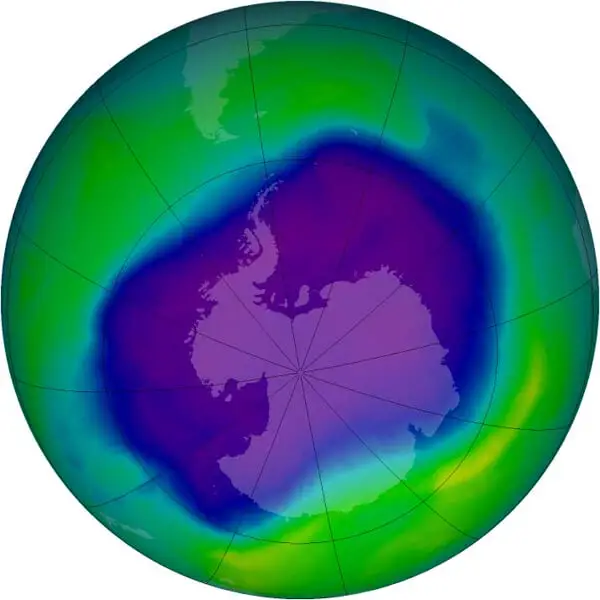
Technology has transformed modern education
Exponential progress in the fields of communication, information technology and computer science continues to reshape society. Some of the most important advances have occurred in education. Although many countries are being ravaged by global warming, access to learning is now so effortless and inexpensive that – paradoxically – even the poorest and most destitute of places can take advantage of it.
Schools and classrooms as people from the 20th century would know them have largely disappeared by 2060. Networking has replaced in-person learning for the vast majority of students, who now take part in decentralised, online and virtual classes. Strong AI has supplanted most of the roles that were formerly held by human teachers. These artificial instructors have instant access to vast repositories of data and knowledge, greatly expanding the horizons of learning environments. Students are exposed to a much wider variety of culture and ideas, since classes are no longer limited by geographical proximity. Connectivity allows young people with similar interests and abilities to learn together and be optimally matched in terms of personality types. Universal translators have removed any language barriers such international classrooms would have experienced in the past.
Full immersion virtual reality allows modern "schools" to exist as purely online institutions, with a seemingly infinite variety of classes and subjects. These can be experienced through self-guiding neural implants – or more commonly, by simply wearing an external device like a headset or visor. Free software and the negligible cost of hardware have brought unprecedented levels of education to Third World countries. The lack of required physical infrastructure and reduced need to pay teachers* has given even the poorest neighbourhoods access to a range of study far beyond anything seen in the past. While schools and colleges still exist in the physical world, these are declining in number and have been heavily influenced by information technology. Instead of paper or textbooks, students make use of portable tablet devices with essentially limitless power and bandwidth, again at negligible cost. As a consequence, global illiteracy has fallen below 1%.**
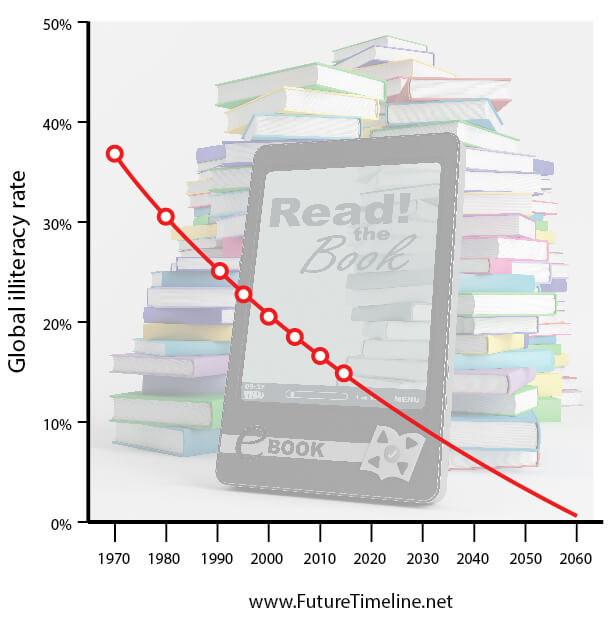
As well as technology, the process of education itself has evolved to meet the changing needs of society. With the continuing trend of mechanisation, the bulk of manufacturing and physical labour has been relegated to machines. Even many white collar jobs have disappeared thanks to the emergence of strong AI. As a result, human work is increasingly confined to subjective, abstract and/or creative professions – such as science, art, design, law, etc. This has turned high education into an absolute necessity in many countries. Methods for teaching students have changed in response.
In the past, most systems of education consisted of a set period of time that people would move through school. The grades they received played a large role in determining what opportunities they would have later in life. Regardless of how well students did in school, and regardless of whether they even understood the material, they would all complete their education at roughly the same time with whatever skill level they had managed to acquire. Now, this method has been reversed.* In the most developed countries, semester-based learning has been replaced with a go-at-your-own-pace style of learning. The proliferation of virtual teachers has made it possible for a person's education to be exactly tailored to their own learning abilities and interests. This avoids the issue of exceptional students being held back, and struggling students being left behind. The overall result is that time spent in school has become variable, while the level of knowledge and skill one gets out of school has been given a floor.
The physical (and virtual) classroom environment itself has also changed. It is common now to have a single class be taught by more than one teacher, allowing them to play off their individual strengths and give students a broader base of information. Teaching is much more reciprocal, with students learning from teachers, learning from other students, or even imparting their own knowledge back onto the teacher. Also, the classic lecture environment has been replaced by a more hands-on approach. Much more of schooling involves practical application with teachers demonstrating exactly how their material can be used in the real world.
Technology is bringing further innovations to education. A profound and world-altering paradigm – referred to in earlier decades as the 'Singularity' – appears to be on the cusp of emerging. For increasing numbers of people, direct merger of their brain with cloud-based, non-biological artificial intelligence* has become necessary in order to keep up with the truly staggering amount of new information appearing each day.* These upgrades are having a significant impact on the process of learning. Personal AI can guide a person's educational progression using detailed knowledge of their brain structure and learning abilities. By the end of the century, this method of assisted learning will evolve into a system of downloads, with new skills and facts seamlessly inserted directly into a person's brain. This will ultimately lead to the end of education in the traditional sense, with a new species of transhuman emerging based on automatic, instantaneous accumulation of knowledge and vastly amplified intelligence.

High-speed rail connects Sydney and Melbourne
For decades, Australia had debated the merits of high-speed rail without actually building a true intercity system. This changed during the 2020s, when federal planning accelerated and construction began on the first dedicated route between Newcastle and Sydney. High-speed services had reached Sydney in 2039 and Western Sydney International Airport in 2042, before successive extensions gradually transformed the initial 194 km corridor into a much larger national project.
Today, in the early 2060s,* Australia's east-coast high-speed rail network extends almost 1,800 km from Brisbane to Melbourne, connecting the Gold Coast, Newcastle, Sydney, Canberra and various regional centres along the way. The main Brisbane–Melbourne corridor includes around 20 stations, alongside additional connections such as the branch to Western Sydney International Airport. Express trains cover Sydney–Melbourne in less than three hours, compared with almost 11 hours on conventional rail during the 2020s, while Brisbane–Sydney takes around two hours and 40 minutes and Sydney–Canberra little more than an hour.*
Click to enlarge
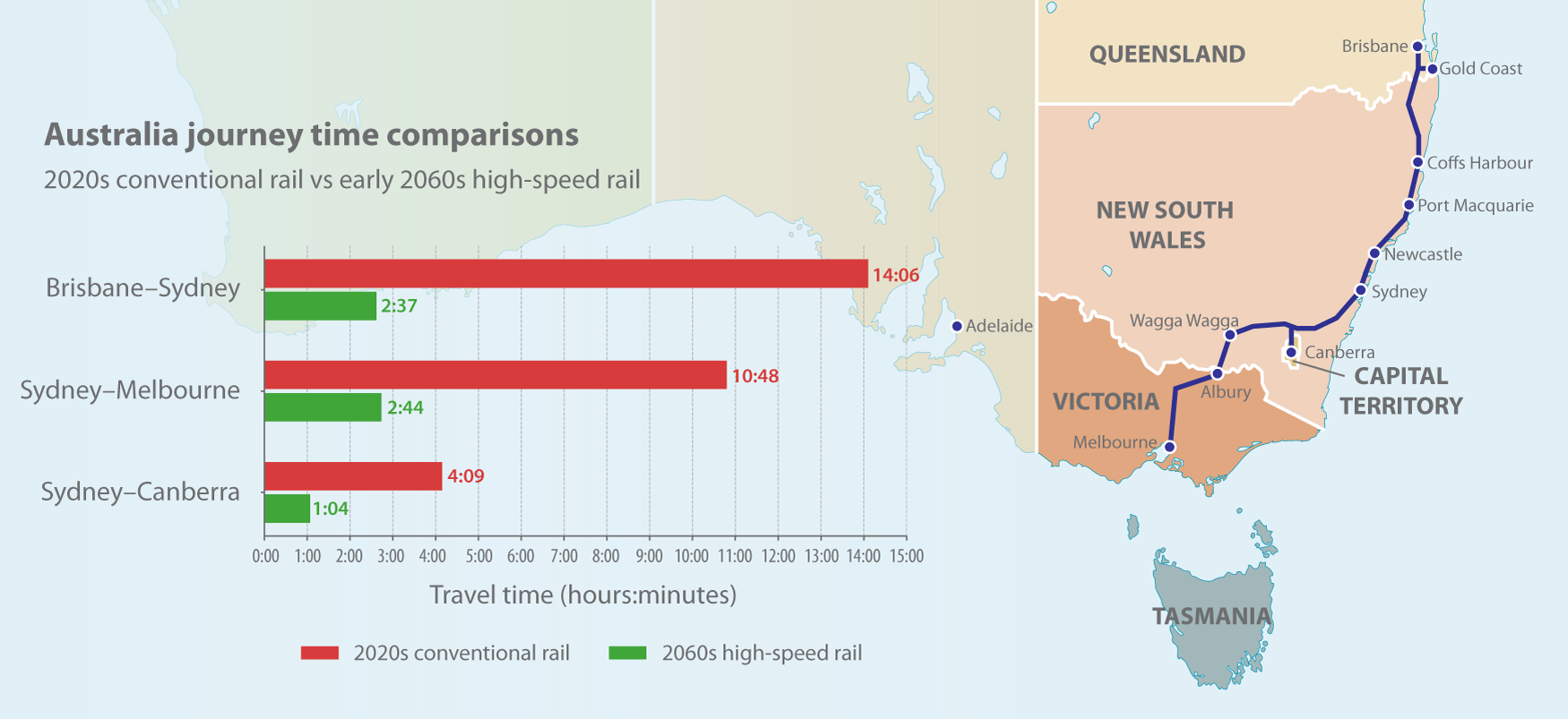
The network is now over nine times the length of the original 194 km first stage. Earlier federal studies had estimated around A$114 billion in 2012 prices to build a complete east-coast system.* After decades of inflation and rising construction costs, however, the cumulative cost has reached several hundred billion Australian dollars.
The completed network is strengthening economic links between Australia's largest cities and many regional communities, widening labour and business markets, encouraging housing and investment around station precincts, and providing a highly competitive alternative to domestic aviation. Studies conducted decades earlier had projected almost 84 million passengers annually by the mid-2060s* and suggested that high-speed rail could capture a majority of the Sydney–Melbourne and Brisbane–Sydney intercity travel markets.
Construction of the later stages had appeared increasingly different from the labour-intensive infrastructure projects of the early 21st century. During the 2040s and 2050s, autonomous tunnelling and earthmoving machines, robotic track-laying systems, drones and AI-controlled construction equipment had taken over much of the excavation, surveying, materials handling, assembly and inspection work. Human workers had remained essential for engineering, supervision and specialised tasks, but increasingly operated fleets of machines rather than performing physical construction themselves. This automation had helped contain costs and overcome labour shortages as thousands of kilometres of track, tunnels, bridges and associated infrastructure were completed.
Climate resilience has also advanced considerably since the earliest sections of the network. The original engineering studies had envisaged infrastructure capable of withstanding extreme Australian temperatures, but later generations are designed for still harsher conditions. New materials and protective coatings improve resistance to heat, fire and weathering, while heat-resistant track and overhead equipment, continuously monitored structures, flood-resistant viaducts and drainage systems, fire-resistant power and communications equipment, and extensive bushfire protection are now standard throughout the corridor. Trains and major stations are fully climate-controlled, with powerful and highly redundant cooling systems maintaining comfortable conditions even during major heatwaves. AI systems monitor weather, track temperatures, vegetation and thousands of infrastructure sensors in real time, allowing trains and maintenance robots to respond automatically to emerging hazards. These adaptations help to keep the network operating through the increasingly severe heatwaves, floods and bushfires affecting eastern Australia in the mid-21st century.
Expansion of the network will continue during the closing decades of the 21st century. High-speed rail will eventually extend west from Melbourne to Adelaide, alongside additional regional branches and upgrades elsewhere on the system. By the early 22nd century, advances in automated tunnelling, new materials and large-scale subsea construction will also make possible a fixed rail connection beneath Bass Strait, linking Victoria with Tasmania and bringing the island into the wider network. A conventional high-speed line to Perth, however, will remain uneconomic because of the immense distances and sparse population across Australia's interior, with increasingly fast and low-carbon aviation continuing to dominate east–west travel.

2061
Halley's Comet returns
The most famous of the periodic comets, Halley's Comet last appeared in the inner solar system in 1986. Like most comets, it has a highly elliptical orbit – taking it close to the Sun for only a short time. Several unmanned probes are sent to explore it during this year, including the first robotic lander.

The UK population reaches 80 million
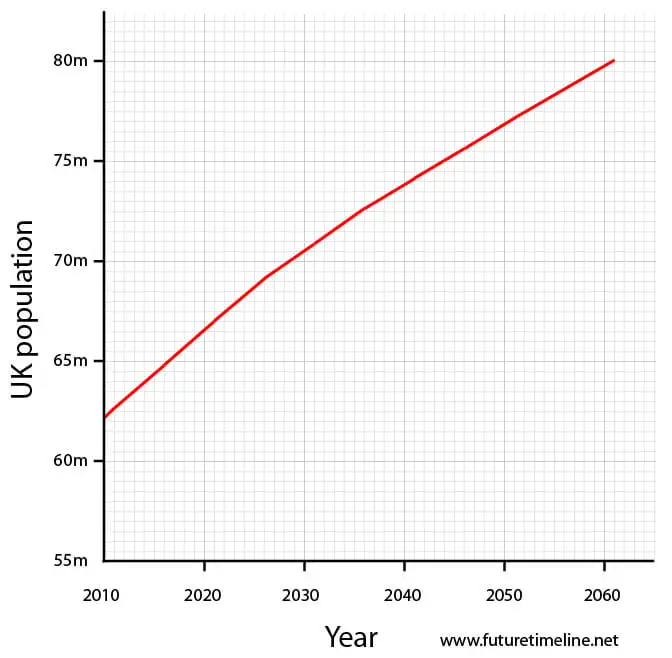
The UK is now the most populous country in Western Europe, with more people than France (72 million), Germany (71 million) and Spain (52 million).** The population of Europe, as a whole, has been declining since the 2030s. However, strong growth from immigration and a younger average population, combined with favourable environmental conditions have allowed the UK to prosper and become the leading economic power in the region.
The country's ethnic makeup has changed dramatically over the last 50 years, becoming far more diverse and geographically integrated. In particular, black and Asian persons in the most affluent areas have greatly increased.*
London has become a true mega-city. Its urban population (in the continuous built-up area surrounding the city) has swelled to almost 12 million, while its total metropolitan area now encompasses the entire southern half of England.
Recreational cannabis is legal in the majority of countries
The legalisation of recreational cannabis followed a much slower path than that of medical cannabis. Uruguay became the first country to establish a nationwide legal market in 2013, followed by Canada in 2018. A small but growing number of countries introduced similar reforms during the 2020s and 2030s, although political resistance, international drug-control agreements and concerns over public health continued to limit the pace of change.
Medical cannabis had become legal in a majority of countries by 2042, while only around three dozen permitted recreational use. Recreational legalisation continued to spread during the following two decades as attitudes shifted. Younger generations, including members of Generation Beta, tended to view cannabis as more socially acceptable than their predecessors, while decades of experience in early-adopting countries provided governments with growing evidence on taxation, regulation, crime, health and consumption patterns.
Economic considerations also played a role. Legal markets generated substantial tax revenues and employment while diverting revenue away from illicit suppliers. Governments increasingly concluded that regulated sales offered greater control over the market than prohibition, particularly through age restrictions, product testing, potency labelling, advertising rules and limits on where cannabis could be sold or consumed.
Legalisation nevertheless took many different forms. Some countries allowed commercial retail markets like those established earlier in North America, while others relied on state-controlled outlets, licensed membership clubs, home cultivation or tightly restricted non-profit distribution systems. As smoking rates continued to decline worldwide, legal cannabis markets increasingly shifted towards non-combustible products such as edibles, beverages, oils and vaporised preparations. All regulated systems imposed minimum-age restrictions and prohibited driving while impaired, while most also continued to restrict or ban cannabis smoking in public places. Regulations also placed growing emphasis on high-potency products and the risks associated with frequent use.
By the 2050s, legalisation had spread through much of Europe and the Americas and gained wider acceptance across parts of Asia, Africa and the Middle East. International drug-control rules had gradually adapted to the changing legal landscape, removing one of the main obstacles faced by governments during the early decades of reform.
In 2061, 98 of the world's 195 countries now permit recreational cannabis in some form, crossing the threshold of a global majority.* Prohibition remains in place across much of the rest of the world, often with severe penalties, but the global balance has decisively shifted. What began as an unusual policy experiment in a handful of countries during the early 21st century has become a mainstream approach to cannabis regulation.
The change is also beginning to influence policy beyond cannabis. A handful of more reform-oriented countries are experimenting with tightly controlled legal access to 'harder' psychoactive substances, usually through licensed clinics, supervised settings or state-regulated supply rather than ordinary retail. During the final decades of the 21st century, these early models will expand alongside new forms of neurotechnology capable of altering mood and perception.

2062
Liver cancer is effectively eradicated in developed countries
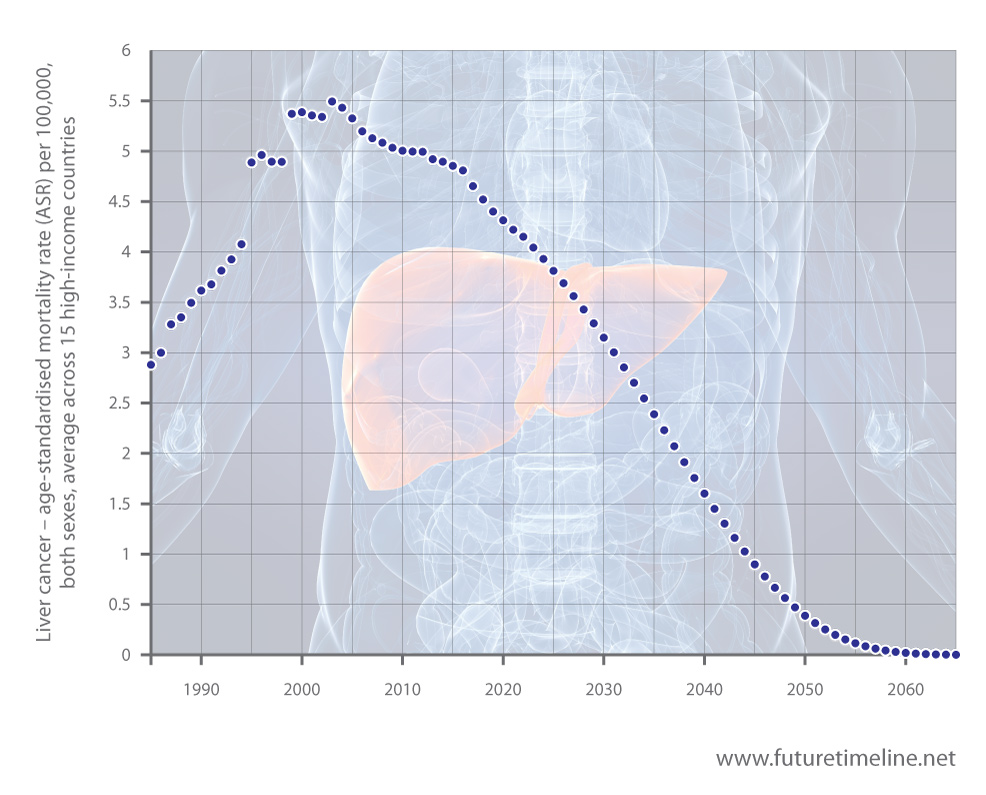
By 2062,* liver cancer has become exceptionally rare as a cause of death in developed countries. The age-standardised mortality rate (ASR), which fell below 1 per 100,000 in 2045, has now dropped under 0.01 per 100,000. Once among the world's deadliest cancers, it is now largely preventable, usually detected before it becomes life-threatening, and curable in the overwhelming majority of cases.
The foundations for this achievement had been laid over many decades. Hepatitis B vaccination, antiviral treatment for hepatitis B and C, stronger alcohol policies in many countries, and improved management of obesity, diabetes, and fatty liver disease had already driven down the number of people developing severe chronic liver damage. Earlier diagnosis had also changed the clinical picture. By the 2040s, AI-assisted monitoring, molecular blood screening, advanced imaging, and liquid biopsies allowed clinicians to detect high-risk liver changes long before tumours became advanced. Instead of waiting for late-stage cancer to appear, doctors increasingly intercepted the disease at the level of fibrosis, cirrhosis, pre-cancerous nodules, or early malignant clones.
By the 2050s, liver cancer treatment had moved even further toward prevention and repair. Personalised vaccines and immune therapies trained the body to recognise liver tumour cells before they could spread. Targeted drugs blocked the molecular pathways that allowed malignant liver cells to grow, while adaptive treatment algorithms changed therapy as tumours evolved. Nanomedical systems delivered drugs directly into diseased tissue, destroyed microscopic cancer deposits, and monitored the liver for recurrence after treatment.
Regenerative medicine played a central role. Earlier transplantation had saved many lives, but donor organs were scarce and surgery remained complex. By the early 2060s, bioengineered liver tissue, lab-grown grafts, and 3D-printed organ structures have transformed care. Patients with advanced cirrhosis can receive partial and, in some cases, full liver replacement using patient-matched tissue grown from their own cells, alongside cellular repair that restores damaged regions of the organ. This reduces rejection and avoids many of the risks associated with donor organs.
Together, these technologies not only treat cancer, but also repair the damaged liver environment that once allowed new tumours to emerge. For the small number of patients who still develop overt liver cancer, treatment is now fast and exquisitely precise. Tiny tumours are mapped at cellular resolution and removed through minimally invasive methods, while immune and nanomedical therapies eliminate residual disease. Recurrence, once a defining challenge of liver cancer, has become exceptionally rare because the underlying liver damage can now be corrected rather than merely monitored.
This milestone remains most visible in developed countries, where long-term surveillance, antiviral programmes, precision medicine, and regenerative therapies are widely available. However, the global picture has also improved dramatically. As low-cost hepatitis vaccines, curative antiviral drugs, portable diagnostics, and automated treatment platforms spread to lower-income regions, many countries that once had the world's highest liver cancer rates are now seeing rapid falls.
By 2062, liver cancer no longer represents a meaningful public health burden in developed countries. It persists only in very rare cases involving highly unusual genetic vulnerability, severe environmental exposure, late diagnosis, or people outside normal healthcare systems. A disease once associated with late detection, organ failure, and poor survival has become, for all practical purposes, eradicated in developed countries.
Advanced home fabricators are a mainstream consumer product
By the early 2060s,** advanced home fabricators have become common in many households. Descended from earlier 3D printers, desktop manufacturing systems and automated repair tools, these compact appliances can produce a wide range of everyday objects on demand. Users can create replacement parts, kitchenware, toys, simple tools, decorative items, customised fittings, clothing accessories, personalised supplements, snack foods and many other small to medium-sized products.
Most models resemble a cross between a washing machine and a microwave oven, with a sealed interior compartment where objects take shape, often with surprising speed. Rather than constructing items atom-by-atom, they typically use a combination of additive manufacturing, laser processing, robotic assembly, molecular coatings and automated finishing. Raw materials arrive in standardised cartridges, powders, gels, resins, metal filaments and recyclable feedstocks, while AI software checks designs for safety, durability and compatibility before production begins.
Schematics can be downloaded from online libraries, purchased from manufacturers, or generated by AI from a simple verbal description. Although these machines cannot make literally everything, they have greatly reduced the need to buy many basic household items from shops or wait for replacement parts to arrive by post. For consumers, the greatest benefits are convenience, customisation and repairability, while businesses have adapted by selling licensed designs, specialist materials and premium fabrication templates.

2063
China is carbon neutral
In the early 21st century, China overtook the United States to become the world's largest source of carbon emissions, driven by rapid expansion in the use of coal and other fossil fuels. Many of its cities became notorious for their chronic pollution and extremely high levels of smog.
While this rapid growth had contributed to China's emergence as a global power, its leaders recognised the need for change. The 2010s saw the adoption of policies more favourable towards clean energy and environmental protection, with dramatic improvements achieved in a relatively short time.
In 2015, China became the world's largest producer of photovoltaic power, narrowly surpassing Germany. Its total installed capacity of solar photovoltaics grew from 800 megawatts (MW) in 2010 to almost 205 gigawatts (GW) in 2019, a more than 250-fold increase. Wind power, although nowhere near as fast as solar in terms of growth, nevertheless formed a major part of China's clean energy strategy. China became the largest producer of wind energy in 2010, with its total installed capacity reaching 31 GW, a figure that grew almost seven-fold to reach 210 GW by 2019.
In 2020, the Chinese President, Xi Jinping, announced a long-term goal of carbon neutrality by 2060. This required China to peak its carbon emissions by 2030 with a rapid decline thereafter. China's next five-year plan (2021–2025) included measures to discourage coal use, with a transition to gas, accompanied by greater use of renewables, as well as nuclear. A nationwide carbon-emission trading scheme, the largest of its kind, also emerged.
China's progress towards the 2030 target received a boost from the ongoing, inexorable decline in the cost of solar PV, as well as improvements in the efficiency and scalability of solar cells. Likewise, the cost of both onshore and offshore wind power continued to improve, with many huge farms being developed in the Yellow Sea, East China Sea, and South China Sea. This occurred in parallel with major advances in batteries for handling base loads.
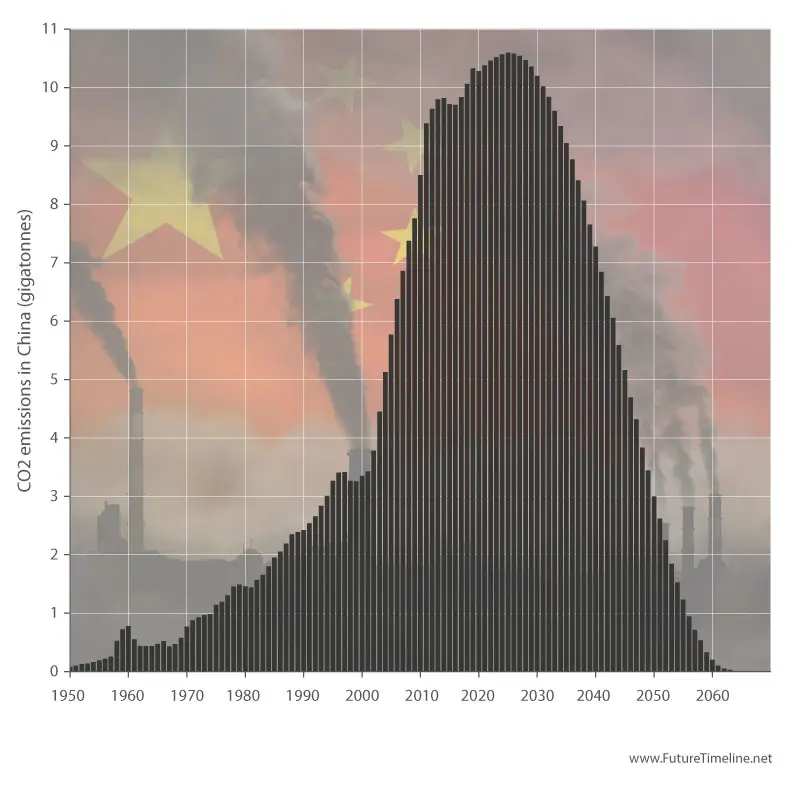
As flooding, droughts, storms, heatwaves and other extreme weather disasters continued to worsen, the urgency of the climate crisis became ever more apparent during the 2030s. However, China succeeded in dramatically reducing its emissions, from a peak of around 10.6 gigatonnes (Gt) to just over 7 Gt by the end of the decade. The coal sector, now in a state of collapse, made way for the exponentially growing solar and wind power industries. New electric and hydrogen vehicles replaced traditional petrol-driven road vehicles, with sales of the latter being phased out by 2035.
Despite this progress, considerable challenges lay ahead. Gas remained a significant part of China's energy supply, while industrial processes such as steel and cement making required the use of fossil fuels.
By 2050, China had shrunk its emissions to 3 Gt. Many of the aforementioned industrial facilities underwent conversions to hydrogen or concentrated solar for high-temperature processes, such as steel rolling, along with greener forms of cement and other materials. The intensifying climate disasters now being witnessed around the world added further impetus to retrofitting or phasing out the older, aging plants and equipment. The vast majority of China's electricity now came from renewables and nuclear, while the aviation sector had seen a rapid transition to electric planes. New building codes ensured higher standards for energy conservation and heat management. Meanwhile, trees planted decades earlier during mass reforestation programs now reached maturity and provided a natural way of sequestering large volumes of CO2. As the decade drew to a close, the finishing line appeared in sight for carbon neutrality.
By 2060, China's annual CO2 emissions had dwindled to just 0.2 Gt. With regulations now stricter than ever, in the face of a mounting global catastrophe, authorities in China sought to clamp down on businesses which continued to illegally use fossil fuels. Only a handful of such cases remained – typically in poorer, backwater areas of the country where small-scale remnants of legacy infrastructure from past decades could still be found. By 2063,* the last of these have been identified and ordered to either adapt or shut down.
In the four decades following 2020, China's efforts resulted in a cumulative reduction of 215 billion tonnes of CO2. This prevents 0.3°C (0.5°F) of global average temperature increase. The China of 2063 is now highly modernised, meeting World Health Organization standards for air quality, and well on its way to becoming the "ecological civilisation" envisioned by its government at the dawn of the century.
Having transformed its energy system, China is now attempting to go even further – not only maintaining its carbon neutrality, but developing new ways of going carbon negative, with a portion of the carbon being turned into useful products. This goal is aided by the abundance of cheap, renewable energy now available, which has grown by orders of magnitude in recent decades. The megaprojects now being deployed include operations to sequester gigatonnes of CO2 each year, via direct air capture, to reverse the approximately 2.5 trillion tonnes of historical global emissions.
Bowel cancer mortality falls below 1 per 100,000
Bowel cancer, often referred to as colorectal cancer, ranked as the third most common cancer in the world during the early 21st century. In 2020, it accounted for more than 1.9 million new cases and 935,000 deaths worldwide, with the highest rates occurring in Australia, Europe, New Zealand, and North America.
Multiple risk factors contributed to the disease. Age remained the most significant, with the majority of cases diagnosed in people over 50. Men faced higher risks than women, while diet also played a major role: high consumption of red or processed meats, alcohol, and saturated fats correlated with incidence, as did obesity, smoking, and a sedentary lifestyle. About 10% of cases linked directly to insufficient physical activity. Genetic predispositions and hereditary conditions such as Lynch syndrome also increased vulnerability.
Throughout much of the 20th century, doctors relied on surgery, chemotherapy, and radiation to treat bowel cancer. For the more advanced cases, palliative care provided symptom relief but not a cure. Survival rates improved gradually as screening became more common and surgical techniques advanced. The late 20th and early 21st centuries brought genome sequencing, innovative mouse models, and advances in molecular biology that revealed more about tumour pathways. This knowledge opened the door to precision medicine.
The mid-21st century marked a decisive shift. Colonoscopies and stool-based tests gave way to non-invasive, AI-augmented screening tools. Liquid biopsies – already in use by the early 2020s – have by 2063 become ubiquitous, ultra-sensitive, and virtually costless. Integrated into continuous digital health monitoring, they flag malignancies at their earliest stages with near-perfect accuracy. Preventive programmes use personalised risk scores, integrating genomic and lifestyle data to predict who should undergo enhanced monitoring. Doctors also deploy nanoparticles to deliver chemotherapy agents with pinpoint accuracy, sparing healthy tissue and reducing side effects.
By 2063, the age-standardised mortality rate (ASR) in high-income nations has fallen below 1 per 100,000, a milestone that effectively signals near-elimination. Breakthroughs in immunotherapy, including engineered T-cells trained to target bowel tumours, complement advances in regenerative medicine. Surgeons both human and robotic now repair intestinal tissue with bioengineered scaffolds. Most patients now recover quickly from minimally invasive interventions. As a result, bowel cancer has shifted from one of the world's most common and lethal cancers to a condition rarely seen in clinical practice across the developed world.*

2064
Leadbeater's possum is going extinct in the wild
Leadbeater's possum – also known as the fairy possum – evolved around 20 million years BC. First discovered in southern Australia during 1867, it later became the faunal symbol of Victoria, the most densely populated state in the country. A shy, nocturnal and fast-moving creature, it was rarely seen – occupying the highest parts of trees including the mountain ash (the world's tallest flowering plant), where it leaped athletically from branch to branch. Previously common in this region, concerns grew that it would go extinct after the draining of swamps and wetlands for agriculture in the early 1900s. Following the Black Friday bushfires in 1939 – which burned 20,000 km² (4,942,000 acres, 2,000,000 ha) of land – it was thought to have vanished. However, the animal was rediscovered in 1961, surviving in the Central Highlands about 80 km (49 mi) northeast of Melbourne.
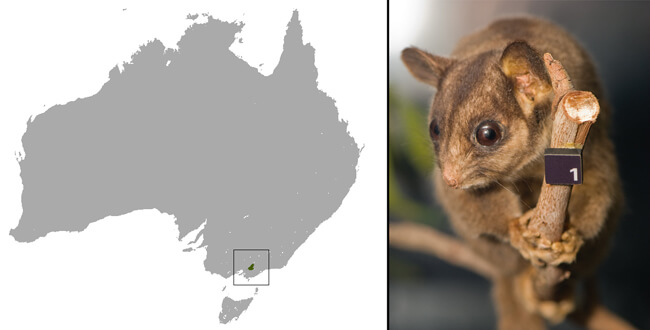
Map: IUCN Red List of Threatened Species / Chermundy [CC-BY-SA-3.0], via Wikimedia Commons
Photo: Leadbeater's possum, by Pengo (Own work) [CC-BY-SA-3.0], via Wikimedia Commons
Leadbeater's possum began to recover, with numbers peaking at 7,500 by the early 1980s. They declined sharply from the late 1990s onwards, due to a population bottleneck and the combination of fire events and land use activities such as logging. The Black Saturday bushfires of 2009 – the country's worst ever natural disaster – were particularly damaging and destroyed 43% of the animals' habitat, reducing their wild population to just 1,500. Legislation passed in 2013 allowed a timber corporation access to these forests until 2040 and to be self-monitoring, a move that conservationists described as a death sentence for the remaining possums. The incoming Liberal/National coalition was similarly hostile to the environment.
For millions of years, these primitive marsupials had been largely unchanged, still resembling their evolutionary ancestors in appearance and behaviour. Within a geological eye-blink, they were in danger of being wiped out completely. The so-called "old growth" trees – on which they strongly depended – covered about 4% of the Central Highlands area in 1964, but this proportion fell to 1% by 2011. As well as helping to regulate the rainfall patterns and water supply of Melbourne, this region also contained the world's most carbon-dense forests.
Although protections were eventually increased, these efforts proved to be too little, too late. Alongside the ever-worsening droughts, heat and fires resulting from climate change, many decades of logging had caused fatal damage to the possum's ecosystem. These forests would not recover in time to save the species. By the middle of this decade, their population is heading for complete collapse.*
2065
Longevity treatments able to halt aging
Various combinations of treatments are now available that can essentially halt the aging process, at a cost low enough for the average person. This is changing society and culture in profound ways.
Rather than being a single process, aging researchers identified several distinct types of damage.* As such, no "silver bullet" emerged for aging. It required a number of different approaches:
1. Junk
– inside cells
2. Junk – outside cells
3. Cells – too few being produced
4. Cells – too many being produced
5. Mutations – chromosomes
6. Mutations – mitochondria
7. Protein crosslinks
In the early years of the 21st century, it was possible to extend the human lifespan by only two months per year. In other words, for every year of a person's life they lived, two months of additional life could be expected from advances in science and medicine.
However, subsequent decades witnessed a revolution in medicine, with major advances in the use of stem cells, gene therapy, 3D printing of body parts, nanotechnology and other techniques. Ever more sophisticated, powerful, and compact devices gained the ability to scan, identify and treat the most elusive of bodily defects at scales previously thought impossible. Exponential progress, aided by the prevalence of deep learning and other AI techniques, enabled the "longevity escape velocity" to edge closer and closer – first in mice, then later in monkeys, and finally in humans, with 12 months per year of additional lifespan being added. By the 2040s, this allowed some celebrities and other high-income individuals to remain in a relatively young and biologically healthy state.*
By the mid-2060s, cost reductions are combining with expiration of patents, and further improvements in research, to enable the majority of the world's population to benefit. As with previous revolutions in science, debates have raged over the ethics and implications of an end to aging. However, there is generally strong support from the public, due to the improvements in quality of life (healthspan) and the potential to live a vastly extended life with all the experiences and opportunities that brings.

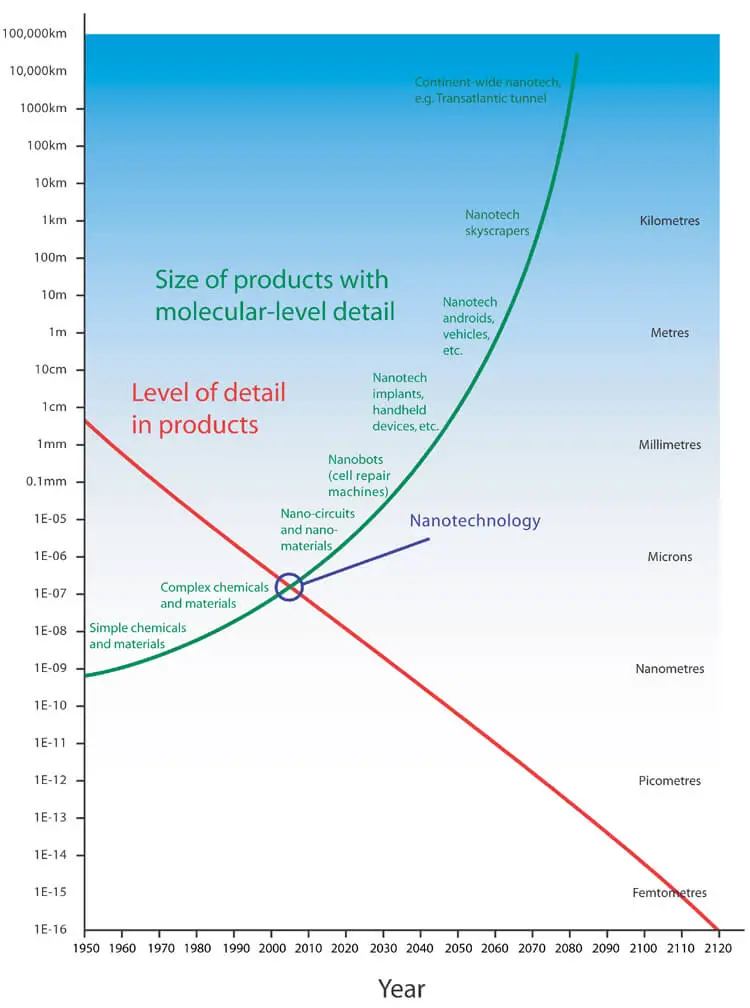
Self-assembling buildings made 100% from nanotech
Nanotechnology – the control of matter on an atom-by-atom basis – has swept the world, transforming society in myriad ways.* At the same time, new methods of automation are displacing the need for human labour on ever increasing scales. A growing number of industries have seen their workforces shrink dramatically, with robots and AI handling the bulk of operations. Around the world, unemployment has soared.
Construction companies are being particularly affected now. By the middle of this decade, it's becoming possible to build entire homes and offices using nanotechnology alone. For a typical square or rectangular plot of land, this takes the form of self-assembling machinery, based around a scaffold system that initially resembles a giant, four poster bed. Vertical columns, one in each corner of the site, support a platform that gradually rises from the ground, adding successive layers of material beneath it. The columns rise in tandem with the platform, whilst also relaying material, until the building is finally topped out.
In effect, these machines are like substantially bigger versions of 3D printers and nanofabricators. For some of the more "unique" building designs or features, traditional methods of construction and engineering are still incorporated. Even these will eventually be replaced by self-assemblers as the technology advances further.
Atom by atom, these intelligent machines lay the foundations, core, framework, flooring, electrics, doors and other components – while robots inspect the interior, perform safety checks and make adjustments where necessary. By the 2070s, even skyscrapers and other tall structures can be erected using this method. The process is so rapid, it takes a matter of days from groundwork to final completion. Humans are rarely if ever needed on site.
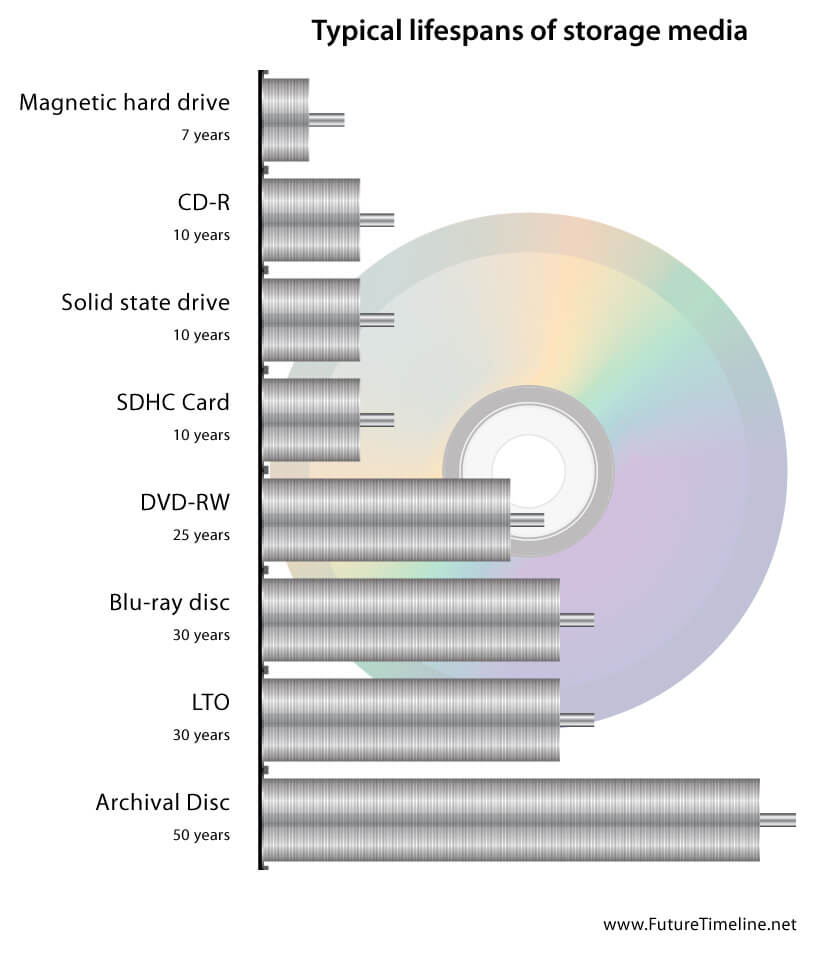
Archival Discs are becoming unreadable
Archival Disc was a successor to the Blu-ray format, commercially introduced in 2015. In addition to a much larger storage capacity (initially 300 GB, later expanded to 1 TB), it also featured a longer lifespan. Various factors were known to affect the read/write quality of magnetic media – such as temperature, humidity, dust and other conditions, frequency of use and compatibility between disc and device. Archival Disc was designed to maintain readability for at least 50 years. By 2065, the first generation of these Archival Discs are becoming degraded. Any data on this storage medium that has not been backed up or transferred to an alternative format will now be lost.*
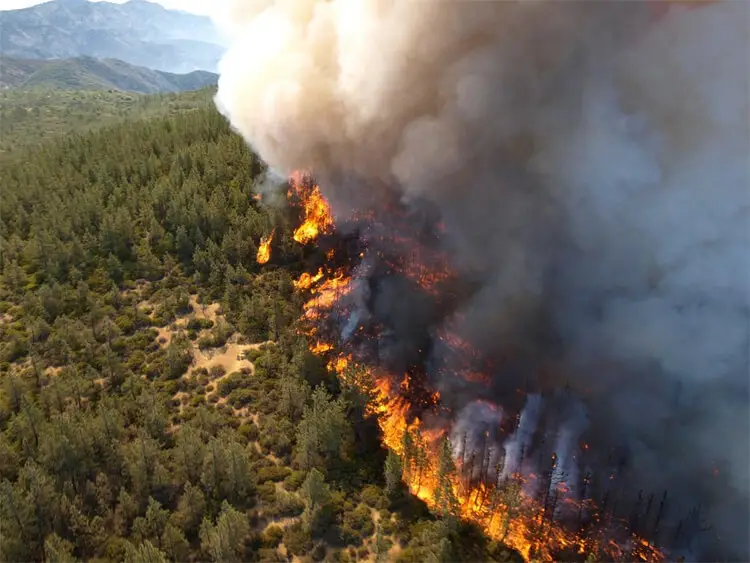
Insurance crisis
Damage wrought by accelerating climate change has led to a majority of insurance firms filing for bankruptcy.* In the United States, widespread flooding has resulted in hundreds of billions of dollars' worth of damage. Coastal cities are particularly badly hit. Much of the infrastructure in the southern states has been destroyed by category 5 hurricanes, with Houston and New Orleans lying virtually abandoned. Along the west coast, gigantic fires spread by the tinder-dry ground are ravaging the land. Many of the biggest insurance firms have been nationalised by the government in a bid to avert economic collapse.
4K volumetric displays are the latest in home comfort
The bandwidth now available for telecommunications has resulted in TV channels and online streaming services that can broadcast three-dimensional content in full 4K resolution. This is achieved via a form factor that somewhat resembles an aquarium, when in standby mode.
While televisions of the early 21st century had become progressively thinner, a new device class has now reversed this trend. Volumetric displays had been in use for many years previously – in aerospace, defence, medical imaging, and other applications – but with much lower pixel counts, and very high costs. In 2065, however, they are a mainstream consumer product and increasingly common in homes around the world.*
When switched on, a television of this type uses voxels, located in 3D space. These tiny particles of light are refreshed at dozens of times a second, with a data rate that is typically on the order of 1.3×1013 bit/s, about 1,000 times greater than standard 2D transmissions in 4K.
Larger volumetric displays can be found in movie theatres, museums, galleries, and other public venues. These now offer breathtaking experiences and an incredible sense of immersion.
Display technology continues to evolve, with light field (full parallax) being the next major iteration, during the late 21st century. This is followed by advances in holographics and the advantage of being able to project outside a limited volume.*

2067
Lung cancer is effectively eliminated in developed countries
By 2067, health systems in the highest-income regions have effectively eliminated lung cancer as a significant public health concern. The age-standardised mortality rate (ASR) – already below 1 per 100,000 in 2052 – has now declined even further, reaching 0.01 per 100,000 over the last 15 years.* Once considered one of the most devastating cancers worldwide, lung cancer now ranks among exceptionally rare diseases, posing a threat similar to that of minor infections or easily treatable chronic conditions.
Advancements in preventive medicine, personalised healthcare, and biomedical innovation have driven this extraordinary success. Medical teams use nanotechnology-enabled diagnostics embedded in routine health checks to continuously monitor for cellular abnormalities and detect cancerous changes at the molecular level, years or decades before symptoms appear.
Clinicians employ medical imaging that incorporates quantum computing and artificial general intelligence (AGI) to identify even microscopic tumours in real-time – immediately triggering precise interventions. Treatments now involve seamless and minimally invasive procedures. Specialists use highly targeted immunotherapies and nanobot-assisted delivery systems to eliminate cancer cells with exceptional accuracy while sparing healthy tissues completely.
Doctors routinely apply cellular-level genetic editing technologies to repair precancerous mutations, effectively "vaccinating" patients against tumour formation. These genetic interventions – along with customised synthetic T-cell treatments available "off-the-shelf" – ensure swift and robust immune responses to any residual malignant cells.
Meanwhile, governments and industries in the developed world have nearly eradicated tobacco use and dramatically reduced exposure to industrial pollutants, further diminishing lung cancer risk. AGI-driven models – synthesising genomic, environmental, and lifestyle data – forecast individual risks decades in advance, enabling proactive and precisely tailored preventive therapies.
Although atypical mutations occasionally trigger rare cases, healthcare providers can almost always treat them quickly, effectively, and curatively. Lung cancer, previously among the world's deadliest diseases, now stands as a historical footnote – a testament to decades of scientific ingenuity and public health progress.

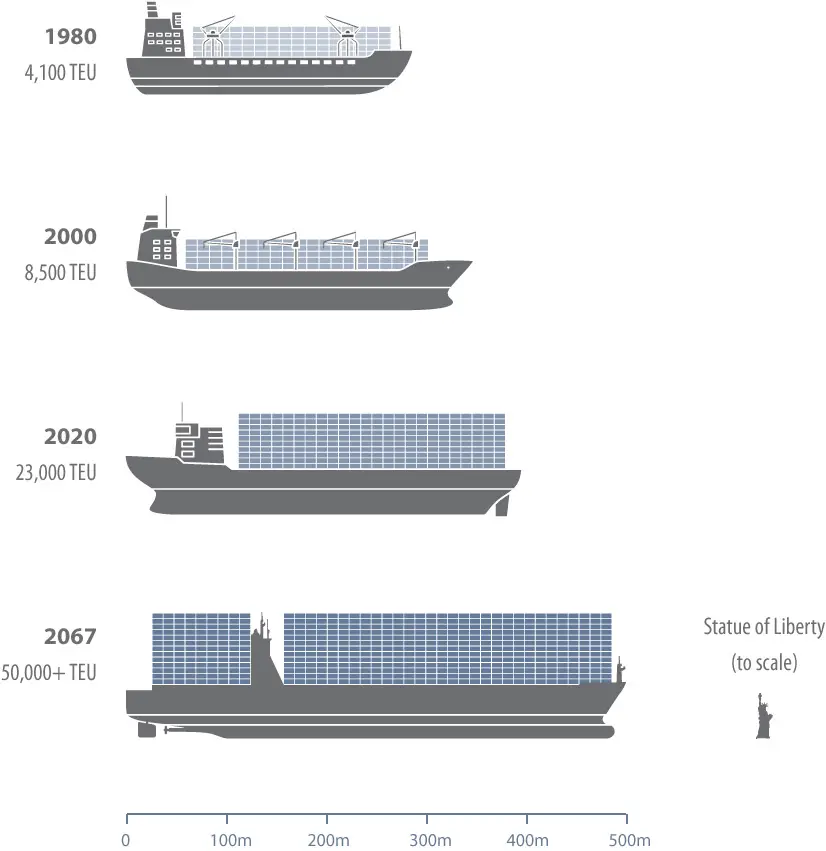
Fully automated container vessels at 50,000 TEU
In the 1960s, shipping companies had begun to increase the use of container boxes. These allowed the bundling of cargo and goods into larger, unitised loads that could be easily handled, moved, and stacked, and that would pack tightly into a ship or yard. As the economy expanded and society became more globalised, container boxes grew more and more numerous, with a consequent demand for larger and larger sea-going vessels.
The industry used a measurement known as TEU, which stood for "twenty-foot equivalent unit" – a reference to the rectangular container boxes with dimensions of 20' x 8' x 8'. A cargo ship with capacity of 20,000 TEUs, for example, could fit 20,000 shipping containers of that size into itself.
In the early 1970s, the biggest ships held approximately 2,000 TEU. In subsequent decades, the carrying capacities increased substantially. By 2010 they had reached 15,000 TEU and by 2020 they regularly exceeded 23,000 TEU, an order of magnitude difference compared to 50 years previously. A notable incident occurred in 2021 when the Ever Given – one of the world's largest container vessels – ran aground in the Suez Canal, disrupting nearly $10bn of global trade every day for a week.
Berthing fees divided ships into 100 metre brackets. For many years, this had kept their designs to just below 400 metres – resulting in wide, bulky and vertically stacked vessels. However, the enormous and growing volumes of cargo requiring transportation meant that eventually, this ceiling would need to be exceeded for practical and safety reasons. As such, the first container vessels reaching half a kilometre in length began to emerge, their additional capacity offsetting the increase in berthing fees.
In addition to length, ships continued to grow in width and draft level. Emerging markets in southeast Asia and elsewhere now had middle classes with improved per capita incomes and living standards, demanding more and more consumer items from around the world.
By the late 2060s – a full century after their introduction – container vessels have reached truly enormous sizes. The largest are now exceeding 50,000 TEU or more than double their cargo volume in 2020.** This has necessitated major upgrades of ports, such as the redesign of cranes and other terminal infrastructure. Gigantic, floating dry docks, with cranes on both sides that load or unload cargo from one ship simultaneously, are a common sight at coastal cities of the 2060s. Another major development is the widening of canals and other routes.
Not only are these ships much larger, they are also fully automated. Ports with automated facilities had already emerged in the 2020s* and the ships themselves are now AI-controlled too. The days of piracy are long gone, since the vessels can operate entirely by themselves, preventing any possibility of hostage taking. Automated defences, such as armed drones, serve to further dissuade any would-be attackers. Any maintenance required during a voyage can be performed by robots as well.
Another improvement is that the entire global shipping fleet is now 100% sustainable, as the older ships have all been decommissioned, while newer ships conform to international standards on emissions.
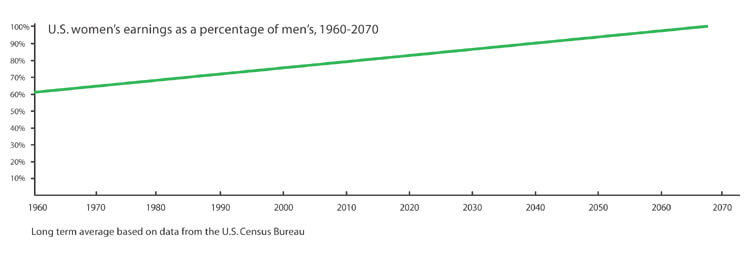
Male and female salaries are reaching parity
In the developed world, the gender gap has narrowed to such an extent that salaries and rights are pretty much equal for both sexes. Women are now playing a greater role in business and government than ever before. Just one consequence has been a significant reduction in military spending. The money and resources saved are being diverted to education, healthcare, transport and environmental programmes, improving the living standards and opportunities for many. With less male aggression in world affairs, more balanced and level-headed discourse is taking place on international issues. Widespread use of AI in neutral, objective, consultative roles is also reinforcing cooperation by providing more "logical" solutions to global issues.
2068
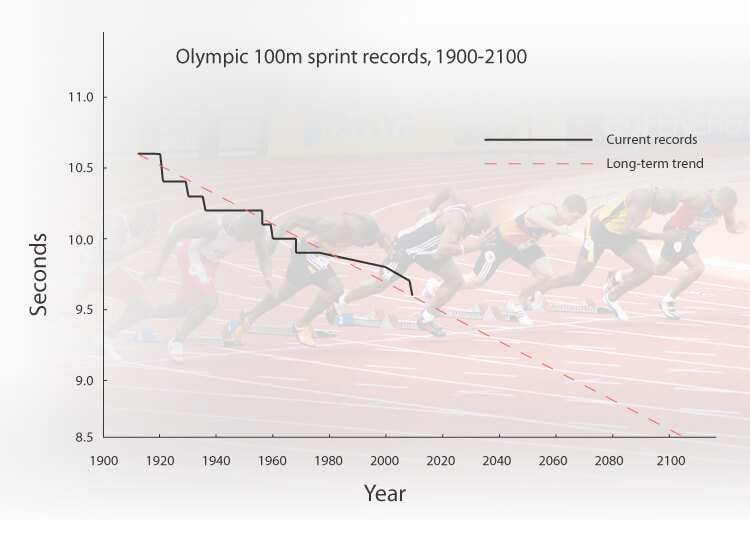
A major landmark in the world of athletics*
Improved lifestyles and training techniques – including the use of VR for mental enhancement – saw many world athletics records continue to fall during the last few decades. At the 2068 Olympics, a major landmark is passed when a black male athlete completes the 100 metre sprint in less than nine seconds. However, these records will soon be hitting a barrier as it becomes physically impossible for humans to run any faster without biotechnological aids.*
Indeed, a new breed of "super athlete" has emerged, as the authorities have legalised certain implants, drugs and muscle-enhancing devices. This has resulted in a splitting of the games into three separate events – a "classic" group for natural, unenhanced athletes; Paralympics for those with disabilities; and a third "cyber" category for those with biotechnology enhancements. The Paralympics will eventually disappear altogether as literally all physical disabilities are overcome.
2069
Underground habitats are commonplace
By the mid-21st century, severe climate change gripped much of the world. As the global average temperature rise edged toward 3°C, desperate measures were taken by governments, businesses and citizens alike to adapt to a rapidly worsening environment.
In addition to a gradual phasing out of fossil fuels, various carbon capture and storage methods were employed. This included natural solutions in addition to technological innovations. Massive tree-planting efforts, for example, allowed many cities and towns to achieve local cooling.* Meanwhile, a shift away from traditional agriculture and in favour of cultured meat products, alongside plant-based alternatives, further reduced humanity's impact.
However, despite the ubiquity of clean energy and other progress towards carbon neutrality, society remained in a fragile and perilous state. While the level of atmospheric carbon dioxide (CO2) and other greenhouse gases had now peaked and begun to fall, emissions from earlier decades were "locked in" to the system. Gargantuan amounts of heat lay trapped in the oceans, for example, which had soaked up 90% of global warming, while feedback loops had been triggered and some appeared irreversible for centuries. Rather like attempting to change the course of an oil tanker, the climate system was slow to respond to humanity's more eco-friendly direction.
Significant portions of the Earth's surface were being rendered uninhabitable – due to temperatures passing the limits of human endurance, on top of extreme droughts, flooding and hurricane activity. Having been a somewhat minor and distant threat in the first half of the 21st century, the reality of rising sea levels now emerged as one of the most urgent and serious issues facing the world.
The looming spectre of nuclear conflict returned as some nations fought over territory and resources, such as India and Pakistan in the disputed Kashmir region. Amid the growing geopolitical chaos, mass migrations of refugees became the norm, particularly from Africa and the Middle East.
Climate change served to exacerbate global inequality. A hyper-rich elite, now including a number of trillionaires, sought to isolate themselves and their interests by creating entire new micronations. While some chose to invest in "closed cities" with restricted access and military protection, others looked to the oceans to build enormous floating islands and undersea habitats. As the world entered the second half of the 21st century, an emerging ecosystem of space-based habitats provided yet another means of escape.
By the late 2060s,* a fourth option gaining widespread commercial and technical viability is underground towers, often referred to as "earthscrapers". These can reach hundreds of metres below the Earth's surface, utilising new materials and structural techniques in combination with self-sufficient power generation and production of food/water, fully automated recycling, heat management and so on. Some facilities are even powered by fusion, while others have access to geothermal energy if placed in the appropriate geographical location. Subterranean gardens, sports and entertainment, virtual reality and other features ensure that occupants are kept stimulated and free of claustrophobia.
Unlike the overground micronations, most of these underground habitats provide the advantage of being essentially immune to nuclear war, as well as various other global threats. This physical robustness makes them increasingly attractive as long-term investments – but also for general security, privacy and improved business operations in the short to medium term.
While some communities opt for an isolated existence, away from the chaos and upheaval above ground, others are more open to visitors. As the number of residents in earthscrapers reaches into the tens of millions, they are joined by a network of hyperloop tunnels, linking countries and continents. Many of the design principles in these habitats are later employed on the Moon and Mars. Later still, they are adapted for colonies in hollowed-out asteroids.
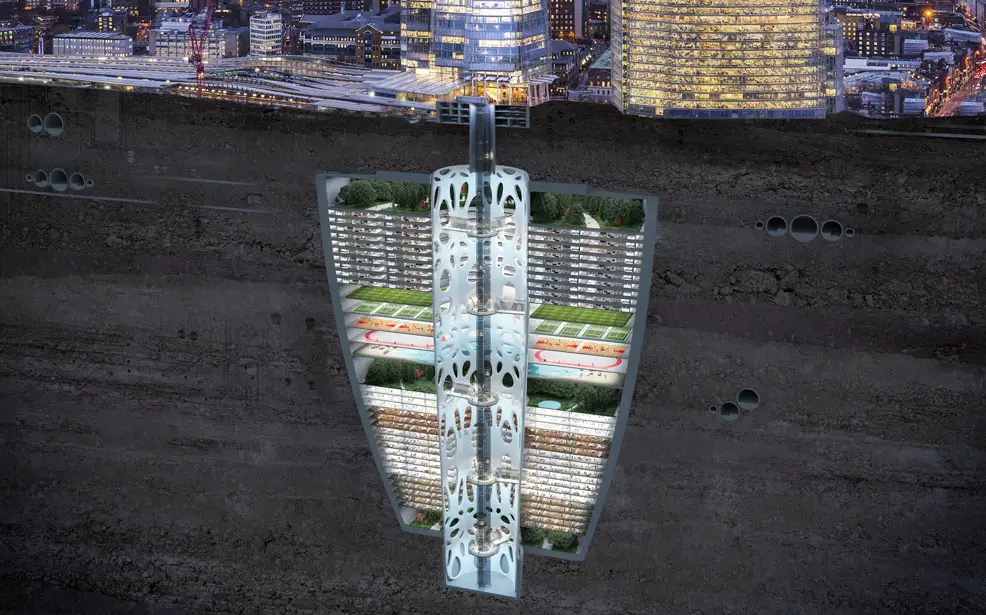
Credit: Samsung/Preconstruct
100th anniversary of Apollo 11
Exactly a century has passed since Neil Armstrong made the first historic landing on the Moon. This anniversary is marked by celebrations in the lunar colonies. It later becomes the first off-Earth national holiday. By this date, Apollo 11's landing site has been turned into a UNESCO world heritage site and tourist destination. Visitors can walk around the lunar module and see the famous footprints left by the astronauts. However, although the spacecraft is perfectly preserved, the American flag has been long since bleached white by UV radiation on the lunar surface. The flag was also displaced from its original location when the astronauts blasted off.*
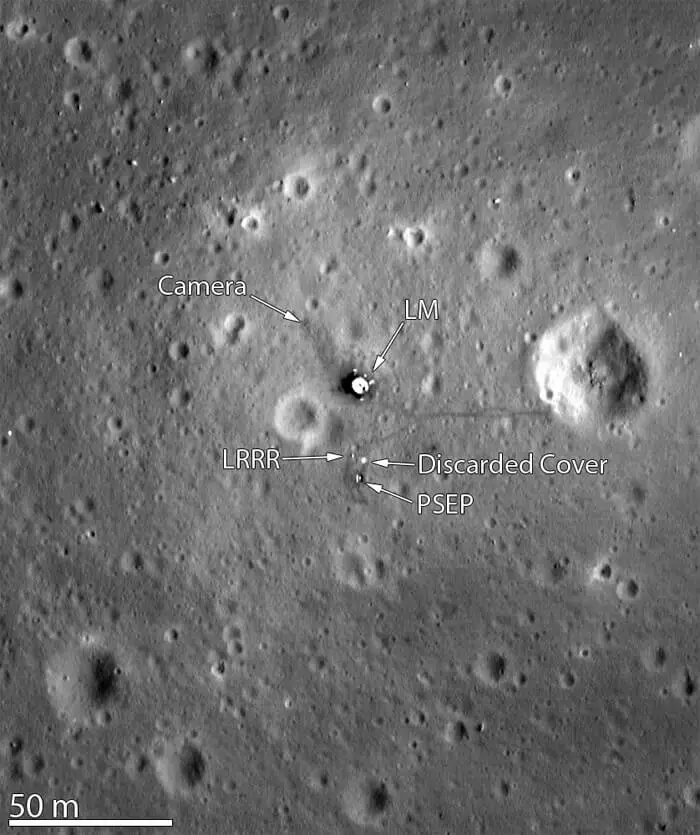
Credit: NASA
« 2059 |
⇡ Back to top ⇡ |
2070 » |
If you enjoy our content, please consider sharing it:
References
1 Royal Society Special Issue on Global Warming Details 'Hellish Vision' of 7°F (4°C) World — Which We May Face in the 2060s!, Climate Progress:
https://archive.thinkprogress.org/royal-society-special-issue-details-hellish-vision-of-7-f-4-c-world-which-we-may-face-in-the-2060s-589675385491/
Accessed 11th June 2023.
2 "The report backs the notion that humanity has already moved beyond 'safe' planetary boundaries on biodiversity loss, climate change and the nitrogen cycle, risking severe impacts in the future."
Population and consumption key to future, report says, BBC News:
https://www.bbc.co.uk/news/science-environment-17829665
Accessed 13th June 2020.
3 The God Species, by Mark Lynas:
http://www.amazon.co.uk/God-Species-Humans-Really-Planet/dp/000731342X/
Accessed 21st July 2012.
4 Engines of Creation: The Coming Era of Nanotechnology, by Eric Drexler:
http://www.amazon.com/Engines-Creation-Coming-Era-Nanotechnology/dp/0385199732/
Accessed 21st July 2012.
5 Grey goo, Wikipedia:
http://en.wikipedia.org/wiki/Grey_goo
Accessed 21st July 2012.
6 Peter Joseph Radio Lecture "A Profile of Collapse", The Zeitgeist Movement ]:
http://www.youtube.com/watch?v=Bil6ZTEvC8M
Accessed 21st July 2012.
7 Major migration challenge by 2060, experts warn, The Telegraph:
https://www.telegraph.co.uk/news/earth/environment/climatechange/8836567/Major-migration-challenge-by-2060-experts-warn.html
Accessed 13th June 2020.
8 Where will they go when the Sea rises?, New Scientist:
http://www.newscientist.com/article/mg18624983.800-where-will-they-go-when-the-sea-rises.html
Accessed 21st July 2012.
9 In Northern Africa, Climate Change Could Make A Current Refugee Crisis Even Worse, Climate Progress:
https://archive.thinkprogress.org/in-northern-africa-climate-change-could-make-a-current-refugee-crisis-even-worse-369328a83204/
Accessed 11th June 2023.
10 Climate change will lead to civil wars in Africa, says research, The Telegraph:
http://www.telegraph.co.uk/earth/environment/climatechange/6653298/Climate-change-will-lead-to-civil-wars-in-Africa-says-research.html
Accessed 21st July 2012.
11 The Geopolitics of Climate Change, Gwynne Dyer:
http://www.youtube.com/watch?v=aRLg8No0RVQ
Accessed 21st July 2012.
12 "Even at the coarse resolution of a computer model grid, Botswana's fate is clear – the entire country is covered by 'active' dunes after about 2070."
See Six Degrees: Our Future on a Hotter Planet, by Mark Lynas:
http://www.amazon.com/Six-Degrees-Future-Hotter-Planet/dp/0007209053/
Accessed 21st July 2012.
13 2084: An Oral History of the Great Warming, by James Powell:
http://www.amazon.com/2084-History-Warming-Kindle-ebook/dp/B004TAD8G0/
Accessed 21st July 2012.
14 Glaciers in Southwest China Feel the Brunt of Climate Change, Science Daily:
http://www.sciencedaily.com/releases/2011/10/111025210906.htm
Accessed 21st July 2012.
15 See 2035.
16 Could global warming turn Canada into a superpower?, CTV News:
http://www.ctvnews.ca/could-global-warming-turn-canada-into-a-superpower-1.556373
Accessed 21st July 2012.
17 The Next 100 Years: A Forecast for the 21st Century, by George Friedman:
http://www.amazon.com/The-Next-100-Years-Forecast/dp/0767923057/
Accessed 21st July 2012.
18 See 2042.
19 2084: An Oral History of the Great Warming, by James Powell:
http://www.amazon.com/2084-History-Warming-Kindle-ebook/dp/B004TAD8G0/
Accessed 21st July 2012.
20 Catastrophic Drought Looms for Capital City of Bolivia, Science Daily:
http://www.sciencedaily.com/releases/2010/11/101112141332.htm
Accessed 21st July 2012.
21 Climate Migration in Latin America: A Future 'Flood of Refugees' to the North?, Council on Hemispheric Affairs:
http://www.coha.org/climate-migration-in-latin-america-part-1/
Accessed 21st July 2012.
22 To Escape Rising Seas, Maldives President May Move His Entire Island Nation to Australia, Tree Hugger:
http://www.treehugger.com/climate-change/sea-levels-rise-maldives-president-may-move-his-entire-island-nation-australia.html
Accessed 21st July 2012.
23 Surviving in a warmer world, New Scientist:
http://www.newscientist.com/embedded/mg20126971700-surviving-in-a-warmer-world
Accessed 21st July 2012.
24 See 2035-2040.
25 Climate
Wars: The Fight for Survival as the World Overheats, by Gwynne Dyer
http://www.amazon.com/Climate-Wars-Fight-Survival-Overheats/dp/1851687181/ref=sr_1_1?ie=UTF8&s=books&qid=1295388454&sr=1-1
Accessed 12th March 2011.
26 Refugees Join List of Climate-Change Issues, New York Times:
http://www.nytimes.com/2009/05/29/world/29refugees.html?_r=1
Accessed 21st July 2012.
27 Climate Wars: The Fight for Survival as the World Overheats, by Gwynne Dyer:
http://www.amazon.com/Climate-Wars-Fight-Survival-Overheats/dp/1851688145/ref=sr_1_1?ie=UTF8&qid=1339144404&sr=8-1
Accessed 21st July 2012.
28 The Next 100 Years: A Forecast for the 21st Century, by George Friedman:
https://www.amazon.com/Next-100-Years-Forecast-Century/dp/0767923057
Accessed 21st July 2012.
29 Life after the end of economic growth, The Guardian:
http://www.guardian.co.uk/commentisfree/2011/nov/30/end-of-growth
Accessed 21st July 2012.
30 The Great Disruption: Why the Climate Crisis Will Bring On the End of Shopping and the Birth of a New World, by Paul Gilding:
http://www.amazon.com/Great-Disruption-Climate-Crisis-Shopping/dp/1608193535/
Accessed 21st July 2012.
31 Why Climate Change Will Make You Love Big Government, The Nation:
https://www.thenation.com/article/archive/why-climate-change-will-make-you-love-big-government/
Accessed 11th June 2023.
32 The Singularity Is Near: When Humans Transcend Biology, by Ray Kurzweil:
http://www.amazon.com/Singularity-Near-Humans-Transcend-Biology/dp/0143037889/
Accessed 21st July 2012.
33 The Age of Virtuous Machines, KurzweilAI:
http://www.kurzweilai.net/the-age-of-virtuous-machines
Accessed 21st July 2012.
34 The Great Disruption: Why the Climate Crisis Will Bring On the End of Shopping and the Birth of a New World, by Paul Gilding:
http://www.amazon.com/Great-Disruption-Climate-Crisis-Shopping/dp/1608193535/
Accessed 21st July 2012.
35 The full global warming solution: How the world can stabilize at 350 to 450 ppm, Climate Progress:
https://archive.thinkprogress.org/the-full-global-warming-solution-how-the-world-can-stabilize-at-350-to-450-ppm-326e6ecb950b/
Accessed 11th June 2023.
36 Data sources for graph -
Temperature record: http://www.skepticalscience.com/graphics.php
Carbon emissions: https://cdiac.ess-dive.lbl.gov/whatsnew.html
CO2 concentration: http://www.esrl.noaa.gov/gmd/ccgg/trends/history.html
37 Bombshell: You Can't Slow Projected Warming With Gas, You Need 'Rapid and Massive Deployment' of Zero-Carbon Power, Think Progress:
https://archive.thinkprogress.org/bombshell-you-cant-slow-projected-warming-with-gas-you-need-rapid-and-massive-deployment-of-zero-a4a242c10d49/
Accessed 11th June 2023.
38 Low-carbon technologies 'no quick-fix', say researchers, Institute of Physics (via Phys.org):
https://phys.org/news/2012-02-low-carbon-technologies-quick-fix.html
Accessed 11th June 2023.
39 Carbon Mitigation Initiative: Stabilization Wedges Introduction, Princeton University:
https://cmi.princeton.edu/resources/stabilization-wedges/introduction/
Accessed 11th June 2023.
40 The business of cooling the planet, CNN Money:
Archived here: https://www.futuretimeline.net/21stcentury/pdfs/the-business-of-cooling-the-planet-cnn-money.pdf
Accessed 21st July 2012.
41 The Geoengineering Option, Foreign Affairs (subscription required to access full article):
http://www.foreignaffairs.com/articles/64829/david-g-victor-m-granger-morgan-jay-apt-john-steinbruner-and-kat/
Accessed 21st July 2012.
42 Scientists warn geoengineering may disrupt rainfall, Reuters:
https://www.reuters.com/article/us-geoengineering-research-idUKBRE8550P020120606
Accessed 21st July 2012.
43 A stunning year in climate science reveals that human civilization is on the precipice, Think Progress:
https://archive.thinkprogress.org/a-stunning-year-in-climate-science-reveals-that-human-civilization-is-on-the-precipice-1df7316f3232/
Accessed 11th June 2023.
44 Geoengineering potential of artificially enhanced silicate weathering of olivine, PNAS:
http://www.pnas.org/content/107/47/20228.full.pdf
Accessed 21st July 2012.
45 The God Species, by Mark Lynas:
http://www.amazon.co.uk/God-Species-Humans-Really-Planet/dp/000731342X/
Accessed 21st July 2012.
46 The New Colonialism: Foreign Investors Snap Up African Farmland, Spiegel Online:
http://www.spiegel.de/international/world/the-new-colonialism-foreign-investors-snap-up-african-farmland-a-639224-2.html
Accessed 21st July 2012.
47 Welsh recycling rates hit 48%, The Guardian:
http://www.guardian.co.uk/environment/2012/jun/28/wales-recycling-rates
Accessed 21st July 2012.
48 Why landfill mining could be the next big thing, The Guardian:
http://www.guardian.co.uk/business/2010/oct/11/energy-industry-landfill
Accessed 21st July 2012.
49 The End of Growth: Adapting to Our New Economic Reality, by Richard Heinberg:
http://www.amazon.com/The-End-Growth-Adapting-Economic/dp/0865716951
Accessed 21st July 2012.
50 S&P: 60% of countries will be bankrupt within 50 years, Raw Story:
https://www.rawstory.com/2010/10/sp-60-countries-bankrupt-50-years/
Accessed 21st July 2012.
51 The Great Disruption: Why the Climate Crisis Will Bring On the End of Shopping and the Birth of a New World, by Paul Gilding:
http://www.amazon.com/Great-Disruption-Climate-Crisis-Shopping/dp/1608193535/
Accessed 21st July 2012.
52 Happy Planet Index:
http://www.happyplanetindex.org/
Accessed 21st July 2012.
53 Technology, The Venus Project:
http://www.thevenusproject.com/en/technology
Accessed 21st July 2012.
54 Steady state economy, Wikipedia:
http://en.wikipedia.org/wiki/Steady_state_economy
Accessed 21st July 2012.
55 The High Price of Materialism, MIT Press:
https://mitpress.mit.edu/books/high-price-materialism
Accessed 21st July 2012.
56 Graham Hill: Less stuff, more happiness, TED:
https://www.ted.com/talks/graham_hill_less_stuff_more_happiness
Accessed 11th June 2023.
57 Why economic inequality leads to collapse, The Guardian:
http://www.guardian.co.uk/business/2012/feb/05/inequality-leads-to-economic-collapse
Accessed 21st July 2012.
58 The Evidence in Detail, The Equality Trust:
http://www.equalitytrust.org.uk/why/evidence
Accessed 21st July 2012.
59 An Illustrated Guide to the Science of Global Warming Impacts: How We Know Inaction Is the Gravest Threat Humanity Faces, Climate Progress:
https://archive.thinkprogress.org/an-illustrated-guide-to-the-science-of-global-warming-impacts-how-we-know-inaction-is-the-gravest-f04743c28ab5/
Accessed 21st July 2012.
60 Zeitgeist: Moving Forward:
http://www.zeitgeistmovingforward.com/
Accessed 21st July 2012.
61 NASA predicts sea level rises to 2150, Future Timeline Blog:
https://futuretimeline.net/blog/2022/02/18-sea-level-rise-future-timeline.htm
Accessed 11th June 2023.
62 "Much of Lower Manhattan could be submerging as frequently as every
five years, making whole zones economically unviable."
Six
Degrees, by Mark Lynas.
http://www.amazon.co.uk/Six-Degrees-Future-Hotter-Planet/dp/0007209053/ref=sr_1_1?ie=UTF8&s=books&qid=1221170576&sr=1-1.
Accessed 26th August 2009.
63 Six Degrees: Our Future on a Hotter Planet, by Mark Lynas:
http://www.amazon.com/Six-Degrees-Future-Hotter-Planet/dp/1426203853/
Accessed 16th October 2012.
64 Warming may bring hurricanes to Mediterranean, Reuters:
https://www.reuters.com/article/us-climate-mediterranean-idUSL1666597920070716
Accessed 16th October 2012.
65 Climate change could swamp Venice's flood defence, New Scientist:
http://www.newscientist.com/article/dn17668-climate-change-could-swamp-venices-flood-defence.html
Accessed 16th October 2012.
66 Moses won't save Venice says mayor, Italy Magazine:
http://www.italymag.co.uk/italy/veneto/moses-won-t-save-venice-says-mayor
Accessed 16th October 2012.
67 Tropical habitat loss threatens mass extinction akin to fall of the
dinosaurs, Columbia University:
http://www.columbia.edu/cu/pr/00/03/extinction.html
Accessed 16th February 2010.
68 Ozone layer finally healing after damage caused by aerosols, UN says, The Guardian:
https://www.theguardian.com/environment/2018/nov/05/ozone-layer-healing-after-aerosols-un-northern-hemisphere
Accessed 6th November 2018.
69 Given Tablets but No Teachers, Ethiopian Children Teach Themselves, Technology Review:
https://www.technologyreview.com/2012/10/29/84908/given-tablets-but-no-teachers-ethiopian-children-teach-themselves/
Accessed 12th November 2012.
70 World illiteracy, 1970-2015, Wikipedia:
http://en.wikipedia.org/w/index.php?title=File:World_illiteracy_1970-2010.svg&page=1
Accessed 12th November 2012.
71 Literacy and Education Data for the school year ending in 2010, UNESCO:
http://www.uis.unesco.org/literacy/Pages/adult-youth-literacy-data-viz.aspx
Accessed 12th November 2012.
72 Year 2060: Education Predictions, Khan Academy:
http://www.youtube.com/watch?v=CiKrFcgVSIU
Accessed 12th November 2012.
73 Neural implant enhances brain function in monkeys, study finds, The Verge:
http://www.theverge.com/2012/9/15/3337178/brain-neural-implant-monkeys-cocaine
Accessed 12th November 2012.
74 Moore's Law, 1970-2100, Future Timeline > Data and Trends:
https://www.futuretimeline.net/data-trends/moores-law.htm
Accessed 15th September 2024.
75 The Bullet Train That Could Save Australia, The B1M:
https://www.theb1m.com/video/the-bullet-train-that-could-save-australia
Accessed 20th August 2026.
76 Appendix 1G – High Speed Rail Study Phase 2 Report, Department of Infrastructure and Transport:
https://www.infrastructure.gov.au/sites/default/files/migrated/rail/publications/...
For archived version, see:
https://www.futuretimeline.net/21stcentury/pdfs/HSR_Phase_2_Appendix_Group_1_Travel_markets.pdf
Accessed 20th August 2026.
77 High Speed Rail Study Phase 2 Report, Department of Infrastructure and Transport:
https://www.infrastructure.gov.au/sites/default/files/migrated/rail/publications/...
For archived version, see:
https://www.futuretimeline.net/21stcentury/pdfs/HSR_Phase_2_Keyfindings_ES_Booklet.pdf
Accessed 20th August 2026.
78 Appendix 1G – High Speed Rail Study Phase 2 Report, Department of Infrastructure and Transport:
https://www.infrastructure.gov.au/sites/default/files/migrated/rail/publications/...
For archived version, see:
https://www.futuretimeline.net/21stcentury/pdfs/HSR_Phase_2_Appendix_Group_1_Travel_markets.pdf
Accessed 20th August 2026.
79 Graph extrapolated to 2061, using data from page 75 (figure 11.1) of:
ETHNIC POPULATION PROJECTIONS FOR THE UK AND LOCAL AREAS, 2001-2051,
University of Leeds:
Archived at: https://www.futuretimeline.net/21stcentury/pdfs/WP_ETH_POP_PROJECTIONS.pdf
Accessed 11th June 2023.
80 Britain's population timebomb: By 2060 there'll be just two workers
for every pensioner, London Evening Standard:
https://www.standard.co.uk/news/britains-population-timebomb-by-2060-therell-be-just-two-workers-for-every-pensioner-6808749.html
Accessed 3rd January 2018.
81 UK's ethnic minority numbers 'to rise to 20% by 2051', BBC News:
https://www.bbc.co.uk/news/10607480
Accessed 16th July 2010.
82 See 2042.
83 Extrapolated from the following dataset, and based on a Gompertz trend.
Age-standardized rate (World) per 100 000, mortality, both sexes, Australia + Austria + Canada + France (metropolitan) + Greece + Hungary + Ireland + Italy + Japan + The Netherlands + Singapore + Spain + Switzerland, United Kingdom, USA – Liver, Cancer Over Time:
https://gco.iarc.who.int/overtime/en/dataviz/trends
Accessed 5th June 2026.
84 Major US and Global Trends and Events: 1750 C.E. – 2100 C.E., Transmedia Digest / Peter von Stackelberg:
Archived here: https://www.futuretimeline.net/21stcentury/pdfs/Timeline-of-Trends-and-Events-2008-Edition.pdf
Accessed 11th June 2023.
85 The development of 3D printing. Guiding visions towards a desirable future. Background study, ResearchGate:
https://www.researchgate.net/publication/283462948
Archived here: https://www.futuretimeline.net/21stcentury/pdfs/Timeline-of-Trends-and-Events-2008-Edition.pdf
Accessed 8th June 2026.
86 China – carbon emissions, 1950-2060, Future Timeline – Data & Trends:
https://www.futuretimeline.net/data-trends/17.htm
Accessed 22nd December 2020.
87 Extrapolated from the following dataset, and based on a Gompertz trend.
Age-standardized rate (World) per 100 000, mortality, both sexes, Australia + Austria + Canada + France (metropolitan) + Greece + Hungary + Ireland + Italy + Japan + The Netherlands + Singapore + Spain + Switzerland, United Kingdom, USA – Colorectum, Cancer Over Time:
https://gco.iarc.fr/overtime/en/dataviz/trends
Accessed 16th September 2025.
88 "ANU researchers have found at least a 92% chance Victoria central highlands ecosystem will collapse within 50 years"
See Leadbeater's possum habitat 'almost certain to collapse' due to logging, fires,
The Guardian:
http://www.theguardian.com/australia-news/2014/nov/07/leadbeaters-possum-habitat-almost-certain-to-collapse-due-to-logging-fires
Accessed 22nd November 2014.
89 Aubrey de Grey – In Pursuit of Longevity, YouTube:
http://www.youtube.com/watch?v=HTMNfU7zftQ
Accessed 21st March 2010.
90 "Within the next 50 years, advances in the science of longevity might make the dynamic elderly the rule rather than the exception."
See The longevity gap: Costly new longevity drugs could help the wealthy live 120 years or more – but will everyone else die young?, aeon:
https://aeon.co/essays/will-new-drugs-mean-the-rich-live-to-120-and-the-poor-die-at-60
Accessed 23rd November 2014.
91 Engines of Creation: The Coming Era of Nanotechnology, K. Eric Drexler:
http://www.amazon.com/Engines-Creation-Coming-Era-Nanotechnology/dp/0385199732/ref=sr_1_1?s=books&ie=UTF8&qid=1281048457&sr=1-1
Accessed 12th September 2010.
92 Sony, Panasonic develop 300GB to 1TB 'Archival Disc' for 50 year-plus storage, PC World:
http://www.pcworld.com/article/2106260/sony-panasonic-develop-300gb-optical-discs-for-enterprise-storage.html
Accessed 14th June 2014.
93 Six Degrees: Our Future on a Hotter Planet, by Mark Lynas:
http://www.amazon.com/Six-Degrees-Future-Hotter-Planet/dp/0007209053/
Accessed 21st July 2012.
94 The future of 3D display and the emergence of holographic television, Phys.org:
https://phys.org/news/2021-12-future-3d-emergence-holographic-television.html
Accessed 6th February 2022.
95 Holography, and the future of 3D display, Light: Advanced Manufacturing:
https://www.light-am.com/article/doi/10.37188/lam.2021.028
Accessed 6th February 2022.
96 Extrapolated from the following dataset, and based on a Gompertz trend.
Age-standardized rate (World) per 100 000, mortality, both sexes, Australia + Austria + Canada + France (metropolitan) + Greece + Hungary + Ireland + Italy + Japan + The Netherlands + Singapore + Spain + Switzerland, United Kingdom, USA – Lung, Cancer Over Time:
https://gco.iarc.fr/overtime/en/dataviz/trends
Accessed 16th August 2025.
97 50,000 TEU... the Future or Not?, The Maritime Executive:
https://www.maritime-executive.com/editorials/50000-teu-the-future-or-not
Accessed 20th June 2021.
98 Container shipping: The next 50 years, McKinsey:
https://www.mckinsey.com/~/media/mckinsey/industries/travel.../
Accessed 20th June 2021.
99 China's fully autonomous Yangshan Port, Future Timeline Forum:
https://www.futuretimeline.net/forum/viewtopic.php?f=16&t=110
Accessed 20th June 2021.
100 Men's 100 metres world record progression, Wikipedia:
http://en.wikipedia.org/wiki/World_Record_progression_100_m_men
Accessed 25th August 2009.
101 The Big Question: As the 100m world record falls again, how much faster
can humans run?, Independent.co.uk:
http://www.independent.co.uk/extras/big-question/the-big-question-as-the-100m-world-record-falls-again-how-much-faster-can-humans-run-838899.html
Accessed 25th August 2009.
102 Urban trees can improve millions of lives by reducing air pollution and temperature, says report, Future Timeline Blog:
https://www.futuretimeline.net/blog/2016/11/1-2.htm
Accessed 15th September 2019.
103 Samsung predicts life in the year 2069, Future Timeline Blog:
https://www.futuretimeline.net/blog/2019/09/5.htm
Accessed 15th September 2019.
104 All the American Flags On the Moon Are Now White, Gizmodo:
http://gizmodo.com/5930450/all-the-american-flags-on-the-moon-are-now-white
Accessed 6th October 2013.
 |
|||||||||||||||||||||||||||||||
|
Latest predictions |
Timeline » 21st century |
Blogs » AI & Robotics |
Features » |
About us
|
|||||||||||||||||||||||||||
|
|
|||||||||||||||||||||||||||||||


