
![[+]](https://www.futuretimeline.net/images/buttons/expand-symbol.gif)
|
|
|
|
|
|
2035-2085
The Einstein Telescope is operational
The Einstein Telescope (ET) is a third-generation gravitational wave observatory developed by research institutions in the European Union. With 10 times the sensitivity of any previous instrument, it allows precision gravitational wave astronomy – greatly extending the distance at which black hole binaries and other gravitational wave sources can be studied, while improving tests of Einstein's general theory of relativity.
The ET achieves its much higher sensitivity by increasing the size of the interferometer compared to the previous generation of facilities, while implementing a series of new technologies. It has three sides, each 10 km (6.2 mi) in length, forming an equilateral triangle. By contrast, the earlier Virgo interferometer (established in 2007) had sides of only 3 km (1.9 mi). Two detectors are placed in each corner.
In addition to its huge size, the ET includes state of the art vacuum and cryogenics technologies, able to cool some of the main optics to just above absolute zero, alongside new quantum technologies to reduce light fluctuations. The total high-vacuum volume is the largest ever realised: 120,000 m³. Almost the entire facility is built 300 m (0.2 mi) underground to minimise noise and reduce environmental perturbations.
While the second generation of gravitational wave observatories had studied the Universe at 10 billion light years distance, the Einstein Telescope is able to peer even further back in time, to the cosmic "Dark Ages" – when the first stars, galaxies and filaments began to form.
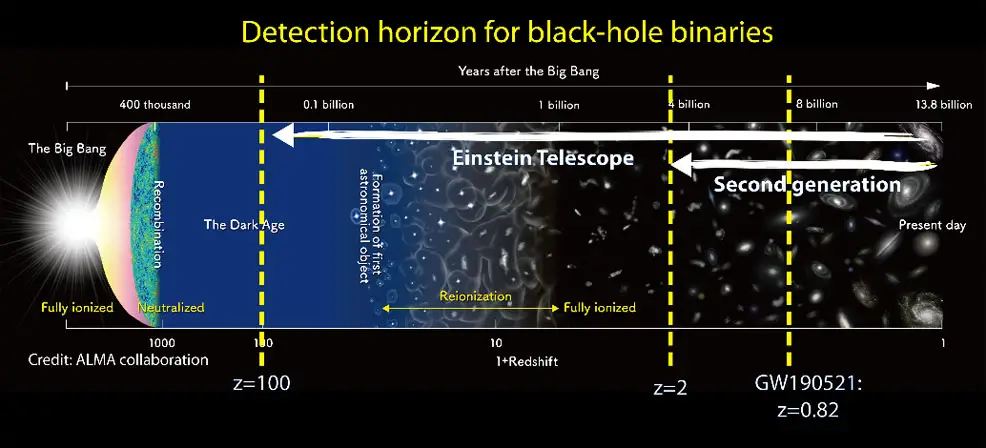
Credit: NAOJ/ET
By exploiting the ET's extreme sensitivity and frequency band, the entire population of stellar and intermediate mass black holes is accessible over the complete history of the Universe, helping scientists to understand their origin (stellar versus primordial), evolution, and demography.
The facility can detect up to a million gravitational waves each year, from binary sources distributed throughout the entire Universe. It probes the physics near black hole horizons (from tests of general relativity to quantum gravity) and reveals new insights into the nature of dark matter (such as primordial black holes, axion clouds, and dark matter accreting on compact objects). It also studies dark energy and possible modifications of general relativity at cosmological scales.
In addition to black holes, the ET performs detailed observations of neutron stars, the second densest bodies in the Universe after black holes. By studying the inspiral phase of these city-sized objects (the collapsed cores of supergiant stars) and the onset of tidal effects with high signal-to-noise ratio, astronomers gain an unprecedented insight into their interior structure. The fundamental properties of matter can also be investigated in a completely unexplored regime, such as quantum chromodynamics at ultra-high densities and possible exotic states of matter.
Costing €2bn ($2.4bn), the ET is a long-term project that begins operations in 2035* and has an expected lifetime of 50 years.* Several other next-generation observatories have been developed in recent years to study gravitational wave sources – including Athena, the E-ELT, and the Square Kilometre Array. Alongside the Einstein Telescope, these reveal major new insights into the history and nature of the Universe.
2035-2075
The Very Large Hadron Collider is operational
By smashing particles together in high-energy collisions, it is possible to recreate the conditions in the earliest moments of the universe. The higher the energy, the further back in time researchers can simulate, and the more likely it is that exotic interactions will be observed.
The Large Hadron Collider (LHC) was built by the European Organisation for Nuclear Research (CERN) from 1998 until 2008. Described as "one of the great engineering milestones of mankind", it allowed physicists to test the predictions of different theories of particle physics and high-energy physics – and most importantly, to prove or disprove the existence of the long-theorised Higgs Boson, as well as the large family of new particles predicted by supersymmetric theories.
The Higgs was confirmed by data from the LHC in 2013, and in subsequent decades the LHC would continue to address many unsolved questions, improving knowledge of physical laws. An upgrade was completed in 2015, doubling its energy from 3.5 to 7 tera-electronvolts (7 TeV) per beam. A further performance boost in the 2020s increased the luminosity of the machine by a factor of 10 – providing a better chance to see rare processes and improving statistically marginal measurements.
The Very Large Hadron Collider (VLHC) is the successor to the Large Hadron Collider (LHC).* The detailed design and location choice were finalised in the mid-2020s, with construction taking a decade after that. With a tunnel measuring 60 miles (100 km), the VLHC is by far the largest particle accelerator ever built, dwarfing the LHC. Reaching from the Jura mountains in the west, to the Alps in the east, its diameter is so huge that it requires excavation under Lake Geneva. Its collision energy is over 50 tera-electronvolts (50 TeV) per beam, more than seven times that of its predecessor.*
The VLHC leads to a revolution in particle physics – vastly improving our knowledge of dark matter, dark energy, string theory and supersymmetry (the latter is a theory that suggests a second, "superpartner" may be coupled to each and every Higgs boson). New information is gleaned on the structure and nature of extra dimensions and how these influence the universe, giving credence to theories beyond the Standard Model.*
Longer term, the VLHC helps in the development of picotechnology enabling new applications at scales that are orders of magnitude smaller than nanotechnology.* Particle accelerators continue to grow in size and power, eventually becoming too large for Earth to support them and requiring space-based locations. By the middle of the 4th millennium, the very earliest moment of the Big Bang can be simulated, demonstrating a state known as the Grand Unification Energy, in which fundamental forces are united into a single force.*
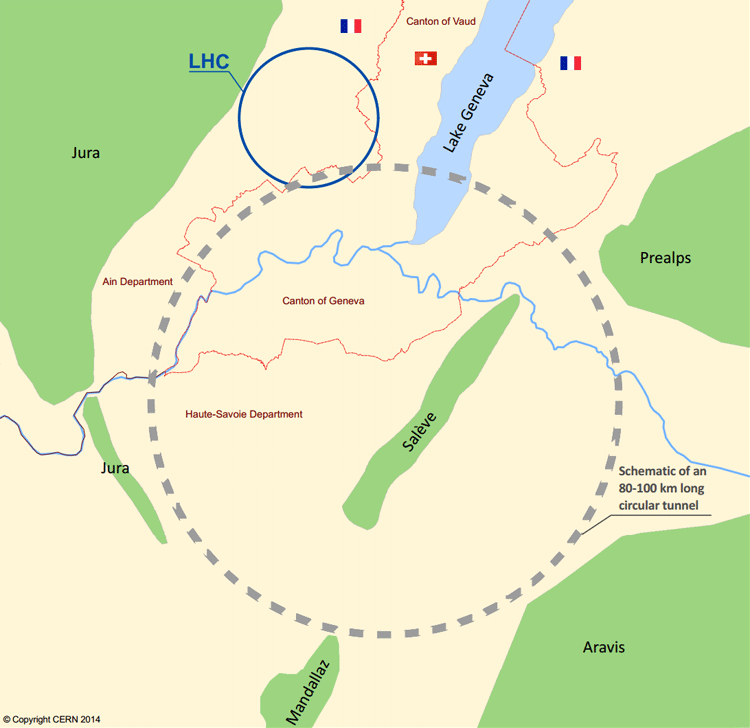
Map of the Very Large Hadron Collider (VLHC) and its location compared to the Large Hadron Collider (LHC). Credit: CERN
2035-2050
The next ESA Large-class missions
During this period, the European Space Agency (ESA) deploys the next trio of "Large"-class missions, following the earlier ATHENA X-ray observatory (2028), Jupiter Icy Moons Explorer (2031), and Laser Interferometer Space Antenna (2034).
Having selected these previous missions for development, ESA began turning its attention to longer-term technologies and in 2021 announced plans for a series of even more ambitious telescopes and exploratory spacecraft.*
For its 2035-2050 timeframe, the agency proposed a next-generation probe for studying the moon of a gas giant. With the exception of Cassini–Huygens (2005), previous missions to these planets had all involved either flybys or orbiters. This new mission, however, would include an in-situ unit – such as a lander or drone – which ESA saw as the next logical step in the gradual exploration of the Solar System.
With Europa being extensively studied by the Jupiter Icy Moons Explorer and Europa Clipper (launched by ESA and NASA, respectively), this moon presented an intriguing option for follow-up science. Indeed, these earlier probes had included the determination of candidate landing sites in their science objectives. A direct investigation of the surface environment might reveal new clues about Europa's internal geological processes and even potential evidence of life. Researchers had concluded that such a probe would need to drill at least 30 cm (12") below the surface to find any biosignatures because of Jupiter's intense radiation.*
For the second of these Large-class missions, ESA proposed a major new space telescope for better studying the hidden regions of the Milky Way (such as the galactic core, for example, and other areas obscured by high densities of stars, dust, and gas clouds). The new observatory would also enable "characterisation of temperate exoplanets in the mid-infrared, through a first spectrum of direct thermal emission from exoplanet atmospheres to better understand if they harbour truly habitable surface conditions". This would be even more powerful and sensitive than CHEOPS (2019), PLATO (2027) and ARIEL (2029).
The third in this trio would be a new gravitational wave observatory with even higher precision than LISA, revealing insights into the early Universe, the cosmic microwave background, and the very first cosmic structures.
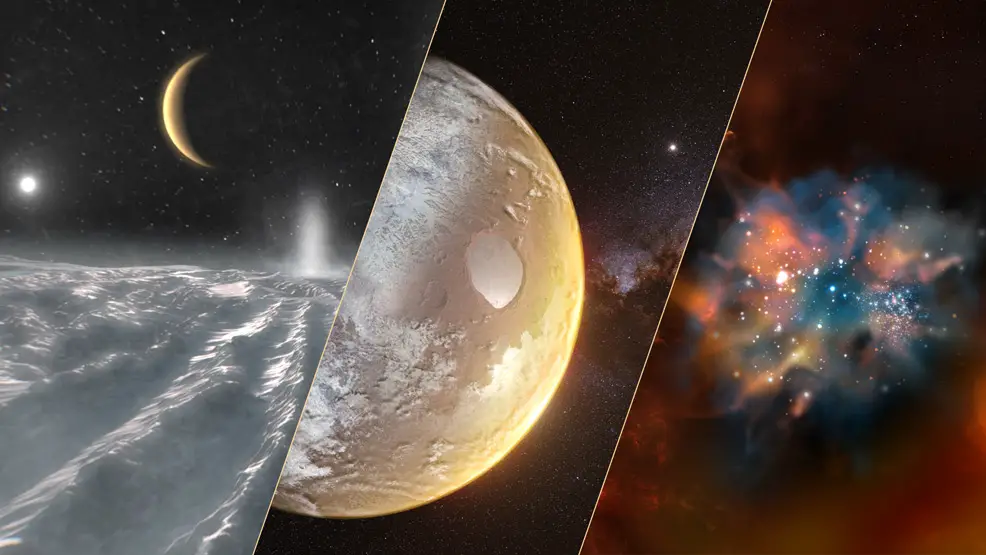
Credit: ESA/Science Office
2035-2045
The first definitive evidence of life beyond Earth
During this period, the number of confirmed exoplanets (i.e. planets around stars beyond our Solar System) begins to reach into the millions. The first exoplanet was announced in 1988 and a total of 50 had been catalogued by the year 2000. The rate of discovery began to accelerate dramatically following the launch of the Kepler Space Telescope in 2009, which uncovered thousands of new worlds, including 20 of two Earth sizes or less and in habitable zones. These were in addition to those found by ground-based observatories.
Many more planet-hunting missions would follow in the years and decades ahead. Each new generation of telescopes brought orders of magnitude improvements in sensitivity, resolution and computational abilities. Most of the earliest discoveries had been so-called "hot Jupiters" – gas giants in extremely close proximity to their parent star. In subsequent decades, however, much smaller candidates were capable of being identified and seen at greater distances in their systems. Eventually it was possible to determine the atmospheric compositions and even weather patterns on these unimaginably distant worlds, 10 billion times dimmer than the stars they orbited. By 2040, optics were so powerful that continent-sized features on terrestrial exoplanets were being directly imaged and mapped.*
Not only were these highly detailed scans emerging, vast numbers of them were being generated. Like many areas of technology, space observatories were advancing exponentially in terms of raw data. Moreover, their results were increasingly interpreted, not by humans, but by AI software algorithms – using new and ever more sophisticated methods to recognise patterns, avoid the "false positives" and spot the proverbial needle in the haystack.
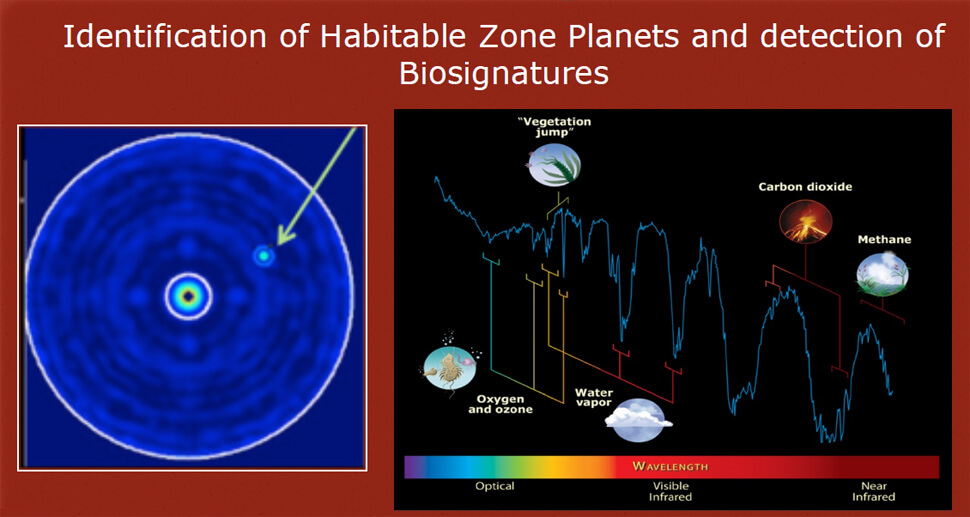
Some of the criteria for evaluating candidate planetary biosignatures included the presence of liquid water, oxygen, complex organic molecules, the ratio of certain chemicals like hydrogen and methane, and changes in the surface or atmosphere that could not be explained by abiotic (non-living) processes. Based on these various observations and datasets, researchers could form categories for gaseous, surface, or temporal biosignatures. For example, oxygen might be detected in sufficient amounts to be the waste product of photosynthetic organisms, while an exoplanet's colour might give away the presence of vegetation pigments. Meanwhile, carbon dioxide (CO2) levels that varied in a way resembling Earth's Keeling curve* might also suggest a carbon cycle influenced by life.*
For many years, candidate planets had been observed with only one, or at most a few, of these biosignatures. Although interesting from a scientific and observational point of view, they lacked the weight of evidence required to prove the existence of life. During the late 2030s and early 2040s, however, the sheer volume of data being acquired by telescopes, combined with revolutionary new ways of analysing the results, leads to a profound discovery. The first definitive evidence of life beyond Earth is uncovered during this period** with high levels of confidence based on a large and varied body of mutually supporting research. While some are cautiously sceptical initially, the observations are verified over and over again, to leave most people in little doubt that something incredibly special and unique has been found.
The discovery of life on another world has enormous cultural impact, and even religious implications for many people. It is one of the biggest and most significant historical milestones of the 21st century, if not the millennium, reshaping the zeitgeist in numerous ways. One of the most obvious benefits is an immediate boost in support for space exploration funding, which helps in part to justify the crewed missions to Mars and the Moon that are coinciding around this time.
Earlier studies had attempted to constrain the parameters of the famous Drake Equation and these suggested that primitive life was relatively common in our region of the galaxy.*** Indeed, many more planets with life are found in subsequent years. Later in the 21st century, however, the rate of exoplanet discovery begins to slow as most of the "low hanging fruit" in our galactic neighbourhood has been catalogued. The remaining candidates are to be found primarily in the core regions and beyond. These are much harder to observe, due to the combined brightness and density of so many stars in the galactic centre.
2035-2040
Establishment of the first permanent lunar base
By the latter half of this decade, government and private ventures have created a permanent human presence on the Moon.*** This marks a significant milestone during a period of accelerated development in space, which has seen major technological advancements and the increased commercialisation of space flight.
From the late 2000s onwards, NASA had begun to focus its attention on a return to the Moon. The agency initiated development of a huge new rocket known as the Space Launch System (SLS), the largest since the Apollo era, and a crewed spacecraft called Orion. Meanwhile, other national space agencies revealed their long-term plans to explore the Moon. This occurred in parallel with a major increase in commercial developments, such as the reusable Falcon and Starship rockets of SpaceX, as well as Blue Origin and others.
By the late 2020s, NASA and other agencies had constructed a station in lunar orbit. Subsequent missions included the deployment of a pressurised rover and surface habitat for excursions of up to 60 days.** A permanent base for long-term operations would follow during the mid-late 2030s – led by NASA but with contributions from the European Space Agency (ESA), Canadian Space Agency (CSA), and others, alongside commercial companies.
3D printing is making construction much cheaper and easier, with new tools, spare parts and even components for entire buildings forged using the lunar regolith as a material.* The location of this base – in the southern polar region – provides the advantages of both (a) permanently illuminated spots for near-continuous solar power, and (b) nearby access to permanently shadowed craters known to contain water and other volatiles.* The initial base is gradually expanded over subsequent decades to include new modules and even greenhouses for food production.
In addition to Western space agencies, China is preparing its own separate lunar base, in collaboration with Roscosmos. Its temporary robotic station will soon be upgraded for longer-term human operations from 2036 to 2045.
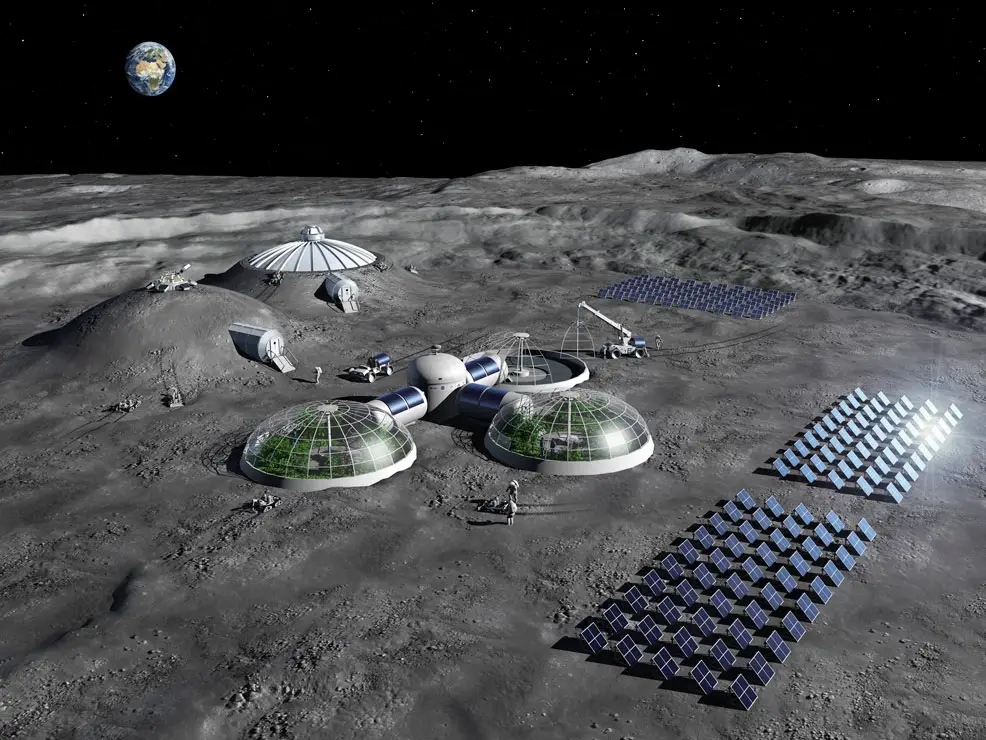
Future lunar base. Credit: ESA - P. Carril
Russia is a global food superpower
With a population approaching 9 billion,* the world now requires over 50% more food than it did at the beginning of the century.* At the same time, however, many regions are faced with peak phosphorous* and the effects of climate change which are beginning to accelerate.*
Africa's Sahel region – which transitions between the Sahara in the north and Sudanian Savannas in the south – is threatened by ever-worsening droughts and desertification. Indian and Southeast Asian crop yields, meanwhile, are being hit by increasingly violent and irregular monsoons. Pakistan is experiencing shortfalls of water due to receding snowcaps that are the main source of its rivers. Farms in South America, too, are being badly affected by ice loss. The once fertile plains of the American Midwest have been ravaged by dust-bowlification, while European nations in the Mediterranean are struggling with chronic drought.
A number of regions, however, are actually prospering at this time – these include Canada, Russia and Scandinavia. Melting permafrost and a retreating polar icecap have opened up vast tracts of land in the north. Russia is benefiting the most of all, now that seemingly endless stretches of arable land are appearing in Siberia. The country is taking full advantage of this, with areas being quickly bought up and divided for farms.
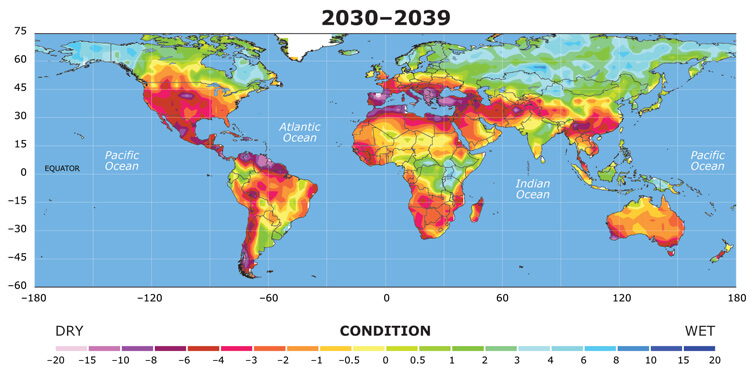
Credit: University Corporation for Atmospheric Research
In previous decades, genetic engineering was viewed with suspicion. In today's world of increasing food stress, nations are readily adopting this and other methods. Russia is no exception, with GM crops being widely used throughout the country. Vertical farms, too, are being deployed more rapidly in response to the warmer climate. Third-generation biofuels – such as genetically-engineered algae and halophyte plants – have also emerged. Aquaculture is being expanded all along Russia's northern coast, due to rapid warming and melting of the Arctic. Climate change is having another benefit here, since it is increasing the stock of herring, cod, capelin, and mackerel in the region, allowing the expansion of traditional wild-catch fishing. Changing currents and warming seas have resulted in a more north-eastward distribution of the fish stock located in the Barents Sea, at great benefit to the Russian exclusive economic zone. With the Barents Sea largely free of ice for many months,* production of cod alone has jumped by over 50%.*
Besides food, Russia is now also secure in terms of fresh water. With much of Brazil affected by chronic droughts, Russia along with Canada holds an increasingly large percentage of the world's available fresh water. Now that it is able to support itself, Russian food is in great demand, especially in Europe and Central Asia. Russia's influence on the world stage grows considerably during the 2030s.*
In light of the unfolding crisis in Europe, this constitutes a significant shift in power and resources, which inevitably results in friction with the other superpowers. One side effect of this, however, is the increasing flow of immigrants and refugees attracted by Russia's new-found abundance and wealth. Many are fleeing resource conflicts throughout Eurasia. Due to its sheer size, it is virtually impossible for Russia to fully close its borders. This is a particular issue with those fleeing the drought-stricken Tibetan Plateau of Western China.
As a result of all this, Russia's population has begun to stabilise, having recently undergone a decline. This trend is due to both domestic food security and the growing numbers of immigrants fleeing disasters at lower latitudes.
The RAF Typhoon is phased out and replaced by the Tempest
In 2035, a next-generation aircraft known as the Tempest enters service in Britain's Royal Air Force (RAF).* By 2040, it has superseded the aging Typhoon as the latter is phased out completely. The new fighter jet is developed and built by companies specialising in four key technology areas: advanced combat air systems and integration (BAE Systems); advanced power and propulsion systems (Rolls-Royce); advanced sensors, electronics and avionics (Leonardo) and advanced weapon systems (MBDA).
Capable of being used either with pilots, or as a drone, the Tempest includes "swarming" technology that uses AI and machine learning to hit its targets, combined with directed energy weapons (DEW) firing concentrated bursts of laser, microwave or particle beam energy to inflict damage.* It is the first British-designed jet to carry such weapons.* The outline and shape of the aircraft makes it difficult or impossible for enemies to detect by radar. It also features a "virtual" cockpit with VR/AR options, distributed multi-spectral sensors, resistance to cyberattacks, a flexible payload configuration and automated support/maintenance on the ground.
Click to enlarge
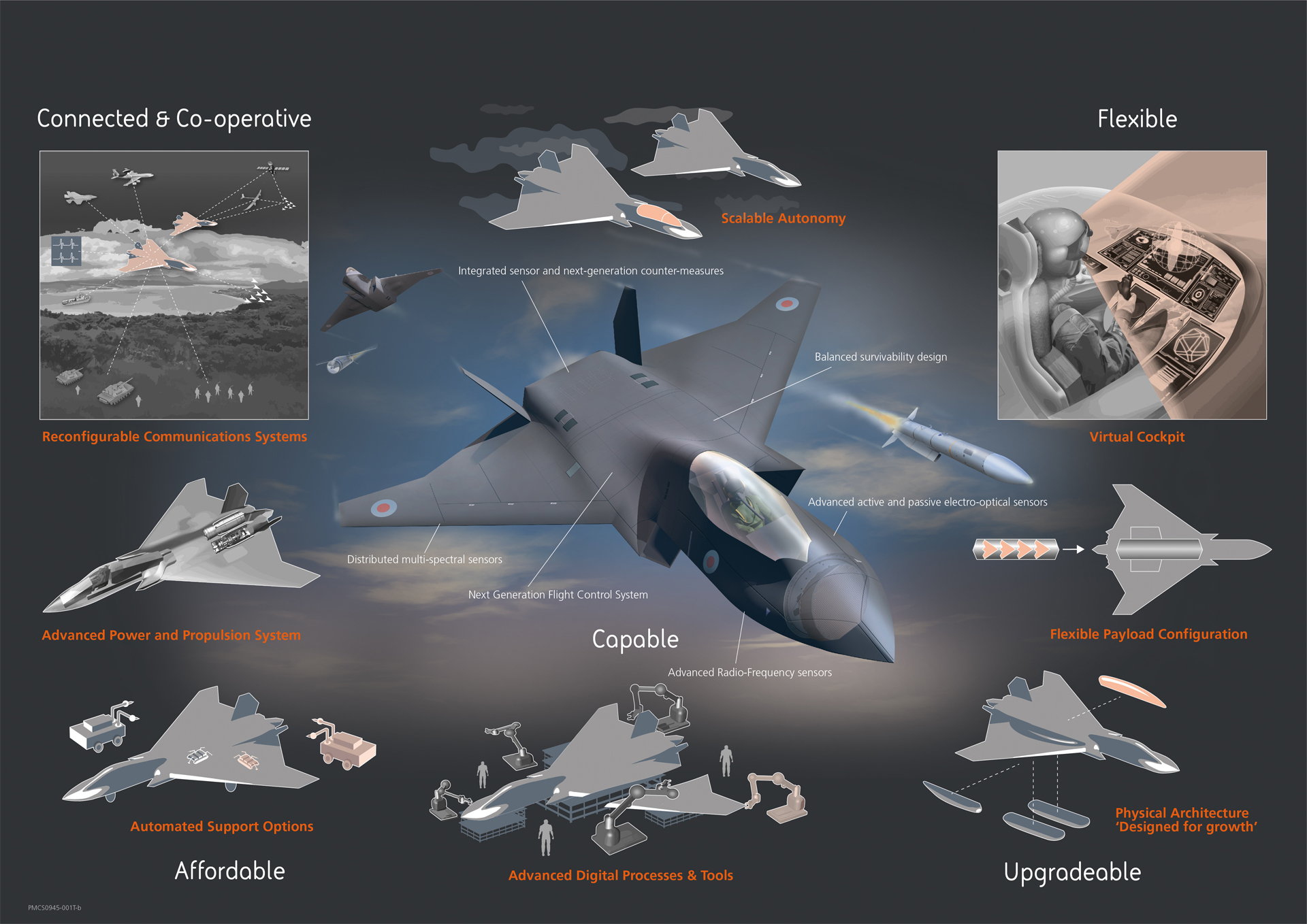
RAF Tempest, entering service in 2035. © Copyright BAE Systems
2035
Millennials are enjoying an inheritance boom
In earlier decades, the Baby Boomers (defined as those born between 1946 and 1964) were vilified by younger generations. In the post-War period they had inherited a host of societal benefits – such as lower education costs, cheaper healthcare, affordable homes, wage increases that matched productivity gains and so on. During the late 20th century, however, as the Boomers became the dominant part of the electorate, their voting patterns supported and gave rise to the neoliberal economics of Reagan, Thatcher, et al. Policies introduced by these and subsequent governments began to strip away and reverse much of what the Boomers had once enjoyed, passing the costs on to Generation X and the incoming Millennials.*
Following the economic crash of 2008 and ongoing stagnation across much of the West, it became clear that these younger generations would be faced with enormous debts, reduced social mobility, an environmental crisis and other problems. The very real prospect of being saddled with lower incomes and poorer living standards than their parents led Millennials, in particular, to accuse the Boomers of a selfish individualism and short-termism.
However, the Boomers would not be around forever. By 2020, their influence was diminishing* as many began to enter their final years. In addition to waning electoral power, the Boomers were passing on record sums of wealth to their offspring. In some countries, inheritance figures more than doubled between the 2010s and 2030s, reaching a peak by 2035.* This would help in offsetting the decline of living standards that the younger generations had experienced earlier. However, it leads to greater inequality within the Millennial cohort (not all of whom had parents with large sums of money or property), while for many it arrives too late to be used during their expensive child-rearing years that require a larger home.*

Lion populations in Africa have declined by half
Between 1990 and 2015, lion populations throughout many parts of Africa declined sharply. The reductions were especially alarming in West* and Central Africa. In two national parks, the Mole and Comoé – located in Ghana and the Ivory Coast, respectively – the animals were found to be extinct.
The main threats to lions were the spread of subsistence farming into woodlands, open plains and thick bush where lions hunted and bred. Being in close proximity to human settlements meant they were often killed in retaliation for attacks on livestock or humans. Alongside this, a thriving trade in bush meat was depleting the prey that lions depended on for survival. Trophy hunting was another problem, one notable example being the death of Cecil the lion, a major attraction at Hwange National Park in Zimbabwe, who was killed by a recreational big-game hunter.*
Having once been found in southeastern Europe and throughout much of the Middle East and India, lions had lost 85% of their historic range by 2015.* Conservation efforts were impeded due to most African nations lacking the money and resources that were needed – so inevitably, lion populations underwent further declines. By 2035, their numbers have halved again, with about 10,000 surviving mostly in southern parts of the continent, which has better wildlife protection measures and a lower density of humans.*

Distributed propulsion systems are revolutionising air travel
During this decade,** a number of national militaries and commercial aerospace firms are adopting turbo-electric distributed propulsion systems for their aircraft, replacing the more traditional wing-attached engines. This is a result of recent advances in materials science, cryogenic cooling systems, novel fuels, high fidelity computational fluid dynamics (CFD) and experimental tools. Along with hypersonic engines,* this technology is contributing to an ongoing revolution in aircraft design.
The basic concept of distributed propulsion is that the thrust-generating components of an aircraft are now fully integrated into the airframe of the vehicle. Instead of one or two large singular engines attached to the outside of the wing or fuselage, thrust is generated by a spanwise distribution of smaller engines or fans across the width of the wing. These are also more seamlessly merged into the body of the plane, offering major advantages in terms of aerodynamics and thrust. This is usually combined with a blended wing body design, creating a more streamlined, synergistic combination of all aircraft components.
Airflow around the plane is optimised – allowing for steeper climbs during take-off, greater degrees of control and manoeuvrability, higher bypass ratios and much greater fuel efficiency. In addition, the majority of these systems utilise electrical propulsion.* Advances in energy storage, as well as a new generation of ultra-lightweight superconductors, have finally paved the way for large-scale production of electric aircraft. These have the benefits of lighter weight, less maintenance, a noise reduction of up to 70 decibels and lower carbon footprints. Construction of these planes is also considerably cheaper in many cases.*
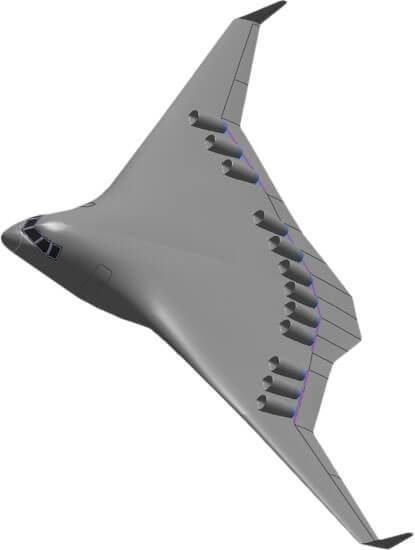
Robots are dominating the battlefield
Highly mobile, autonomous fighting machines are appearing on the battlefield now. Guided by AI, they can aim with inhuman precision* and come equipped with powerful sensors, GPS and thermal vision. They can be deployed for weeks or months at a time if necessary, without need for rest or maintenance. They have other advantages too – such as a complete lack of remorse or fear; no need for training or retirement payments or other such costs. However, debates continue to rage over the morality and ethics of these weapons systems.
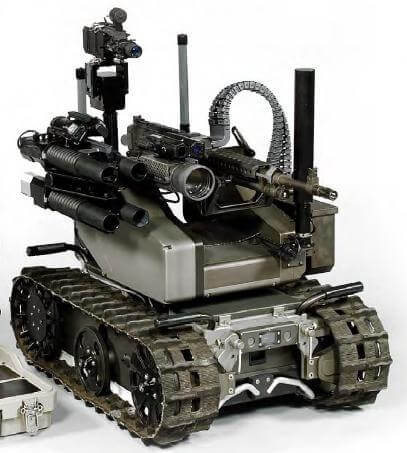
Credit: Qinetiq
Completion of the Hudson Tunnel Project
A major bottleneck in the United States rail network is removed in 2035,* with completion of the Hudson Tunnel Project, part of the wider Gateway Program to modernise rail infrastructure along the Northeast Corridor between New Jersey and New York City. This corridor, running from Boston to Washington, D.C., is the busiest rail route in North America. Two new rail tunnels beneath the Hudson River enter service this year, doubling the number of mainline rail tracks between New Jersey and New York from two to four.
The original North River tunnels, completed in 1910 by the Pennsylvania Railroad Company, had operated at or near full capacity for decades. Carrying more than 200,000 passengers daily, they are a crucial link in the Northeast Corridor, which handles around 820,000 passenger trips per day overall. The line serves an economic region responsible for roughly one-fifth of total U.S. economic output. The tunnels were severely damaged by flooding during Hurricane Sandy in 2012, raising fears that a prolonged closure could cripple transport across the region. Economic modelling suggested that closing one of the existing tunnel tubes for repairs without a replacement could cost the U.S. economy roughly $100 million per day in lost productivity.
Construction of the Hudson Tunnel Project began in 2023 following years of political negotiations and funding delays. The $16 billion undertaking is the largest federally funded mass transit project in U.S. history and forms the central component of the Gateway Program, a broader $40 billion effort to modernise rail infrastructure between New Jersey and New York. Multiple construction sites operate on both sides of the river, including one section known as the Manhattan Tunnel Project, which creates a pair of 9-metre-wide tunnel sections beneath Manhattan's west side that connect the river crossing to Penn Station in Midtown. Two large tunnel-boring machines excavate parallel tubes beneath the Hudson River during construction.
With both new tunnels now operational, the crossing gains greater flexibility and redundancy in rail operations, allowing trains to run more frequently and with improved reliability between New York and New Jersey. During the subsequent rehabilitation phase, at least three of the four tunnel tubes remain operational at all times while the aging 1910 tunnels are closed one at a time for long-planned upgrades. This final stage, concluding in 2038, ensures that the region's most important rail link remains viable for another century. Analysts estimate that the wider Gateway Program will generate $445 billion in economic benefits by 2060 through improved reliability, reduced delays, and increased rail capacity along the Northeast Corridor.*
Norway's underwater suspended tunnels are completed
A major feat of engineering is completed in Norway this year as the final in a series of submerged floating tunnels (SFT) is opened. This novel concept consists of parallel tubes measuring 1,200 m (4,000 ft) in length, each carrying two lanes of traffic across the Sognefjord – the largest and best known fjord in Norway and second longest in the world. Supported by their own buoyancy, the structures exploit the physics of hydrostatic thrust, or the Archimedes' principle. They are suspended at depths of 65 to 100 ft, below any possible contact with ships and withstanding any tidal movements or adverse weather effects.
The initial phase of this project became the first underwater suspended tunnel to be operational anywhere in the world.* In subsequent years, it was joined by several others in nearby regions, together costing a total of $25 billion. This project is designed to ease the congestion of local ferry services and to slash travel times between the north and south of the country. For example, a car journey of 21 hours from Kristiansand to Trondheim is reduced by more than half. Most of the vehicles on the nation's roads are self-driving by now, which helps to further improve road travel times. Being underwater and out of sight (as opposed to highly visible bridges over land) also means the scenic landscapes of each region can be preserved.
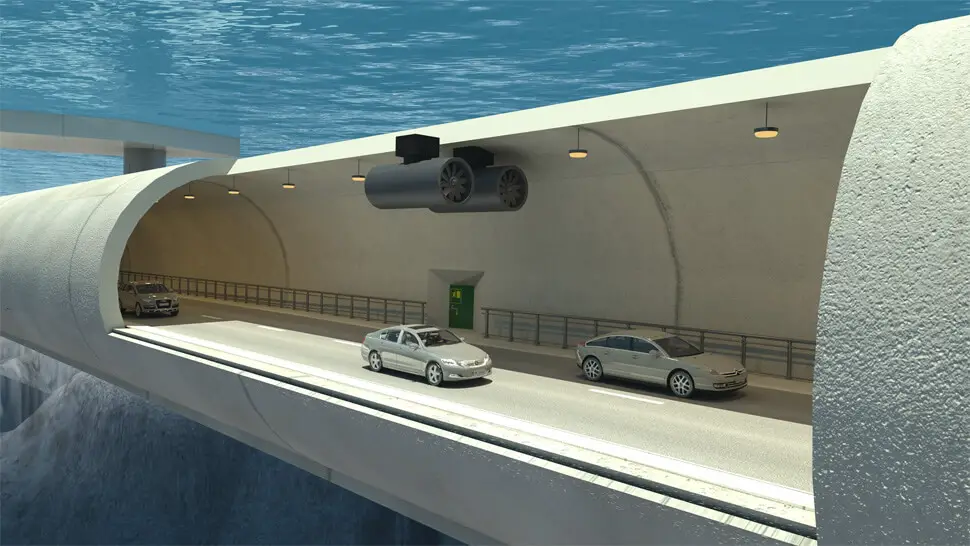
Credit: The Norwegian Public Roads Administration
The global airline fleet has doubled
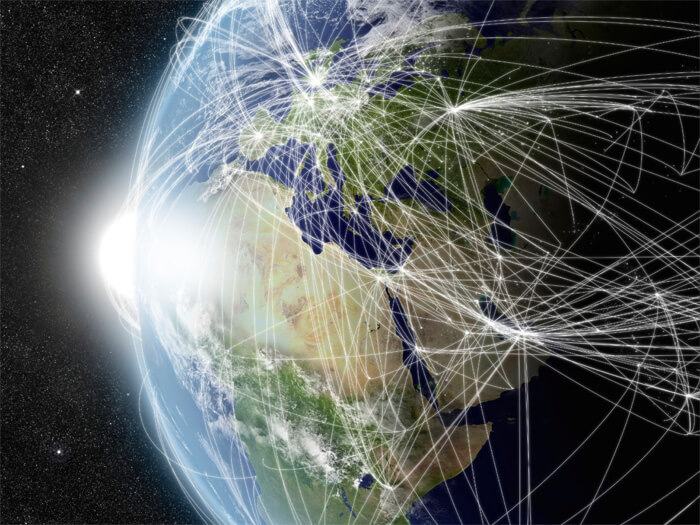
By 2035, the number of commercial airplanes in service has doubled compared to 2015 – going from 22,500 to over 45,000 with a total worldwide value of nearly $6 trillion.* Most of this growth has come from smaller, single-aisle planes, stimulating demand for low-cost carriers and providing replacements for older, less-efficient planes. Perhaps unsurprisingly, airlines in the Asia Pacific region comprise the largest share of new orders (38%), followed by North America (21%), Europe (19%) and the Middle East (8%).
The customer base for airplanes has become increasingly diverse and globalised, thanks to emerging markets and new business models. In 1995, airlines in Europe and North America represented 64% of all traffic. By 2035, that share has fallen to 37%, with Asia Pacific and Middle Eastern airlines becoming far more prominent in global aviation.* New supersonic planes, utilising "quiet" engine technology to dampen sonic booms, have expanded the available long-haul routes, reducing journey times and making the world feel smaller and more interconnected than ever before.
However, all regions still face the challenges of fuel-price volatility, emission controls, and ever-increasing airport and airspace congestion. Biofuels and other clean technologies are used for many more planes than in earlier decades. Even solar power is now being adopted for short to medium haul flights* alongside new hydrogen planes,* although these still represent a minority of aircraft. With air traffic growth still outpacing efforts to reduce pollution, the aviation sector has become an increasingly significant contributor to global greenhouse gas emissions.
Air accident fatalities have been largely eliminated
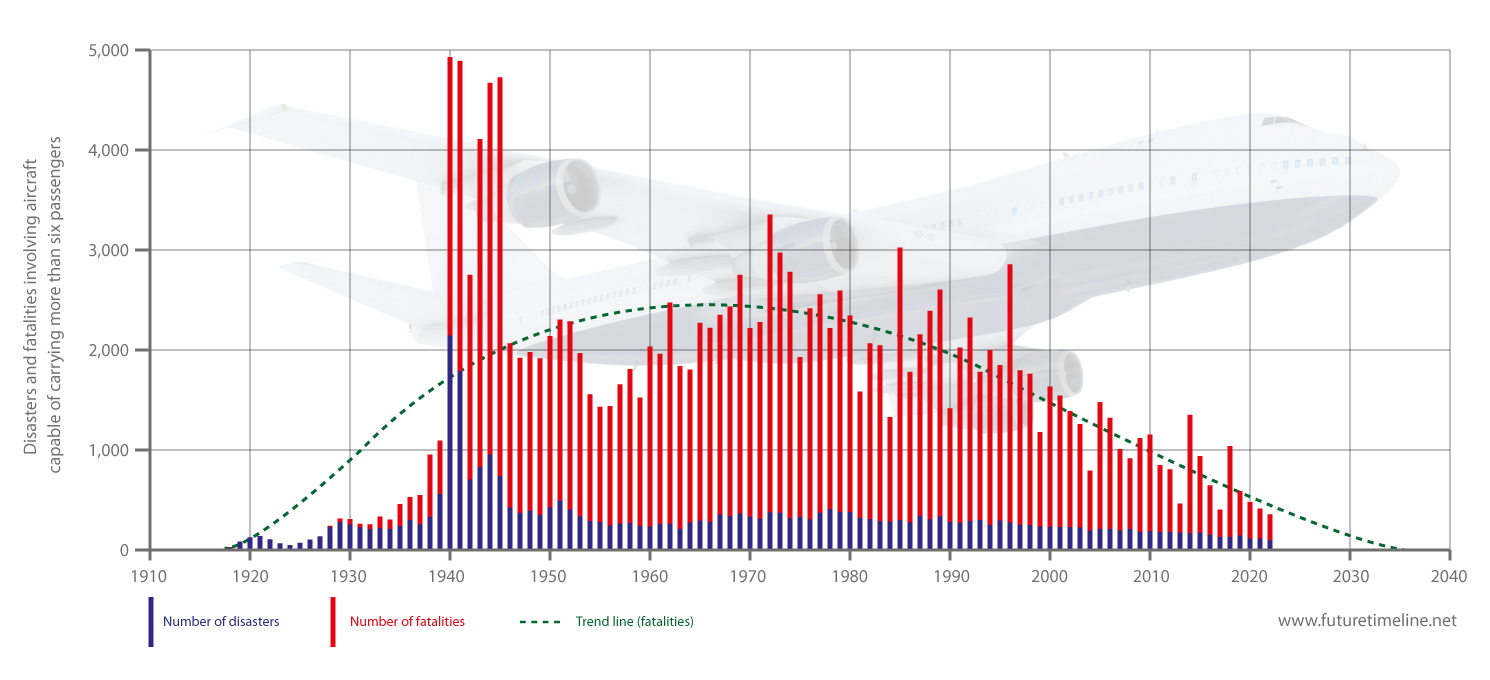
In addition to its massive growth in passenger numbers, the aviation sector has undergone substantial improvements in safety. All of the major airlines are now close to perfecting their flight records, with accidents and fatalities approaching zero.
Excluding World War II, passenger aviation deaths peaked during the 1970s. In subsequent decades, following a number of major incidents, new systems and procedures helped to reduce the frequency of crashes. These included better pilot training, more modern aircraft designs, improvements in weather forecasting and communication systems, stricter maintenance checks, and enhanced runway safety.
The early 21st century saw further progress in these areas, along with greater levels of computer input. Weather conditions, for example, are capable of being simulated with extreme accuracy by the mid-2030s.* The very latest aircraft feature new materials and sensors built with nanometre precision and embedded throughout the wings and body, overcoming the structural failure issues that affected earlier generations. Many planes now operate on purely electric systems, without the need for dangerous and combustible liquid fuels. Increased security measures and improved baggage screening technology, already implemented in the wake of 9/11 and other terrorism, have been additional factors in this downward trend of aviation incidents.
Consequently, air crashes involving passenger deaths in commercial jets are practically unheard of by 2035.* The age-old phobia of flying will soon become a thing of the past. With safety issues having been largely taken care of, airlines are now planning major improvements in comfort, to be implemented in the next generation of planes unveiled by 2050.*
Click to enlarge
Robotic-assisted surgery is routine across the NHS
During the early 21st century, robotics began to expand more widely across commercial and industrial sectors. Rapid advances in computing power, sensors, artificial intelligence and precision engineering reduced costs while improving performance. Factories, warehouses and laboratories adopted robotic systems to carry out complex or repetitive tasks with speed and consistency. As the technology matured, engineers and clinicians increasingly explored its potential in the realm of healthcare, particularly in surgery where extreme accuracy and stability could offer major advantages.
During the late 2020s, robotic surgery gained momentum in many countries. The UK's National Health Service (NHS) invested heavily in new surgical platforms, training programmes and operating theatre upgrades. Hospitals across the country introduced robotic arm systems capable of extremely precise movements. These allowed surgeons fine control of miniature instruments while viewing high-resolution, magnified images of the operating field. Early deployments focused on procedures such as prostate, colorectal, gynaecological and urological surgery, where the technology helped reduce blood loss, shorten recovery times and improve surgical accuracy.
By 2035, robotic-assisted surgery forms a central pillar of NHS healthcare. In England alone, hospitals now perform around 500,000 robotic operations annually,* compared with 70,000 a decade earlier – a more than seven-fold increase. Surgeons use robotic systems in the vast majority of minimally invasive procedures, with around 90% of keyhole operations involving this technology. Doctors control the machines from consoles that translate hand movements into highly stable, tremor-free actions by robotic instruments enabling delicate procedures in confined areas of the body. Patients benefit from smaller incisions, fewer complications and significantly faster recovery times, easing pressure on hospital beds and improving outcomes across many specialties.
Remote surgery, also known as telesurgery and assisted by robotic systems, is now routine in many areas of healthcare. Surgeons in major medical centres can operate on patients many hundreds of kilometres away, linking specialist expertise to smaller hospitals that previously lacked advanced surgical capabilities. Demonstrations during the 2020s showed the potential of this approach, including a milestone operation in which doctors in London remotely controlled a robotic procedure on a patient in Gibraltar.* By 2035, secure high-speed fibre networks and ultra-low-latency communications allow the NHS to perform large numbers of remote procedures safely and routinely. This capability is proving particularly valuable in rural areas and smaller regional hospitals, where local teams prepare patients while specialist surgeons control the operation from dedicated surgical hubs.
Many other countries have followed a similar trajectory. By the mid-2030s, surgical robotics has grown into a $35 billion global industry, with healthcare systems across Europe, North America, East Asia and parts of the Middle East expanding their fleets of surgical robots and integrating them into operating theatres as standard equipment.* Manufacturers have developed more compact and affordable systems, allowing smaller hospitals and clinics to adopt the technology. International telesurgery networks have formed, enabling collaboration and training among surgeons while spreading expertise to underserved regions.
These developments are merely a glimpse of what is to come. In the decades ahead, increasingly sophisticated robots will perform a growing share of tasks with minimal human oversight – ultimately leading to full autonomy.

« 2034 |
⇡ Back to top ⇡ |
2036 » |
If you enjoy our content, please consider sharing it:
References
1 Introduction, The ET (Einstein Telescope) project Web Site:
http://www.et-gw.eu/
Accessed 4th September 2021.
2 The Future, European Gravitational Observatory:
https://www.ego-gw.it/future/
Accessed 4th September 2021.
3 "By the time it reports back, in about five years, the next set of results from the LHC should help settle on a conceptual design for a machine that might be built anywhere. From there another five years to complete a detailed design, choose a site, and secure international approval and financing. And with 10 years to build and install the equipment, it might just be feasible to have a new machine ready when the LHC retires in 2035. ... the tunnel that now houses the LHC, and previously housed LEP was first discussed 40 years ago, and will still be in use in 20. Likewise, the future collider will probably go through many incarnations, and still be running in 60 years."
Cern considers building huge physics machine, BBC:
http://www.bbc.co.uk/news/science-environment-26250716
Accessed
22nd February 2014.
4 Searching for supersymmetry: Work begins on Large Hadron Collider's 60-mile-long successor, ExtremeTech:
http://www.extremetech.com/extreme/176969-searching-for-supersymmetry-work-begins-on-large-hadron-colliders-60-mile-long-successor
Accessed
22nd February 2014.
5 First experimental signs of a "New Physics" beyond the Standard Model, Future Timeline Blog:
https://www.futuretimeline.net/blog/2013/08/6.htm
Accessed
22nd February 2014.
6 See 2072.
7 See 3500 AD.
8 Voyage 2050 sets sail: ESA chooses future science mission themes, ESA:
https://www.esa.int/Science_Exploration/Space_Science/Voyage_2050
Accessed 26th July 2021.
9 A lander on Jupiter's icy moon Europa may have to dig at least 1 foot down to find signs of life, Space.com:
https://www.space.com/jupiter-moon-europa-alien-life-dig-deep
Accessed 26th July 2021.
10 What else can you do with a Big Dumb Booster?, Charlie's Diary:
http://www.antipope.org/charlie/blog-static/2016/09/what-else-can-you-do-with-a-bi.html
Accessed 23rd December 2016.
11 Keeling Curve, Wikipedia:
https://en.wikipedia.org/wiki/Keeling_Curve
Accessed 23rd December 2016.
12 NSN Webinar: Exploring Exoplanet Biosignatures, YouTube:
https://www.youtube.com/watch?v=yxtRr9hL99M
Accessed 23rd December 2016.
13 NASA chief scientist Ellen Stofan: "I think we're going to have definitive evidence within 20 to 30 years."
Signs of Alien Life Will Be Found by 2025, NASA's Chief Scientist Predicts, Yahoo! News:
https://uk.news.yahoo.com/signs-alien-life-found-2025-nasas-chief-scientist-212655192.html
Accessed 23rd December 2016.
14 "Since imaging allows us to directly study the light coming through the planet's atmosphere, it also uniquely allows us to perform spectral analyses of exoplanet spectra to study their atmospheric compositions. An exciting future possibility of direct imaging is the ability to search for atmospheric chemical biosignatures of life on alien planets. Currently there are several concepts for a large space-based telescope whose primary science goal will be to directly image Earth-like planets and to study their signs for atmospheric biosignatures. With continued support, it may be possible to perform a truly scientific search for life on other planets by 2040."
NASA Planet Discovery AMA, Reddit:
https://www.reddit.com/r/science/comments/4rq4i4/science_ama_series_we_are_scientists_working_in/
Accessed 23rd December 2016.
15 How common is alien life in our galaxy?, Future Timeline Blog:
https://www.futuretimeline.net/blog/2014/12/7.htm
Accessed 23rd December 2016.
16 Two billion planets in our galaxy may be suitable for life, The Guardian:
https://www.theguardian.com/science/2013/nov/04/planets-galaxy-life-kepler
Accessed 23rd December 2016.
17 One percent of all exoplanets may be suitable for complex organisms, Future Timeline Blog:
https://www.futuretimeline.net/blog/2014/06/1-2.htm
Accessed 23rd December 2016.
18 "All of these factors – the available shelter, water, resources and potential for power — along with the Moon's relatively close proximity to Earth, are reasons why we may see the first lunar bases built before 2035."
New data about the Moon may help create lunar bases, NASA:
http://lunarscience.nasa.gov/articles/lunar-bases/
Accessed 8th September 2013.
19 "In January, Newt Gingrich's space ambitions were mocked by many experts as well as the public, particularly his vow that a moon colony would be established by the conclusion of his 'second term.' Musk isn't committing to a timeline nearly so ambitious; when pushed by Wright, he suggested that this could be a reality within the next 30 years."
Why Elon Musk Wants To Bring People to Mars—and Go There Himself, Slate:
http://www.slate.com/blogs/future_tense/2012/03/15/elon_musk_wants_spacex_to_help_establish_a_colony_on_mars_.html
Accessed 8th September 2013.
20 NASA picks SpaceX, Blue Origin to fly lunar rover and habitat to the Moon, Astronomy.com:
https://www.astronomy.com/space-exploration/nasa-picks-spacex-blue-origin-to-fly-lunar-rover-and-habitat-to-the-moon/
Accessed 8th September 2013.
21 See 2032-2033.
22 NASA Plans to Assign Missions for Two Future Artemis Cargo Landers, NASA:
https://www.nasa.gov/news-release/nasa-plans-to-assign-missions-for-two-future-artemis-cargo-landers/
Accessed 3rd December 2024.
23 Future astronauts could use Moon rock and 3D printers to make tools and equipment on site, Future Timeline Blog:
https://www.futuretimeline.net/blog/2012/12/1.htm
Accessed 8th September 2013.
24 NASA's Plan for Sustained Lunar Exploration and Development, NASA:
https://www.nasa.gov/sites/default/files/atoms/files/a_sustained_lunar_presence_nspc_report4220final.pdf
Accessed 6th March 2021.
25 Global population, Future Timeline:
https://www.futuretimeline.net/data-trends/1.htm
Accessed 15th November 2020.
26 World lacks enough food, fuel as population soars: U.N., Reuters:
http://www.reuters.com/article/2012/01/30/us-un-development-idUSTRE80T10520120130
Accessed 11th February 2012.
27 See 2033.
28 Climate change: Drought may threaten much of globe within decades, University Corporation for Atmospheric Research:
https://www2.ucar.edu/atmosnews/news/2904/climate-change-drought-may-threaten-much-globe-within-decades
Accessed 11th February 2012.
29 Ice-free Arctic Ocean Possible In 30 Years, Not 90 As Previously Estimated, Science Daily:
https://www.sciencedaily.com/releases/2009/04/090402143752.htm
Accessed 31st December 2017.
30 Impacts of climate change on commercial fish stocks in Norwegian waters, Elsevier:
http://www.akuastrateji.sumae.gov.tr/downloads/makale_en/Impacts_Climate.pdf
Accessed 11th February 2012.
31 20 predictions for the next 25 years, The Guardian:
http://www.guardian.co.uk/society/2011/jan/02/25-predictions-25-years
Accessed 11th February 2012.
32 UK unveils new Tempest fighter jet to replace Typhoon, The Guardian:
https://www.theguardian.com/uk-news/2018/jul/16/uk-tempest-fighter-jet-typhoon-farnborough-airshow
Accessed
17th July 2018.
33 Britain reveals combat air strategy alongside new Tempest fighter jet design, Defense News:
https://www.defensenews.com/digital-show-dailies/farnborough/2018/07/16/introducing-tempest-the-uks-next-gen-fighter/
Accessed
17th July 2018.
34 UK unveils new Tempest fighter jet model, BBC News:
https://www.bbc.co.uk/news/business-44848294
Accessed
17th July 2018.
35 How the baby boomers — not millennials — screwed America, Vox:
https://www.vox.com/2017/12/20/16772670/baby-boomers-millennials-congress-debt
Accessed
30th December 2017.
36 See 2020.
37 Millennials to secure 'inheritance boom', BBC News:
http://www.bbc.com/news/uk-42519073
Accessed
30th December 2017.
38 The million dollar be-question: inheritances, gifts, and their implications for generational living standards, The Resolution Foundation:
http://www.resolutionfoundation.org/publications/the-million-dollar-be-question-inheritances-gifts-and-their-implications-for-generational-living-standards/
Accessed
30th December 2017.
39 Lions are critically endangered in West Africa, FutureTimeline Blog:
https://www.futuretimeline.net/blog/2014/01/11-2.htm
Accessed
24th November 2016.
40 Killing of Cecil the lion, Wikipedia:
https://en.wikipedia.org/wiki/Killing_of_Cecil_the_lion
Accessed
24th November 2016.
41 Lions added to endangered species list, FutureTimeline Blog:
https://www.futuretimeline.net/blog/2015/12/27.htm
Accessed
24th November 2016.
42 "About 20,000 lions remain in all of Africa, according to estimates. The scientists projected that there was a 67 percent chance that the number of lions in Central and West Africa would drop by half within two decades."
Lion Population in Africa Likely to Fall by Half, Study Finds, The New York Times:
http://www.nytimes.com/2015/10/27/science/african-lion-population-is-dwindling-study-finds.html
Accessed
24th November 2016.
43 "This paper describes some early concepts of the distributed propulsion vehicles and the current turboelectric distributed propulsion (TeDP) vehicle concepts being studied under the NASA's Subsonic Fixed Wing (SFW) Project to drastically reduce aircraft- related fuel burn, emissions, and noise by the year 2030 to 2035."
See Distributed propulsion vehicles, NASA:
http://ntrs.nasa.gov/archive/nasa/casi.ntrs.nasa.gov/20100036222_2010039460.pdf
Accessed 14th August 2013.
44 "... appearing on the 25-year horizon."
See Cruise-Efficient, Low-Noise, Short-Takeoff-and-Landing Vehicle Studied for the Revolutionary System Concepts for Aeronautics Project, NASA:
http://www.grc.nasa.gov/WWW/RT/2005/PB/PBA-kim.html
Accessed 14th August 2013.
45 See 2033.
46 Development of a 3D Sizing Model for All-Superconducting Machines for Turbo-Electric Aircraft Propulsion, IEEE Xplore:
http://ieeexplore.ieee.org/xpl/login.jsp?reload=true&tp=&arnumber=6410380
Accessed 14th August 2013.
47 Superconducting Distributed propulsion – many small engines that are integrated with the airframe for radically different airplanes, Next Big Future:
https://www.nextbigfuture.com/2013/03/distributed-propulsion-many-small.html
Accessed 31st December 2017.
48 Coming to the Battlefield: Stone-Cold Robot Killers, Washington
Post:
http://www.washingtonpost.com/wp-dyn/content/article/2009/01/02/AR2009010202191_pf.html
49 The tunnel that could double NYC rail capacity is finally back under construction, Time Out:
https://www.timeout.com/newyork/news/the-tunnel-that-could-double-nyc-rail-capacity-is-finally-back-under-construction-030626
Accessed 14th March 2026.
50 The Economic Promise of the Gateway Program, RPA:
https://rpa.org/work/reports/economic-promise-gateway
Accessed 14th March 2026.
51 Norway to build world's first floating underwater traffic tunnels, inhabitat:
http://inhabitat.com/norway-to-build-worlds-first-floating-underwater-traffic-tunnels/
Accessed 28th November 2016.
52 Global airline fleet to double by 2035, FutureTimeline Blog:
https://www.futuretimeline.net/blog/2016/07/14.htm
Accessed 15th December 2016.
53 Current Market Outlook 2016-2035, Boeing:
http://www.boeing.com/resources/boeingdotcom/commercial/about-our-market/assets/downloads/cmo_print_2016_final_updated.pdf
Accessed 15th December 2016.
54 "I'm sure that within 10 years, we'll see electric airplanes transporting 50 passengers on short to medium haul flights."
See The first solar-powered aircraft to circumnavigate the Earth, Future Timeline:
https://www.futuretimeline.net/blog/2016/07/27.htm
Accessed 15th December 2016.
55 Airbus reveals new zero-emission concept aircraft, Airbus:
https://www.airbus.com/newsroom/press-releases/en/2020/09/airbus-reveals-new-zeroemission-concept-aircraft.html
Accessed 15th November 2020.
56 Supercomputers – future predictions, Future Timeline:
https://www.futuretimeline.net/data-trends/20-supercomputer-future-prediction.htm
Accessed 26th February 2023.
57 Data sources for the graph accompanying our prediction:
Aviation accidents and incidents > Statistics, Wikipedia:
https://en.wikipedia.org/wiki/Aviation_accidents_and_incidents#Statistics
Accidents rate per year, Bureau of Aircraft Accidents Archives:
http://www.baaa-acro.com/statistics/crashs-rate-per-year?page=0
Death rate per year, Bureau of Aircraft Accidents Archives:
http://www.baaa-acro.com/statistics/death-rate-per-year?page=0
Accessed 26th February 2023.
58 See 2050.
59 Millions to benefit from NHS robot drive, NHS England:
https://www.england.nhs.uk/2025/06/millions-to-benefit-from-nhs-robot-drive/
Accessed 13th March 2026.
60 Surgeon's op on patient 1,500 miles away a UK first, BBC News:
https://www.bbc.co.uk/news/articles/cq577v126g9o
Accessed 13th March 2026.
61 Surgical Robots Market to Reach USD 34.8 Billion by 2035, Driven by Multi-Arm Platforms, AI Imaging, and Hybrid OR Integration, openPR:
https://www.openpr.com/news/4228897/surgical-robots-market-to-reach-usd-34-8-billion-by-2035-driven
Accessed 13th March 2026.
 |
|||||||||||||||||||||||||||||||
|
Latest predictions |
Timeline » 21st century |
Blogs » AI & Robotics |
Features » |
About us
|
|||||||||||||||||||||||||||
|
|
|||||||||||||||||||||||||||||||


