
![[+]](https://www.futuretimeline.net/images/buttons/expand-symbol.gif)
|
|
|
|
|
|
2023
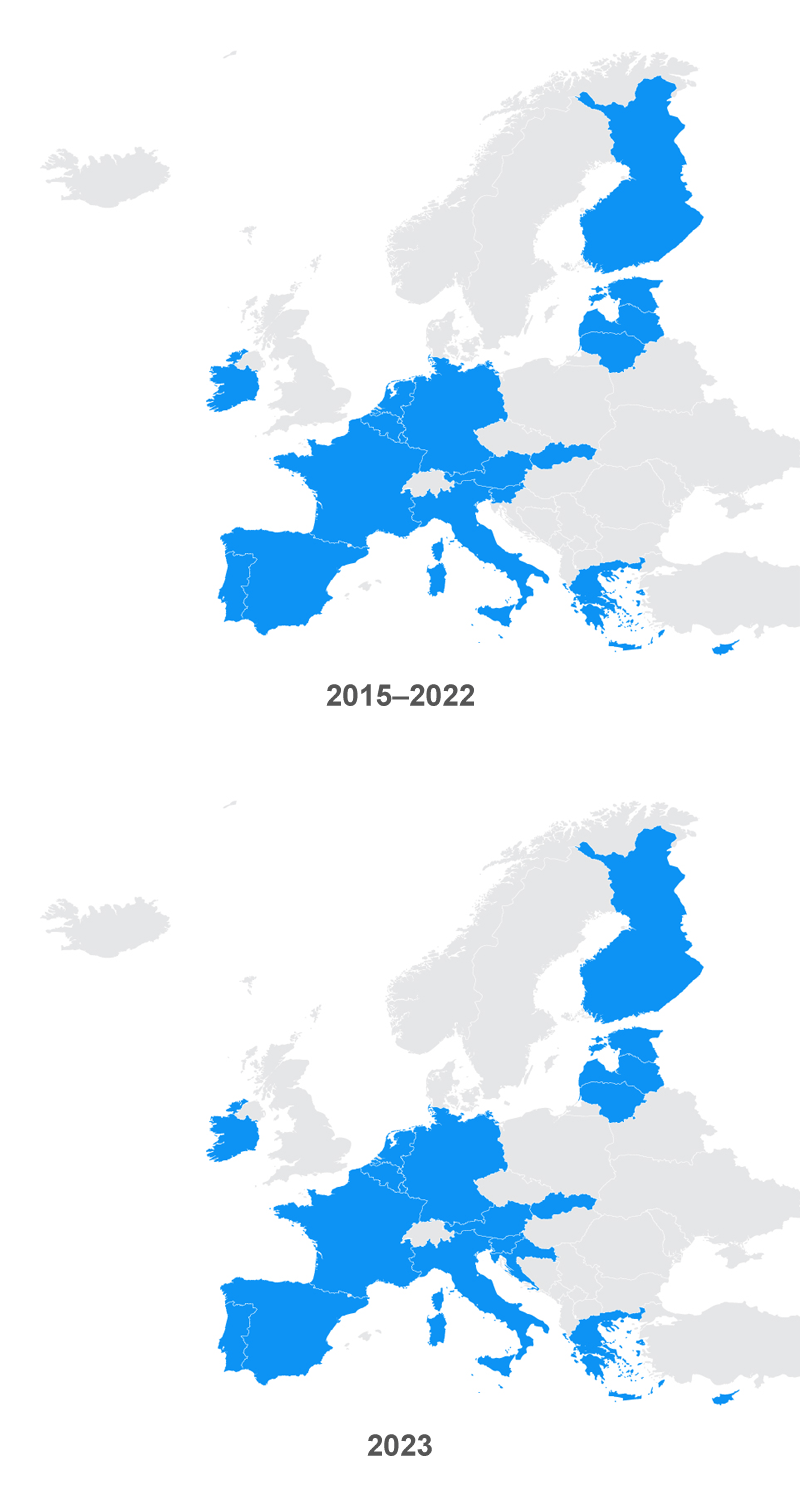
Croatia adopts the euro
On 1st January 2023, Croatia adopted the euro as its official currency,* becoming the 20th member state of the European Union (EU) to do so – and the first since Lithuania's accession in 2015.
Croatia had joined the EU in 2013. Like other nations before it, becoming part of the single currency required five "convergence criteria" to be met, in order to demonstrate economic stability. These criteria placed limits on inflation, government budget deficits, debt-to-GDP ratios, and interest rates, for example.
The Croatian National Bank had originally planned for euro adoption within two or three years of EU entry. However, the European sovereign debt crisis and Croatia's own contracting economy posed a challenge to its meeting of the convergence criteria, delaying its transition by several years.
As a precursor to full adoption of the euro, Croatia joined the EU's exchange rate mechanism (ERM II) in July 2020. Later that year, Prime Minister Plenković stated that Croatia intended to adopt the euro on 1st January 2023. The government then published its action plan. In September 2021, Croatia signed an official agreement with the European Commission and eurozone member states on practical steps for the minting of Croation euro coins.
Having met the convergence criteria, Croatia transitioned from the ERM II to the euro and phased out its national currency, the kuna. This new addition to the monetary union would be followed by Bulgaria, joining in 2025.
Jacinda Ardern resigns as Prime Minister of New Zealand
Following the resignation of Jacinda Ardern, who served as the nation's leader from 2017–2023, Chris Hipkins became the new Prime Minister of New Zealand on 25th January 2023. His premiership was faced almost immediately by the Auckland Anniversary Weekend floods and then further flooding from Cyclone Gabrielle. He led his party into the 2023 general election, with Labour losing to the National Party. He subsequently became Opposition leader on 27th November and was succeeded as Prime Minister by the centre-right Christopher Luxon.
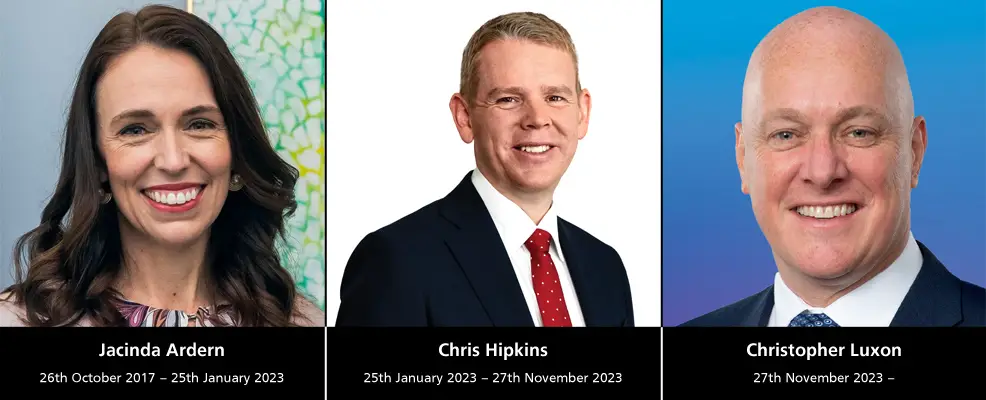
Credits: Newzild / New Zealand Labour Party / New Zealand National Party. All images CC BY-SA 4.0, via Wikimedia Commons
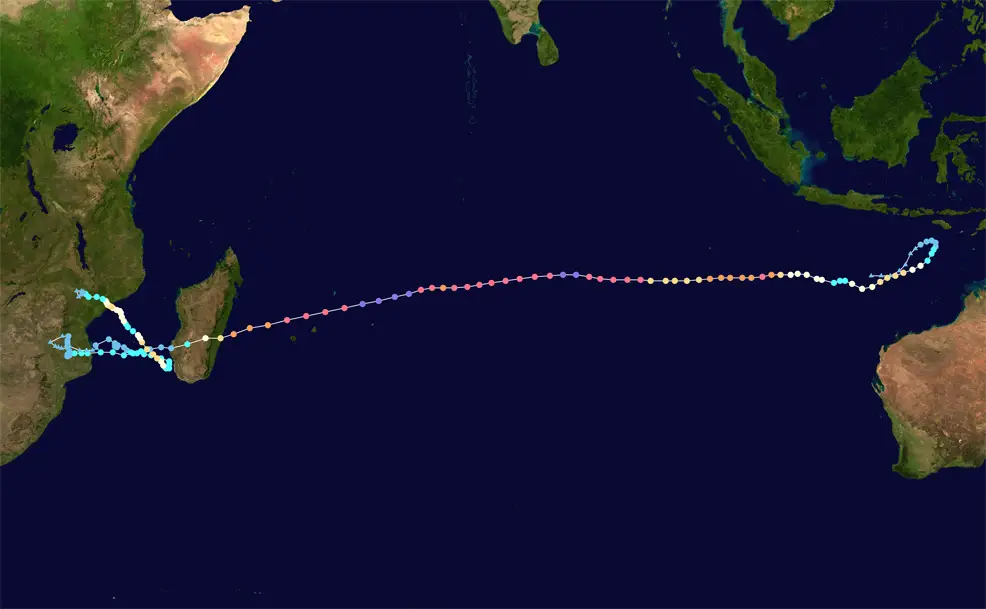
Cyclone Freddy breaks records for duration and energy
Cyclone Freddy, also known as Very Intense Tropical Cyclone Freddy, was an exceptionally long-lived, powerful, and deadly tropical cyclone that occurred in 2023. It formed on 5th February, lasting until 14th March, traversing the southern Indian Ocean for more than five weeks. Freddy set a record for both its duration and the highest accumulated cyclone energy (ACE) ever recorded worldwide, producing 87.01 units of ACE, surpassing the previous record of 85.26 units set by Hurricane Ioke in 2006.
Cyclone Freddy resulted in 1,434 deaths – in Malawi, Mozambique, Madagascar, Zimbabwe, and Mauritius – making it the second-deadliest tropical cyclone in the South-West Indian Ocean and the third deadliest in the Southern Hemisphere. Nineteen people were also reported missing. In total, an estimated 1.75 million people were affected by the storm, while the economic damage came to around $655 million. Freddy's unprecedented duration and intensity, coupled with its disastrous impacts, highlighted the increasing challenges posed by extreme weather events in a changing climate.
Turkey–Syria earthquakes kill 59,000
In February 2023, a devastating series of earthquakes struck the border region between Turkey and Syria. The main quake, with a magnitude of 7.8, occurred on 6th February, followed by numerous aftershocks, including another major earthquake of magnitude 7.5. These earthquakes were among the deadliest and most destructive in the region's history.*
Thousands of buildings, including residential structures, hospitals, and schools, collapsed or were severely damaged, trapping many people under rubble. Tens of thousands died across both countries, with many more injured. The majority of deaths (51,000) occurred in Turkey, with the rest (8,000) in Syria. The disaster also displaced hundreds of thousands, leading to a humanitarian crisis as survivors faced harsh winter conditions without adequate shelter, food, or medical care.
The international community responded with emergency aid and support, but with an estimated US$163.6 billion in total damage, the scale of the disaster overwhelmed local and national response capabilities. The earthquakes highlighted the challenges of disaster preparedness and response in regions with complex socio-political dynamics.
Recovery and rebuilding efforts remained ongoing throughout 2023, with an emphasis on improving building standards and disaster preparedness to mitigate the impact of future seismic events.

Tasnim News Agency, CC BY 4.0, via Wikimedia Commons
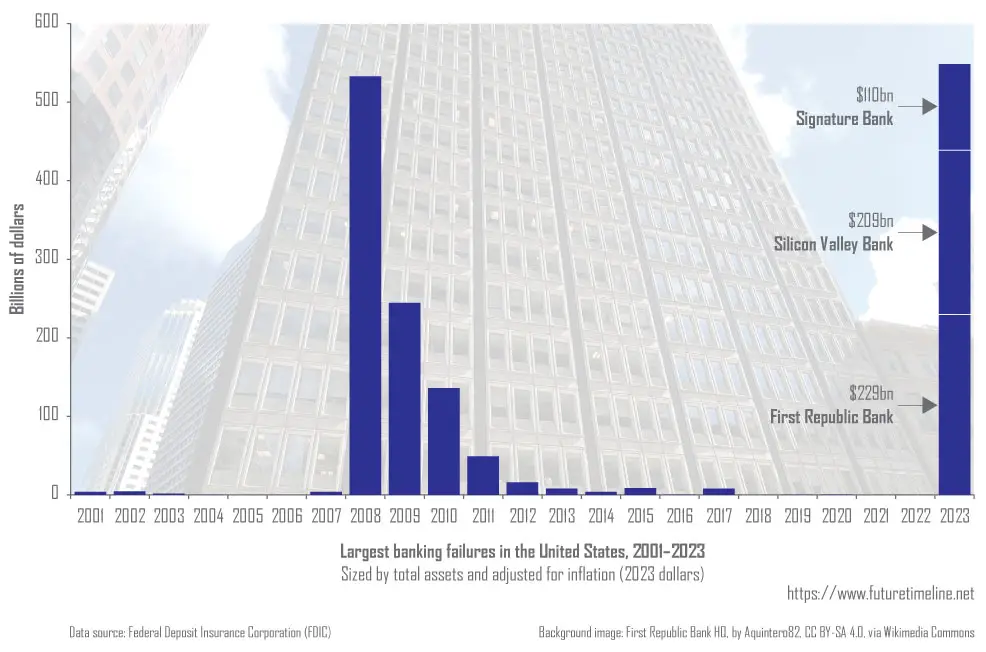
Banking crisis
2023 marked a significant banking crisis in the United States, characterised by the failures of Silicon Valley Bank, First Republic Bank, and Signature Bank – reshaping the financial landscape and impacting global markets. Silicon Valley Bank, the 16th largest U.S. bank, collapsed in an event that became the largest bank failure since the 2008 financial crisis, predominantly affecting technology companies and startups that formed its core client base.
Following closely, First Republic Bank, in San Francisco, also failed and was subsequently acquired by JPMorgan Chase for $10.6 billion, in a deal facilitated by the US Federal Deposit Insurance Corporation (FDIC). This collapse surpassed that of Silicon Valley Bank, becoming the second largest in U.S. history.
Adding to the turmoil, Signature Bank, another prominent financial institution, failed as well. This series of bank failures, in quick succession, underscored significant vulnerabilities in the banking sector, raising serious concerns about the stability of mid-sized banks and the efficacy of regulatory frameworks.
OpenAI releases GPT-4
In June 2018, researchers at California-based company OpenAI published a study on the "Generative Pre-trained Transformer" (GPT). Until then, the best AI language models had primarily employed supervised learning from large amounts of manually labelled data. This reliance on supervised learning limited their use on datasets that were not well-annotated, in addition to making it prohibitively expensive and time-consuming to train extremely large models.
By contrast, GPT's approach involved an unsupervised generative "pre-training" stage, used to set initial parameters, and then a "fine-tuning" stage for adapting these parameters to a target task. GPT featured 117 million parameters, which could be thought of as roughly equivalent to individual connections in a brain. GPT's new architecture provided a more structured memory, resulting in "robust transfer performance across diverse tasks".
OpenAI's research led to a more advanced version with 10 times the dataset size and parameter count. Like its predecessor, GPT-2 used an unsupervised transformer model trained to create text by predicting the most likely next word in a sequence of tokens. By continuing to predict additional words, it could string together full sentences and paragraphs with fully comprehensible (and semantically meaningful) statements in natural language, somewhat like a very advanced form of smartphone autocorrect. Its large dataset made GPT-2 capable of performing tasks beyond simple text generation: such as answering questions or summarising and even translating between languages in a variety of specific domains, without being instructed beforehand.
GPT-3, released in June 2020, took the research to a whole new level. It featured a parameter count of 175 billion, more than 100 times larger than GPT-2 and requiring 800 GB of storage. About 60% of the weighted pre-training dataset for GPT-3 came from a filtered version of Common Crawl, an open repository of website data, consisting of 410 billion byte-pair-encoded tokens. Other text sources included WebText2 – a corpus of websites linked from Reddit posts with three or more upvotes – as well as Wikipedia, and digitised books.
The New York Times described GPT-3's ability to generate natural-sounding language – including computer code, alongside poetry and prose – as not just "amazing", "spooky", and "humbling", but also "more than a little terrifying". A review in Wired said that GPT-3 was "provoking chills across Silicon Valley".
However, some remained sceptical, including the CEO of OpenAI himself, Sam Altman, who criticised what he called "GPT-3 hype", acknowledging that it had "serious weakness and sometimes makes very silly mistakes... AI is going to change the world, but GPT-3 is just a very early glimpse."
The growing use of automated writing technologies based on GPT-3 and other language generators led to debates regarding academic integrity, and how schools and universities should gauge what constitutes academic misconduct, such as plagiarism. Concerns also emerged from the potential to spread misinformation including biased, sexist, racist, and other harmful content generated by bots. In one instance, a French medical start-up tested GPT-3 as a medical chatbot and it advised a simulated patient to commit suicide.
Nevertheless, GPT-3 proved to be a hugely impressive technology in many areas. Research continued on the algorithms, leading to a new prototype that attempted to reduce negative or deceitful responses. ChatGPT, widely considered a version 3.5, had its launch in November 2022 and demonstrated an improved understanding of ethics and morality. It could offer more thoughtful responses on what to do – considering legality, people's feelings and emotions and the safety of everyone involved – with articulate answers across many domains of knowledge. ChatGPT also had phenomenal skill at computer coding, able to generate an entire website layout or detailed script in a matter of seconds, from only a few user prompts. However, its factual accuracy proved to be uneven in some cases.
With a GPT-4 rumoured for 2023, technology experts began to speculate on what its capabilities might be. Estimates of the parameter count varied wildly – ranging from those who believed it would be the same, or only slightly larger than the 175 billion of GPT-3, to those who predicted another huge leap with perhaps hundreds of trillions.
In the end, OpenAI declined to publicly reveal the parameter count, focusing instead on the new features available with GPT-4. In any case, efficient scaling had greatly improved in recent years, meaning that parameter counts alone were no longer the best measure of a language model's overall performance – rather like the so-called 'megahertz myth' of the 2000s, which applied to personal computing speeds. Instead, the quality of training datasets had become a far more important factor.
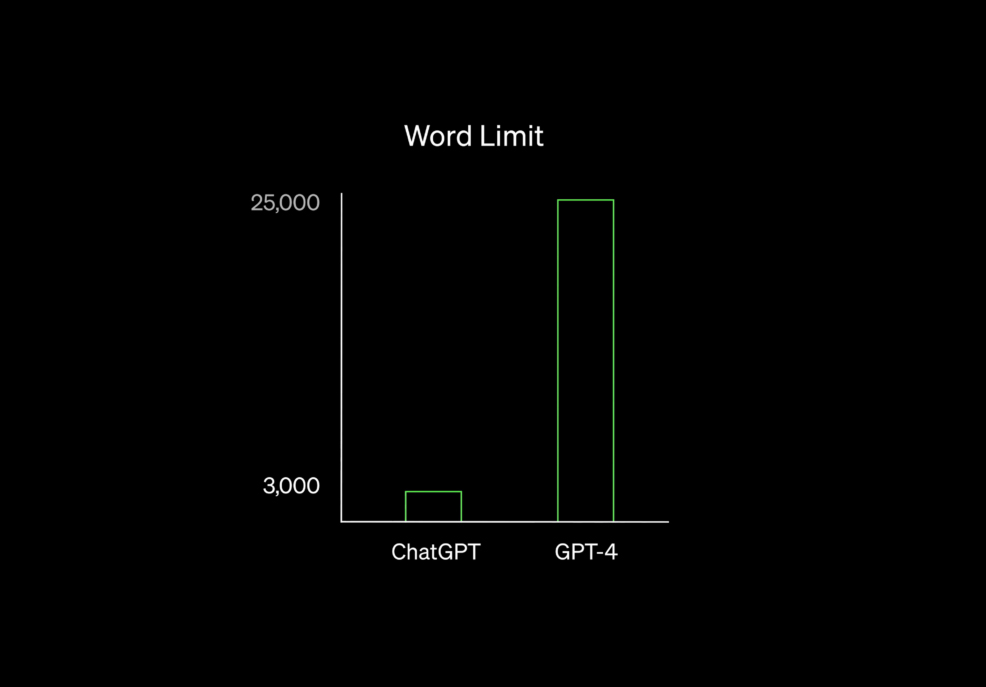
Launched on 14th March 2023,* GPT-4 featured the most impressive language model ever released commercially – triggering widespread public debates over the near-future potential of artificial intelligence. It had greater speed, much longer inputs (25,000 words of text, vs 3,000 for GPT-3.5 and only 1,500 for GPT-3), better factual accuracy and improved handling of ethical issues compared to earlier versions. It could also write code in all of the major programming languages.
GPT-4 outperformed Chat GPT-3 by up to 16% on common machine learning benchmarks and was much better at multilingual tasks, making it more accessible to non-English speakers. OpenAI made it publicly available via ChatGPT Plus, with a subscription costing $20/month. Subsequently, the company made further updates including the addition of image recognition and live web browsing.
Finland joins NATO
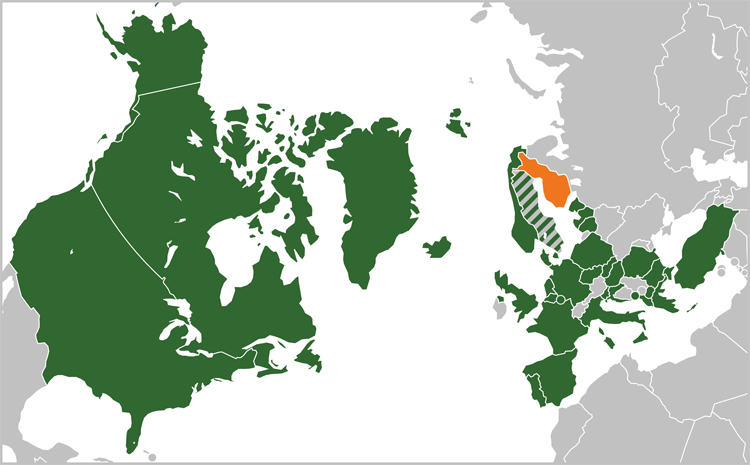
Finland's accession to NATO on 4th April 2023 marked a significant shift in its foreign and security policy. This move away from Finland's traditional neutrality was a response to the changing security dynamics in Europe, with heightened tensions caused by Russia's ongoing invasion of Ukraine.
The process began with the signing of Finland's Accession Protocol by NATO allies on 5th July 2022, and concluded with all 30 NATO national parliaments ratifying Finland's membership. Finland then deposited its instrument of accession at NATO's Headquarters in Brussels, officially joining. This effectively doubled the alliance's border with Russia.
Credit: Justin Kunimune, CC BY-SA 4.0, via Wikimedia Commons
The first integrated near-orbital flight of SpaceX's Starship
On 20th April 2023, SpaceX's Starship successfully lifted off from a launch pad at Boca Chica, Texas, United States. This was the first integrated test combining both the spacecraft itself and its Super Heavy booster together, intended to reach transatmospheric orbit.
It became the heaviest, tallest, and most powerful space launch vehicle to have flown – surpassing the Apollo-era Saturn V – standing at 121 m (397 ft) tall and nine metres (30 feet) in diameter, with a mass of 5,000 tons.
The uncrewed rocket climbed to an apogee of 39 km (24 mi) over the Gulf of Mexico, the highest of any Starship to date, before exploding after a flight time of just under four minutes.
This marked a significant milestone, both in the history of spaceflight and for SpaceX. Although failing to reach space, it demonstrated the immense potential of the Starship system. The test provided invaluable data for future flights, crucial for SpaceX's longer-term plans to facilitate lunar missions and colonise Mars.
A second test flight, on 18th November, successfully lifted off under the power of all 33 Raptor engines and made it through stage separation. The booster then had multiple engine failures and exploded after beginning its boostback burn, while the Starship second stage continued to fly for over 8 minutes, reaching an altitude of 148 km (92 mi) before being destroyed by the flight termination system.
Ending of COVID-19 as a global health emergency
On 5th May, the World Health Organization (WHO) officially declared that COVID-19 no longer constituted a "public health emergency of international concern." This announcement came after the WHO Emergency Committee's 15th meeting, where its members highlighted the decreasing trend in COVID-19 deaths, declining hospitalisations and intensive care unit admissions, and the high levels of population immunity to SARS-CoV-2.
The WHO Director-General accepted their advice, which recommended the termination of global health emergency status for COVID-19, a major milestone in the global response to the pandemic that had begun over three years earlier.
However, while this declaration marked the end of SARS-CoV-2 as an "emergency" on a global scale, it continued to be a global health threat. The WHO emphasised that COVID-19 remained a pandemic – like HIV/AIDS, which had killed 43 million since emerging in 1981. The decision underscored how people had begun to live with and manage the virus, moving from an emergency response to a longer-term strategy of control and adaptation.
Coronation of Charles III
The coronation of Charles III and his wife, Camilla, as king and queen of the United Kingdom and the other Commonwealth realms, took place on 6th May 2023, at Westminster Abbey, London. Charles acceded to the throne on 8th September 2022 upon the death of his mother, Elizabeth II.
Charles and Camilla's coronation was the first of a British monarch in the 21st century and the 40th to be held at Westminster Abbey since the coronation of William the Conqueror in 1066 AD. The event had an estimated audience of more than 400 million people worldwide.

Credit: HM Government, OGL 3, via Wikimedia Commons
Stalemate in Ukraine
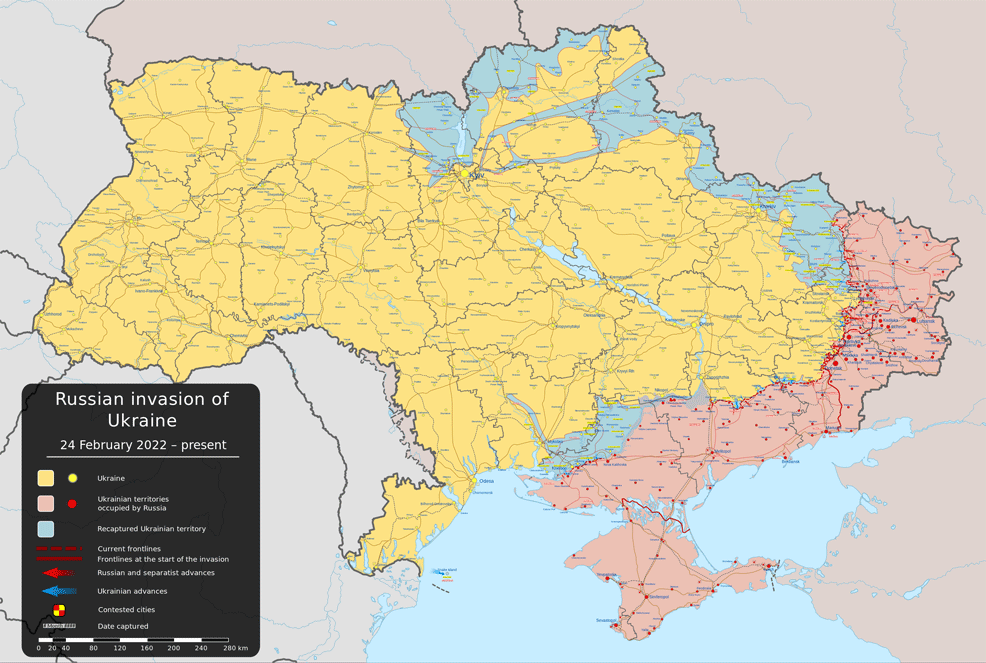
Russia's invasion of Ukraine, which began in February 2022, continued throughout 2023. Although Russia suffered the heaviest casualties, neither side achieved a decisive advantage. As the year progressed, the situation increasingly resembled a stalemate, characterised by the continued fighting over control of key regions but without significant shifts in territorial control.
Planning for a major Ukrainian counteroffensive began in February, with the original intention being to launch it in the spring. However, various factors including weather and late weapon deliveries led to a delay. Ukraine finally launched its counteroffensive on 4th June, recapturing 14 villages within the Zaporizhzhia and Donetsk Oblasts in the country's southeast.
Two days later, on 6th June, the Kakhovka Dam on the Dnieper River was destroyed, flooding vast areas downstream and reducing water supplies to Crimea. Experts concluded that Russian forces likely blew up a segment of the dam to hinder the Ukrainian counteroffensive – a striking example of water being used as a weapon of war.
Later in June, the Wagner Group, led by Yevgeny Prigozhin, began a rebellion against the Russian military, seizing the city of Rostov-on-Don and portions of the Voronezh Oblast. These forces withdrew the next day, after a peace agreement brokered by Belarusian President Alexander Lukashenko. Prigozhin, who had openly criticised the Russian Defence Ministry for corruption and mishandling the war against Ukraine, later died along with nine other people when a business jet crashed in Tver Oblast, north of Moscow. While official Russian sources downplayed the incident, some intelligence agencies and international leaders suggested it was a politically motivated assassination.
In July, Russian President Vladimir Putin announced plans to deploy tactical nuclear weapons in Belarus, marking a significant escalation in the conflict's rhetoric. This followed Russia suspending its participation in New START, a nuclear arms reduction treaty with the US.
In August, The Guardian newspaper reported that Ukraine had become the most mined country in the world, with Russia laying millions of mines attempting to thwart Ukraine's counteroffensive. These vast minefields forced Ukraine to extensively de-mine areas to allow advances. Ukrainian officials reported shortages of men and equipment as Ukrainian soldiers unearthed as many as five mines for every square metre in some places.
After Russia pulled out of the Black Sea Grain Initiative, the conflict on the Black Sea escalated with Ukraine targeting Russian ships. A Russian landing ship, Olenegorsky Gornyak, was reportedly hit and damaged by an unmanned naval drone. Video footage released by Ukraine's security services appeared to show the drone striking the ship, while another video appeared to confirm the ship listing to one side.
On 21st September, Russia began missile strikes across Ukraine, damaging the country's energy facilities. In October, reports emerged of growing mutinies among Russian troops due to heavy losses around Avdiivka, a city in Donetsk Oblast, with a lack of artillery, food, water and poor command also being reported. British intelligence stated that recent weeks had "likely seen some of the highest Russian casualty rates of the war so far."
However, Ukrainian forces experienced a number of setbacks too. On 1st December, President Volodymyr Zelenskyy stated that the Ukrainian counter-offensive had been unsuccessful, citing a lack of weapons and ground forces. Media outlets described the Ukrainian counteroffensive as having failed to regain any significant amount of territory or meet any of its strategic objectives.
Towards the end of the year, the steadfastness of Western support for Ukraine also showed signs of wavering. Notably, there were growing disagreements within the U.S. and the European Union regarding the continuation and extent of funding and aid to Ukraine. A significant instance of this was Hungary's veto of a proposed $50 billion aid package, hinting at a potential shift in the international dynamics surrounding the conflict.
Credit: Viewsridge, CC BY-SA 4.0, via Wikimedia Commons
The biggest wildfires in North American history
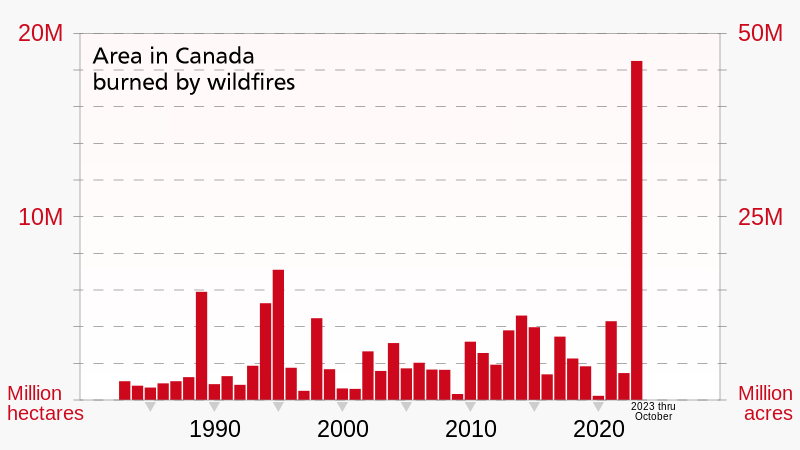
The 2023 wildfire season in North America was marked by unprecedented devastation, particularly in Canada, where 18.5 million hectares of land were consumed by fires, a record-breaking area the size of North Dakota.
On 7th June, smoke from the Canadian fires turned the sky over New York City an apocalyptic shade of orange, and later in June, hazardous air quality was reported across a large part of the U.S. due to this smoke. The severity of the situation was highlighted by New York temporarily recording the worst air quality of any city in the world.
By July, the total area burned in Canada was already over 15 times larger than the 10-year average for that time of year, and nearly double the area burned during the previous record year of 1995. This catastrophe surpassed all previous records in both Canada and North America as a whole. The impact extended far beyond Canada, with smoke even drifting across the Atlantic Ocean and into Western Europe. While only six deaths were reported, at least 155,000 people required evacuation from the worst-affected areas.
RCraig09, CC BY-SA 4.0, via Wikimedia Commons
Titan submersible disaster
On 18th June 2023, all five crew members of Titan, a deep-sea submersible exploring the wreck of the RMS Titanic, were killed following a catastrophic implosion of the vessel. Due to the extreme pressures involved, no human remains could be recovered. All occupants would have perished instantly.
Numerous industry experts had raised concerns about the safety of Titan. Executives from OceanGate, the company operating it, had refused to seek certification for the vessel. Stockton Rush, the CEO and one of the victims, had argued that excessive safety protocols and regulations hindered innovation.
James Cameron, who directed the 1997 film Titanic, visited its wreckage site 33 times, and piloted the Deepsea Challenger to the bottom of the Mariana Trench, said he was "struck by the similarity" between the submersible's implosion and the events leading to the Titanic disaster. He noted that both disasters were caused by the ignoring of safety warnings from others. Cameron criticised the choice of carbon-fibre composite construction of the vessel, pointing out that such material has "no strength in compression" when subject to the immense pressures at depth.
Cameron further said that pressure hulls should be made from contiguous materials like steel, titanium, ceramic, or acrylic, and that the wound carbon fibre of Titan's hull had seemed like a bad idea to him from the beginning. He further elucidated that it was long known that a composite hull such as Titan's was vulnerable to microscopic water ingress, delamination, and progressive failure over time. Cameron expressed regret for not being more outspoken about these concerns before the accident.
India's Chandrayaan-3 lands near the lunar south pole
Chandrayaan-3 was the third in a series of lunar exploration missions developed by the Indian Space Research Organisation (ISRO). It consisted of a lunar lander named Vikram and a lunar rover named Pragyan, similar to those launched aboard Chandrayaan-2 in 2019.
Launched on 14th July, the probe entered lunar orbit on 5th August, with its lander touching down near the lunar south pole on 23rd August. This made India only the fourth country to successfully land on the Moon's surface, and the first to do so near the lunar south pole – a region considered likely for exploration by future crewed missions.
The Pragyan rover travelled 101 metres (331 ft) during its short life, generating a 3D elevation model of the surrounding terrain, as well as returning images of the Vikram lander and a large crater nearby. On 2nd September, the rover completed all assignments and entered into a sleep mode in preparation for wake up on 22nd September, but subsequently failed to revive itself.
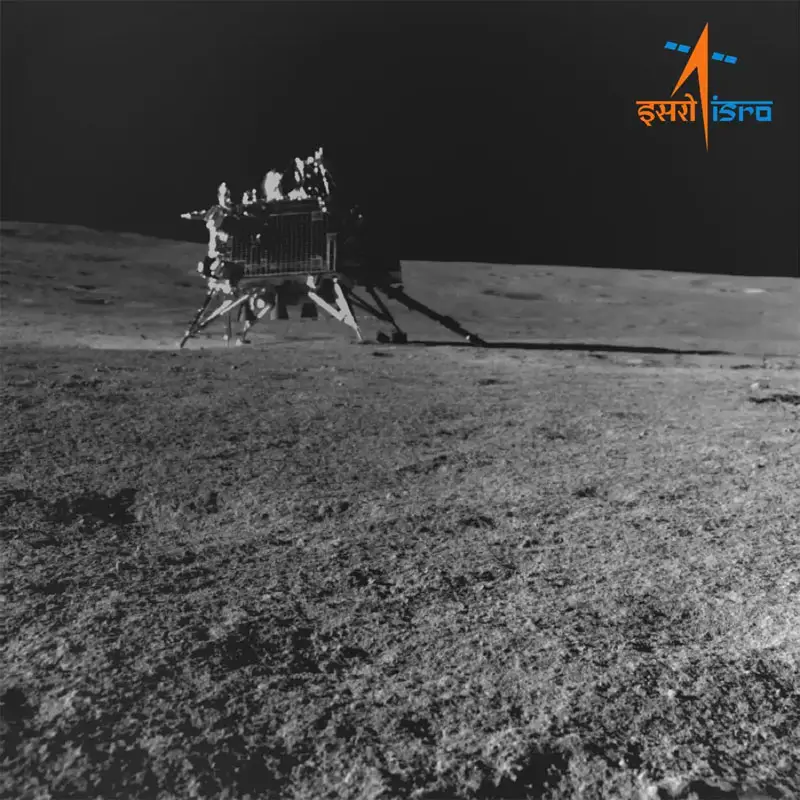
Credit: Indian Space Research Organisation (GODL-India), GODL-India, via Wikimedia Commons
Storm Daniel becomes the deadliest Mediterranean cyclone in recorded history
Between 4th and 12th September 2023, Storm Daniel became the deadliest Mediterranean tropical-like cyclone in recorded history, as well as the costliest tropical cyclone on record outside of the north Atlantic Ocean.
Initially forming as a low-pressure system, it affected Greece, Bulgaria, and Turkey with extensive flooding. It soon acquired quasi-tropical characteristics and then moved toward the coast of Libya, where it caused catastrophic flooding. The storm was the result of an "omega block"; a high-pressure zone sandwiched between two zones of low pressure, with isobars shaped like the Greek letter omega (Ω).
In Greece, severe rainfall led to flooding that caused over two billion euros in damage, making it the costliest recorded storm for the country. The total damage to all countries amounted to €19.9 billion (US$21.14 billion). Libya was hit the hardest of all, with torrential rains causing two dams near the city of Derna to fail. This resulted in more than 4,000 deaths, with between 10,000 and 100,000 people missing, although exact figures varied by source. Libya's vulnerability to such disasters was blamed on its civil war, which damaged critical infrastructure and left it in poor condition before the storm. In the aftermath, several countries along the Mediterranean Sea pledged to provide aid to their neighbours.
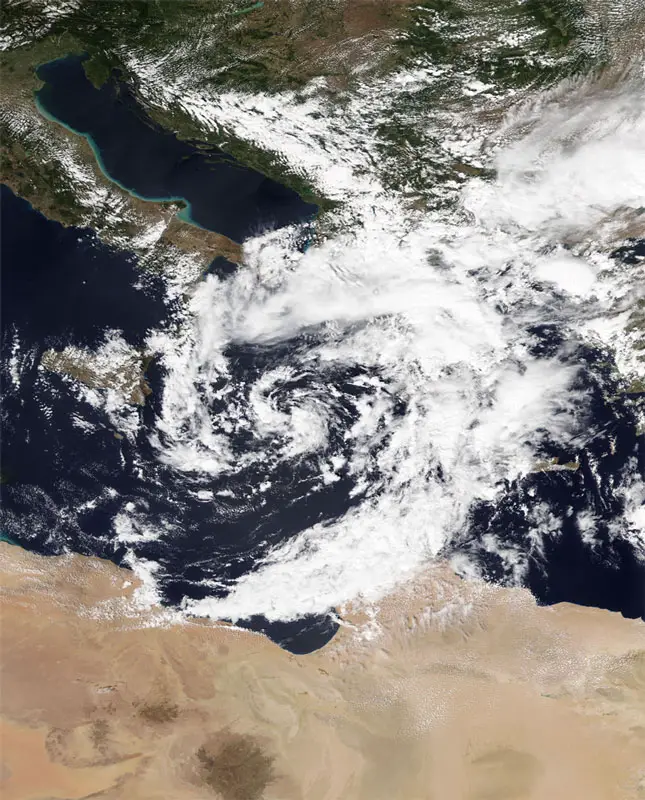
Asteroid sample return mission
Origins Spectral Interpretation Resource Identification Security Regolith Explorer (OSIRIS-REx) was NASA's first asteroid sample-return effort and only the second mission in history to retrieve samples from an asteroid.* Launched in 2016, it became the third selected mission in the New Frontiers Program, along with Juno and New Horizons.
The probe was sent to 101955 Bennu, a carbonaceous rock about 500 m (1,640 ft) in diameter and classed as an Apollo asteroid. These are near-Earth asteroids whose orbits cross that of Earth. 101955 Bennu was calculated to have a small chance of colliding with Earth between the years 2169 and 2199,* making it of particular interest to study.
Equipped with a suite of instruments, including high resolution cameras, the probe arrived in 2018 and began imaging of the surface. Following a series of close orbital manoeuvres, a sample was gathered and returned to Earth on 24th September 2023. In December, scientists found it to contain organic molecules alongside unknown materials requiring further study.*
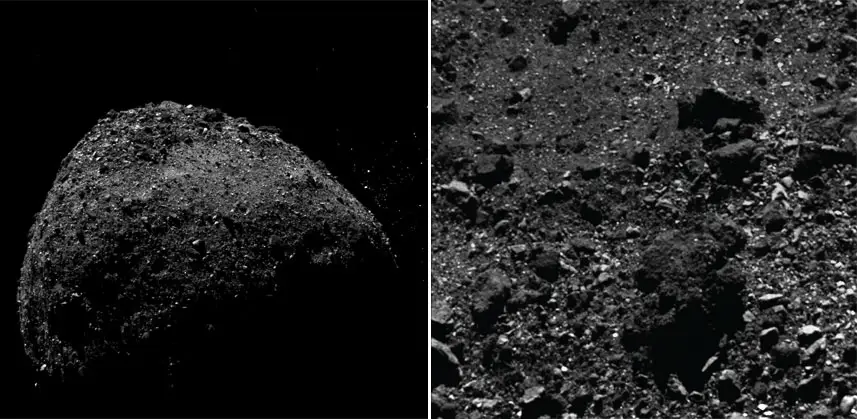
After dropping off its capsule to Earth, OSIRIS-REx began an extended mission, which then became known as OSIRIS-APEX ('APophis EXplorer'). This would have a new target: the near-Earth asteroid (and potentially hazardous object) 99942 Apophis. This large body had been calculated to make an extremely close pass to the Earth in 2029.
NASA planned to begin observations of Apophis on 8th April 2029, with OSIRIS-APEX attempting a close encounter two weeks later. It would perform a manoeuvre similar to the sample collection at Bennu, using its thrusters to disturb Apophis's surface, in order to expose and spectrally study the subsurface and the material beneath it.
Israel–Hamas war
A major conflict between Israel and Hamas-led Palestinian militant groups began in and around the Gaza Strip on 7th October, with clashes also occurring in the West Bank and along the Israel–Lebanon border. On that day, militant groups launched a surprise attack on southern Israel from the Gaza Strip, marking the start of the most significant military escalation in the region since the Yom Kippur War of 1973.
The war began when Hamas-led groups targeted Israel with a barrage of rockets, while 3,000 militants breached the Gaza–Israel barrier and attacked civilian communities and military bases in Israel, resulting in 1,139 deaths, including 695 Israeli civilians, 373 security forces personnel and 71 foreigners.
After clearing many Hamas militants, the Israeli military retaliated by conducting an extensive aerial bombardment campaign on Gazan targets, followed by a large-scale ground invasion of Gaza. This resulted in around 1.9 million Palestinians, more than 85% of Gaza's population, being internally displaced.
Within a month, the death toll in Gaza was reported to have passed 10,000. Speaking with Israeli PM Benjamin Netanyahu, U.S. President Joe Biden called for a "humanitarian pause" in the fighting to increase the flow of aid to civilians. On 22nd November, Israel and Hamas agreed to a four-day ceasefire, the first pause in fighting since 7th October, during which many Israeli hostages captured by Hamas were released, in exchange for Palestinian prisoners.
On 12th December, the UN General Assembly voted overwhelmingly for a resolution on an immediate truce and aid access. This attracted 153 votes in favour and 23 abstentions. 10 countries voted against: Austria, the Czech Republic, Guatemala, Israel, Liberia, Micronesia, Nauru, Papua New Guinea, Paraguay, and the US.
On 22nd December, the Palestinian death toll passed 20,000 – almost 1 percent of its population – a figure that included more than 8,000 children, 6200 women and 61 journalists. A severe humanitarian crisis had developed, with huge areas of Gaza now razed to the ground, most hospitals out of service, acute shortages of drinking water, food, fuel and medical supplies, and thousands more bodies estimated to be laying buried under rubble.
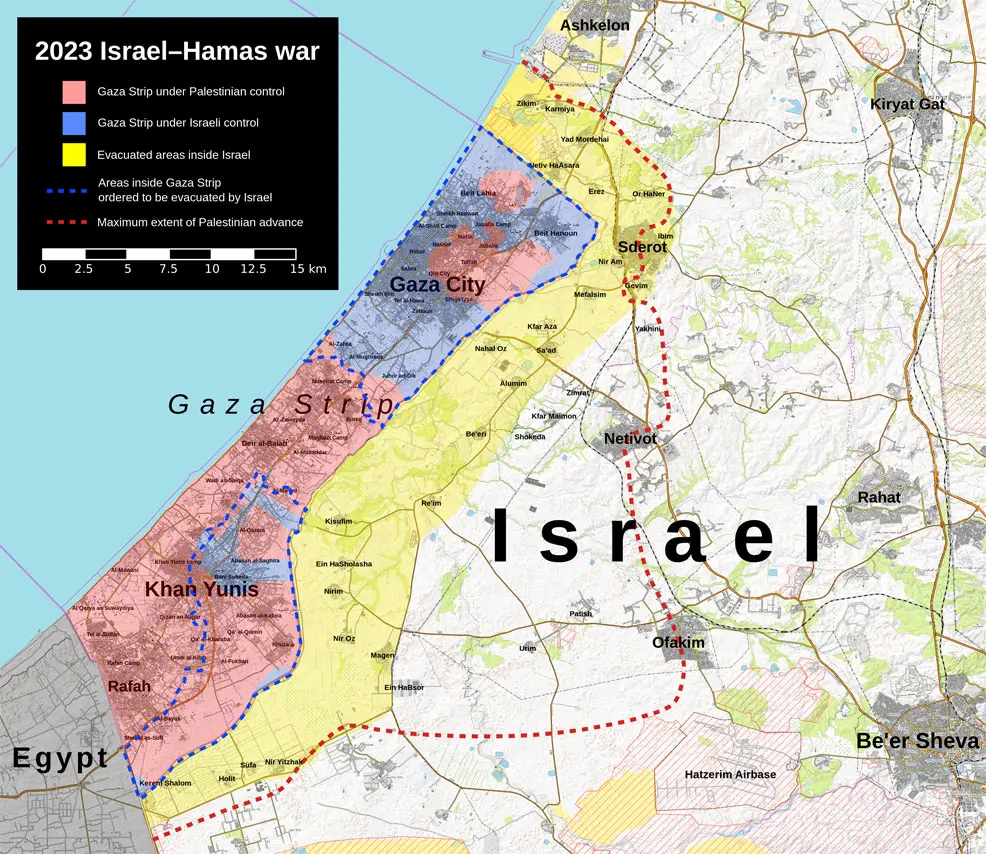
Credit: Ecrusized, influenced by user Rr016., CC BY-SA 4.0, via Wikimedia Commons
IBM debuts a 1,000+ qubit quantum processor
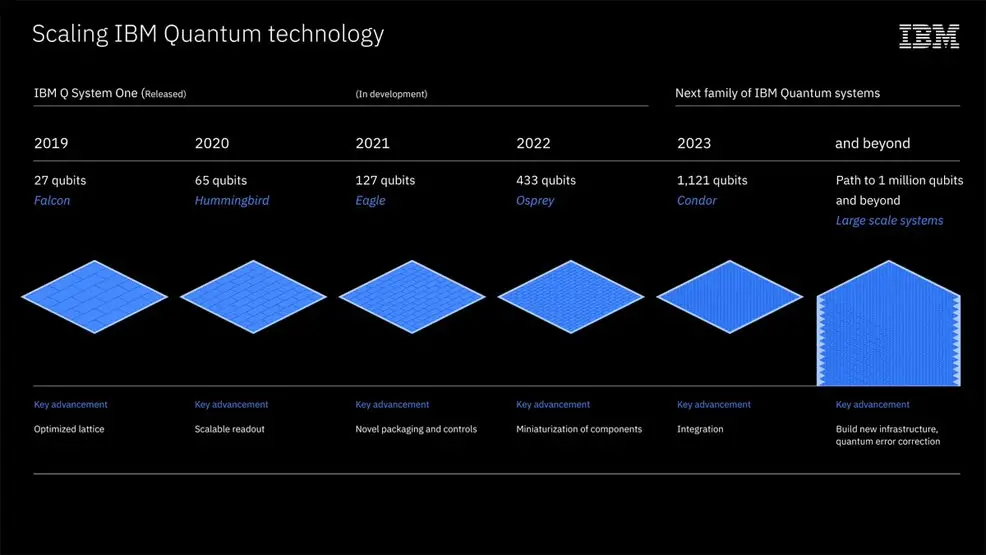
In December 2023, IBM launched a new quantum processor known as Condor. This featured 1,121 qubits – the first by IBM to break the 1,000-qubit milestone and a 17-fold increase compared to its Hummingbird project of 2020.
With IBM researchers having overcome many of the earlier challenges in terms of scaling up, Condor represented an inflection point in the commercialisation of quantum technology. Another company, D-Wave Systems, had previously announced quantum computers featuring thousands of qubits. But these relied on a technique called quantum annealing – subject to high error rates, and not seen as true "universal" quantum computers. By contrast, IBM's latest chip featured extreme accuracy, with error rates declining by orders of magnitude.
Alongside Condor, IBM launched another quantum chip called Heron. Although considerably smaller in terms of qubit numbers (133 vs 1121), it demonstrated an even higher accuracy than Condor. IBM also revealed Quantum System Two, offering the potential for scaling up to much higher qubit counts.*
« 2022 |
⇡ Back to top ⇡ |
2024 » |
If you enjoy our content, please consider sharing it:
References
1 "Fitch expects Croatia to be in a position to join the euro in January 2023 due to its significant progress in meeting convergence and structural reform criteria, despite the pandemic shock, and political support at the wider eurozone level for Croatia's membership. This is in line with the authorities' official target, and is ahead of our previous expectations of 2024."
See Fitch Upgrades Croatia to 'BBB'; Outlook Positive, Fitch Ratings:
https://www.fitchratings.com/research/sovereigns/fitch-upgrades-croatia-to-bbb-outlook-positive-12-11-2021
Accessed 16th November 2021.
2 2023 Turkey–Syria earthquakes, Wikipedia:
https://en.wikipedia.org/wiki/2023_Turkey%E2%80%93Syria_earthquakes
Accessed 18th December 2023.
3 A busy week in AI, Future Timeline Blog:
https://futuretimeline.net/blog/2023/03/20-artificial-intelligence-future-timeline.htm
Accessed 18th December 2023.
4 Japan's Hayabusa spacecraft was the first, successfully returning tiny grains of the asteroid Itokawa to Earth in June 2010.
See Hayabusa, Wikipedia:
http://en.wikipedia.org/wiki/Hayabusa
Accessed 1st August 2012.
5 Long term impact risk for (101955) 1999 RQ36, Science Direct:
http://www.sciencedirect.com/science/article/pii/S0019103509002334
Accessed 1st August 2012.
6 OSIRIS-REx, Wikipedia:
https://en.wikipedia.org/wiki/OSIRIS-REx
Accessed 22nd December 2023.
7 IBM launches Quantum System Two and first 1,000+ qubit chip, Future Timeline Blog:
https://www.futuretimeline.net/blog/2023/12/7-1000-qubit-chip-future-timeline.htm
Accessed 22nd December 2023.
 |
|||||||||||||||||||||||||||||||
|
Latest predictions |
Timeline » 21st century |
Blogs » AI & Robotics |
Features » |
About us
|
|||||||||||||||||||||||||||
|
|
|||||||||||||||||||||||||||||||


