
Nanotechnology News and Discussions

User avatar
wjfox
Site Admin
Posts: 13578
Joined: Sat May 15, 2021 6:09 pm
Location: Essex, UK
Contact:

Re: Nanotechnology News and Discussions

Post by wjfox »

Nanotechnology breakthrough: A single-molecule valve

15th May 2023

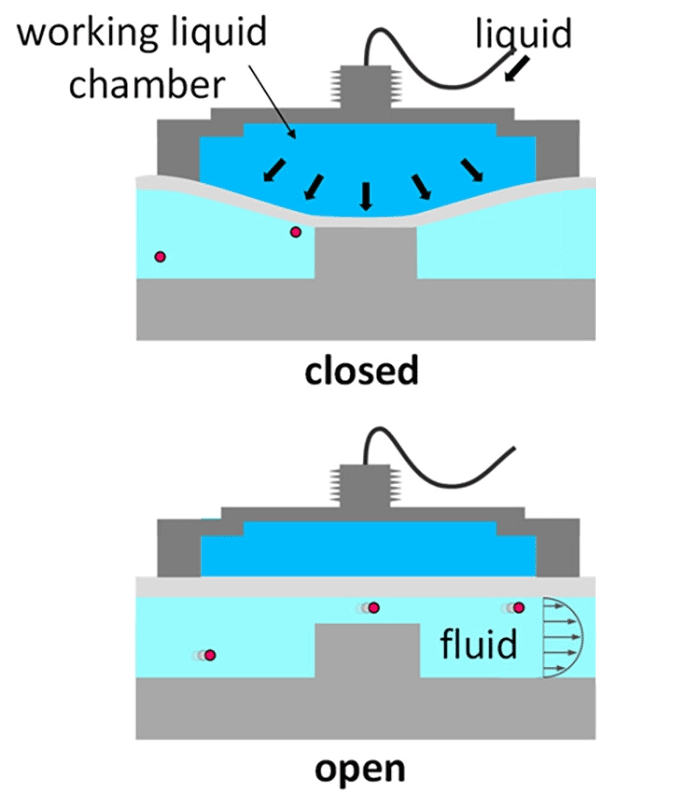
A breakthrough in nanoscale control of fluids has been demonstrated by Osaka Metropolitan University, Japan.

[...]

The team also discovered that when they trapped single fluorescent (dyed) molecules in the nanospace inside the valve, the fluorescence of the single molecules became brighter. This happened because the small space made it harder for single molecules to move around randomly.

Professor Yan Xu, who led the study, explains that "this effect of fluorescence signal amplification could help with detecting very small amounts of pathogens for early diagnosis of diseases such as cancers and Parkinson's, without requiring expensive equipment."

This breakthrough has the potential to be useful in many other ways – "its applications are limitless," according to Xu's team. It could help in developing personalised medicines for rare diseases, or creating better displays and batteries, for example. It could be a significant step towards freely assembling materials using single molecules as building blocks in solution.

Read more: https://www.futuretimeline.net/blog/202 ... -valve.htm

Image
weatheriscool
Posts: 24486
Joined: Sun May 16, 2021 6:16 pm
Contact:

Re: Nanotechnology News and Discussions

Post by weatheriscool »

Researchers demonstrate electrical creation and control of antiferromagnetic vortices
https://phys.org/news/2023-05-electrica ... tices.html
by Jane Icke, University of Nottingham
A new study has shown for the first time how electrical creation and control of magnetic vortices in an antiferromagnet can be achieved, a discovery that will increase the data storage capacity and speed of next generation devices.

Researchers from the University of Nottingham's School of Physics and Astronomy have used magnetic imaging techniques to map the structure of newly formed magnetic vortices and demonstrate their back-and-forth movement due to alternating electrical pulses. Their findings have been published in Nature Nanotechnology.

"This is an exciting moment for us, these magnetic vortices have been proposed as information carriers in next-generation memory devices, but evidence of their existence in antiferromagnets has so far been scarce. Now, we have not only generated them, but also moved them in a controllable way. It's another success for our material, CuMnAs, which has been at the center of several breakthroughs in antiferromagnetic spintronics over the last few years," says Oliver Amin.

CuMnAs has a specific crystal structure, grown in almost complete vacuum, atomic layer by atomic layer. It has been shown to behave like a switch when pulsed with electrical currents, and the research group in Nottingham, led by Dr. Peter Wadley, alongside international collaborators, have "zoomed in" on the magnetic textures being controlled; first with the demonstration of moving domain walls, and now with the generation and control of magnetic vortices.
weatheriscool
Posts: 24486
Joined: Sun May 16, 2021 6:16 pm
Contact:

Re: Nanotechnology News and Discussions

Post by weatheriscool »

Researchers report technique to fabricate nanosheets in one minute
https://phys.org/news/2023-05-technique ... inute.html
by Nagoya University

A research group led by Professor Minoru Osada (he, him) and postdoctoral researcher Yue Shi (she, her) at the Institute for Future Materials and Systems (IMaSS), Nagoya University in Japan, has developed a new technology to fabricate nanosheets, thin films of two-dimensional materials a couple of nanometers thick, in about one minute.

This technology enables the formation of high-quality, large nanosheet films with a single click without the need for specialized knowledge or technology. Their findings are expected to contribute to developing the industrial manufacturing process for various types of nanosheet devices. The study was published in ACS Applied Materials & Interfaces.
weatheriscool
Posts: 24486
Joined: Sun May 16, 2021 6:16 pm
Contact:

Re: Nanotechnology News and Discussions

Post by weatheriscool »

Chemists develop ferromagnetic single-atom spin catalyst for boosting water splitting reactions
https://phys.org/news/2023-05-chemists- ... sting.html
by National University of Singapore
Chemists from the National University of Singapore (NUS) have developed a scalable hydrothermal approach for obtaining ferromagnetic single-atom spin catalysts which can boost the efficiency of water splitting reactions under the influence of a magnetic field.

Electrolysis of water using renewable resources is a promising technology for hydrogen production and is having a growing interest worldwide. This is because hydrogen is seen as a promising alternative to address the increasing concerns over carbon emissions from fossil fuels that can cause climate change.

However, hydrogen production via water electrolysis is primarily limited by the sluggish kinetics of an associated process known as the oxygen evolution reaction (OER). Precious metal based electrocatalysts are often used in the OER process to improve its poor efficiency. A pioneering class of catalytic materials known as heterogeneous ferromagnetic single-atom spin catalysts (SASCs), when used together with an applied magnetic field has great potential to accelerate this chemical reaction.
weatheriscool
Posts: 24486
Joined: Sun May 16, 2021 6:16 pm
Contact:

Re: Nanotechnology News and Discussions

Post by weatheriscool »

Engineering designer materials with bird-inspired structural colors using nanoparticle-based supraballs
https://phys.org/news/2023-05-materials ... balls.html
by Thamarasee Jeewandara , Phys.org
Materials scientists are often bioinspired, and in a new study, bird-inspired by structural colors exhibited by avian species to form non-iridescent nanoparticle assemblies. Such nanoparticle mixtures varying in particle chemistry and size can affect the color produced to identify structure-color relationships and create designer materials with tailored color.

In a new report on Science Advances, Christian M. Heil, and a research team at several international, multidisciplinary research institutes in the U.S., Belgium, and Germany, showed how to reconstruct the assembled structures via small-angle scattering measurements.

The research team successfully and quantitatively predicted the experimentally observed colors in mixtures with strongly absorbed nanoparticles to demonstrate the influence of a single layer of segregated nanoparticles and produce a color of interest. The versatile computational approaches integrated in this work were useful to engineer synthetic materials with desired colors suited for paints, cosmetics, and food coloring applications.
User avatar
lechwall
Posts: 79
Joined: Mon Jan 02, 2023 3:39 pm

Re: Nanotechnology News and Discussions

Post by lechwall »

Quite telling this is the sub with the lowest activity https://time.com/4068125/nanotech-sector/
I don't think people would have predicted this when engines of creation was released
User avatar
Powers
Posts: 1183
Joined: Fri Apr 07, 2023 7:32 pm
Location: a.k.a Lurking, Member, Lorem Ipsum, ..., --- and ººº.

Re: Nanotechnology News and Discussions

Post by Powers »

lechwall wrote: Fri Jun 23, 2023 5:55 pm Quite telling this is the sub with the lowest activity https://time.com/4068125/nanotech-sector/
I don't think people would have predicted this when engines of creation was released
We are still far from flying micro-machines.
User avatar
wjfox
Site Admin
Posts: 13578
Joined: Sat May 15, 2021 6:09 pm
Location: Essex, UK
Contact:

Re: Nanotechnology News and Discussions

Post by wjfox »

Tiny nanopores can contribute to faster identification of diseases

June 15, 2023

In a collaboration with Groningen University, Professor Jørgen Kjems and his research group at Aarhus University have achieved a remarkable breakthrough in developing tiny nano-sized pores that can contribute to better possibilities for, among other things, detecting diseases at an earlier stage.

Their work, recently published in the journal ACS Nano, shows a new innovative method for finding specific proteins in complex biological fluids, such as blood, without having to label the proteins chemically. The research is an important milestone in nanopore technology, and could revolutionize medical diagnostics.

Nanopores are tiny channels formed in materials, that can be used as sensors. The researchers, led by Jørgen Kjems and Giovanni Maglia (Groningen Univ.), have taken this a step further by developing a special type of nanopore called ClyA with scanner molecules, called nanobodies, attached to it.

These nanobodies, derived from antibodies, are capable of recognizing different proteins with astonishing accuracy. In this study, the researchers attached nanobodies to ClyA, using a DNA adapter. By using a series of nanobodies, they were able to create many different nanopore sensors, which could detect a variety of proteins of different sizes.

https://phys.org/news/2023-06-tiny-nano ... ation.html


Image
User avatar
wjfox
Site Admin
Posts: 13578
Joined: Sat May 15, 2021 6:09 pm
Location: Essex, UK
Contact:

Re: Nanotechnology News and Discussions

Post by wjfox »

Hyundai Motor unveils nanotechnology vision

Jul 20, 2023 - 15:15

Hyundai Motor Group said Thursday it has developed six kinds of nanotechnologies that will be key drivers of growth in future mobility, ranging from autonomous driving cars to software defined vehicles.

Nanotechnology creates new materials by synthesizing or fabricate arrays of materials that are 1 billionth of a meter in width.

“Only when we secure top level materials technology in mobility can we improve the performance and durability of car parts and vehicles which will offer a competitive edge in the fast-evolving future mobility market,” said Lee Jong-soo, vice president of the institute of advanced technology development at Hyundai Motor Group, during a press conference in Seoul.

The first nanotechnology material presented by the company was self-healing polymer coating, which removes scratches or water from cameras and lidar sensors on self-driving cars.

Based on multiple sets of self-healing mechanisms, unlike a one-off chemical reaction, it can constantly help the car to restore its detecting device, spotting obstacles or pedestrians on roads more accurately, according to Yeo In-hong, a researcher at institute of advanced technology development at Hyundai Motor Group.

http://www.koreaherald.com/view.php?ud=20230720000598
weatheriscool
Posts: 24486
Joined: Sun May 16, 2021 6:16 pm
Contact:

Re: Nanotechnology News and Discussions

Post by weatheriscool »

Researchers demonstrate scaling of aligned carbon nanotube transistors to below sub-10 nm nodes
https://phys.org/news/2023-07-scaling-a ... stors.html
by Ingrid Fadelli , Phys.org

Carbon nanotubes, large cylindrical molecules composed of hybridized carbon atoms arranged in a hexagonal structure, recently attracted significant attention among electronics engineers. Due to their geometric configuration and advantageous electronic properties, these unique molecules could be used to create smaller field-effect transistors (FETs) that exhibit high energy efficiencies.

FETs based on carbon nanotubes have the potential to outperform smaller transistors based on silicon, yet their advantage in real-world implementations has yet to be conclusively demonstrated. A recent paper by researchers at Peking University and other institutes in China, published in Nature Electronics, outlines the realization of FETs based on carbon nanotubes that can be scaled to the same size of a 10 nm silicon technology node.
weatheriscool
Posts: 24486
Joined: Sun May 16, 2021 6:16 pm
Contact:

Re: Nanotechnology News and Discussions

Post by weatheriscool »

Scientists propose method that imparts elastic recovery to ferroelectric materials
https://phys.org/news/2023-08-scientist ... overy.html
by Chinese Academy of Sciences
A research group led by Prof. Li Runwei at the Ningbo Institute of Materials Technology and Engineering (NIMTE) of the Chinese Academy of Sciences (CAS) have proposed a "slight cross-linking" method that imparts elastic recovery to ferroelectric materials. The study was published in Science.

Ferroelectric materials are very useful for applications such as data storage and processing, sensing, energy conversion, and optoelectronics, etc., making them highly desirable in mobile phones, tablets and other electronic devices for everyday use.

After stress is relieved, however, conventional ferroelectric materials exhibit poor elastic recovery—typically less than 2%, thus tend to be either brittle (ferroelectric ceramics) or plastic (ferroelectric polymers).

The ferroelectric properties of these materials are mainly due to their crystalline regions, which lack intrinsic elasticity.

To solve the dilemma of ferroelectric response and elastic recovery, the researchers developed a precise "slight cross-linking" method.
weatheriscool
Posts: 24486
Joined: Sun May 16, 2021 6:16 pm
Contact:

Re: Nanotechnology News and Discussions

Post by weatheriscool »

Scientists design novel nonlinear circuit to harvest clean power using graphene
https://phys.org/news/2023-08-scientist ... power.html
by University of Arkansas
Obtaining useful work from random fluctuations in a system at thermal equilibrium has long been considered impossible. In fact, in the 1960s eminent American physicist Richard Feynman effectively shut down further inquiry after he argued in a series of lectures that Brownian motion, or the thermal motion of atoms, cannot perform useful work.

Now, a new study published in Physical Review E titled "Charging capacitors from thermal fluctuations using diodes" has proven that Feynman missed something important.

Three of the paper's five authors are from the University of Arkansas Department of Physics. According to first author Paul Thibado, their study rigorously proves that thermal fluctuations of freestanding graphene, when connected to a circuit with diodes having nonlinear resistance and storage capacitors, does produce useful work by charging the storage capacitors.

The authors found that when the storage capacitors have an initial charge of zero, the circuit draws power from the thermal environment to charge them.

The team then showed that the system satisfies both the first and second laws of thermodynamics throughout the charging process. They also found that larger storage capacitors yield more stored charge and that a smaller graphene capacitance provides both a higher initial rate of charging and a longer time to discharge. These characteristics are important because they allow time to disconnect the storage capacitors from the energy harvesting circuit before the net charge is lost.

This latest publication builds on two of the group's previous studies. The first was published in a 2016 Physical Review Letters. In that study, Thibado and his co-authors identified the unique vibrational properties of graphene and its potential for energy harvesting.
weatheriscool
Posts: 24486
Joined: Sun May 16, 2021 6:16 pm
Contact:

Re: Nanotechnology News and Discussions

Post by weatheriscool »

Liver-targeting drug delivered via nanogel carrier reverses obesity, lowers cholesterol in mice
https://phys.org/news/2023-08-liver-tar ... erses.html
by University of Massachusetts Amherst
A University of Massachusetts Amherst biomedical engineer has used a nanogel-based carrier designed in his lab to deliver a drug exclusively to the liver of obese mice, effectively reversing their diet-induced disease.

"The treated mice completely lost their gained weight, and we did not see any untoward side effects," says S. Thai Thayumanavan, distinguished professor of chemistry and biomedical engineering. "Considering 100 million Americans have obesity and related cardiometabolic disorders, we became pretty excited about this work."

Efforts to translate these findings to humans are being pursued by a start-up company Cyta Therapeutics, which was founded at the UMass Institute for Applied Life Sciences (IALS) based on the nanogel technologies from the Thayumanavan lab. In late July, Cyta Therapeutics won the Judges' Choice Best Startup at the 16th annual Massachusetts Life Sciences Innovation (MALSI) Day in Boston.
weatheriscool
Posts: 24486
Joined: Sun May 16, 2021 6:16 pm
Contact:

Re: Nanotechnology News and Discussions

Post by weatheriscool »

A brightly (multi)colored future for electrochromic devices shines ahead
https://phys.org/news/2023-09-brightly- ... vices.html
by Tsinghua University Press
Vivid displays, enriched color variations and boosted stability are something everyone can look forward to encountering as advances are made in the electrochromic device (ECD) field

Electrochromic devices (ECDs) are useful in controlling optical properties such as reflection and absorption and are particularly pertinent when it comes to use in smart windows, rearview mirrors and adaptive camouflage. Unfortunately, the widely used electrochromic materials show a lackluster display with minimal color changes and poor cycling stability, often only transforming between transparency and a single color with sluggish switching speeds.

This study demonstrates the use of a more compatible component in the form of a highly porous tin oxide (SnO2) nanosheet scaffold, which provides better cycling, more color variations and a seamless performance than what the current technology has to offer.

Researchers published their work in Nano Research.
weatheriscool
Posts: 24486
Joined: Sun May 16, 2021 6:16 pm
Contact:

Re: Nanotechnology News and Discussions

Post by weatheriscool »

Scaling up nano for sustainable manufacturing with self-assembling nanosheets
https://phys.org/news/2023-11-scaling-n ... heets.html
by Lawrence Berkeley National Laboratory

A new self-assembling nanosheet could radically accelerate the development of functional and sustainable nanomaterials for electronics, energy storage, health and safety, and more.

Developed by a team led by Lawrence Berkeley National Laboratory (Berkeley Lab), the new self-assembling nanosheet could significantly extend the shelf life of consumer products. And because the new material is recyclable, it could also enable a sustainable manufacturing approach that keeps single-use packaging and electronics out of landfills.

The team is the first to successfully develop a multipurpose, high-performance barrier material from self-assembling nanosheets. The breakthrough was reported in Nature.

"Our work overcomes a longstanding hurdle in nanoscience—scaling up nanomaterial synthesis into useful materials for manufacturing and commercial applications," said Ting Xu, the principal investigator who led the study. "It's really exciting because this has been decades in the making."

Xu is a faculty senior scientist in Berkeley Lab's Materials Sciences Division, and a professor of chemistry and materials science and engineering at UC Berkeley.

One challenge in harvesting nanoscience to create functional materials is that many small pieces need to come together so that the nanomaterial can grow large enough to be useful. While stacking nanosheets is one of the simplest ways to grow nanomaterials into a product, "stacking defects"—gaps between the nanosheets—are unavoidable when working with existing nanosheets or nanoplatelets.
weatheriscool
Posts: 24486
Joined: Sun May 16, 2021 6:16 pm
Contact:

Re: Nanotechnology News and Discussions

Post by weatheriscool »

Researchers' breakthrough in thermal transport could enable novel cooling strategies
https://phys.org/news/2023-11-breakthro ... egies.html
by Vanderbilt University
Vanderbilt mechanical engineering professors Deyu Li and Josh Caldwell are part of a team of researchers who have discovered a new heat dissipation channel using phonon polaritons that could have extensive implications for novel cooling technologies in devices like smart phones and other modern electronics.

The research was recently published in Nature under the title "Remarkable Heat Conduction Mediated by Non-equilibrium Phonon Polaritons."

It is well known that electrons and atomic vibrations (phonons) are the major energy carriers in solids. Research teams from Vanderbilt University and Oak Ridge National Laboratory (ORNL) were surprised to find that surface phonon polaritons, hybrid quasi-particles resulting from coupling between infrared light and optically active phonons, could contribute significantly to heat conduction in thin films and nanowires of polar crystals.
weatheriscool
Posts: 24486
Joined: Sun May 16, 2021 6:16 pm
Contact:

Re: Nanotechnology News and Discussions

Post by weatheriscool »

Researchers develop neutron-shielding film for radiation protection
https://phys.org/news/2023-11-neutron-shielding.html
by JooHyeon HeoJooHyeon Heo, Ulsan National Institute of Science and Technology
An advancement in neutron shielding, a critical aspect of radiation protection, has been achieved. This breakthrough is poised to revolutionize the neutron shielding industry by offering a cost-effective solution applicable to a wide range of materials surfaces.

A research team, led by Professor Soon-Yong Kwon in the Graduate School of Semiconductors Materials and Devices Engineering and the Department of Materials Science and Engineering at UNIST has successfully developed a neutron shielding film capable of blocking neutrons present in radiation. This innovative shield is not only available in large areas but also lightweight and flexible.

The team's paper is published in the journal Nature Communications.

"The developed MXene-Boron carbide composite shielding film is several tens of micrometers thick, over 1,000 times thinner than conventional commercial materials," noted Professor Kwon. "It can be effortlessly applied to various surfaces, resembling the act of painting."

Neutrons, which are integral to nuclear power generation, medical devices, and aerospace industries, possess inherent dangers when leaked. They can trigger unexpected phenomena in electronic devices or living organisms through interactions with other atoms.
weatheriscool
Posts: 24486
Joined: Sun May 16, 2021 6:16 pm
Contact:

Re: Nanotechnology News and Discussions

Post by weatheriscool »

Harvesting more solar energy with two-dimensional supercrystals
https://phys.org/news/2023-12-harvestin ... stals.html
by Ludwig Maximilian University of Munich
When Emiliano Cortés goes hunting for sunlight, he doesn't use gigantic mirrors or sprawling solar farms. Quite the contrary, the professor of experimental physics and energy conversion at LMU dives into the nanocosmos.

"Where the high-energy particles of sunlight, the photons, meet atomic structures is where our research begins," Cortés says. "We are working on material solutions to capture and use solar energy more efficiently."

His findings have great potential as they enable novel solar cells and photocatalysts. The industry has high hopes for the latter because they can make light energy accessible for chemical reactions—bypassing the need to generate electricity. But there is one major challenge to using sunlight, which solar cells also have to contend with, Cortés knows: "Sunlight arrives on Earth 'diluted,' so the energy per area is comparatively low." Solar panels compensate for this by covering large areas.
weatheriscool
Posts: 24486
Joined: Sun May 16, 2021 6:16 pm
Contact:

Re: Nanotechnology News and Discussions

Post by weatheriscool »

Atomically precise assembly of 2D materials paves way for next-generation electronics
https://phys.org/news/2023-12-atomicall ... paves.html
by University of Manchester
Researchers at the University of Manchester have made a breakthrough in the transfer of 2D crystals, paving the way for their commercialization in next-generation electronics. This technique, detailed in a recent Nature Electronics article, utilizes a fully inorganic stamp to create the cleanest and most uniform 2D material stacks to date.

The team, led by Professor Roman Gorbachev from the National Graphene Institute, employed the inorganic stamp to precisely "pick and place" 2D crystals into van der Waals heterostructures of up to eight individual layers within an ultra-high vacuum environment. This advancement resulted in atomically clean interfaces over extended areas, a significant leap forward compared to existing techniques and a crucial step towards the commercialization of 2D material-based electronic devices.

Moreover, the rigidity of the new stamp design effectively minimized strain inhomogeneity in assembled stacks. The team observed a remarkable decrease in local variation—over an order of magnitude—at "twisted" interfaces, when compared to current state-of-the-art assemblies.
weatheriscool
Posts: 24486
Joined: Sun May 16, 2021 6:16 pm
Contact:

Re: Nanotechnology News and Discussions

Post by weatheriscool »

Bimetallic alloy nanocatalyst boosts efficient ammonia production with potential for carbon-free energy
https://phys.org/news/2023-12-bimetalli ... cient.html
by City University of Hong Kong
Ammonia (NH3) is regarded as a promising carbon-free energy carrier, but its energy-intensive production process still challenges global scientists. A research team led by City University of Hong Kong (CityU) recently engineered a bimetallic alloy as an ultrathin nanocatalyst that can deliver greatly improved electrochemical performance for generating ammonia from nitrate (NO3-), offering great potential for obtaining carbon-neutral fuel in the future.

The findings were published in the journal the Proceedings of the National Academy of Sciences (PNAS) under the title "Atomic coordination environment engineering of bimetallic alloy nanostructures for efficient ammonia electrosynthesis from nitrate."

Ammonia, which is commonly used in fertilizer, has recently attracted a lot of attention because it can provide a source of hydrogen for fuel cells, and it is easier to liquefy and transport than hydrogen. Owing to its huge demand, upcycling nitrate (NO3-) from ammonium fertilizer-polluted wastewater has emerged as an alternative for reproducing valuable ammonia and making agriculture more sustainable.

Currently, electrochemical nitrate reduction reaction (NO3RR) is regarded as a promising solution for ammonia synthesis. It comprises mainly deoxygenation and hydrogenation steps (i.e. NO3- + 9H+ + 8e- ➙ NH3 + 3H2O) with metal-based electrocatalysts.
Post Reply