15th May 2023
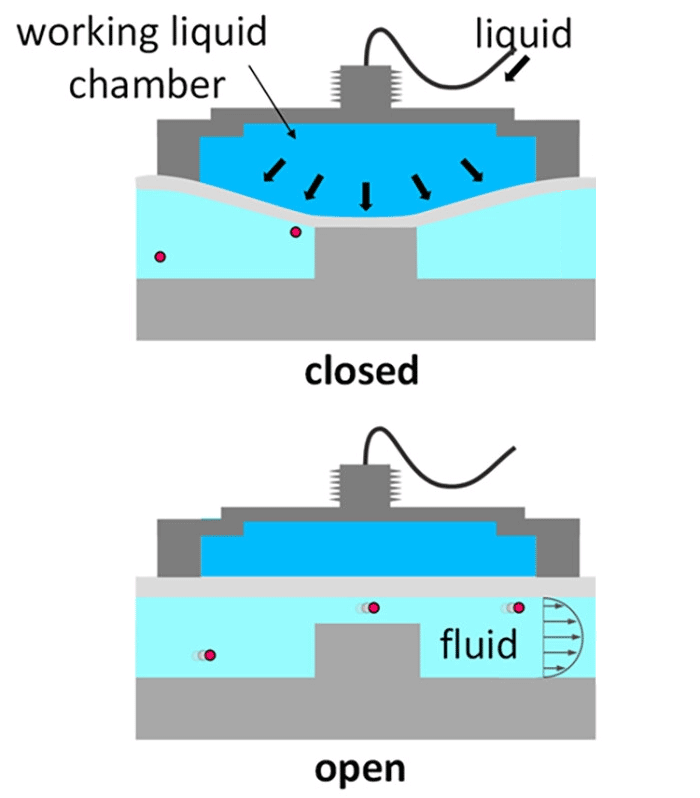
A breakthrough in nanoscale control of fluids has been demonstrated by Osaka Metropolitan University, Japan.
[...]
The team also discovered that when they trapped single fluorescent (dyed) molecules in the nanospace inside the valve, the fluorescence of the single molecules became brighter. This happened because the small space made it harder for single molecules to move around randomly.
Professor Yan Xu, who led the study, explains that "this effect of fluorescence signal amplification could help with detecting very small amounts of pathogens for early diagnosis of diseases such as cancers and Parkinson's, without requiring expensive equipment."
This breakthrough has the potential to be useful in many other ways – "its applications are limitless," according to Xu's team. It could help in developing personalised medicines for rare diseases, or creating better displays and batteries, for example. It could be a significant step towards freely assembling materials using single molecules as building blocks in solution.
Read more: https://www.futuretimeline.net/blog/202 ... -valve.htm