
![[+]](https://www.futuretimeline.net/images/buttons/expand-symbol.gif)
|
|
|
|
|
|
2031-2045
Cargo Sous Terrain becomes operational in Switzerland
Cargo Sous Terrain (CST) is an underground, automated system of freight transport that becomes operational in Switzerland from 2031 onwards.* It is designed to mitigate the increasing problem of road traffic, which has grown by 45% in the region since the mid-2010s. This tube network, including the self-driving carts and transfer stations, is built at a cost of $35 billion and is privately financed.
The first section runs from Härkingen-Niederbipp to Zurich and is around 70 km (43 mi) in length, with 10 hubs between the two regions. This is followed by additional tunnel sections and 80 hubs, eventually spanning the entire width of the country by 2045.*
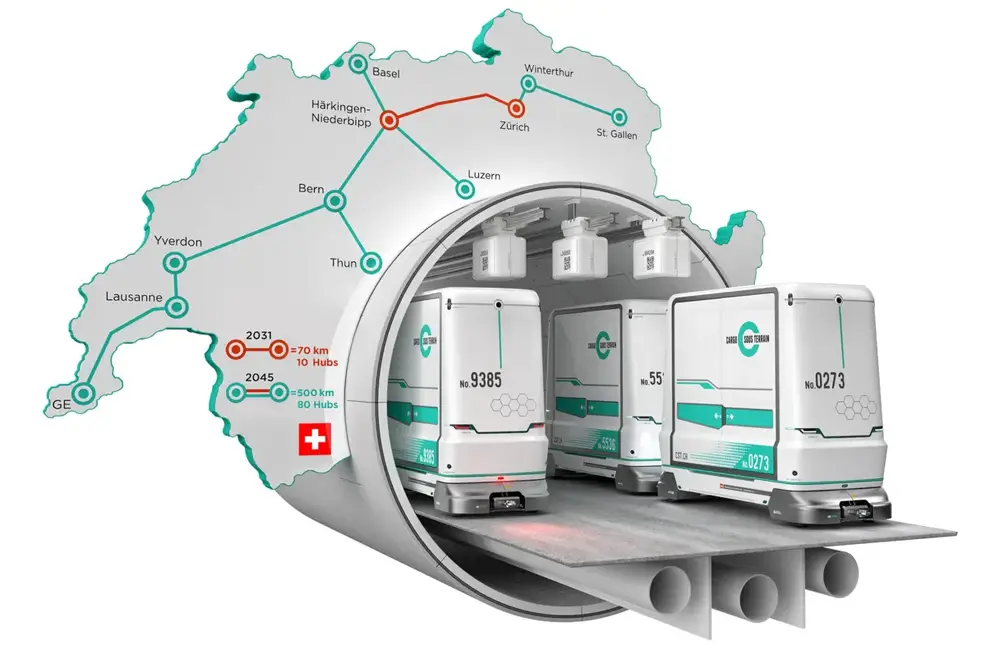
Above-ground waystations with vertical lifts enable the rapid transfer of cargo. Each vehicle is refrigeration-compatible, meaning that fresh and chilled goods can be handled, such as food and medical supplies. As well as deliveries from production and logistics sites to urban centres, the CST can be used for the movement of recycling and waste products.
The entire project is powered by renewables. The vehicles are propelled by electromagnetic induction and run at 19 mph (30 km/h), operating for 24 hours a day, which includes fully automated loading and unloading. An additional monorail system for carrying packages, in the roof of the tunnel, moves at twice this speed. Cargo Sous Terrain allows goods to be delivered more efficiently, at more regular intervals, while cutting both air and noise pollution, as well as reducing the burden of traffic on overground roads and freight trains.*
2031-2035
Jupiter Icy Moons Explorer (JUICE) explores the Jovian system
Jupiter Icy Moons Explorer (JUICE) is a mission by the European Space Agency (ESA) to explore the Jovian system, focussing on the moons Ganymede, Callisto and Europa. Launched in 2023, the craft goes through four gravity assists (Earth, Venus, Earth, Earth), before reaching Jupiter in 2031.*
For its primary objective, the probe performs a series of flybys around some of the largest Galilean moons – Ganymede, Callisto and Europa, all of which are believed to hold subsurface liquid water oceans. As a secondary objective, it also studies Jupiter's atmosphere and magnetosphere, gaining valuable insight into how the gas giant might have originally formed.
The main science goals for Ganymede, and to a lesser extent for Callisto, are:
- Characterisation of the ocean layers and detection of putative subsurface water reservoirs
- Topographical, geological and compositional mapping of the surface
- Study of the physical properties of the icy crusts
- Characterisation of the internal mass distribution, dynamics and evolution of the interiors
- Investigation of Ganymede's tenuous atmosphere
- Study of Ganymede's intrinsic magnetic field and its interactions with the Jovian magnetosphere
For Europa, the focus is on the chemistry essential to life, including organic molecules, and on understanding the formation of surface features and the composition of non-water-ice material. Furthermore, JUICE provides the first subsurface sounding of the moon, including the first determination of the minimal thickness of the icy crust over the most recently active regions.
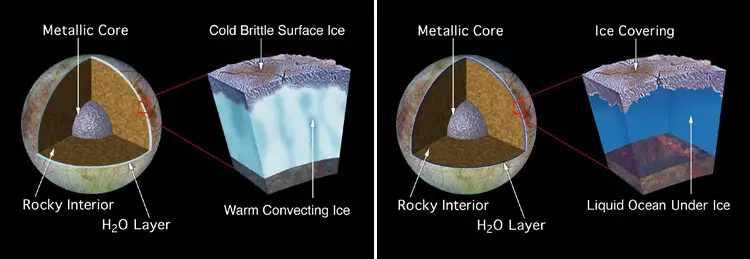
Two possible models of Europa. Credit: NASA
JUICE begins at Ganymede, the largest moon in the Solar System, which it swings past at close range in July 2031. Several hours after this manoeuvre it prepares for orbital insertion at Jupiter itself. This highly elongated first orbit is followed by another Ganymede flyby, then further studies of Jupiter, with orbits around the planet becoming less elongated and more circular.
JUICE flies past Europa in July 2032, and Callisto in the same month. It then begins a "high inclination" phase to allow exploration of Jupiter's polar regions and to study the gas giant's magnetosphere. It also observes moon transits, i.e. moons and their shadows as they pass in front of Jupiter.
In December 2034, the spacecraft returns to Ganymede and enters into orbit (as opposed to a flyby), becoming the first spacecraft to orbit a moon other than Earth's moon. This complicated manoeuvre allows it to come within 500 kilometres (310 mi), returning very close-range images of the surface. It also features a laser altimeter with 20 metre (66 ft) spot size and 10 centimetre (3.9 in) vertical resolution, revealing tidal deformations of Ganymede. With its fuel running out, JUICE is deorbited and impacts the surface of Ganymede in late 2035.
This mission, among ESA's most significant of recent years, provides a wealth of empirical data and new insights into the Jovian system. As well as improving the general scientific understanding of the Galilean moons, JUICE also enables mission planners to determine potential landing sites for surface probes in the future. Indeed, preparations are now getting underway to further explore Europa in the 2035-2050 timeframe.
VERITAS mission to Venus
While several more recent spacecraft had used Venus to perform gravity assists, it had been decades since NASA's last dedicated mission to orbit and study the planet in detail. Magellan, which operated from 1990 until 1994, mapped 98% of the surface with a resolution of 100–250 metres per pixel, revealing thousands of volcanoes, expansive lava plains, and major rift zones.
However, no further NASA missions followed for more than three decades, while much of the agency's planetary exploration focused instead on Mars and the outer Solar System. Following this long hiatus, interest in returning to Earth's twin had grown considerably. In June 2021, NASA finally selected two new missions to Venus for its Discovery Program: VERITAS and DAVINCI, then known as DAVINCI+.
NASA initially expected the two missions to launch between 2028 and 2030. However, an independent review following delays to the Psyche mission found institutional and staffing problems at the Jet Propulsion Laboratory, prompting NASA to pause VERITAS. The launch date consequently shifted to June 2031.*

Credit: NASA/JPL-Caltech
After a six-month cruise, VERITAS arrives at Venus and enters a highly elliptical, 120-hour polar orbit. During its first month at the planet, a further engine burn shortens this orbit to 10 hours. The spacecraft then begins the first of two five-month aerobraking phases, repeatedly dipping into the upper atmosphere to lower and circularise its orbit. Between these phases, a pause of 4.5 months allows an initial science campaign using the Venus Emissivity Mapper. After completing the second aerobraking phase, the spacecraft begins more than two and a half years of observations from a low, near-circular polar orbit.
VERITAS produces the first high-resolution topographic and radar maps of Venus, the first maps of regions undergoing active surface deformation and the first near-global map of surface rock composition. Its Venus Interferometric Synthetic Aperture Radar (VISAR) provides global imagery at 30 m resolution, with detail as fine as 15 m across roughly a quarter of the surface. By comparison, Magellan generally achieved resolutions of around 100–250 m.
VISAR also generates topographic maps with a horizontal resolution of 250 m and vertical accuracy of 5 m, a vast improvement over Magellan's topographic data, which had horizontal resolutions of 10–30 km and vertical resolutions of 50–100 m. Over almost three years of scientific operation, VERITAS returns approximately 3.5 terabytes of data.
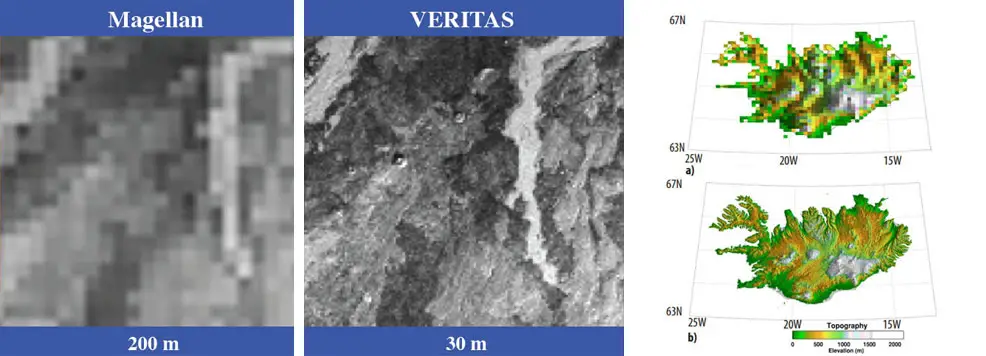
Simulated comparisons of Magellan and VERITAS imaging/topographic resolutions, based on terrestrial data (Hawaii, left; and Iceland, right).
Credit: NASA / JPL-Caltech
A second instrument, the Venus Emissivity Mapper (VEM), uses near-infrared wavelengths to identify different types of surface rock and search for thermal signatures of active volcanism and chemical signatures of recent volcanism. Meanwhile, radio tracking through NASA's Deep Space Network maps variations in the planet's gravitational field with up to three times the precision of Magellan. These measurements help to constrain the size and state of Venus' core, the thickness of its crust and the flow of heat from its interior.
The mission's combined datasets reveal how tectonic and volcanic processes have shaped Venus, what kind of geological activity continues in the present day and whether the planet preserves evidence of past water. By the end of its science operations in 2035, VERITAS has substantially improved our understanding of why Venus and Earth, despite their similar sizes and compositions, followed such radically different evolutionary paths, while also shedding new light on rocky exoplanets beyond the Solar System.
2031-2033
DAVINCI mission to Venus
Deep Atmosphere Venus Investigation of Noble gases, Chemistry, and Imaging (DAVINCI) is one of two missions to Venus selected by NASA in June 2021 for its Discovery Program, alongside the VERITAS orbiter. Originally planned for launch in 2029, budget constraints pushed DAVINCI into the early 2030s. The mission finally launches in 2031, performing two flybys of the planet before releasing a descent sphere into the atmosphere in 2033.
During its two close approaches, the main spacecraft uses ultraviolet and near-infrared instruments to track cloud movements, study the atmosphere and investigate the composition of the surface beneath the dense cloud cover. These observations also provide detailed reconnaissance of the region where the probe later descends.
In 2033,* DAVINCI releases its heavily protected descent sphere on a trajectory towards Alpha Regio, a mountainous and heavily deformed region that may contain some of the oldest rocks on Venus. During its hour-long journey from the upper atmosphere to the surface, the probe measures temperatures, pressures, winds, noble gases, isotopes and trace chemicals. These observations provide new clues to how Venus formed, how much water it once contained and whether its early environment could have resembled that of Earth.
After falling beneath the cloud layer, the probe also captures increasingly detailed near-infrared images of Alpha Regio. The final images reveal surface features at resolutions as fine as 0.7 metres, while infrared emissivity measurements help scientists distinguish between different rock types. Together, these observations test whether the tessera highlands contain silica-rich rocks resembling Earth's continental crust, which could provide evidence for an ancient, wetter period in the planet's history.
DAVINCI forms part of a renewed international exploration of Venus during the 2030s. NASA's VERITAS and ESA's EnVision study the planet from orbit, while DAVINCI provides complementary measurements from deep within the atmosphere and near the surface. Together, these missions greatly improve understanding of why Venus and Earth, despite their similar sizes and compositions, followed such radically different evolutionary paths.
2031-2032
China completes its Guowang and Qianfan megaconstellations
By the end of this period, China has finished deploying two vast satellite networks – Guowang* and Qianfan* – which together reshape the country's position in global space infrastructure. Guowang, operated by state-owned company SatNet, achieves its planned total of 12,992 satellites in low-Earth orbit in 2031. Qianfan, managed by Shanghai Spacecom Satellite Technology (SSST), with support from Shanghai Municipal Government and the Chinese Academy of Sciences, grows to over 14,000 satellites by 2032. Although developed under different institutional frameworks – one central and state-controlled, the other commercially driven with regional backing – both constellations support China's broader strategy to deliver nationwide digital coverage, ensure secure communications, and expand strategic autonomy in space.
Guowang began deployment with a 10-satellite launch in December 2024. In response to the perceived strategic threat posed by Starlink, China's government orchestrated a surge in constellation launches during 2025 and 2026, backed by state directives and supported by national and commercial launch providers. Medium and heavy-lift vehicles – including the Long March 5B and newer Long March 12 – enabled the satellite network to rapidly scale up. Beijing-based company LandSpace added momentum to the effort with the introduction of its methane-fuelled Zhuque-3, whose reusable first stage helped reduce launch costs and turnaround times.* By the end of 2026, China had put 2,800 Guowang satellites into orbit. Over the next five years, the launch cadence grew dramatically, adding more than 10,000 and completing the full megaconstellation of 12,992 satellites. This allowed China to meet its deployment schedule and remain ahead of the regulatory deadline. With near-global coverage, it established China as a direct rival to Western-controlled orbital infrastructure.
Qianfan, the sister constellation, began deployment in August 2024 when a Long March 6A delivered the first 18 satellites. A series of additional launches met the widely publicised goal of 648 satellites by December 2025 – halfway through the 1,296-satellite Phase 1. From 2026 onward, SSST ramped up its operations to several launches each month, using the medium-lift Long March 6A and Long March 8 (the latter with a reusable variant in development), alongside the partially reusable Zhuque-3, which offered a payload capacity comparable to SpaceX's Falcon 9. These efforts pushed the cumulative total above 5,000 satellites in 2028, and to almost 12,000 in 2030. The constellation reaches its planned total of more than 14,000 by 2032.
Together, Guowang and Qianfan expand China's active broadband fleet to 27,000 satellites – second only to Starlink's projected 42,000 by 2033 – and set the stage for Honghu-3, a planned 10,000-satellite network due in 2035 that will push China's total even higher. As part of the broader Digital Silk Road initiative – Beijing's effort to expand digital infrastructure and connectivity across developing regions – these constellations provide partner nations with a state-backed alternative to Western satellite services, reinforcing China's geopolitical influence throughout the Global South.
With low-Earth orbit becoming increasingly congested,* China has begun to integrate electric-propulsion thrusters, onboard AI guidance for collision avoidance, and dedicated de-orbit systems into its latest Guowang and Qianfan satellites. Ground controllers oversee traffic using an advanced platform designed to track tens of thousands of objects, with scalability to 100,000 satellites and beyond – a reflection of China's long-term ambitions in orbital management.
Geopolitically, the completion of Guowang and Qianfan closes a major gap with the United States. A decade earlier, analysts had described Starlink's dominance as a strategic vulnerability for China. That vulnerability no longer exists. With both constellations now fully operational, China controls a broadband system at roughly two-thirds the size of Starlink, but matching its global ambitions. Dozens of countries now rely on Chinese satellites, either by preference or necessity, extending Beijing's influence across digital and orbital domains.
Despite mounting concerns about crowding and competition in space, China's achievement brings clear benefits. Tens of millions of people now enjoy reliable, affordable Internet for the first time, with potential to reach hundreds of millions more as terminal prices fall. Disaster response teams can operate with greater speed and confidence. Businesses, research institutions, and schools tap into high-bandwidth tools that were previously unavailable. The completion of Guowang and Qianfan marks a defining milestone in China's rise as a space power – a technological breakthrough that elevates the nation's role in global communications. It also highlights the pressing imperative for international cooperation to ensure Earth's orbital environment remains stable and accessible for future generations.

2031
Generative AI is a trillion-dollar market
The early beginnings of generative AI – a subset of artificial intelligence for creating new content or data models based on existing datasets – could be traced back to the broader evolution of neural networks and the subsequent rise of deep learning. While the foundational concepts of neural networks first emerged in the mid-20th century,* it took until the 2010s for certain forms of generative AI to begin making notable strides, largely propelled by exponential advances in computational power, algorithms, and the availability of vast datasets.
Generative adversarial networks (GANs) marked a major milestone in the field when first demonstrated in 2014. In a GAN, two neural networks are given a training set of images and then made to "compete" with each other to create brand new ones. This process is repeated, rapidly improving with each cycle, resulting in a final image that is often indistinguishable from an existing object, person, or scene. The public became aware of GANS via content on websites like "This Person Does Not Exist", which created realistic human faces.*
Even greater advancements emerged with large language models (LLMs), such as the GPT series. With 175 billion parameters, GPT-3 demonstrated a remarkable ability to generate human-like text across diverse tasks with minimal fine-tuning. Its versatility made it suitable for tasks ranging from writing essays to coding in various web languages. Version 3.5 became publicly available in late 2022 as ChatGPT, followed by the more powerful GPT-4.
Alongside the LLMs, multimodal models showed that generative AI could be applied to several different areas at the same time – combining realistic and coherent text, images, music, voices, and even video. The complexity of these models led to speculation about the arrival of the first artificial general intelligence (AGI). However, concerns also arose over the use of such technology to generate fake news and other harmful content, as well as its potential to make many traditional human jobs obsolete.

In July 2023, the Screen Actors Guild – American Federation of Television and Radio Artists (SAG-AFTRA), a labour union representing 160,000 media professionals worldwide, began a strike against major TV and film studios in protest of low compensation, ownership of work, and generative AI.
But the march of technology could not be stopped. With each new advance, generative AI drove down the costs of production, decreased the time required to create content, and empowered both individuals and small enterprises to access tools once exclusive to large corporations. The democratisation of this technology around the globe allowed even those without specialised skills or knowledge to harness its power.
In the second half of the 2020s, AI-powered personal assistants became capable of generating entire new movies. With just a few simple voice commands, a film could now be made, based on the user's own personal tastes and preferences. A comedy of 90 minutes duration, for example, perhaps even featuring a deepfake of the user themselves and their friends, along with specific themes or settings.* Although initially a premium service, this capability declined rapidly in cost and soon led to widespread availability of personalised, auto-generated movies.
By 2031, the market for generative AI has seen a nearly 50-fold increase compared with a decade earlier, growing from $23bn to over a trillion dollars annually* – revolutionising industries such as entertainment, advertising, design, journalism, and gaming.
Video games now frequently include AI-generated narratives, which adapt to a player's choices in real-time. Movie scenes can be quickly and easily edited to optimise virtual actors (such as increasing or decreasing the intensity of a certain emotion, without needing a real human to re-enact a scene).
Many schools and colleges are now integrating generative AI into their curricula and courses, not just for computer science, but also creative subjects like art, literature, and music. It can also produce customised learning materials for students, catering to their pace and level of understanding. Virtual teachers can provide students with 24/7 support whenever needed.
Workspaces continue to evolve, with AI increasingly prevalent as a co-worker, collaborator, and tool that amplifies human creativity and productivity. It has transformed numerous other fields including architecture, engineering, fashion, healthcare, and urban planning.
To address the misuse of generative AI (e.g. for deepfakes), many control mechanisms and ethical guidelines have now been established. This includes better detection methods for AI-generated content and inherent safeguards.
The International Space Station is deorbited
The International Space Station (ISS), which first became operational in November 2000, has now reached the end of its lifespan. Originally intended to last for only 15 years, it continued to defy expectations through the late 2010s and into the 2020s. Multiple extensions of the planned time in orbit, along with additional modules and upgrades, meant that it would endure for twice the length of its earlier timeline.
By far the largest human-made object in space, the ISS was visible to the naked eye from Earth as it completed its 16 daily orbits, varying between 418 km and 422 km above the Earth's surface. With its microgravity environment, the ISS yielded breakthroughs in medicine and biotechnology, materials science, and other areas of research. It helped to monitor Earth's ecosystems and natural disasters in real time. It also provided testing of future spacecraft technologies and a place to study the health effects of long-term space flight – essential for enabling the future human exploration of the Solar System.
However, the ISS accumulated damage over the long term, with solar radiation and temperature extremes gradually taking their toll. The daily expansion and contraction of materials, charring of glass, repeated docking and undocking of spacecraft, all weakened the station's integrity. High-speed collisions with space junk also posed a significant and growing threat.
A previous plan by NASA had proposed ending the ISS by 2028. But in 2022, the Biden administration extended this timeline to 2031. The ISS would be steered towards a remote part of the Pacific Ocean known as Point Nemo, a spacecraft "graveyard" and the furthest known location from civilisation.
In late 2030, the ISS is gently decelerated by onboard thrusters, causing its altitude to gradually decrease over the course of a few months. The final part of the descent is much faster and occurs in January 2031.* As it re-enters the atmosphere, the large solar arrays are the first components to burn away, followed by the upper modules and then the remaining structure below. The ISS is four times the size of Mir, which underwent a similar manoeuvre in 2001.
As of 2022, NASA had spent $3.1 billion a year on the space station program, with more than $1.3 billion going to operations of the station and research performed there, and $1.8 billion on crew and cargo transportation. The retirement of the station therefore provides major cost savings for NASA and enables the agency to focus on other areas.
By 2031, commercial space platforms are replacing the ISS as a venue for scientific research and collaboration. Another major deorbit occurs the following year when China retires Tiangong, its national space station.
Europe's first lunar lander
For decades, Europe lagged behind other major space agencies in lunar exploration. While NASA (1966), the Soviet Union (1966), China (2013), and India (2023) all achieved successful Moon landings, Europe had yet to place a single spacecraft on the lunar surface. The European Space Agency (ESA) provided instruments and technology to international missions, but it lacked an independent lunar lander of its own. This absence became more pronounced in the 2020s, as global interest in Moon exploration surged with the Artemis programme, China and India's expanding ambitions, and commercial ventures led by private companies.
Recognising the need for greater autonomy in space, ESA developed Argonaut, its first-ever dedicated lunar lander. This would consist of three main components: a Lunar Descent Element (LDE), for ensuring a precise journey to the Moon and soft landing; a Cargo Platform Element, serving as the interface between the lander and its mission-specific payloads; and the Payload, with a capacity of up to 1,500 kg (3,300 lb).
This modular design would allow the Argonaut to accommodate a wide range of functions – from deploying infrastructure and power systems to transporting scientific instruments and rovers.
In a landmark achievement, an Ariane 6 rocket launches the first Argonaut to the Moon in 2031,* marking Europe's entry into surface operations. This mission, known as ArgoNET, focuses on establishing critical infrastructure in the lunar southern region. It delivers dedicated navigation and telecommunication payloads, along with energy generation and storage systems, laying the groundwork for future explorations and sustained operations.
Notably, Argonaut is engineered to endure the Moon's extreme environmental conditions for extended periods, including the harsh 14-day lunar night where temperatures can plummet to as low as –150°C. Its robust design ensures operational longevity, with the capability to survive for up to five years. Its design is also versatile enough to enable landings in any region – pinpointing locations to within 50 m accuracy – potentially allowing samples to be analysed from previously unexplored and hard-to-reach areas of the Moon.
Additional missions with Argonaut landers occur approximately every two years throughout the 2030s. These aim to expand Europe's role in lunar exploration – such as delivering more complex payloads, supporting international partnerships (e.g. with NASA's Artemis programme),* and helping to establish a long-term human presence on the Moon.

Credit:
ESA - P. Carril
Launch of the Ariel spacecraft
The Atmospheric Remote-sensing Infrared Exoplanet Large-survey (Ariel) is a space observatory developed by the European Space Agency (ESA) as the fourth Medium-class mission in its Cosmic Vision programme. Selected in March 2018 and formally adopted in November 2020, it launches aboard an Ariane 6 in 2031.* During its mission, Ariel studies exoplanet atmospheres, using visible and infrared observations to determine their chemical compositions, temperatures, clouds and other atmospheric properties.
Ariel travels to a halo orbit around the Sun-Earth L2 Lagrange point, about 1.5 million km (930,000 mi) beyond Earth. This location provides a highly stable thermal environment and broad access to the sky, allowing the telescope to make extremely precise observations of planets as they transit their host stars or pass behind them. The mission focuses mainly on warm and hot worlds ranging from rocky planets and super-Earths to gas giants. Ariel represents a major step forward in exoplanet characterisation. Rather than focusing only on individual worlds, it performs the first large-scale chemical census of planetary atmospheres, studying around 1,000 known exoplanets while detecting changes in stellar brightness as small as 0.001%.
By comparing atmospheric properties across this large and diverse sample, Ariel addresses fundamental questions regarding how planets form, how their atmospheres evolve and how their properties relate to those of their parent stars. ESA previously targeted a 2029 launch, but later moved the schedule to 2031. The nominal science mission lasts four years, with the possibility of a further two-year extension.
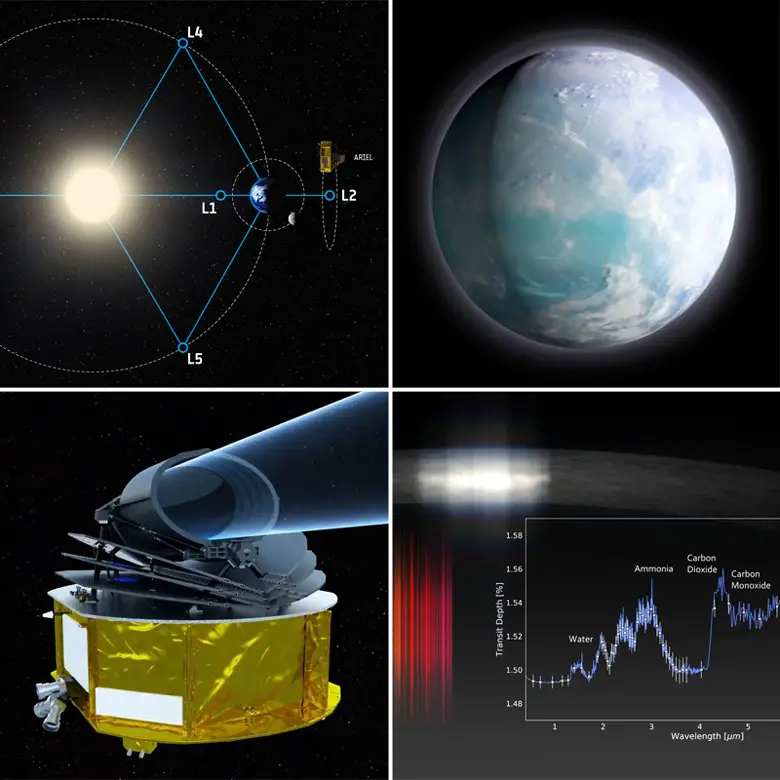
Credit: ESA
2 World Trade Center completes the rebuilding of Ground Zero
Three decades after the terrorist attacks of 11th September 2001, the rebuilding of Ground Zero has reached its symbolic conclusion. Two World Trade Center – the final office tower of the 16-acre World Trade Center site – is now opening as the new global headquarters of American Express.*
Designed by Foster + Partners and developed by Silverstein Properties, the skyscraper rises 374 m (1,226 feet) above 200 Greenwich Street, immediately north of the Oculus, the distinctive wing-shaped transport hub and shopping complex at the centre of the rebuilt World Trade Center. Its 55 floors contain nearly 186,000 sq m (two million square feet) of space with capacity for up to 10,000 employees. American Express is both the sole owner and occupant of the building, which stands on land owned by the Port Authority of New York and New Jersey under a long-term ground lease. The company is relocating from its previous headquarters at the nearby 200 Vesey Street, which had served as its headquarters since 1986.
At street level, the new building fills the last conspicuous gap beside the Oculus and the 9/11 Memorial. It becomes the second-tallest tower in Lower Manhattan, surpassed only by the 541 m (1,776-foot) One World Trade Center. From more distant viewpoints, it adds a major new peak to Lower Manhattan, joining One, Three, Four and Seven World Trade Center in a descending cluster across the rebuilt complex. Its broad, stepped profile gives it a commanding presence, particularly when viewed from the Hudson River and New Jersey, where the previously incomplete eastern side of the complex now appears fully developed.
The tower consists of several slender, interlocking glass volumes that step back as they rise. These setbacks create three terraces and six corner gardens, providing more than an acre of outdoor space with panoramic views across Manhattan and the surrounding waterways. Greenery is integrated throughout the vertical workplace, alongside flexible offices, communal facilities and advanced smart-building technology. Fully electric and designed around energy efficiency, the tower reflects the growing emphasis on employee well-being and environmental performance in corporate architecture.
The project concludes a long, complicated effort to complete the final office tower at Ground Zero. Earlier designs had failed to progress amid financing problems and changing office markets, while the COVID-19 pandemic added further uncertainty. American Express ultimately revived the project by committing to own and occupy the entire building. A ceremonial groundbreaking in July 2026 formally marked the start of the main construction phase.
One qualification remains. The separate Five World Trade Center site lies on the southern edge of the campus, south of Liberty Park and the memorial core. It sits outside the principal group of office towers surrounding the memorial. Two World Trade Center therefore completes this central office cluster and fills its final major skyline gap.
For an entire generation, Ground Zero was characterised by absence: first as an enormous void, and later by construction sites, temporary structures and unfinished plans. By 2031, it has become a fully functioning district of offices, transport, culture, public space and remembrance – demonstrating how a city can preserve the memory of its darkest moment while continuing to build confidently towards the future.

Credit: American Express
Completion of the Stad Ship Tunnel
The Stad Ship Tunnel is a 1.8 km (1.1 mile) canal and tunnel, cutting through Norway's rugged Stad peninsula, letting ships bypass one of the coast's most dangerous stretches. The tunnel measures 49 metres (161 ft) high and 36 metres (118 ft) wide, with a water depth of 12 metres (39 ft),* handling ships up to 16,000 gross tonnage and large enough for the Hurtigruten coastal express ships.
First proposed in 1874 but revived more than 130 years later, the project began construction in 2026. Costing 2.7 billion kroner (US $314 million) and taking around five years to complete, it required the removal of eight million tons of rock to carve the passage. The official opening occurs in 2031,* later than the initial 2026 estimate but still marking the world's first full-scale "ship tunnel".
The tunnel operates with strict safety and traffic controls. Vessels wait at each end for clearance, using a red and white light system, similar to aircraft signals. Only five ships an hour can pass through, maintaining safe distances of about 400 metres. Large vessels have a clearance of 2.5 metres on each side, tested in model tanks to ensure stability. Pilots guide ships longer than 70 metres, while speed limits add a further layer of safety. A typical vessel moving at five knots can pass through in about 15 minutes. Smaller recreational craft may also use the passage during designated times.
India has begun phasing out hydrofluorocarbons (HFCs)
The Montreal Protocol, signed in 1987, was an international agreement to protect the ozone layer by phasing out the production of substances responsible for ozone depletion. These included chlorofluorocarbons (CFCs) and hydrochlorofluorocarbons (HCFCs).
CFCs and HCFCs had been used in a wide range of industrial applications – such as aerospace, agriculture, air conditioning, electronics, fire protection, flexible and rigid foam, laboratory measurements and refrigeration. Produced mostly in developed countries, hydrofluorocarbons (HFCs) began to replace CFCs and HCFCs. HFCs posed no harm to the ozone layer because, unlike CFCs and HCFCs, they did not contain chlorine. They were, however, greenhouse gases, with a very high global warming potential (GWP), thousands of times greater than carbon dioxide (CO2) when measured on a per-molecule basis. While their atmospheric concentration was initially very low, it began to grow rapidly in the years following the Montreal Protocol.
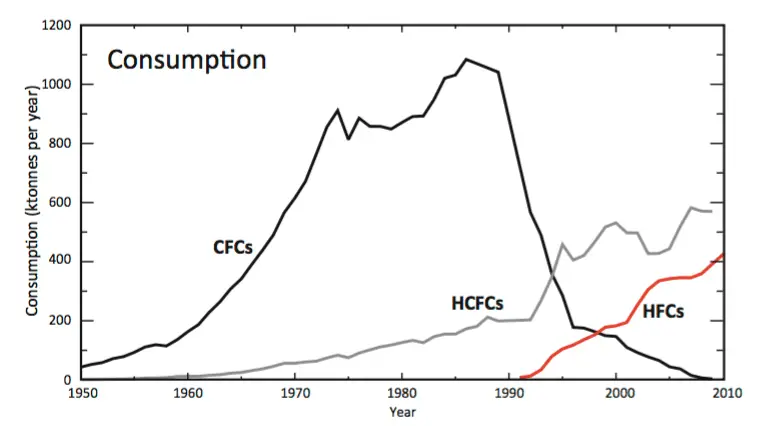
Credit: UNEP
Known as "super greenhouse gases," it was feared that soaring use of HFCs, combined with their high global warming potential, could undercut the benefits expected from the reduction of other greenhouse gases such as carbon dioxide and methane. If left unchecked, it was calculated that HFCs could add a potentially disastrous 0.5°C to global average temperatures by the end of the 21st century.*
Unlike other greenhouse gases in the 2015 Paris Agreement, HFCs had other international negotiations. In September 2016, the New York Declaration urged a global reduction in the use of HFCs. In October 2016, negotiators from 170 nations meeting at the summit of the UN Environment Programme in Kigali, Rwanda, reached a legally-binding accord to phase out hydrofluorocarbons (HFCs) in an amendment to the original Montreal Protocol.*
While hailed as a major achievement for international diplomacy, there were significant differences on the timing and schedule of reductions. The final agreement would see the richest countries starting the process in 2019. Over 100 developing nations would follow in 2024. However, a small group of countries argued for and secured a later start, insisting their economies needed time to grow. Among this group was India, the world's third largest emitter of greenhouse gases and a region with surging demand for air conditioning, due to both rising incomes and increasingly extreme hot weather.
The chemicals needed to replace HFCs were more flammable and toxic – requiring better-trained and better-paid people to design, install and maintain equipment such as air conditioners safely and correctly. In addition, new technologies were required to capture and store HFC in some applications. India's Council on Energy, Environment and Water estimated that the total cost of phasing out HFCs in all homes, workplaces and vehicles could reach up to $38 billion.
India, along with Pakistan and a number of Gulf states, agreed to "freeze" their use of HFCs by 2028. This plateau would be followed by steep reductions from 2031 onwards,* leading to the vast majority of HFCs being eliminated by the late 2040s.*

Much of Bangkok is being abandoned due to flooding
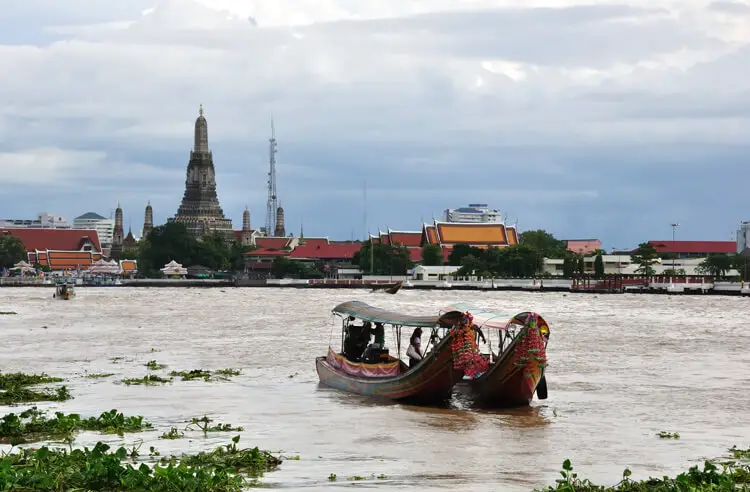
Bangkok, with a population of over 12 million, has been sinking underwater for decades. By the early 2030s, it is facing a disaster of epic scale, with much of the city being abandoned.*
This has occurred for various different reasons. First and foremost, the city is built on clay. When originally settled, the region was just swampy coastline, but today it is covered by skyscrapers, highways and urban development. The enormous weight of all this concrete and steel has been pushing down on the soft clay beneath, causing the soils to descend by up to 5.3cm per year. By 2010, part of the megalopolis was already under sea level, a trend that would only become worse in the following decades.
The illegal tapping of groundwater has been another major factor. Many of the city's residents have been continuously pumping up groundwater – both for their own use and to sell as a commodity – removing a natural layer and resulting in further destabilisation of the soil.
Rising sea levels due to global warming have been yet another factor, eroding the coastline at a rate of 4cm a year, while the increasing severity of monsoon rains has led to longer and more devastating floods.
The explosive growth of Bangkok in recent decades (making it one of the fastest growing places in southeast Asia) has dealt a serious blow to the city's infrastructure. Areas of land that had in the early 20th century been used to absorb flood waters had vast suburbs and business districts built over them. Canals were filled in to make way for the rapid urbanisation of the Chao Praya River Delta. The weight of the city grew and grew, to the point where the soft soil it was built upon could simply no longer support it.
By the early 2030s, large portions of the megalopolis are well below sea level. The government's response during this time has proven inadequate, a lack of clear policy doing little to help the overall situation,* while sea walls have been almost useless due to increasing erosion of the shore. The lowering of the city, combined with rising sea levels (over 20cm higher than in 2000), has resulted in whole districts of Bangkok being permanently abandoned. Over a million buildings, the majority residential, are rendered uninhabitable, forcing their occupants to move further inland.
Many areas which have yet to be fully claimed by the sea have also been evacuated, as the regularity of flooding proved too costly for many. Shantytowns and refugee camps are forming outside the city, while the government struggles to adjust as the capital sinks. Thailand as a whole is going through a period of almost unimaginable stress at this time, a result of such huge population displacement. The political, economic and social upheaval in the region is having a significant impact on global GDP.
Efforts are underway to save Bangkok's numerous historical monuments and artifacts, with some temples being moved inland and reconstructed in their entirety. Due to the scale of this disaster, however, much is lost.
In the coming years, the situation for Bangkok will only worsen as more and more of the city is permanently flooded. By the end of this century, the entire city will be abandoned.*
Perennial wheat and corn are becoming profitable
In traditional agriculture, all major grain crops have been "annuals", or short-lived perennials grown as annuals – surviving for just one growing season. They die off once harvested, and then a brand new crop must be planted to take their place. This requires vast amounts of fuel, fertilizer, herbicides and pesticides – causing soil erosion, acidification and disrupting both the nitrogen and carbon cycles.
Between 1600 and 2000 AD, the United States lost around one-third of its topsoil. Worldwide, soil erosion was putting the livelihoods of nearly a billion people at risk by the early 21st century.* More than a quarter of Earth's land surface had been converted for agricultural use, with more land converted since 1950 than in the previous 150 years. This situation was being exacerbated by rapid population growth,* demand for meat products in emerging economies, increased production of biofuels,* and global warming.*
Genetic engineering had emerged as an important tool in crop management. Among the more notable advances occurred in 2017, when BioCassava Plus received regulatory approval, giving a huge boost to farming in Africa.* By the early 2030s,** this has been followed by an even greater breakthrough – perennial wheat and corn – becoming profitable after many years of development.
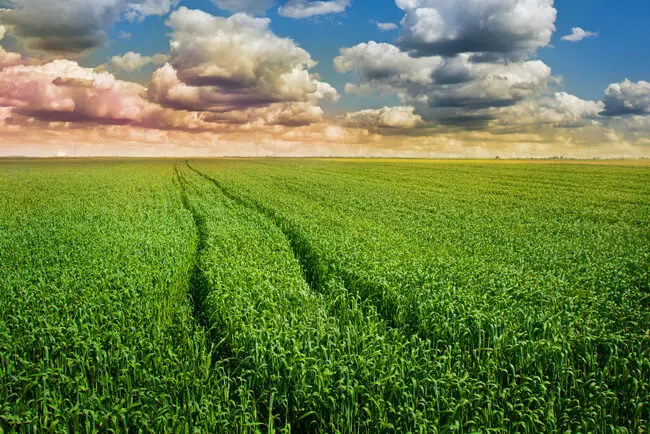
Perennial grain crops provide a revolution in agriculture. By growing continuously for two or more years, they are far more efficient than traditional annual crops, requiring less fuel, fertilizer, herbicides and pesticides. They can store more carbon, maintain better soil quality and water content, and manage nutrients better, thanks to their deeper root systems.
The deciphering of bread wheat's genetic code in the early 2010s* helped in paving the way towards a new generation of perennial crops. The rate of increase in wheat yields, having been in decline since 1980, is now beginning to increase again. However, agriculture will face a new set of challenges later this decade as the effects of climate change begin to accelerate markedly.*
Stem cell pharmacies are commonplace
Stem cell pharmacies are now a fairly common experience in the developed world, offering walk-in diagnosis, stem-cell collection and banking services for use in future medical crises. Affordable, personalised and targeted treatments are becoming available for regenerating various bodily tissues.*

Married couples are a minority in the UK
By now, marriage in the UK has been reduced to a lifestyle choice enjoyed by a minority, rather than an essential institution of society. The married population has shrunk from almost 50% of adults in 2009, to just 41% now.* This trend began in the 1980s. Increasing pressures of work and money, together with the general stresses of the outside world (geopolitical, social and economic), are putting ever-greater strain on couples. The decline of religious institutions has also played a part. Unmarried partnerships no longer carry the stigma they once had.
In addition, increasing numbers of people either working at home alone, or living with their parents, are making it difficult for some to meet potential partners. Another contributory factor is an explosion in the use of virtual reality and other technologies leading to increased isolation of the individual. People of all ages spend increasingly large amounts of their time engaged in highly immersive online experiences, requiring little or no interaction with the outside world.
Of those who are married, the number of children per couple has declined – and not just in the UK, but other Western societies too. Combined with increasing numbers of Muslim immigrants (who have higher numbers of children), this is significantly altering the demographic balance.

Chocolate is becoming a rare luxury
Chocolate products have become alarmingly expensive, with individual bars costing upwards of $10. Drought, soil depletion and diminishing harvests in Africa – where two-thirds of the world's cocoa is produced – have led to soaring prices. Cocoa is also competing for agricultural space with other commodities like palm oil, which is increasingly in demand for biofuels. Poor pay and working conditions have also been a factor. Many young farmers are now abandoning their lands and heading to the cities, in search of better and more highly-paid jobs.*

The final Avatar movie is released
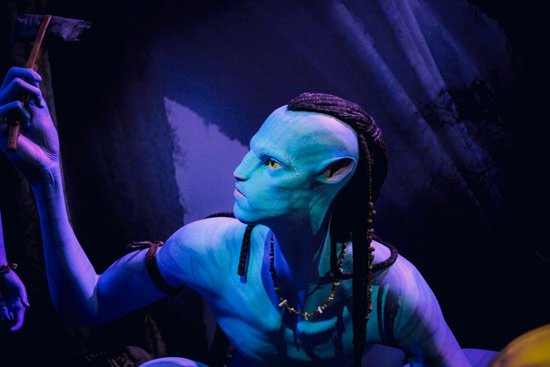
After the success of his 1997 movie, Titanic, director James Cameron began a project that took almost 10 years to make: his science-fiction epic Avatar (2009). This was a landmark for 3D technology and CGI, with numerous accolades – winning Oscars for Best Art Direction, Best Cinematography and Best Visual Effects, and nominated for a total of nine, including Best Picture and Best Director. It also won the 67th Golden Globe Awards for Best Motion Picture – Drama and Best Director, and was nominated for two others. At the 36th Saturn Awards, Avatar won all ten awards it was nominated for.
Numerous other awards, nominations and honours were received. With a worldwide box-office gross of more than $2.7 billion, Avatar became the highest grossing film of all time – surpassing Cameron's previous blockbuster, Titanic ($2.2 billion).
Two sequels to Avatar were initially confirmed after the success of the first film. This number was subsequently expanded to four, with Cameron said to be directing, producing and co-writing all of them. Many of the stars from the original film would reprise their roles – including Sam Worthington, Zoe Saldana, Giovanni Ribisi, C. C. H. Pounder and Joel David Moore. Despite the deaths of their characters in the original film, Stephen Lang and Matt Gerald would also make an appearance. Sigourney Weaver was confirmed too, although playing a different character.
New cast members included Kate Winslet and Cliff Curtis, portraying Na'vi "reef people", along with Oona Chaplin as Varang, described as a "strong and vibrant central character who spans the entire saga of the sequels". A number of child actors would also portray "free-divers" and become pivotal new characters through the sequels.
The second Avatar movie, being set in marine environments, featured heavy use of underwater scenes, actually filmed underwater with the cast in performance capture. Blending underwater filming and performance capture was a feature never accomplished before, requiring a year and a half to develop a new motion capture system. The film would also be available in "glasses-free 3D", another first in film history.
Following acquisition by Disney, these sequels were pushed back. The COVID-19 crisis caused yet further delays in production. Avatar 2 would be shifted to December 2022 (from its original December 2020 date) followed by Avatar 3 in December 2025 and Avatar 4 in December 2029. The science fiction epic reaches its conclusion with a fifth and final film released in December 2031* (six years later than its original planned date). Computing power is orders of magnitude more advanced than in 2009, making the visual effects in these subsequent films even more spectacular and impressive than the original, setting a new benchmark for CGI in movies.
Credit: Supershine
« 2030 |
⇡ Back to top ⇡ |
2032 » |
If you enjoy our content, please consider sharing it:
References
1 Cargo sous terrain commences implementation, Cargo Sous Terrain (official website):
https://www.cst.ch/en/cargo-sous-terrain-commences-implementation/
Accessed 26th August 2022.
2 What is CST?, Cargo Sous Terrain (official website):
https://www.cst.ch/en/what-is-cst/
Accessed 26th August 2022.
3 Switzerland Moves Ahead With Underground Autonomous Cargo Delivery, IEEE Spectrum:
https://spectrum.ieee.org/cargo-sous-terrain
Accessed 26th August 2022.
4 Jupiter Icy Moons Explorer, Wikipedia:
https://en.wikipedia.org/wiki/Jupiter_Icy_Moons_Explorer
Accessed 14th April 2023.
5 Venus has a massive lava tube, Science News:
https://www.sciencenews.org/article/venus-massive-lava-tube-caves
Accessed 24th September 2026.
6 DAVINCI Mission Status Update, Universities Space Research Association:
https://www.hou.usra.edu/meetings/vexagnovember2024/presentations/Monday/1050_Garvin.pdf
Accessed 23rd September 2026.
7 Guowang, Wikipedia:
https://en.wikipedia.org/wiki/Guowang
Accessed 13th May 2025.
8 Qianfan, Wikipedia:
https://en.wikipedia.org/wiki/Qianfan
Accessed 13th May 2025.
9 China to launch 2 new space station cargo spacecraft on commercial rockets in 2025, Space News:
https://spacenews.com/china-to-launch-2-new-space-station-cargo-spacecraft-on-commercial-rockets-in-2025/
Accessed 13th May 2025.
10 See 2029.
11 This week in The History of AI at AIWS.net – Marvin Minsky and Dean Edmonds built SNARC, the first artificial neural network, AIWS.net:
https://aiws.net/the-history-of-ai/this-week-in-the-history-of-ai-at-aiws-net-marvin-minsky-and-dean-edmonds-built-snarc-the-first-artificial-neural-network/
Accessed 9th August 2023.
12 This Person Does Not Exist:
https://thispersondoesnotexist.com/
Accessed 9th August 2023.
13 AI's Impact on Hollywood, Peter Diamandis, YouTube:
https://www.youtube.com/watch?v=GLL4eyd1xUw
Accessed 9th August 2023.
14 $1 trillion mark exceeded in 2031; $1.3 trillion in 2032:
See
Generative AI to Become a $1.3 Trillion Market by 2032, Research Finds, Bloomberg:
https://www.bloomberg.com/company/press/generative-ai-to-become-a-1-3-trillion-market-by-2032-research-finds/
Accessed 9th August 2023.
15 NASA plans to retire the International Space Station by 2031 by crashing it into the Pacific Ocean, CNN:
https://edition.cnn.com/2022/02/02/world/nasa-international-space-station-retire-iss-scn/index.html
Accessed 23rd February 2022.
16 Argonaut: a first European lunar lander, ESA:
https://www.esa.int/Science_Exploration/Human_and_Robotic_Exploration/Argonaut_a_first_European_lunar_lander
Accessed 26th February 2025.
17 Argonaut, ESA:
https://www.esa.int/Science_Exploration/Human_and_Robotic_Exploration/Exploration/Argonaut
Accessed 26th February 2025.
18 Ariel, European Space Agency:
https://www.esa.int/Science_Exploration/Space_Science/Ariel
Accessed 30th September 2026.
19 American Express to Build New State-of-the-Art Global Headquarters at 2 World Trade Center, Deepening Commitment to Lower Manhattan, American Express:
https://www.americanexpress.com/en-us/newsroom/articles/
Accessed 12th July 2026.
20 Stad Ship Tunnel, Wikipedia:
https://en.wikipedia.org/wiki/Stad_Ship_Tunnel
Accessed 9th September 2025.
21 Information for potential contractors for the Stad ship tunnel, Norwegian Coastal Administration:
https://www.kystverket.no/en/development/stad-ship-tunnel/for-contractors/
Accessed 9th September 2025.
22 The biggest climate change story in the world this week is quietly playing out in Rwanda, Vox:
http://www.vox.com/energy-and-environment/2016/10/12/13250202/hfcs-air-conditioning-montreal-protocol
23 Kigali makes history with hydrofluorocarbons freeze, The Hindu:
http://www.thehindu.com/sci-tech/energy-and-environment/countries-agree-in-kigali-to-phase-out-85-of-potent-greenhouse-gas-by-2045/article9223509.ece
Accessed 18th October 2016.
24 Emerging Climate Accord Could Push A/C Out of Sweltering India's Reach, The New York Times:
http://www.nytimes.com/2016/10/13/world/asia/india-air-conditioning.html
Accessed 18th October 2016.
25 Countries agree to curb powerful greenhouse gases in largest climate breakthrough since Paris, UNEP:
http://www.unep.org/newscentre/default.aspx?DocumentID=27086&ArticleID=36283
Accessed 18th October 2016.
26 Thailand, Sinking: Parts of Bangkok Could Be Underwater in 2030, TIME:
http://www.time.com/time/world/article/0,8599,2084358,00.html
Accessed 22nd December 2011.
27 Bangkok at risk of sinking into the sea, The Guardian:
http://www.guardian.co.uk/environment/2011/sep/06/bangkok-thailand-risks-steadily-sinking
Accessed 22nd December 2011.
28 Bangkok is sinking, Global Post:
http://www.globalpost.com/dispatch/thailand/090202/bangkok-sinking-1
Accessed 22nd December 2011.
29 Restoring the land, FAO:
http://www.fao.org/docrep/u8480e/U8480E0D.HTM
Accessed 19th June 2013.
30 Global population, Future Timeline – Data & trends:
https://www.futuretimeline.net/data-trends/1.htm
Accessed 7th August 2022.
31 Biofuel, Wikipedia:
https://en.wikipedia.org/wiki/Biofuel
Accessed 9th February 2016.
32 Global warming timeline – interactive, Future Timeline > Data & trends:
https://www.futuretimeline.net/data-trends/global-warming-timeline-interactive.htm
Accessed 17th June 2026.
33 See 2017.
34 Article from 2007: "It is expected to take at least twenty-five years to achieve profitable, productive perennial grain crops."
Perennial Grain Cropping Research: Frequently Asked Questions, The Land Institute:
http://www.landinstitute.org/vnews/display.v/ART/2007/03/15/45fac90d9668c
Accessed 19th June 2013.
35 By 2030, Perennial Grains Could Revolutionize Agriculture, Save Humanity, PopSci:
http://www.popsci.com/science/article/2010-06/2030-perennial-grains-could-revolutionize-agriculture-save-humanity
Accessed 19th June 2013.
36 Major breakthrough in deciphering bread wheat's genetic code, Future Timeline Blog:
https://www.futuretimeline.net/blog/2012/12/1-2.htm
Accessed 19th June 2013.
37 See 2035-2040.
38 Stem
cell 'pharmacies' in the high street in 20 years, predicts expert, Daily Telegraph:
http://www.telegraph.co.uk/news/science/science-news/7883978/Stem-cell-pharmacies-in-the-high-street-in-20-years-predicts-expert.html
Accessed 31st October 2010.
39 Married
couples to be minority within 20 years, Daily Telegraph:
http://www.telegraph.co.uk/news/uknews/5086491/Married-couples-to-be-minority-within-20-years.html
Accessed 4th April 2009.
40 "In 20 years chocolate will be like caviar. It will become so rare and so expensive that the average Joe just won't be able to afford it."
See Chocolate: Worth its weight in gold?, The Independent:
http://www.independent.co.uk/life-style/food-and-drink/features/chocolate-worth-its-weight-in-gold-2127874.html
Accessed 7th January 2011.
41 Avatar (franchise), Wikipedia:
https://en.wikipedia.org/wiki/Avatar_(franchise)
Accessed 29th December 2024.
 |
|||||||||||||||||||||||||||||||
|
Latest predictions |
Timeline » 21st century |
Blogs » AI & Robotics |
Features » |
About us
|
|||||||||||||||||||||||||||
|
|
|||||||||||||||||||||||||||||||


