
![[+]](https://www.futuretimeline.net/images/buttons/expand-symbol.gif)
|
|
|
|
|
|
2029
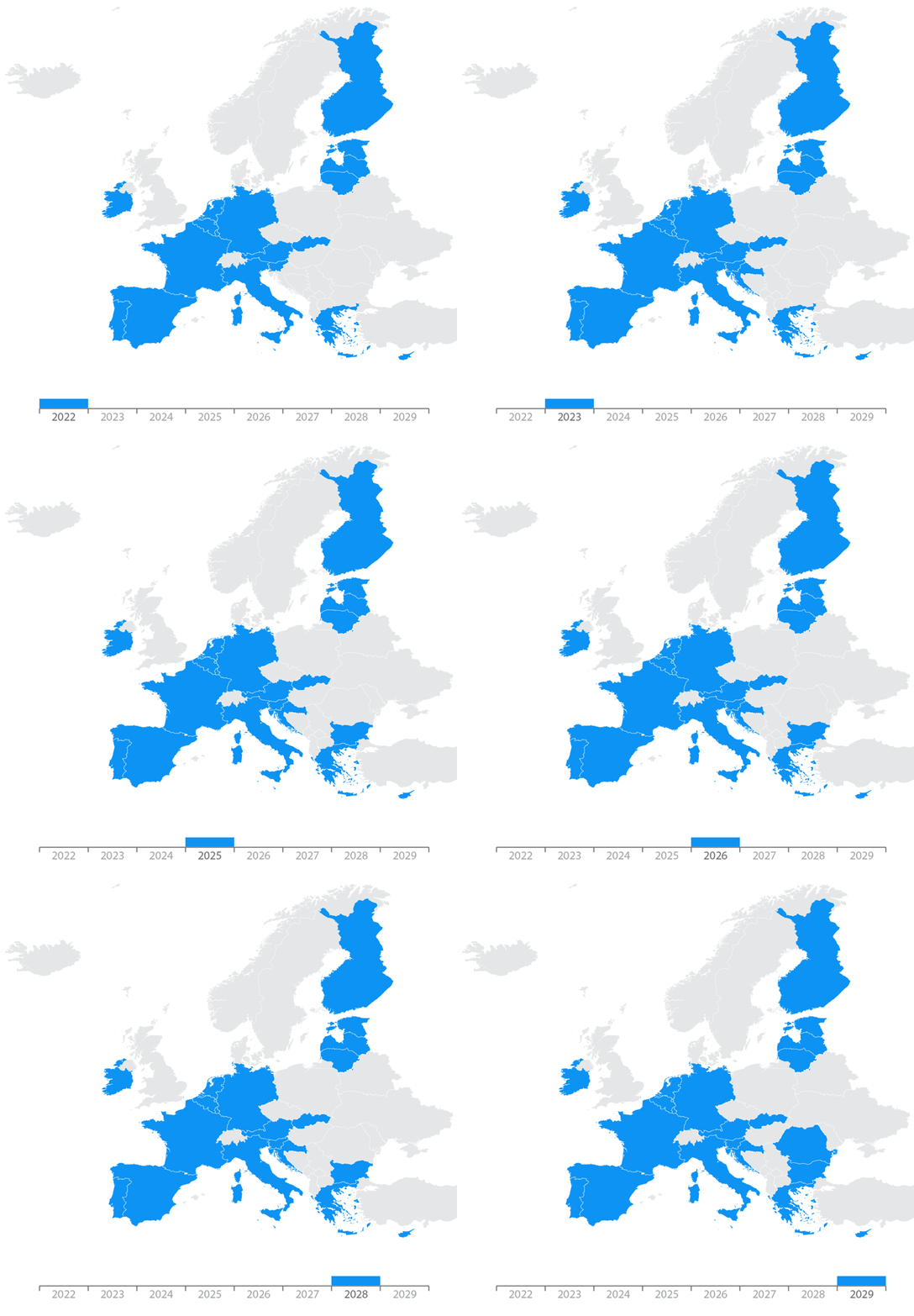
Romania adopts the euro
In 2029, Romania adopts the euro as its official currency, becoming the 22nd member state of the European Union (EU) to do so. This follows Bulgaria (2024) and Croatia (2023).
Like those previous countries, Romania had to meet several criteria before its transition would be possible. After joining the EU in 2007, it worked towards the financial strength, stability, and flexibility required, achieving four of the seven criteria by 2014.
In subsequent years, however, Romania encountered a number of setbacks. The European Commission's (EC's) Convergence Report of 2020 concluded that it did not fulfil the price stability, public finances, exchange rate, and long-term interest rate criteria.
Prime Minister Florin Cîțu stated that Romania could join the eurozone in 2027 or 2028. As a precursor to full adoption of the euro, Romania joined the EU's exchange rate mechanism (ERM II), after working to address concerns around its budget deficit to GDP ratio, inflation rate, long-term interest rate, and compatibility of legislation.
Having met all the criteria and with two years of stability, Romania is accepted into the eurozone. The leu, its national currency since 1867, is finally replaced by the euro in 2029.*
The Extremely Large Telescope achieves first light
In early 2029, the Extremely Large Telescope (ELT) reaches first light on Cerro Armazones in Chile's Atacama Desert. The European Southern Observatory (ESO), an intergovernmental organisation comprising 16 member states, has developed the giant observatory to tackle some of astronomy's biggest questions, from the search for potentially habitable worlds to the nature of dark matter and dark energy and the formation of planets, stars and galaxies.
Its 39-metre (128 ft) primary mirror contains 798 hexagonal segments, with a combined collecting area of 978 square metres. The ELT gathers around 25 times more light than a single 8.2-metre telescope at ESO's Very Large Telescope (VLT), while its five-mirror design and advanced adaptive optics compensate for atmospheric turbulence on Earth, producing images up to six times sharper than those from the James Webb Space Telescope. Its instruments capture light across the visible, near-infrared and mid-infrared spectrum, spanning wavelengths from roughly 0.4 to 13 micrometres.
This enormous sensitivity and resolution allows astronomers to directly image exoplanets and analyse their atmospheres for chemical signatures linked to habitability or life, examine planet-forming disks, resolve individual stars in distant galaxies, study the earliest generations of stars and galaxies, and investigate black holes. The ELT can also test fundamental physics and, over longer periods, directly measure changes in the expansion rate of the Universe.
ESO originally planned the telescope for the late 2010s, but financial, technical and construction delays repeatedly pushed back the schedule. ESO also reduced the planned primary mirror from 42 to 39 metres. The telescope finally achieves technical first light in 2029,* with scientific observations following in 2030.

Size comparison of VLT and ELT. Credit: ESO
Increased automation of banking
During the early 21st century, a wave of new technology swept the banking sector, as companies worked to improve costs and efficiencies. Online services, combined with mobile apps, automated chatbots, virtual telephone assistants, increasingly sophisticated ATMs, and other features all made it quicker and easier than ever to manage one's personal finances. On the business and corporate side, the rise of cloud computing, big data and intelligent algorithms yielded significant time and cost savings in research, marketing, processing and other areas, while giving more power and insight to decision makers.
By 2020, U.S. banks alone were investing over $150 billion in new technology annually, spending more than any other industry. While customers and clients benefited greatly from these improvements, automation reduced the need for human staff. By 2029, more than 10% of banking jobs have been eliminated compared to a decade earlier, adding up to some 200,000 roles in the U.S.* Retail branches and call centres are the hardest hit, where over a quarter of staff are no longer needed. Commercial and investment bank employees are less vulnerable for now, but even these jobs become threatened in subsequent decades as decision making is delegated to ever more powerful hardware and algorithms.

China asteroid re-direct mission
During the early 2020s, as its scientific and technological capabilities began to close the gap with rival space-faring nations, China started exploring serious proposals for planetary defence missions.
In 2024, the country's National Space Science Centre announced a plan to visit the asteroid 2015 XF261. This body, estimated to be 30 m (98 ft) across, had an orbit that crossed Earth's, completing a journey around the Sun every 360 days (0.99 years). Its closest approach of the 21st century would occur in 2090 when it passed within 382,000 km (237,000 mi), less than the Moon's distance from Earth.*
While a collision with Earth could be ruled out, researchers wanted to study 2015 XF261 to gain insights into its composition and structure, enhancing the understanding of near-Earth objects (NEOs) and improving future planetary defence strategies. The mission announced by China would involve two spacecraft launching on the same rocket in 2027, performing a flyby of Venus before arriving near the asteroid in 2029.*
Early this year, the object is 6.7 million km (4.2 million mi) from Earth and moving at 8.8 km/s (19,700 mph). One of the spacecraft is purposely collided with 2015 XF261 in a manner similar to NASA's DART mission. This "kinetic impactor" hits at a speed of 10 km/s (22,400 mph), causing a dust cloud and very slight perturbation of the asteroid's orbit (insufficient to pose any danger to Earth).
The DART mission, which impacted the asteroid Dimorphos in 2022, successfully shortened its orbit by approximately 33 minutes. A similar but smaller effect is predicted for 2015 XF261 due to its smaller size and mass, providing valuable data on the effectiveness of kinetic impact deflection.
The second probe observes the collision and resulting ejecta, returning detailed images and data. In addition to monitoring changes in the orbit, it studies the sub‑surface composition of 2015 XF261, the impact having revealed information about materials within the asteroid. This proves useful to both future planetary defence missions and the mining of asteroids for resources.
By coincidence, this mission occurs during the same month as a related event – the close-approach of 99942 Apophis (see below). This NEO is over 10 times larger than 2015 XF261.
Close approach of the near-Earth asteroid Apophis
99942 Apophis is an asteroid with a diameter of 370m (1,214 ft) and an exceptionally close orbit to Earth. It caused a sensation in 2004 when initial observations indicated a 2.7% chance that it would hit Earth in 2029. This gave it the highest rating ever recorded on the Torino impact hazard scale, reaching level 4.*
Depending on its composition, location and angle of entry, the asteroid would make atmospheric entry with up to 1,200 megatons of kinetic energy – approximately 21 times more than the Tsar Bomba, the largest nuclear weapon ever tested – and six times more than the 1883 eruption of Krakatoa.
However, the orbital characteristics of Apophis were later refined, eliminating any chance of an impact. Nevertheless, the object remains on an alarmingly close path that skims within 31,000 km of Earth, which is 10 times closer than the Moon, and even closer than some man-made satellites.
Apophis is triple the size of 2019 OK, another large object that passed by in July 2019 and comes even closer than that earlier asteroid. Its close passing sparks further debate about the need to defend Earth from potential impacts.
Mass application of gene drives on mosquitoes
During the 2010s, it was estimated that nearly 700 million people were catching mosquito-borne illnesses, resulting in over a million deaths worldwide each year. In spite of the insects' tiny size, they were the deadliest creatures in the world, killing more humans than any other animal. Among the diseases being transmitted were malaria, dengue fever, West Nile virus, yellow fever, chikungunya, filariasis, the Zika virus and many others.
Affecting mostly tropical and sub-tropical regions, the majority of deaths were of young children in sub-Saharan Africa. However, in 2015 it was reported that – due to warming temperatures from climate change – mosquitoes had begun spreading historically rare diseases into Europe: malaria to Greece, the West Nile virus to parts of Eastern Europe and chikungunya to Italy and France. Malaria and West Nile virus were becoming more common in North America too.
The economic and social costs of mosquito-borne infections were often considerable. An individual could be forced to miss time at work or their place of education, pay for doctors' visits and related travel, obtain funds to cover prescription or over-the-counter medicines, pay for hospital bills or medical treatment, and buy insect sprays or repellents to prevent further bites. There were also funeral expenses in the case of deaths. At a national level, the costs to governments included the maintenance and staffing of health facilities, the purchase of drugs and vaccines, public education programs to warn about epidemics, research to prevent further outbreaks and to improve treatments, lost productivity and overall damage to businesses, negative effects on tourism and sports events, as well as compensation for affected communities.
Of the many and various mosquito-borne illnesses, malaria presented the greatest threat, with 3.2 billion people (106 countries and territories) located in areas at risk of transmission. It was a particularly acute problem in Africa, where an estimated 91% of malaria deaths occurred. This disease alone was causing $12 billion in economic damage to the continent each year, reducing the annual Gross Domestic Product (GDP) of some countries by as much as 1.3%. In those nations where the disease was most common, it represented up to 40% of public health spending and could account for 60% of visits to health clinics, along with 50% of hospital admissions.

A variety of methods were in use to control mosquitoes – including the elimination of breeding places (such as pools, ditches, old tires, buckets and other containers of stagnant water); physical barriers like window screens and nets; sprays and repellents; attractant-laced traps; and biological control via fungi and nematodes or predators such as fish. Another strategy was the use of pesticides, but these were gradually becoming less effective as the insects developed resistance, plus the chemicals were damaging to the environment.
While research into vaccines and new medications was now showing promise, a more comprehensive and long-term proposal was to eradicate mosquitoes – or at least drastically reduce their ability to spread infections. Known as a "gene drive", it was hoped that such an initiative would either A) cause the extinction of several of the major vectors of malaria (and some other diseases like dengue and Zika) including Aedes albopictus and Anopheles, or B) induce a massive genetic change throughout the mosquito population, making them unable to transmit vectors.
The ability to modify animal and plant DNA had been around for decades already. The first genetically modified animal was a mouse created in 1973. The first genetically modified crop, an antibiotic-resistant tobacco plant, was produced in 1982. These organisms were still subject to the laws of genetic inheritance, however, as first described by Gregor Mendel in 1865. In other words, if a mosquito carrying altered DNA were to mate with another mosquito, there would only be a 50-50 chance of the offspring inheriting the modified gene. The probability would be even lower that a subsequent generation would pass on the modified gene, and so on.
Gene drives, by contrast, were designed to change the fundamental laws of inheritance. A powerful new editing technique known as CRISPR/Cas9 was demonstrated on fruit flies in the 2010s, showing that it was possible to engineer organisms in which every generation received a modified gene – and an entire population would get it within a few generations. With potential for large-scale transformation of species, attention turned to the problem of mosquitoes in Africa.
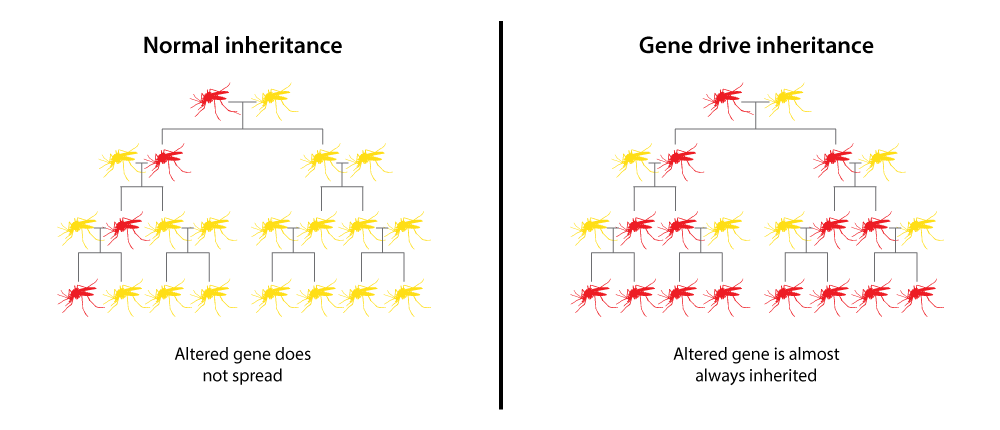
This process of artificially biasing inheritance of desired genes was described as a "mutagenic chain reaction" by researchers. While holding great promise, there were also a number of risks and ethical issues. By altering mosquitoes' DNA to ensure their offspring would always be male, for example, and releasing them into the wild to mate with natural mosquitoes, malaria and other diseases could be wiped out. However, there could also be side effects. Causing the insects' populations to crash might disrupt food chains or have other unforeseen consequences.*
Government reports highlighted these and other areas of concern, delaying the mass introduction of gene drives,* but this was only a temporary setback as major investment was going into research and development of the process. Among the biggest supporters in the fight against malaria was Bill Gates whose foundation had committed almost $2 billion in grants between 2000 and 2015 to combat the disease.
To safeguard against the dangers, a "reversal drive" was developed alongside the gene drive that could, if necessary, undo the process and spread the original genes back into the population. In addition, other alternatives to creating all-male offspring were considered – such as introducing genes to make the insects target animals rather than humans, or genes that stopped the parasite itself from multiplying inside the insect.
Laboratory tests were conducted before the introduction of these GM mosquitoes into the wild. Detailed studies then followed to determine the optimal numbers and best locations to release the insects, as well as the various cause-and-effect pathways in the environment. Following small-scale experiments in the early 2020s, the mass introduction of gene drives is becoming a reality towards the end of the decade. After years of mutagenic chain reactions, follow-up assessments and computer models, researchers have pieced together a trove of evidence and data, refining the process to be safe and with acceptable impacts on the environment. These and other issues have now been largely resolved, with most nations in Africa and elsewhere having approved the use of gene drives. A sharp drop in malaria is being witnessed by 2029.*
Other pests and invasive species are being targeted using this method – cane toads in Australia, for example; locusts that swarm and destroy crops; rodents that carry diseases. Unfortunately, given their enormous power and potential, gene drives are also now coming under intense scrutiny for an altogether different and more sinister reason: their ability to be used as bioweapons on human populations. This is leading to increased transparency, openness and cooperation between governments around the world to ensure better monitoring of scientific research activities and to make safeguards and countermeasures built into gene drives.*
40 MW floating wind turbines
This year sees the deployment of a major new offshore wind project, developed by Norwegian company World Wide Wind.* Its unusual design belongs to a class known as vertical-axis wind turbines (VAWTs).
Offshore wind has grown rapidly this decade, from a worldwide installed capacity of 35 GW in 2020 to over 200 GW in 2029, a six-fold increase. This is thanks to dramatic cost reductions, advances in technology, and policies favouring renewable energy, with ever-increasing national targets. Among the new innovations are larger and more powerful turbines, dwarfing earlier designs and handling even greater capacities.
The project by World Wide Wind is the largest of all. It features two sets of rotor blades on a single mast, making them rotate in opposite directions. It can produce up to 40 MW of electricity in a single unit, more than triple the world record capacity at the start of the decade, achieved by General Electric's Haliade-X. This occurs within a floating structure that measures 400 m (1,312 ft) in height – taller than the roof of the Empire State Building, and far surpassing the world record size of 260 m (853 ft) in 2020.
World Wide Wind developed a smaller 3 MW prototype in 2026, before achieving the massive scalability needed for this version in 2029. Farms of these VAWTs can also be deployed closer together than conventional offshore wind turbines, due to their more vertically-focused design. This greater density reduces the area of sea needed to deploy them.
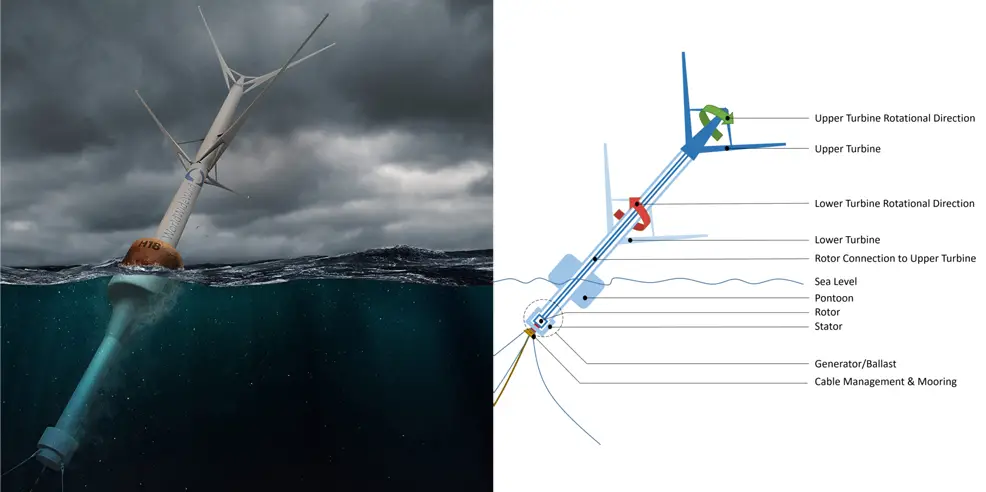
Credit: World Wide Wind
Finland bans coal for energy use
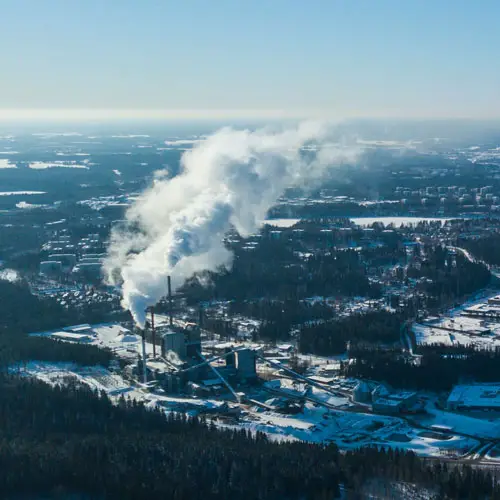
In 2029, Finland implements a nationwide ban on coal use. The country's greenhouse gas emissions had already peaked in the early 2000s, but it was still reliant on coal for its energy, with 11 million tons burned each year. Lacking any domestic production of its own, this was imported from other nations – primarily Russia (72%), the USA (7%), Canada (6%), Australia (6%) and Poland (3%). The percentage of coal as an energy source in Finland declined from 18.6% in 1980 to 14.7% in 1990 and 11% in 2000, rising again slightly before entering a permanent decline from 2003 onwards and reaching 8% by 2018. The ban was announced in February 2019 and comes into effect from 1st May 2029.*
Madagascar's radiated tortoise is extinct in the wild
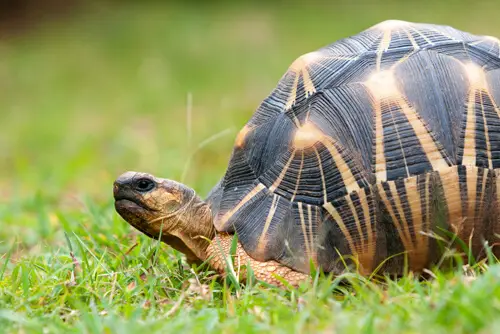
Years of unmitigated hunting and loss of habitat, as well as capture for the illegal exotic pet trade, have caused the wild population of the radiated tortoise to dwindle to almost nothing.* Like over 80% of the island's flora and fauna, the radiated tortoise can be found nowhere else on Earth naturally.
The government of Madagascar attempted to halt the decline by introducing a series of protection laws. Unfortunately, the size of the island's wildlife areas and poor economic conditions meant these restrictions were largely ignored, with even protected areas being invaded by poachers. Surveys in the 2010s revealed a shocking decline in the number of tortoises. The breeding population quickly shrunk throughout the 2020s.
Though there is hope of future repopulation using those bred in captivity, the shrinking habitats they once occupied make this prospect unlikely. In another 15 years or so, almost all of Madagascar's forests will be gone.*
Expansion of London's Heathrow Airport
For many years, Heathrow Airport in London held the title of world's busiest airport when measured by international passenger traffic, as well as the busiest in Europe by overall passenger traffic. By the early 2010s, it was handling 70 million passenger journeys per year (though Dubai International would eventually overtake it) and forecast to reach 85 million by 2030. As the airport began to reach 100% capacity at peak times, concerns were raised about overcrowding and the need for expansion. Globally, air traffic in general was growing rapidly – due in large part to booming demand from the emerging markets of the Asia Pacific and Middle East regions – and the number of planes in service was projected to double between 2015 and 2035.
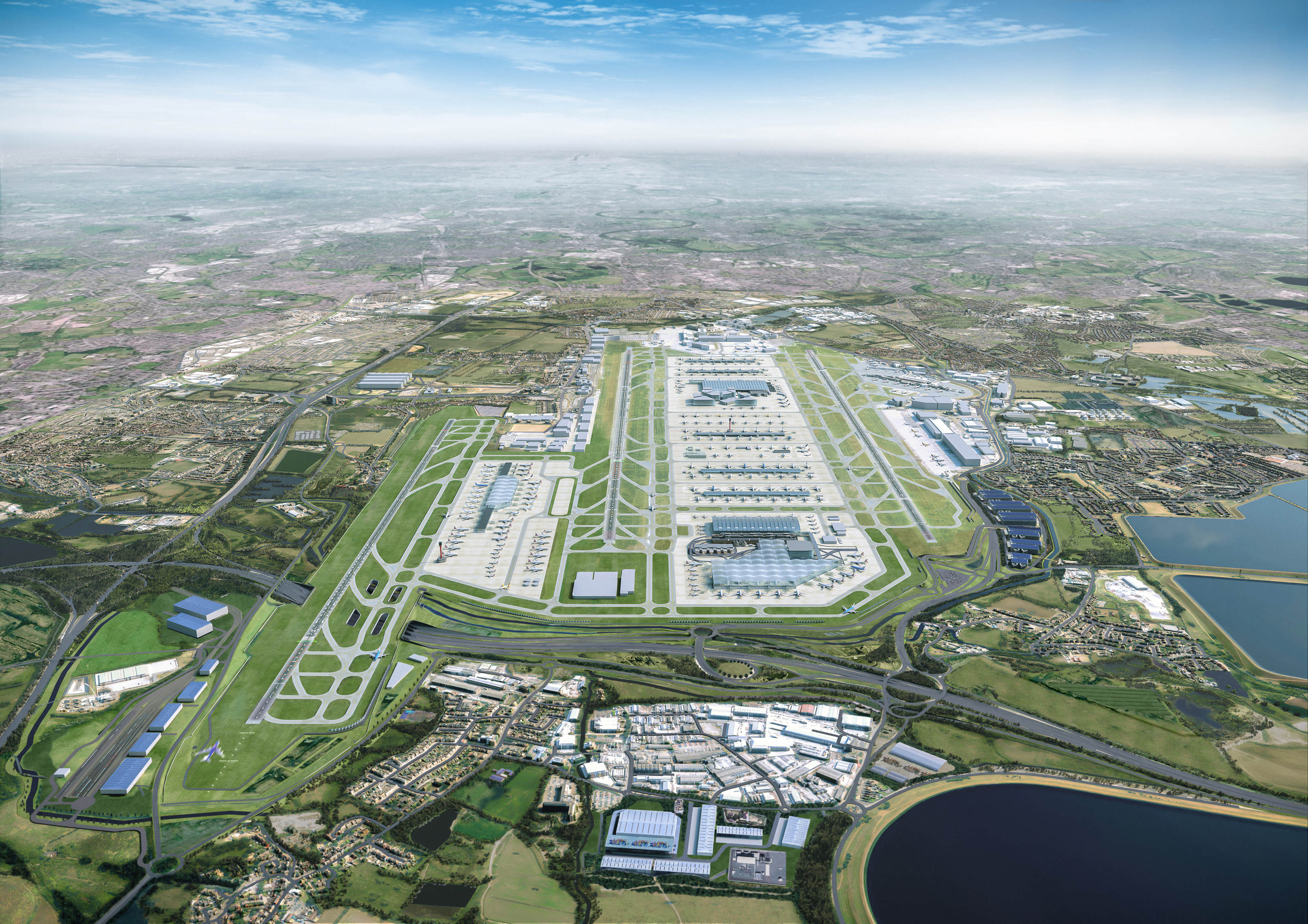
In 2009, the UK's Labour government announced that it would support the expansion of Heathrow and encouraged the airport operator (BAA) to apply for planning permission. However, these plans were cancelled the following year by the new coalition government of the Conservatives and Liberal Democrats. Following several more years of planning and reviews, the Airport Commission recommended a third runway and sixth terminal. A full report was finally published in 2015 that confirmed a new expansion to the northwest as the chosen proposal. After further revisions, and with estimated costs of £14.3bn (funded privately), this northwest runway and terminal plan was approved by the government in 2018.
The new infrastructure would increase Heathrow's capacity from 85 million to 130 million passengers annually. It was predicted to create 180,000 new jobs and generate £200bn in total economic benefits by 2050. Up to 40 new long-haul routes would become available. In addition to the airport itself, a number of access improvements were planned – such as the 118 km (73 mile) Crossrail line running all the way from east to west London, along with a refurbished Piccadilly line providing more spacious, air-cooled trains at higher frequencies than before.
Click to enlarge
Credit: Heathrow Airports Limited
The pro-expansion stance of both Labour and the Conservatives was supported by many groups and prominent individuals, including the aviation sector, Confederation of British Industry (CBI), British Chambers of Commerce (BCC) and 32 local chambers of commerce, local authorities, the manufacturing and freight sector and trade unions.
However, there was considerable opposition too. Political opponents included the Liberal Democrats, Green Party and UKIP. Sadiq Khan, Mayor of London, and his two predecessors, Boris Johnson and Ken Livingstone, were also against it. Various campaign groups voiced concerns, including Greenpeace, Friends of the Earth, the RSPB and WWF, as well as conservation organisation The National Trust, and developmental charities Oxfam and Christian Aid, alongside Hillingdon Council – a local government in West London.
Among the biggest concerns were the impacts on local communities. Some 700 homes, a church and eight Grade II-listed buildings would have to be demolished or abandoned (Grade II being a designation given to "buildings [that] are nationally important and of special interest", warranting every effort to preserve them). The main high street in the village of Harmondsworth would need splitting and a graveyard would have to be "bulldozed". The entire village of Sipson was in danger of being wiped from the map.
The other major concerns were air and noise pollution, along with greenhouse gas emissions. Environmental campaigners warned that the increased CO2 caused by the additional flights would make it harder for the UK to meet its commitments to the Paris climate agreement. They also pointed to studies showing that the claimed economic benefits would be negated by the long-term costs of carbon. Building a third runway would also raise the general level of air pollution, at a time when 40,000 people were dying each year from dirty air across the country. The UK was already in breach of legal limits and the government had lost multiple court cases on the issue.
Furthermore, expanding Heathrow and its flight paths would expose hundreds of thousands of additional residents in London – as well as the neighbouring county of Berkshire – to sustained high levels of aircraft noise for the first time.
Many people also resented London gaining yet another major project, drawing money away from the rest of the UK. Other regions were falling behind and there were opportunities for investment in Birmingham and Manchester, for example. The widening gap between London and everywhere else had already created a worrying socio-economic divide. This ever-growing sense of inequality may have been a contributory factor in the Brexit referendum result.
The arguments from the opposition side were strong, but those in support were stronger. The importance of Heathrow as an international transport hub and a catalyst for wealth generation in London and the South East was deemed too great, with approval granted by the government in June 2018.*
As with many large projects of this type, however, financial issues and construction delays pushed back the original timetable. Completion of a third runway had been scheduled for 2026, but was subsequently revised to 2029.*
NASA's Psyche spacecraft makes orbital insertion
In August 2029, a NASA probe called Psyche enters orbit around the large metallic asteroid known as 16 Psyche.* One of the most massive objects in the main asteroid belt – and the heaviest known M-type asteroid – 16 Psyche is 222 km (137 mi) in diameter and contains 1% of the mass of the entire belt.
Psyche is an orbiter mission developed as part of NASA's Discovery Program. Its primary objective is to explore the origin of planetary cores and confirm whether 16 Psyche is the exposed iron core of a protoplanet, the remnant of a violent collision with another object that stripped off its outer crust.
The spacecraft was launched on 13th October 2023 aboard a SpaceX Falcon Heavy launch vehicle, and then performed a Mars gravity assist at 500 km (310 mi) altitude in 2026, before reaching its destination three years later.
From 2029 onwards, it conducts a comprehensive study of the asteroid's geology, shape, surface features, elemental composition, gravity, magnetism, and distribution of mass – revealing insights into planetary formation and interiors. This information is also of potential use in future asteroid mining operations. Psyche's mission duration is 26 months, lasting until November 2031, with gradually decreasing orbits taking it closer and closer to 16 Psyche. The initial orbit starts at 700 km (435 mi) distance, while the lowest orbit is at 75 km (47 mi).
In addition to its study of 16 Psyche, the spacecraft also tests an experimental laser communication technology called Deep Space Optical Communications – designed to increase spacecraft communications performance and efficiency by 10 to 100 times over conventional means. The laser beams from the spacecraft are received by a ground telescope at Palomar Observatory in California.
The Giant Magellan Telescope is fully operational
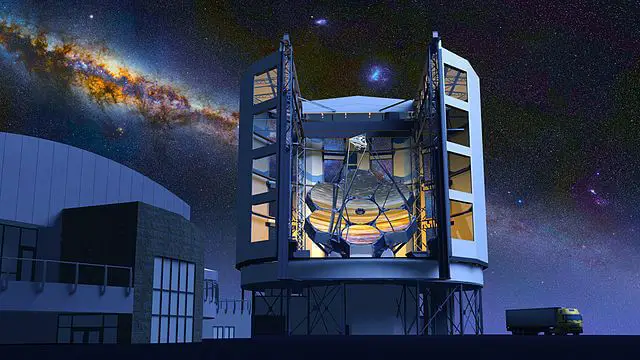
The Giant Magellan Telescope (GMT) is a major new astronomical observatory completed in 2029.* Costing nearly $2 billion, this international project is led by the US, in partnership with Australia, Brazil, and Korea, with Chile as the host country. The telescope is built on a mountain top in the southern Atacama Desert of Chile with an altitude of 2,516 m (8,255 ft). This site was chosen as the instrument's location because of its outstanding night sky quality and clear weather throughout most of the year, along with a lack of atmospheric pollution and sparse population giving it low light pollution.
The GMT consists of seven 8.4 m (27.6 ft) diameter primary segments, with a combined resolving power equivalent to a 24.5 m (80.4 ft) mirror. It has a total light-gathering area of 368 m sq (3,960 sq ft), which is 15 times greater than the older, neighbouring Magellan telescopes. It has four times the image resolution and 200 times the sensitivity of the James Webb Space Telescope.*
The GMT operates at near infrared and visible wavelengths of the spectrum. It features adaptive optics, which helps to correct image blur caused by the Earth's atmospheric interference. The seven mirrors are polished with a surface accuracy of 19 nanometres.
The GMT is the latest in a series of major telescopes being constructed this decade, heralding a new era of higher resolution astronomy. Others include the European Extremely Large Telescope and the Square Kilometre Array, in addition to numerous space-based observatories. This new generation of telescopes leads to huge advances in knowledge of the early universe, major new discoveries of Earth-like planets around other stars, and breakthroughs in understanding the mysterious dark matter and dark energy that influence the structure and expansion of the universe.
By Giant Magellan Telescope - GMTO Corporation [CC BY-SA 3.0], via Wikimedia Commons
Jupiter's Great Red Spot is disappearing
The first sightings of a Great Red Spot on Jupiter were made in the 1660s by Robert Hooke and Giovanni Cassini. This feature – a monstrous, anticyclonic storm – was not studied in detail until the late 19th century. At that time, its diameter was found to be around 25,500 miles (41,000 km), large enough to swallow three entire planet Earths.
On 25th February 1979, NASA's Voyager 1 spacecraft returned close-range photos of the planet. These revealed that its Great Red Spot had shrunk to 14,500 miles (23,335 km). Later studies by the Hubble Space Telescope, from the 1990s onwards, revealed it continuing to get smaller in size. By 2012, the rate of shrinkage was nearly 1,000 km per year and increasing. It was theorised that small eddies, observed feeding into the storm, were accelerating this change by altering the internal dynamics. The raging winds in this turbulent region were measured to be 384 mph (618 km/h), greatly surpassing even the strongest hurricanes on Earth.
Another space probe – Juno – orbited the gas giant in 2016. This provided a greater understanding of the atmospheric composition, cloud motions, temperature, magnetosphere, gravity and other properties affecting the overall dynamics of Jupiter. Once again, the Great Red Spot was seen shrinking and losing momentum. This process would continue into the following decade. By the end of the 2020s, it has vanished entirely.** Yet another probe, Jupiter Icy Moon Explorer (JUICE), arrives in 2031, shortly after its disappearance is confirmed.
The wreck of the Titanic has decomposed
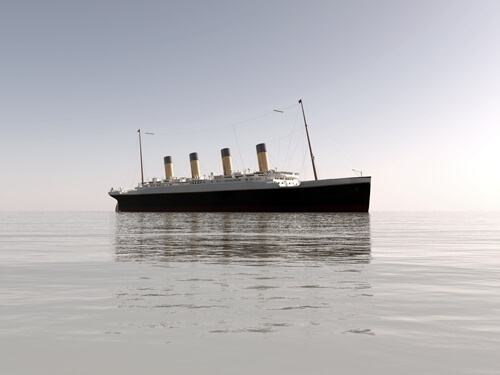
By the late 2020s, the famous wreck of the Titanic has been reduced to a mere rust patch. Metal-eating bacteria have dissolved what remains of the once mighty structure. Though some artifacts were salvageable, any hope of recovering the ship itself is now gone.*
A quantum computer with 1 million qubits
During the 2010s and 2020s, as the concept of quantum computing transitioned from theoretical exploration to practical application, numerous companies emerged to establish a solid foundation for this revolutionary field. These early efforts set the stage for intense competition among firms, not only aiming to become leaders in the nascent industry but also to rapidly boost the power and scale of quantum computing systems. This included giants like IBM and Google, alongside institutes in China and other countries, who pushed the frontiers of research.
Quantum bits, or qubits – the equivalent of traditional computer "bits" – allowed quantum computers to work with extraordinarily large numbers and perform calculations of staggering complexity. Unlike the binary ones and zeroes of classical machines, qubits took advantage of a phenomenon known as superposition, meaning they could have multiple states. With more qubits joined together, this effect scaled exponentially, with potential to vastly exceed even the fastest of the classical supercomputers in terms of number crunching.
After moderate progress in qubit counts during the 2010s, a massive scaling up occurred in the 2020s, with a system by IBM exceeding 100 qubits in 2021, followed by the first 1,000+ qubit system by the same company in 2023.
Due to the extremely sensitive nature of superposition, achieving such large numbers of qubits required them to be isolated from external stimuli such as noise, vibrations, and temperature fluctuations. Scientists referred to this state as quantum coherence. New techniques began to emerge for maintaining coherence and reducing errors that resulted from interruptions. Researchers also directed their efforts to creating "logical" qubits, consisting of many physical qubits working together to eliminate faults. QuEra, a relatively unknown company based in Boston, Massachusetts, revealed a 10,000-qubit system in 2026, an order of magnitude improvement over IBM's Condor system just three years earlier. This included 100 logical qubits.
PsiQuantum, a company founded in 2015 and based in Palo Alto, California, announced its plan to build the first quantum computer with a million physical qubits. This fault-tolerant system would use a photonics-based approach – encoding qubits in particles of light – for greater stability and resistance to decoherence. PsiQuantum attracted significant investment, with major backers including BlackRock, Microsoft's venture fund M12, and DARPA, putting its valuation at over $3.1 billion by the early 2020s.
In April 2024, the Australian and Queensland Governments invested a further $940m AUD ($620m USD) into PsiQuantum. In exchange, the company agreed to locate its planned quantum computer in Brisbane. This machine, described as "the world's first utility-scale, fault-tolerant quantum computer" would be housed in a large "compute building" with many rows of cabinets, each containing thousands of photonic chips, next to a cryoplant to provide cooling. PsiQuantum targeted a completion date of 2029.*
A project of similar scale is also being completed by Google this year.* The leap in qubit count – from 10,000 achieved in 2026, to a million now – is not just a quantitative change but a qualitative one. These machines are among the first quantum computers able to perform "useful" tasks, such as simulating complex molecular structures for drug discovery and new materials, optimising large-scale logistical operations, and solving intricate problems in real-time. This capacity provides the ability to model phenomena that are beyond the reach of classical supercomputers.
With qubits (both physical and logical) continuing to scale up, even greater advances will soon become possible, such as the cracking of RSA‑2048 encryption during the 2030s, a task that would require trillions of years in calculation time for traditional computers. Commercial-scale, fault-tolerant quantum computing leads to thousands of new jobs in Australia and generates an additional $48 billion in GDP by 2040.*

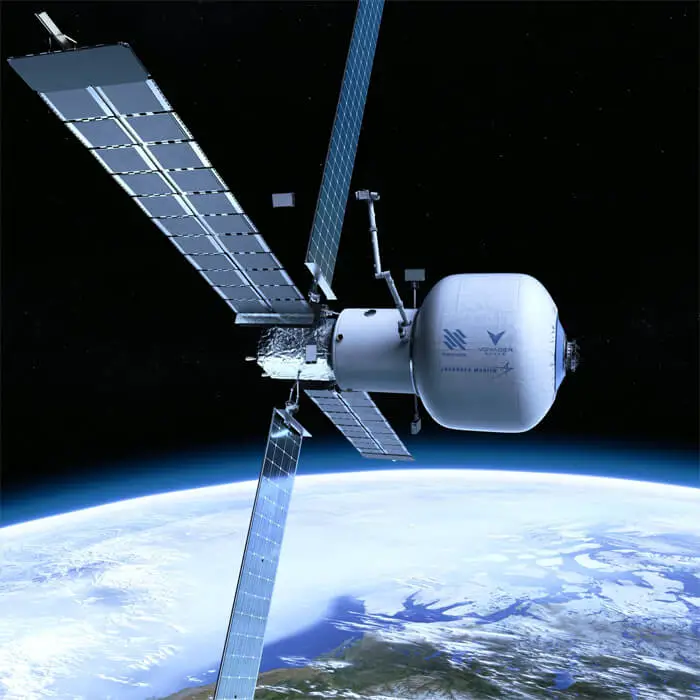
The Starlab commercial space station is operational
Starlab is the first ever free-flying commercial space station. Announced in October 2021, the project is a collaboration between Nanoracks, Voyager Space and Lockheed Martin.*
It features 340m³ of internal volume, about one-third that of the International Space Station (ISS). As a continuously crewed platform, it ensures a continued U.S. presence in low-Earth orbit, at a time when the ISS is nearing the end of its lifespan.
The basic elements of the Starlab space station include a large inflatable habitat, designed and built by Lockheed Martin, a metallic docking node, a power and propulsion element (60kW), a large robotic arm for servicing cargo (maximum payloads of 22m³), and a state-of-the-art laboratory system with comprehensive research, science, and manufacturing capabilities. Among the services provided are materials research, plant growth and other biotech, astronaut missions and space tourism. It can hold up to four passengers at any one time.
Initial operational capability begins in 2029. There are now several space stations in Earth or near-Earth orbit – Starlab, the soon-to-be-retired ISS, and China's own space station.
The number of satellites in Earth orbit has grown exponentially
By the end of this decade, the number of active satellites in orbit around Earth has reached nearly 60,000 – a 20-fold increase compared to a decade earlier and a 75-fold increase since the start of the century.
Russia (then known as the Soviet Union) launched the first artificial satellite, Sputnik 1, in October 1957. Just three-and-a-half years later, more than 100 others had been placed in orbit as the Space Race got underway between the Soviets and the USA. The numbers continued to increase over the decades with more and more countries able to conduct launches for purposes such as weather monitoring, telecommunications, surveillance, and GPS.
During the early 21st century, smaller and lighter satellites with more compact and miniaturised components became increasingly popular. These provided the advantage of cheaper launch costs and a more flexible range of uses. This segment of the market became divided into various classes depending on the weight of the spacecraft – from "mini" satellites (between 500–100 kg), descending through micro, nano, pico and femto satellites, the smallest being less than 0.1 kg.
Concerns mounted over the accumulation of space debris from old satellites and other defunct or abandoned objects. In a worst-case scenario, this might trigger a catastrophic chain reaction of collisions – known as the Kessler syndrome* – with potential to block safe access to space for generations.
Despite the growing risk, satellite numbers began to explode from the late 2010s onwards. SpaceX announced plans for Starlink, a huge constellation to expand global Internet coverage, as well as satellites for military, scientific and other purposes. Many rival companies emerged with similar projects that collectively appeared set to transform the already crowded space above Earth, creating a kind of "satellite singularity".
The 2,600 active satellites in 2020 would be joined by a further 57,000 over the next 10 years,* bringing the total to almost 60,000. Astronomers had earlier reported interference with ground-based observations and the spoiling of the night sky, a problem now made even worse. Satellite developers responded with new measures to reduce reflected sunlight through spacecraft orientation, sun shielding, and surface darkening.
The end of this decade is marked by the emergence of a quantum Internet, providing absolutely secure encryption.* This orbiting network, still at an early stage of deployment in 2029, is massively expanded during the 2030s.
« 2028 |
⇡ Back to top ⇡ |
2030 » |
If you enjoy our content, please consider sharing it:
References
1 Romania and the euro, Wikipedia:
https://en.wikipedia.org/wiki/Romania_and_the_euro
Accessed 2nd July 2022.
2 Telescope first light for ESO's Extremely Large Telescope now planned for March 2029, ESO:
https://www.eso.org/public/announcements/ann25001/
Accessed 26th August 2026.
3 'Goliath Is Winning': The Biggest U.S. Banks Are Set to Automate Away 200,000 Jobs, Gizmodo:
https://gizmodo.com/goliath-is-winning-the-biggest-u-s-banks-are-set-to-a-1838740347?IR=T
Accessed 5th October 2019.
4 Asteroid 2015 XF261, Space Reference:
https://www.spacereference.org/asteroid/2015-xf261
Accessed 18th July 2024.
5 China reschedules planetary defense mission for 2027 launch, SpaceNews:
https://spacenews.com/china-reschedules-planetary-defense-mission-for-2027-launch/
Accessed 18th July 2024.
6 99942 Apophis, Wikipedia:
https://en.wikipedia.org/wiki/99942_Apophis
Accessed 23rd August 2019.
7 "Gene drive." Learn the term. Because it could one day transform the world., Vox:
http://www.vox.com/2016/6/9/11890472/gene-drive-benefits-risk
Accessed 29th August 2016.
8 Gene Drives on the Horizon: Advancing Science, Navigating Uncertainty, and Aligning Research with Public Values (2016), Committee on Gene Drive Research in Non-Human Organisms: Recommendations for Responsible Conduct; Board on Life Sciences; Division on Earth and Life Studies; National Academies of Sciences, Engineering, and Medicine:
http://www.nap.edu/catalog/23405/gene-drives-on-the-horizon-advancing-science-navigating-uncertainty-and
Accessed 29th August 2016.
9 "According to a business plan developed for the Gates Foundation, the self-annihilating mosquitoes could be unleashed in 2029."
See The Extinction Invention, MIT Technology Review:
https://www.technologyreview.com/s/601213/the-extinction-invention/
Accessed 29th August 2016.
10 A power for good or evil: The technology of 'gene drives' holds immense potential for improving our life on this planet – and also great dangers, The Independent:
http://www.independent.co.uk/voices/editorials/a-power-for-good-or-evil-the-technology-of-gene-drives-holds-immense-potential-for-improving-our-10434022.html
Accessed 29th August 2016.
11 This new wind turbine concept isn't like any we've seen before, Fast Company:
https://www.fastcompany.com/90783637/this-new-wind-turbine-concept-isnt-like-any-youve-seen-before
Accessed 19th January 2023.
12 Finland approves ban on coal for energy use from 2029, Reuters:
https://uk.reuters.com/article/finland-energy-coal/finland-approves-ban-on-coal-for-energy-use-from-2029-idUKL5N20N6QV
Accessed 4th March 2019.
13 Madagascar's Radiated Tortoise Could Disappear By 2030, Science 2.0:
http://www.science20.com/news_articles/madagascars_radiated_tortoise_could_disappear_2030
Accessed 19th December 2011.
14 10 natural wonders to see before they disappear, MSNBC:
http://www.msnbc.msn.com/id/42723289/ns/travel-destination_travel/t/natural-wonders-see-they-disappear/#.Tu9lMfL6M9Q
Accessed 19th December 2011.
15 Heathrow Airport: Cabinet approves new runway plan, BBC:
https://www.bbc.co.uk/news/uk-politics-44357580
Accessed 7th June 2018.
16 "An expansion plan for Britain's Heathrow Airport will be delayed by more than a year and a third runway now will probably be completed between early 2028 and late 2029, the airport said."
Heathrow's new runway delayed until at least 2028, Reuters:
https://uk.reuters.com/article/uk-britain-heathrow/heathrows-new-runway-delayed-until-at-least-2028-idUKKBN1YO0TS
Accessed 21st December 2019.
17 Psyche Asteroid Mission, NASA:
https://www.nasa.gov/psyche
Accessed 13th October 2023.
18 Major NSF Grant Accelerates Development of the Giant Magellan Telescope, Giant Magellan Telescope:
https://giantmagellan.org/2020/09/16/major-nsf-grant-accelerates-development-for-one-of-the-worlds-most-powerful-telescopes/
Accessed 15th January 2024.
19 New telescope with 4x resolution of James Webb, Future Timeline Blog:
https://www.futuretimeline.net/blog/2023/10/2-giant-magellan-telescope-future-timeline.htm
Accessed 15th January 2024.
20 Jupiter's Great Red Spot could disappear in a generation, The Raw Story:
http://www.rawstory.com/rs/2014/05/17/jupiters-great-red-spot-could-disappear-in-a-generation/
Accessed 18th May 2014.
21 The shrinking of Jupiter's Great Red Spot, The Hubble Space Telescope:
http://www.spacetelescope.org/news/heic1410/
Accessed 18th May 2014.
22 First it was an iceberg, now it's bacteria: Rust-eating species 'will
destroy wreck of Titanic within 20 years', The Daily Mail:
http://www.dailymail.co.uk/sciencetech/article-1346446/Titanic-wreck-completely-destroyed-20-years-new-rust-eating-bacteria.html
Accessed 28th February 2011.
23 Australia signs deal worth almost $1b with PsiQuantum to build world's first 'useful' quantum computer, ABC News:
https://www.abc.net.au/news/2024-04-30/australia-signs-deal-for-first-useful-quantum-computer/103781352
Accessed 3rd May 2024.
24 Google plans to build a practical quantum computer by 2029 at new center, CNET:
https://www.cnet.com/tech/computing/google-plans-to-build-a-practical-quantum-computer-by-2029-at-new-center/
Accessed 3rd May 2024.
25 "...investing in the world's first commercial-scale fault-tolerant quantum computer could lead to up to an additional $48 billion in GDP and 240,000 new jobs in Australia by 2040."
See Delivering a Future Made in Australia with 400 new technology jobs in Brisbane, Ministers for the Department of Industry, Science and Resources:
https://www.minister.industry.gov.au/ministers/husic/media-releases/delivering-future-made-australia-400-new-technology-jobs-brisbane
Accessed 3rd May 2024.
26 Starlab, Nanoracks:
https://nanoracks.com/starlab/
Accessed 21st October 2021.
27 "Gravity" continuous shot. Opening Scene. Space debris hits Explorer, YouTube:
https://www.youtube.com/watch?v=vKW-Gd_S_xc
Accessed 30th August 2020.
28 The scramble for space at Earth's outer limits, ABC:
https://www.abc.net.au/news/2020-08-07/spacex-amazon-satellites-scramble-for-space-around-earth/12512978?nw=0
Accessed 30th August 2020.
29 Entangled photons sent between suborbital space and Earth, Future Timeline:
https://www.futuretimeline.net/blog/2017/06/21.htm
Accessed 30th August 2020.
 |
|||||||||||||||||||||||||||||||
|
Latest predictions |
Timeline » 21st century |
Blogs » AI & Robotics |
Features » |
About us
|
|||||||||||||||||||||||||||
|
|
|||||||||||||||||||||||||||||||


