Cancer News and Discussions

weatheriscool
Posts: 24486
Joined: Sun May 16, 2021 6:16 pm
Contact:

Re: Cancer News and Discussions

Post by weatheriscool »

Scientists can detect brain tumours using a simple urine or blood plasma test
https://medicalxpress.com/news/2021-07- ... urine.html
by University of Cambridge
Researchers from the Cancer Research UK Cambridge Institute have developed two tests that can detect the presence of glioma, a type of brain tumor, in patient urine or blood plasma.

The team say that a test for detecting glioma using urine is the first of its kind in the world.

Although the research, published in EMBO Molecular Medicine, is in its early stages and only a small number of patients were analyzed, the team say their results are promising.

The researchers suggest that in the future, these tests could be used by GPs to monitor patients at high risk of brain tumors, which may be more convenient than having an MRI every three months, which is the standard method.

User avatar
wjfox
Site Admin
Posts: 13579
Joined: Sat May 15, 2021 6:09 pm
Location: Essex, UK
Contact:

Re: Cancer News and Discussions

Post by wjfox »

A magnetic helmet shrunk a deadly tumor in world-first test

The user-friendly medical device can be operated at home.

July 26th, 2021

We've seen helmets and AI that can spot brain tumors, but a new hard hat can actually treat them, too. As part of the latest neurological breakthrough, researchers used a helmet that generates a magnetic field to shrink a deadly tumor by a third. The 53-year-old patient who underwent the treatment ultimately passed away due to an unrelated injury. But, an autopsy of his brain showed that the procedure had removed 31 percent of the tumor mass in a short time. The test marked the first noninvasive therapy for a deadly form of brain cancer known as glioblastoma.

https://www.engadget.com/magnetic-helme ... 23598.html


Image
weatheriscool
Posts: 24486
Joined: Sun May 16, 2021 6:16 pm
Contact:

Re: Cancer News and Discussions

Post by weatheriscool »

Turning the molecular clock back on halts neuroblastoma tumor growth
https://medicalxpress.com/news/2021-07- ... tumor.html
by Graciela Gutierrez, Baylor College of Medicine
Researchers at Baylor College of Medicine and Texas Children's Cancer Center have found that the molecular clock may be key to treating neuroblastoma. The researchers studied patients with high expression of MYCN, known to be the major oncogenic driver of neuroblastoma. In those patients, two main components of the molecular clock were repressed—BMAL1, which oscillates to drive the clock cycle, and RORa, which activates BMAL1. This repression correlated with poor clinical outcome.

"We were very interested in how MYCN can reprogram tumor metabolism," said Dr. Eveline Barbieri, assistant professor of pediatrics—hematology and oncology at Baylor. "We found that MYCN amplification inhibits BMAL1 expression and oscillation, leading to metabolic reprograming and oncogenesis."

Because BMAL1 and RORa suppression allowed the tumor cells to grow, the researchers wanted to know if restoring these components of the molecular clock would stop growth in neuroblastoma cells. They tested two approaches in the lab—genetic overexpression of RORa and a pharmaceutical approach using a synthetic ligand that reactivates RORa. Both techniques successfully restored BMAL1 expression and oscillation.
weatheriscool
Posts: 24486
Joined: Sun May 16, 2021 6:16 pm
Contact:

Re: Cancer News and Discussions

Post by weatheriscool »

New drug combo shows early potential for treating pancreatic cancer
https://medicalxpress.com/news/2021-08- ... eatic.html
by Anne Trafton, Massachusetts Institute of Technology

Pancreatic cancer, which affects about 60,000 Americans every year, is one of the deadliest forms of cancer. After diagnosis, fewer than 10 percent of patients survive for five years.

While some chemotherapies are initially effective, pancreatic tumors often become resistant to them. The disease has also proven difficult to treat with newer approaches such as immunotherapy. However, a team of MIT researchers has now developed an immunotherapy strategy and shown that it can eliminate pancreatic tumors in mice.

The new therapy, which is a combination of three drugs that help boost the body's own immune defenses against tumors, is expected to enter clinical trials later this year.

"We don't have a lot of good options for treating pancreatic cancer. It's a devastating disease clinically," says William Freed-Pastor, a senior postdoc at MIT's Koch Institute for Integrative Cancer Research. "If this approach led to durable responses in patients, it would make a big impact in at least a subset of patients' lives, but we need to see how it will actually perform in trials."

Freed-Pastor, who is also a medical oncologist at Dana-Farber Cancer Institute, is the lead author of the new study, which appears today in Cancer Cell. Tyler Jacks, the David H. Koch Professor of Biology and a member of the Koch Institute, is the paper's senior author.
User avatar
Yuli Ban
Posts: 5194
Joined: Sun May 16, 2021 4:44 pm

Re: Cancer News and Discussions

Post by Yuli Ban »

weatheriscool wrote: Fri Aug 06, 2021 12:24 am New drug combo shows early potential for treating pancreatic cancer
https://medicalxpress.com/news/2021-08- ... eatic.html
by Anne Trafton, Massachusetts Institute of Technology

Pancreatic cancer, which affects about 60,000 Americans every year, is one of the deadliest forms of cancer. After diagnosis, fewer than 10 percent of patients survive for five years.

While some chemotherapies are initially effective, pancreatic tumors often become resistant to them. The disease has also proven difficult to treat with newer approaches such as immunotherapy. However, a team of MIT researchers has now developed an immunotherapy strategy and shown that it can eliminate pancreatic tumors in mice.

The new therapy, which is a combination of three drugs that help boost the body's own immune defenses against tumors, is expected to enter clinical trials later this year.

"We don't have a lot of good options for treating pancreatic cancer. It's a devastating disease clinically," says William Freed-Pastor, a senior postdoc at MIT's Koch Institute for Integrative Cancer Research. "If this approach led to durable responses in patients, it would make a big impact in at least a subset of patients' lives, but we need to see how it will actually perform in trials."

Freed-Pastor, who is also a medical oncologist at Dana-Farber Cancer Institute, is the lead author of the new study, which appears today in Cancer Cell. Tyler Jacks, the David H. Koch Professor of Biology and a member of the Koch Institute, is the paper's senior author.
Probably the worst cancer, just because of how deadly it is
Any progress on that front is welcome
And remember my friend, future events such as these will affect you in the future
User avatar
Yuli Ban
Posts: 5194
Joined: Sun May 16, 2021 4:44 pm

Re: Cancer News and Discussions

Post by Yuli Ban »

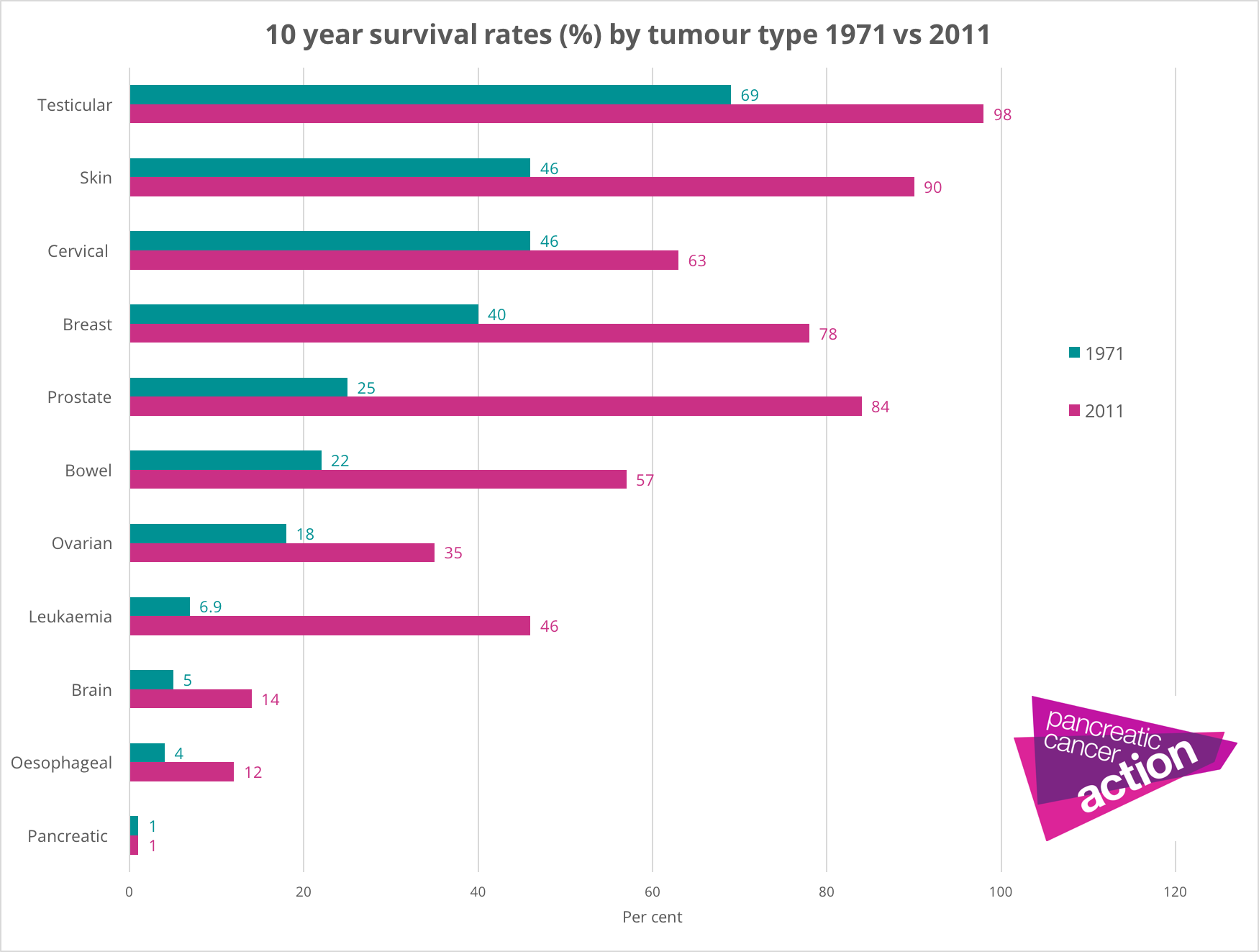
For those OOTL, pancreatic cancer has an absurd 10% five-year survival rate
It's basically a death sentence in most cases.

Back in 2011, it was even lower.

Image

Earlier this year, I was showing some symptoms that looked like they could be pancreatic cancer, from the blunt dull pain in my abdomen to a supraclavicular lymph node swelling to loss of appetite that lasted for days on end to, most damningly, elevated liver enzymes. Thankfully it wasn't that, but for about a month-long period back in May and early June, I was fully expecting to be wasting away by now and not even be alive by the end of the year; I was 100% shifting to "I'm going to die, I might as well mentally prepare for it."

For good measure, the pain in my abdomen was mild diverticulitis and has since faded; the lymph node swole from the Moderna vaccine and while it's still there, it's gone done massively and is very soft and rubbery to boot (which is a strong sign against it being cancer; if it was swollen from cancer, it'd be growing and firm); the loss of appetite was ironically from anxiety due to fearing I had cancer.

Conquering pancreatic cancer, or at least bringing its survival rate up to 50%, is basically us defeating cancer as a disease as far as I'm aware. That's one of THE hardest and deadliest to combat outside of very specific niche ones.
And remember my friend, future events such as these will affect you in the future
User avatar
wjfox
Site Admin
Posts: 13579
Joined: Sat May 15, 2021 6:09 pm
Location: Essex, UK
Contact:

Re: Cancer News and Discussions

Post by wjfox »

Yuli Ban wrote: Fri Aug 06, 2021 6:02 am
Earlier this year, I was showing some symptoms that looked like they could be pancreatic cancer, from the blunt dull pain in my abdomen to a supraclavicular lymph node swelling to loss of appetite that lasted for days on end to, most damningly, elevated liver enzymes. Thankfully it wasn't that, but for about a month-long period back in May and early June, I was fully expecting to be wasting away by now and not even be alive by the end of the year; I was 100% shifting to "I'm going to die, I might as well mentally prepare for it."

For good measure, the pain in my abdomen was mild diverticulitis and has since faded; the lymph node swole from the Moderna vaccine and while it's still there, it's gone done massively and is very soft and rubbery to boot (which is a strong sign against it being cancer; if it was swollen from cancer, it'd be growing and firm); the loss of appetite was ironically from anxiety due to fearing I had cancer.

Conquering pancreatic cancer, or at least bringing its survival rate up to 50%, is basically us defeating cancer as a disease as far as I'm aware. That's one of THE hardest and deadliest to combat outside of very specific niche ones.

Christ, that must have been scary. Glad you're better now.

And yeah, pancreatic cancer is the worst. Back in 2011, a colleague (arguably the most popular guy in the office) thought he had jaundice, and took some time off work. A few people were laughing at a photo of him and his yellow-coloured face. I wasn't among those who found it funny, and I remember feeling angry at their reactions. Sure enough, he later revealed his diagnosis of pancreatic cancer. A year later, he sent a video from his hospital bed, looking extremely gaunt and thin.

A few weeks after that, he was dead aged 43.

Always get yourself checked by a doctor if you're worried.
User avatar
wjfox
Site Admin
Posts: 13579
Joined: Sat May 15, 2021 6:09 pm
Location: Essex, UK
Contact:

Re: Cancer News and Discussions

Post by wjfox »

User avatar
wjfox
Site Admin
Posts: 13579
Joined: Sat May 15, 2021 6:09 pm
Location: Essex, UK
Contact:

Re: Cancer News and Discussions

Post by wjfox »

User avatar
wjfox
Site Admin
Posts: 13579
Joined: Sat May 15, 2021 6:09 pm
Location: Essex, UK
Contact:

Re: Cancer News and Discussions

Post by wjfox »

Cancer vaccine developed using Oxford-AstraZeneca vaccine technology

3rd September 2021

Researchers at the University of Oxford and the Ludwig Institute for Cancer Research have designed a two-dose therapeutic cancer vaccine using Oxford’s viral vector vaccine technology. The cancer vaccine, which has already been tested in mouse tumour models, has been shown to increase the levels of anti-tumour T cells infiltrating the tumours and improve the efficacy of cancer immunotherapy.

https://www.healtheuropa.eu/cancer-vacc ... gy/110725/
weatheriscool
Posts: 24486
Joined: Sun May 16, 2021 6:16 pm
Contact:

Re: Cancer News and Discussions

Post by weatheriscool »

Link found between cell identities and childhood cancer neuroblastoma
https://medicalxpress.com/news/2021-09- ... ancer.html
by Karolinska Institutet
Neuroblastoma is a type of childhood cancer that develops in infants and young children. Whilst it is a relatively rare form of cancer, it is still responsible for approximately 15 percent of all cancer deaths in children. In a new study published today in Nature Communications, researchers at Karolinska Institutet have discovered that low-risk and high-risk neuroblastoma have different cell identities, which can affect the survival rate.

Neuroblastoma often starts in the sympathetic nervous system or the adrenal glands. This cancer has a high variability in outcome, ranging from spontaneous regression and complete disappearance to relentless disease progression with very few treatment options.

The child's age at the time of diagnosis is one of the most important prognostic factors for a favorable outcome. However, the importance of age is a question that has previously been left unanswered.
weatheriscool
Posts: 24486
Joined: Sun May 16, 2021 6:16 pm
Contact:

Re: Cancer News and Discussions

Post by weatheriscool »

Researchers discover a gene that controls the severity of colon cancer
https://medicalxpress.com/news/2021-09- ... ancer.html
by Brittany Steff, Purdue University

Regulatory T cells (TReg) are essential to regulating the immune system. However, there are several different types of TReg cells, and scientists are only now beginning to differentiate among them and understand their functions and roles.

Researchers from Purdue University, including Majid Kazemian, an assistant professor of biochemistry and computer science, and a team of collaborators from Mayo Clinic and the University of Chicago, have discovered that the gene TCF-1 controls the functions of a specific set of TReg cells. Without TCF-1, these TReg cells keep their normal repressive function, but they gain additional properties and become inflammatory: They become more activated, increase the cancer signals, and gain a gut-homing feature, resulting in more drastic and dangerous colon cancers. Patients with colon cancer have these same TReg cells that lack TCF-1in their tumor. Before this research, scientists knew many of the main regulators, but this is the first time the link between TCF-1 and colon cancer has been explored. Future drug development could focus on this pathway to treat or ameliorate certain kinds of colon cancer.
User avatar
wjfox
Site Admin
Posts: 13579
Joined: Sat May 15, 2021 6:09 pm
Location: Essex, UK
Contact:

Re: Cancer News and Discussions

Post by wjfox »

Galleri cancer test: What is it and who can get it?

1 hour ago

Tens of thousands of volunteers are being recruited in a trial of a potentially "game-changing" blood test for cancer.

It's hoped the Galleri test can detect more than 50 types of the disease before symptoms appear.

What is the Galleri cancer test?

It's a simple blood test that looks for the earliest signs of cancer, particularly those that are typically difficult to identify early or for which there are no NHS screening programmes - such as lung, pancreas or stomach cancers.

Developed by Californian firm Grail - and already used in the US - the test can detect subtle changes caused by cancers, when patients may have no other obvious symptoms.

It works by finding chemical changes in fragments of genetic code - cell-free DNA (cfDNA) - that leak from tumours into the bloodstream.

https://www.bbc.co.uk/news/health-58544874
weatheriscool
Posts: 24486
Joined: Sun May 16, 2021 6:16 pm
Contact:

Re: Cancer News and Discussions

Post by weatheriscool »

Scientists discover new pathway that prevents bowel cancer treatment from working

by University of Birmingham
https://medicalxpress.com/news/2021-09- ... tment.html
Leading scientists at the University of Birmingham have discovered a previously unknown pathway that prevents specific drugs from working in patients with bowel cancer.

The research findings pave the way for increasing the number of bowel cancer patients who can be successfully treated, say the scientists.

Bowel cancer, also called colorectal cancer, affects the large bowel, which is made up of the colon and rectum. It is the fourth most common cancer in the UK, with over 42,000 people diagnosed with bowel cancer every year in the UK. It is also the second biggest cancer killer, with 16,000 people with bowel cancer dying in the UK every year.

The University of Birmingham-led research involved the study of 184 tumor samples and medical records of bowel cancer patients participating in the COIN trial, as well as research carried out in mice, cell cultures, and a laboratory model for pre-malignant colorectal cancer.
weatheriscool
Posts: 24486
Joined: Sun May 16, 2021 6:16 pm
Contact:

Re: Cancer News and Discussions

Post by weatheriscool »

Study links protein-coding gene to tumor development, activation of body's natural immune defense against cancer
https://medicalxpress.com/news/2021-09- ... -body.html
by Case Western Reserve University
Researchers from the Case Comprehensive Cancer Center uncovered the potentially important role of the protein-coding gene, MYO10, in tumor development and immune therapy response. Their findings were published today in Science Advances.

The team, led by Youwei Zhang, an associate professor of pharmacology at the Case Western Reserve University School of Medicine, found breast tumors with high levels of MYO10—including the most malignant triple-negative breast cancers—responded favorably to immune checkpoint blockade (ICB) therapy, supporting the use of this therapy to treat these types of tumors.

ICB is an innovative treatment that uses medications known as immune checkpoint inhibitors—medications that can help the body's immune system recognize and attack cancerous cells.

The team's findings also suggest that the use of ICBs should be avoided in breast tumors with low MYO10 because these tumors actually grew larger after ICB therapy.

Studies found that high levels of MYO10 induce chronic inflammation in tumors, which reduces the ability of key immune cells—known as T cells—to slow tumor growth.

At the same time, however, this inflammatory environment in the tumor increased the ability of immune cells to provoke an immune response. This eventually allowed tumor cells to respond to ICB therapy, improving outcomes.
weatheriscool
Posts: 24486
Joined: Sun May 16, 2021 6:16 pm
Contact:

Re: Cancer News and Discussions

Post by weatheriscool »

New gene therapy pathway could protect us from cancer and dementia

by University of Sheffield
https://medicalxpress.com/news/2021-09- ... entia.html
Researchers from the University of Sheffield have discovered a new gene therapy pathway that has uncovered an important regulatory mechanism to keep our genome healthy. This pathway has the potential to protect us against serious life-limiting diseases such as cancer and dementia.

Cancer and neurodegeneration are two major health challenges currently affecting the population, and they constitute two sides of the same coin - one is caused by uncontrolled cell proliferation due to genome damage, and the other is caused by excessive genome damage that causes cell death. This new pathway impacts both and offers new therapeutic opportunities to help the fight against disease.

Published in Nature Communications, the research found that when cells in our body read DNA to build proteins, they often make mistakes that can damage our genome, causing disease such as cancer and dementia. However, by investigating how cells fix damage in the DNA to keep us healthy, scientists have discovered the benefits of three proteins working together as a team. The three proteins, called USP11, KEAP1 and SETX, receive instructions from their coach to direct their function in space and time with remarkable harmony, to keep our DNA healthy.
weatheriscool
Posts: 24486
Joined: Sun May 16, 2021 6:16 pm
Contact:

Re: Cancer News and Discussions

Post by weatheriscool »

Control of rhabdomyosarcoma cell identity provides clues to possible treatments
https://medicalxpress.com/news/2021-09- ... ments.html
by St. Jude Children's Research Hospital

Scientists at St. Jude Children's Research Hospital have revealed how the tumor suppressor gene PTEN plays a more important role in pediatric rhabdomyosarcoma than was previously appreciated. The research highlights a possible new treatment approach.The study appears today inNature Communications.

In this study, researchers showed that decreased expression of PTEN makes tumors more aggressive. The work also revealed that PTEN controls transcription factors such as PAX7 to govern rhabdomyosarcoma cell identity. Research findings also showed that loss of PAX7 was associated with tumor cell death, suggesting the protein as a potential treatment target.

Rhabdomyosarcoma is a type of soft tissue cancer that resembles skeletal muscle. It is the most common type of soft tissue sarcoma in children. Most cases of rhabdomyosarcoma occur in children younger than 10 years, and some children are even born with it.
Rhabdomyosarcoma either has a fusion oncoprotein (when two genes come together abnormally and create problematic proteins) with PAX3-FOXO1 or PAX7-FOXO1 or is fusion-negative. Fusion-negative rhabdomyosarcoma is genetically diverse, and sequencing has not found a particular driver mutation.

"We're fundamentally interested in how normal developmental processes are hijacked to turn on cancer in children," said corresponding author Mark Hatley, M.D., Ph.D., St. Jude Department of Oncology. "By knocking out PTEN in our mouse model, we generated tumors that more faithfully recapitulate the rhabdomyosarcoma that kids get by introducing this abnormality that spans the majority of tumors."
weatheriscool
Posts: 24486
Joined: Sun May 16, 2021 6:16 pm
Contact:

Re: Cancer News and Discussions

Post by weatheriscool »

Gut bacteria might be an indicator of colon cancer risk
https://medicalxpress.com/news/2021-09- ... ancer.html
by University of Washington School of Medicine
A study published today in the journal Cell Host & Microbe reported that the increased presence of certain bacteria in a gut biome indicates a greater likelihood that colon polyps will become cancerous.

In his research, William DePaolo, associate professor at the University of Washington School of Medicine, tracked 40 patients who had undergone routine colonoscopies and had biopsies taken near the polyps to identify bacteria present at relatively higher levels compared with those of patients who were polyp-free. All the patients were between the ages 50 and 75, and 60% were women.

"The rising incidence of colorectal cancer is a major health concern, but little is known about the composition and role of microbiota associated with precancerous polyps," the study states.
weatheriscool
Posts: 24486
Joined: Sun May 16, 2021 6:16 pm
Contact:

Re: Cancer News and Discussions

Post by weatheriscool »

New drug slows the regrowth of tumors among some bowel cancer patients
https://medicalxpress.com/news/2021-09- ... ancer.html
by University of Glasgow
A new drug has shown promise in slowing the regrowth of tumors among some bowel cancer patients, according to new findings of a major trial run by researchers at UCL in collaboration with the Universities of Glasgow, Oxford, Leeds and Cardiff.

The results of the FOCUS4-C trial, which was funded by Cancer Research UK, the EME Program—an MRC/NIHR partnership—and AstraZeneca, was presented on Saturday (18 September) at the European Society of Medical Oncology and published this week in the Journal of Clinical Oncology.

The trial looked at whether a drug called adavosertib, taken in the form of a daily pill, could delay tumor regrowth among patients with an aggressive sub-type of inoperable bowel cancer who have limited treatment options.

Comparing 44 patients who took adavosertib with 25 patients who did not, the researchers found that the drug delayed tumor growth by about two months on average and had relatively few side effects. The drug had more effect in the 31 patients with left-sided/rectal tumors, increasing overall survival—that is, patients lived longer.
User avatar
andmar74
Posts: 389
Joined: Mon May 24, 2021 9:10 am
Location: Denmark

Re: Cancer News and Discussions

Post by andmar74 »

https://www.theguardian.com/science/202 ... n-children
Hopes that breakthrough marks new era where artificial intelligence can develop treatments for all types of cancer
Some critique: The drugs extended survival by 14% in mouse models. If the same applies to children, then it's almost worthless. This cancer is horrible, everyone dies.
There is still no effective treatment and no chance of survival. Only 10% of children with DIPG survive for 2 years following their diagnosis, and less than 1% survive for 5 years. The median survival time is 9 months from diagnosis.
Post Reply