
For updates relating specifically to Virgin Galactic, you may wish to use this thread:
Virgin Galatic
https://newatlas.com/space/dawn-aerospa ... es-direct/
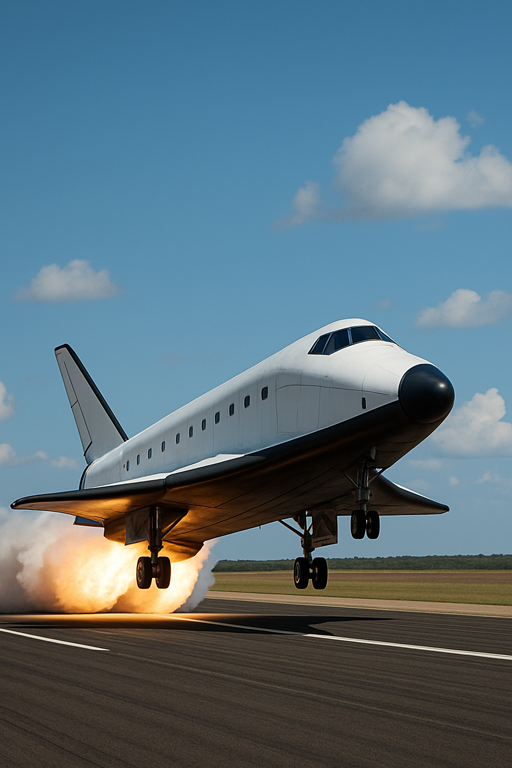
Dawn Aerospace seems to want to play with the big kids as it announces that it will be selling its spaceplane directly to customers the same way that airliner manufacturers market their aircraft, suggesting a major shift in space launch business models.
Currently, the space launch sector is pretty much a vertical affair. The company that builds and operates the rockets retains ownership of them and what is flown when is set by them. It's the way the business has been run since commercial payloads started launching in the 1960s, but that may soon change if Dawn Aerospace's plans are successful.
The current setup is rather as if Boeing and Airbus not only built airplanes but completely controlled all the freight and passenger traffic as well. That's somewhat similar to how railways have operated but rail companies work under what is called a natural monopoly. That is, having competing railways in an area is almost impossible because there are only so many routes to lay track on. However, if you look up at the sky, there aren't anything like tracks. It's like the oceans, the common property of humanity.
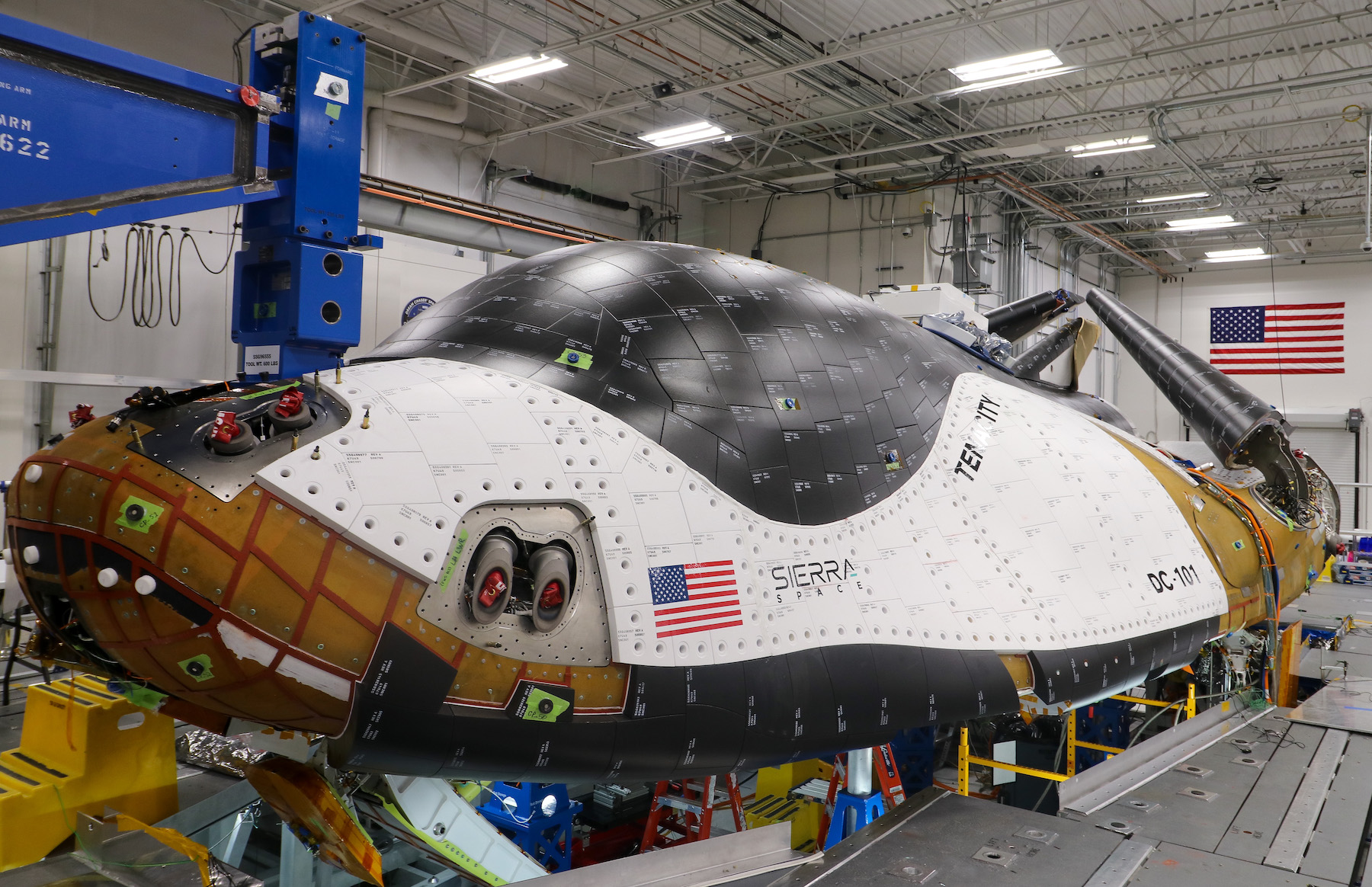
LOUISVILLE, Colorado—The first Dream Chaser spaceplane built to go into orbit is starting to look the part. Its foldable wings and fuselage are covered in custom-fitted ceramic tiles to shield the spacecraft's composite structure from the scorching heat of atmospheric reentry as it flies back to Earth. It has its landing gear, and technicians buzz around the vehicle to add the finishing touches before it leaves the factory.
Inside the spacecraft, workers are installing the final ducts for the environmental control system, which will make the pressurized compartment within Dream Chaser livable for astronauts at the International Space Station. The Dream Chaser's job, at least for now, is to ferry cargo to and from the research complex orbiting some 240 miles (385 kilometers) above Earth. It will launch on top of a conventional rocket, maneuver in space like a satellite, and then land on a runway.
https://arstechnica.com/space/2023/11/a ... dy-to-fly/Across the hall from the production floor, Sierra Space has set up a mission control room, where engineers will monitor and command the spacecraft when it's in orbit. Down the hall, a mock-up is in place for astronauts to train on how to enter the Dream Chaser and pack and unpack cargo while it's docked at the station.
Read more here https://abcnews.go.com/US/virgin-galact ... =102128933Virgin Galactic launched its first mission carrying paying customers on Thursday, weeks after the company's first flight.
Galactic 02 launched from Spaceport America in New Mexico at 9:00 a.m. MST (11:00 a.m. EST), according to a livestream.
The spaceflight company, founded by British businessman Richard Branson, is bringing six people to space aboard the VSS Unity, with three of them being regular civilians.
The mission also makes history with the first Olympian in space as well as the first Caribbean astronauts and the first mother-daughter duo in space.

https://newatlas.com/space/reaction-eng ... s-program/Proving that you can't keep a good technology down, Reaction Engines' Synergetic Air-Breathing Rocket Engine (SABRE) has a new lease on life after a British-led consortium announced Invictus, a new program to build a Mach 5+ spaceplane.
Sometimes you have to admire sheer perseverance when it comes to technological innovations.
In 1982, British Aerospace and Rolls-Royce teamed up to develop the Horizontal Take-Off and Landing (HOTOL) spaceplane that was intended to be a single-stage-to-orbit vehicle that could take off and land from a conventional runway and could breathe air for most of its flight to drastically cut down on weight.
The program generated a lot of enthusiasm in aerospace circles and a model was proudly displayed in the Science Museum in London. It even garnered a lot of official support from the British government. However, by 1987, Whitehall decided that the project was "over ambitious" and withdrew funding.
But that didn't stop Alan Bond, John Scott-Scott, and Richard Varvill from going private in 1989 and forming their own company, Reaction Engines Limited, to keep the idea alive and develop the key technologies of HOTOL in a new incarnation.
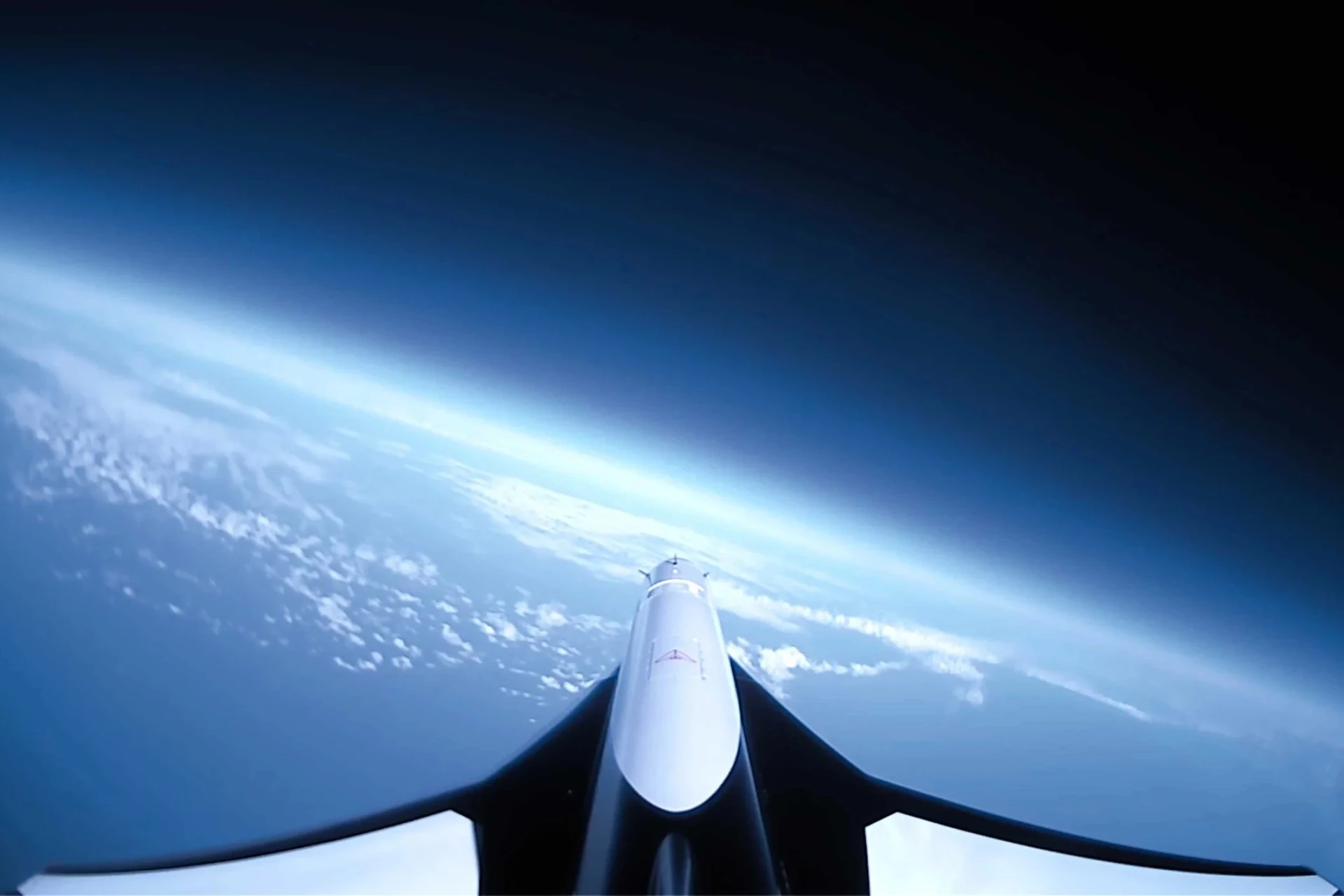
Andrew Duggleby, co-founder and CTO of Venus Aerospace, discusses their groundbreaking propulsion technology. They have a ramjet integrated with a rotating detonation rocket engine (RDRE) which they call the Venus Detonation Ramjet (VDR2). This will enable hypersonic flight (up to Mach 6-10) from conventional runways, with emphasis on efficiency, challenges, and innovations. It could also be used to massively boost the payload to space.
They use hydrogen peroxide (H2O2) mixed with fuel in the RDRE to achieve the detonation process.
Duggleby introduces Venus Aerospace’s unique approach to hypersonic propulsion, combining a traditional ramjet (for efficient high-speed cruising) with an RDRE (for high-thrust takeoff and acceleration). He contrasts this with conventional turbofan engines, noting that rockets and detonation-based systems are more efficient at supersonic and hypersonic speeds. The RDRE is described as a game-changer” ecause it uses a continuous detonation wave rather than steady combustion, leading to 15-30% better fuel efficiency and higher thrust in a compact design.
https://newatlas.com/space/dream-chaser ... -fly-free/Sierra Space and NASA have renegotiated their contract for the Dream Chaser spaceplane that will allow the spacecraft to make its first orbital flight next year as a free flier instead of visiting the International Space Station (ISS).
The ISS is an outpost in space and like any outpost it needs to be resupplied on a regular basis in order to survive. Currently, the space lab is kept in freeze-dried shrimp cocktail and toilet paper by cargo ships from SpaceX and Northrop Grumman, but these were meant to be the first pair of a larger fleet of spacecraft that would regularly visit the station.
In 2016, NASA awarded a Commercial Resupply Services (CRS-2) contract to Sierra Space to be one of the second tranche of companies to run cargo missions to the ISS, using the Dream Chaser spaceplane and its Shooting Star disposable versions that can be burned up in the Earth's atmosphere for garbage disposal.
