Stars, supernovae, black holes and stellar remnants

weatheriscool
Posts: 24486
Joined: Sun May 16, 2021 6:16 pm
Contact:

Re: Stars, supernovae, black holes and stellar remnants

Post by weatheriscool »

Gamma-ray outburst detected from the radio source 3C 216
https://phys.org/news/2025-01-gamma-ray ... ource.html
by Tomasz Nowakowski , Phys.org

Using NASA's Fermi space telescope, Italian astronomers have observed a radio source known as 3C 216. As a result, they detected increased gamma-ray activity from this source, including a strong outburst. The finding is reported in a research paper published on the arXiv preprint server.

3C 216 is an extragalactic radio source at a redshift of approximately 0.67, with a projected linear size of about 182,500 light years. It has an overall steep radio spectrum and a relatively compact morphology. Therefore, it is classified as a compact steep spectrum (CSS) object.

Previous observations of 3C 216 have found that it is a radio galaxy consisting of a central component surrounded by a more extended structure, and has an inner relativistic jet. It turns out that this galaxy is associated with gamma-ray source 4FGL J0910.0+4257.
weatheriscool
Posts: 24486
Joined: Sun May 16, 2021 6:16 pm
Contact:

Re: Stars, supernovae, black holes and stellar remnants

Post by weatheriscool »

Hubble Telescope Captures 2.5-Gigapixel Image of Andromeda Galaxy
The image is the product of ten years of Hubble observations.
By Ryan Whitwam January 22, 2025
The universe is an unfathomably big place, but even after decades of service, the Hubble Space Telescope can see a lot of it. It's also great for things that are much closer, like our nearest galactic neighbor, the Andromeda Galaxy. Despite its nearness, photographing the entire Andromeda Galaxy is no easy task. Scientists have just finished a decade-long project to image Andromeda in unprecedented detail. The final image clocks in at a whopping 2.5 gigapixels.

Hubble gazes at galaxies all the time—the famous Hubble Deep Field images alone show countless galaxies in faraway parts of the universe. Andromeda, however, is much closer and takes up more of the sky. It's just 2.5 million light-years distant, which is nothing in cosmological terms. Under the right conditions, you can even see Andromeda (also known as M31) with the naked eye. In addition, it may be home to upward of 1 trillion stars, many of which are close to the telescope's detection limit. Even Hubble had to take its time.
Image
https://www.extremetech.com/science/hub ... eda-galaxy
User avatar
caltrek
Posts: 9280
Joined: Mon May 17, 2021 1:17 pm

Re: Stars, supernovae, black holes and stellar remnants

Post by caltrek »

Hundreds of Black Hole 'Missing Links' May Have Been Discovered in New Survey
by Michele Starr
February 20, 2025

Introduction:
(Science Alert) A survey to reveal the unseen majority of the Universe has just turned up a treasure trove of black holes that may help solve one of the biggest mysteries of the cosmos.

Lurking at the centers of dwarf galaxies speckled throughout space, astronomers have found 2,444 active black holes, slurping up matter from material around them. And, even more amazingly, 298 of these appear to be that elusive beast, the black hole of intermediate mass – long considered a missing link between stellar-mass black holes and supermassive behemoths.

This is nearly triple the number of previously known intermediate mass black hole (IMBH) candidates, representing the largest haul to date – a discovery that has huge implications for our understanding of how black holes get to masses equivalent to millions or billions of Suns.

"The statistical sample of dwarf active galactic nucleus candidates," the researchers write, "will be invaluable for addressing several key questions related to galaxy evolution on the smallest scales, including accretion modes in low-mass galaxies and the co-evolution of galaxies and their central black holes."
Read more here: https://www.sciencealert.com/hundreds- ... w-survey
Don't mourn, organize.

-Joe Hill
weatheriscool
Posts: 24486
Joined: Sun May 16, 2021 6:16 pm
Contact:

Re: Stars, supernovae, black holes and stellar remnants

Post by weatheriscool »

User avatar
wjfox
Site Admin
Posts: 13578
Joined: Sat May 15, 2021 6:09 pm
Location: Essex, UK
Contact:

Re: Stars, supernovae, black holes and stellar remnants

Post by wjfox »

User avatar
caltrek
Posts: 9280
Joined: Mon May 17, 2021 1:17 pm

Re: Stars, supernovae, black holes and stellar remnants

Post by caltrek »

Don't mourn, organize.

-Joe Hill
weatheriscool
Posts: 24486
Joined: Sun May 16, 2021 6:16 pm
Contact:

Re: Stars, supernovae, black holes and stellar remnants

Post by weatheriscool »

NRL's narrow field imager launches on NASA's PUNCH mission
https://phys.org/news/2025-03-nrl-narro ... -nasa.html
by Emily Winget, Naval Research Laboratory
The U.S. Naval Research Laboratory's (NRL) Narrow Field Imager (NFI) was launched into space aboard a SpaceX Falcon 9 rocket as a part of NASA's Polarimeter to Unify the Corona and Heliosphere (PUNCH) mission on March 11 and deployed from Falcon 9 on March 12.

PUNCH is a four-satellite constellation, collecting observations in low Earth orbit. It will conduct global, 3D observations of the inner heliosphere to investigate the solar corona's evolution into the solar wind. The mission is scheduled to conduct science for the next two years, following a 90-day commissioning period.
weatheriscool
Posts: 24486
Joined: Sun May 16, 2021 6:16 pm
Contact:

Re: Stars, supernovae, black holes and stellar remnants

Post by weatheriscool »

Astronomers confirm the existence of a lone black hole
https://phys.org/news/2025-04-astronome ... -hole.html
by Bob Yirka , Phys.org
A team of astronomers at the Space Telescope Science Institute, working with one colleague from the University of St Andrews' Center for Exoplanet Science and another from the European Southern Observatory, has confirmed the existence of a lone black hole. In their paper published in The Astrophysical Journal, the group describes how they studied newer data regarding an object they had spotted several years ago to confirm its identity.Image
In 2022, members of essentially the same team reported the discovery of what they described as a "dark object" moving through the constellation Sagittarius. They suggested it might be a lone black hole. Shortly thereafter, a second research team challenged that result, suggesting it was more likely a neutron star. After continuing to study the object, the original research team has found more evidence backing up their original claim that it is likely a lone black hole.
User avatar
caltrek
Posts: 9280
Joined: Mon May 17, 2021 1:17 pm

Re: Stars, supernovae, black holes and stellar remnants

Post by caltrek »

New Research Traces Heavy Elements to Collapsing Stars
by Matthew Williams
May 1, 2025

Introduction:
(Universe Today) Based on accepted cosmological models, hydrogen and helium were the only elements in the early Universe. These coalesced to form the first stars and galaxies, which fused hydrogen and helium to create heavier elements like carbon, silica, and iron. These, in turn, were distributed throughout the Universe once these stars experienced gravitational collapse and went supernova. This process, known as "stellar nucleosynthesis," is how the elements that gave rise to the planets and life formed.

However, the origin of the heaviest elements on the periodic table is one of the most challenging questions in physics. These include thorium, uranium, plutonium, and other elements that only form under extreme conditions. To explore this mystery, a team of researchers led by the Los Alamos National Laboratory considered the jets emanating from collapsed stars. Their findings indicate that gamma-ray bursts produced deep in these jets could dissolve the outer layers of a star into neutrons, creating the conditions that result in heavy elements.

The study was conducted by researchers from the Theoretical Division and the Center for Theoretical Astrophysics at the Los Alamos National Laboratory (LANL) and the Physics Division at the Argonne National Laboratory. The paper detailing their findings, "Let There Be Neutrons! Hadronic Photoproduction from a Large Flux of High-energy Photons," appeared in The Astrophysical Journal on March 25th, 2025. As the team indicated, the formation of the heaviest elements on the periodic table comes down to the neutron-capture process ("r process").

This describes nuclear reactions where atomic nuclei absorb a free neutron and emit a discrete amount of gamma-ray photons. However, free neutrons have a short half-life of about 15 minutes, making them rare and limiting the scenarios in which they would be common enough to form heavy elements.
Read more of the Universe Today article here: https://www.universetoday.com/articles ... ng-stars

For a presentation of study results as published in The Astrophysical Journal: https://iopscience.iop.org/article/10. ... 57/adb1e3
Don't mourn, organize.

-Joe Hill
weatheriscool
Posts: 24486
Joined: Sun May 16, 2021 6:16 pm
Contact:

Re: Stars, supernovae, black holes and stellar remnants

Post by weatheriscool »

User avatar
caltrek
Posts: 9280
Joined: Mon May 17, 2021 1:17 pm

Re: Stars, supernovae, black holes and stellar remnants

Post by caltrek »

Perfect Sphere of Plasma Discovered in Space Is a Conundrum Waiting to Be Solved
by Dr. Alfredo Carpineti
May 20, 2025

Introduction:
(IFL Science) Regular geometrical shapes are such a common feature in human civilizations that we often don’t realize that they are not that common in nature. But then you see a perfect sphere of plasma in the depths of space, and, well, that is certainly strange.

An international team of astronomers led by Professor Miroslav Filipović from Western Sydney University has dubbed this object Teleios, from the ancient Greek word for perfection. And it is indeed a perfect sphere, which really challenged the scientists in understanding how it came to be.

The sphere was discovered in the Australian Square Kilometre Array Pathfinder (ASKAP) Evolutionary Map of the Universe (EMU). It is only visible in radio waves, which allowed the team to find a very likely culprit. This was formed by the explosion of a supernova. So far, so good. But things soon got puzzling.

The supernova remnant is not only almost perfectly symmetric, but it has one of the lowest surface brightnesses of all known supernova remnants in the Milky Way. The team has come up with multiple scenarios to explain what they are seeing.

This might be a young supernova remnant, maybe less than 1,000 years old, located around 7,000 light-years away. That could be the case because early on in the so-called Sedov phase, the explosion that ripped a star apart is roughly symmetrical.

Read more here: https://www.iflscience.com/perfect-sph ... ed-79285
Don't mourn, organize.

-Joe Hill
weatheriscool
Posts: 24486
Joined: Sun May 16, 2021 6:16 pm
Contact:

Re: Stars, supernovae, black holes and stellar remnants

Post by weatheriscool »

Binary star system with millisecond pulsar and a helium star companion discovered
Image
by Bob Yirka, Phys.org
https://phys.org/news/2025-05-binary-st ... elium.html
edited by Gaby Clark, reviewed by Robert Egan
Editors' notes
A large team of astronomers and astrophysicists affiliated with several institutions in China has discovered a binary star system, where one of the stars is a millisecond pulsar and the other is made mostly of helium. In their paper published in the journal Science, the group describes how they discovered that a pulsar under study since 2020 had a companion star—one that was gravitationally bound to it.

Researchers on the team first spotted the pulsar back in May of 2020, and soon thereafter noticed that not only did it spin incredibly fast, but for one-sixth of its orbit, its radiation emissions were blocked. That suggested an object was passing between it and Earth. Over the next four years, the team studied the apparent binary system to learn more about its characteristics and confirm that there truly was a second star.

Pulsars are a type of neutron star that emit beams of radiation from their poles. They appear to pulse as viewed from Earth due to their spinning—the radiation signal can only be seen when one of the poles is pointed directly at the Earth.

In this new effort, the pulsar was found to be spinning so fast that it qualified as a millisecond pulsar, which means it rotates on its axis at least a hundred times a second. Even at that speed, the researchers were able to detect gaps in its pulse, suggesting something was situated between the pulsar and Earth.
weatheriscool
Posts: 24486
Joined: Sun May 16, 2021 6:16 pm
Contact:

Re: Stars, supernovae, black holes and stellar remnants

Post by weatheriscool »

Dozens of new high-redshift quasars discovered by astronomers

by Tomasz Nowakowski, Phys.org
https://phys.org/news/2025-05-dozens-hi ... omers.html
An international team of astronomers has discovered 25 new quasars by analyzing multiwavelength data from various surveys. All the newfound quasars were detected at redshifts greater than 4.6. The findings are detailed in a research paper published May 21 on the arXiv pre-print server.

Quasars, or quasi-stellar objects (QSOs), are active galactic nuclei (AGN) in the centers of active galaxies, which showcase very high luminosity and are powered by supermassive black holes (SMBHs). They emit electromagnetic radiation observable in radio, infrared, visible, ultraviolet and X-ray wavelengths.

Finding new high-redshift quasars (at redshifts higher than 4.4) is important for astronomers as such QSOs are the most luminous and most distant compact objects in the observable universe. Their spectra can be used to estimate the mass of supermassive black holes that constrain the evolution and formation models of quasars
weatheriscool
Posts: 24486
Joined: Sun May 16, 2021 6:16 pm
Contact:

Re: Stars, supernovae, black holes and stellar remnants

Post by weatheriscool »

Chandra spots surprisingly strong black hole jet at 'cosmic noon'
https://phys.org/news/2025-06-chandra-s ... e-jet.html
by Lee Mohon, NASA
A black hole has blasted out a surprisingly powerful jet in the distant universe, according to a new study from NASA's Chandra X-ray Observatory. This jet exists early enough in the cosmos that it is being illuminated by the leftover glow from the Big Bang itself.

Astronomers used Chandra and the Karl G. Jansky Very Large Array (VLA) to study this black hole and its jet at a period they call "cosmic noon," which occurred about 3 billion years after the universe began. During this time, most galaxies and supermassive black holes were growing faster than at any other time during the history of the universe.

The graphic above is an artist's illustration showing material in a disk that is falling toward a supermassive black hole. A jet is blasting away from the black hole toward the upper right, as Chandra detected in the new study.
Image
The black hole is located 11.6 billion light-years from Earth when the cosmic microwave background (CMB), the leftover glow from the Big Bang, was much denser than it is now. As the electrons in the jets fly away from the black hole, they move through the sea of CMB radiation and collide with microwave photons. These collisions boost the energy of the photons up into the X-ray band (purple and white), allowing them to be detected by Chandra even at this great distance, which is shown in the inset.
User avatar
wjfox
Site Admin
Posts: 13578
Joined: Sat May 15, 2021 6:09 pm
Location: Essex, UK
Contact:

Re: Stars, supernovae, black holes and stellar remnants

Post by wjfox »

User avatar
caltrek
Posts: 9280
Joined: Mon May 17, 2021 1:17 pm

Re: Stars, supernovae, black holes and stellar remnants

Post by caltrek »

Unexpected Nova Just Appeared in the Night Sky
By Dr Alfredo Carpineti
June 20, 2025

Introduction:
(IFL Science) For the last year or so, astronomers and sky lovers have been waiting for the explosion of T Coronae Borealis. The system is a notorious recurring nova, which is expected to go any moment now, but still has not. So, while astronomy can be a cruel mistress, making us wait, it can also be a generous mistress since there is also a brand new and unexpected nova in the night sky that you can see. Its name is V462 Lupi.

A nova is a stellar object that suddenly brightens in the night sky, usually to a level that makes it visible from Earth with much smaller telescopes or even just to the naked eye (not to be confused with a supernova). V462 Lupi is a classical nova, which means that the eruption that generated the increase in luminosity is an act of theft, and was detected on June 12.

In the system, there is a white dwarf, the remains of a star like the Sun after it became a red giant and ran out of fuel. This dense, hot core is the white dwarf. In a system that becomes a nova, the white dwarf is not alone; there is another star in the system, usually a red giant, and the white dwarf is stealing material. The material accumulates on the surface of the white dwarf, and with mounting pressure, it detonates.

This is the cause of the nova's sudden brightness. Nova comes from the Latin for stella nova or "new star", because novae just suddenly appear, like out of nowhere. It was a much bigger deal when people believed the universe to be immutable. Suddenly getting a new star in the night sky was a lovely challenge to that worldview.

V462 Lupi is in the constellation of the Lupus (the wolf), a southern sky constellation which is visible across the whole Southern Hemisphere and up to 35 degrees latitude in the Northern Hemisphere. Which means anyone south of North Carolina has a chance to see it tonight or in the coming days.
Read more here: https://www.iflscience.com/unexpected- ... e-79708
Don't mourn, organize.

-Joe Hill
User avatar
wjfox
Site Admin
Posts: 13578
Joined: Sat May 15, 2021 6:09 pm
Location: Essex, UK
Contact:

Re: Stars, supernovae, black holes and stellar remnants

Post by wjfox »

weatheriscool
Posts: 24486
Joined: Sun May 16, 2021 6:16 pm
Contact:

Re: Stars, supernovae, black holes and stellar remnants

Post by weatheriscool »

weatheriscool
Posts: 24486
Joined: Sun May 16, 2021 6:16 pm
Contact:

Re: Stars, supernovae, black holes and stellar remnants

Post by weatheriscool »


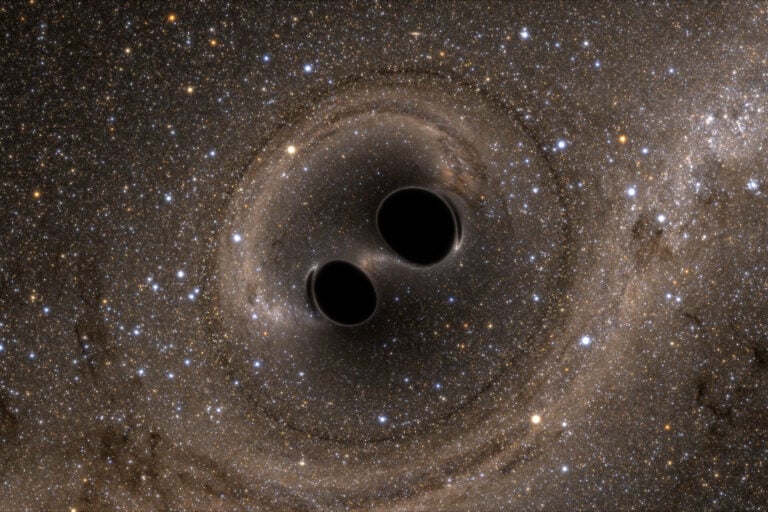
Astronomers Detect a Black Hole Merger That’s So Massive It Shouldn’t Exist

The powerful merger, designated GW231123, produced an extremely large black hole about 225 times the mass of our Sun.
By Gayoung Lee Published July 13, 2025 | Comments (14)
https://gizmodo.com/astronomers-detect- ... 2000628197
Gravitational waves—ripples in space-time caused by violent cosmic events—travel at the speed of light in every direction, eventually fading out like ripples in water. But some events are so destructive and extreme that they create disturbances in spacetime more like powerful waves than small ripples, with enough energy to reach our own detectors here on Earth.

Today, the LIGO Collaboration announced the detection of the most colossal black hole merger known to date, the final product of which appears to be a gigantic black hole more than 225 times the mass of the Sun. Much about this signal, designated GW231123, contradicts known models for stellar evolution, sending physicists scrambling to apprehend how such a merger was even possible.
Image
weatheriscool
Posts: 24486
Joined: Sun May 16, 2021 6:16 pm
Contact:

Re: Stars, supernovae, black holes and stellar remnants

Post by weatheriscool »

Post Reply