Bioprinting news and discussion

weatheriscool
Posts: 24495
Joined: Sun May 16, 2021 6:16 pm
Contact:

Re: Bioprinting news and discussion

Post by weatheriscool »

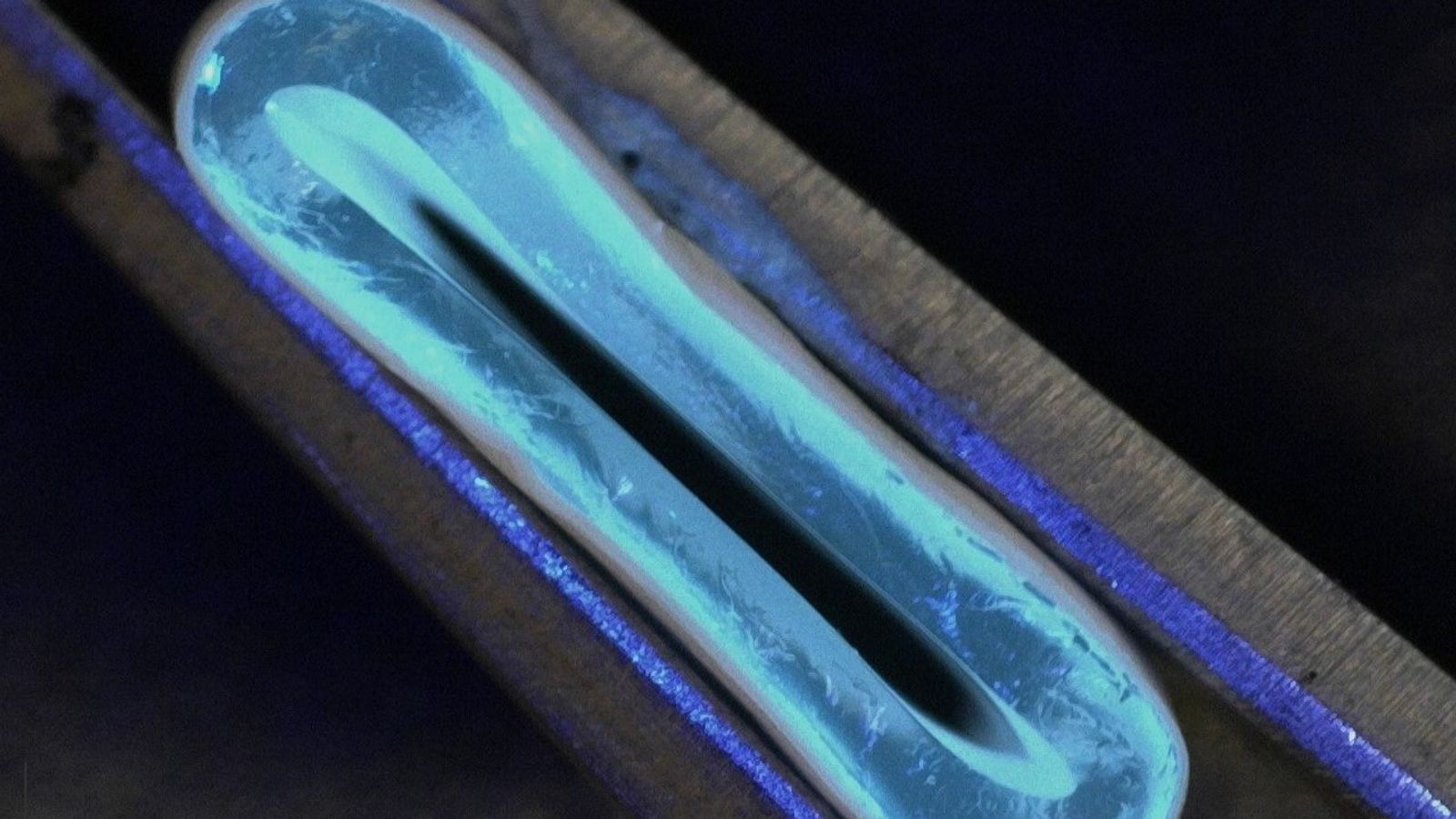
3D-printable tissue adhesive sets a new standard in biomedical technology
https://medicalxpress.com/news/2024-02- ... ndard.html
by Tejasri Gururaj , Medical Xpress
Researchers from MIT have developed a 3D-printable tissue adhesive that demonstrates superior tissue adhesion, rapid sealing capabilities across various surgical scenarios and a unique blood-repelling feature. The technology holds immense potential for revolutionizing wound care and biomedical device applications.

The research has been published in Nature Communications.

Tissue adhesives provide alternatives to traditional wound closure methods like sutures and staples, offering advantages such as reduced tissue trauma, quicker application, and potentially minimized scarring.

Despite the effectiveness of traditional adhesives, their time-consuming, skill-dependent application and patient discomfort have prompted the quest for innovative solutions.

For instance, they might be less effective in sealing irregularly shaped or highly mobile tissues. Moreover, the application of traditional adhesives can be labor intensive, leading to extended surgical times. Additionally, these methods may cause tissue damage, and the materials themselves might not always integrate seamlessly with the body.

Innovations in tissue adhesives aim to overcome these drawbacks by providing more versatile, efficient, and patient-friendly solutions. The development of 3D printable tissue adhesives, as showcased in the MIT research, introduces a new dimension to wound closure and tissue repair.
weatheriscool
Posts: 24495
Joined: Sun May 16, 2021 6:16 pm
Contact:

Re: Bioprinting news and discussion

Post by weatheriscool »

Astonishing scar-free surgery prints living skin right into wounds
By Paul McClure
March 04, 2024
https://newatlas.com/medical/3d-printin ... g-surgery/
In a world first, researchers have printed multi-layered, living skin directly onto significant injuries in rats for scar-free skin repair. It's not sci-fi – they're genuinely 3D-printing skin (and possibly hair) right into damaged areas.

The skin of the head and face is vital to protecting the structures underlying it. It’s also integral to our identity. Full-thickness skin damage caused by traumatic injury to or extensive surgery on the face or head – to remove a cancerous tumor, say – can negatively impact a person’s confidence and self-esteem.

Despite advances in plastic and reconstructive surgery, repairing full-thickness skin loss on the head and face using skin grafts is challenging. It can result in scarring, permanent hair loss, and graft failure. But now, researchers from Pennsylvania State University (Penn State) have become the first to 3D print full-thickness, living skin with hair-growing potential during surgery on rats, immediately correcting a significant skin deficit on the animals’ heads.
weatheriscool
Posts: 24495
Joined: Sun May 16, 2021 6:16 pm
Contact:

Re: Bioprinting news and discussion

Post by weatheriscool »

Transplant Patient Receives World's First 3D Printed Windpipe
The new trachea was created partially from stem cells.
By Adrianna Nine March 18, 2024
A woman in South Korea made history as the first person to receive a "new" windpipe 3D printed from stem cells. Now that the transplant appears to have been a success, her experience could pave the way for other patients who have lost parts of their tracheas to cancer or trauma.

Researchers at Gachon University and the Catholic University of Korea have spent the last two decades experimenting with 3D printed partial organ replacements using stem cells, according to BBC Science Focus. In recent years, the team has partnered with T&R Biofab, a Korean biomedical engineering firm, to combine their research with 3D printing technology suitable for medical use. The resulting 3D bioprinter infuses donor nasal epithelial cells and ear cartilage cells with bioink and polycaprolactone (PCL), a synthetic polycaprolactone stabilizer, to create solid yet flexible transplant organs.
https://www.extremetech.com/science/tra ... d-windpipe
weatheriscool
Posts: 24495
Joined: Sun May 16, 2021 6:16 pm
Contact:

Re: Bioprinting news and discussion

Post by weatheriscool »

User avatar
caltrek
Posts: 9280
Joined: Mon May 17, 2021 1:17 pm

Re: Bioprinting news and discussion

Post by caltrek »

3D Bioprinting Unveils New Horizons in Biomedical Applications
June 3, 2024

Introduction:
(Eurekalert) A cutting-edge review explores the convergence of three-dimensional (3D) printing and peptide self-assembly, unveiling a new era in biomanufacturing. This technology paves the way for creating sophisticated biomaterials, advancing the fields of tissue engineering and regenerative medicine.

With the development of intelligent biomedical engineering, the application of three-dimensional (3D) printing technology has become increasingly widespread. However, existing 3D printing technologies mainly focus on inorganic or polymer materials, limiting their applications in biocompatibility and biodegradability. Due to these challenges, there is a need for in-depth research on biocompatible and functional materials.

This review (DOI: 10.1007/s42242-024-00275-5), conducted by institutions such as China University of Petroleum (East China), Zhejiang University, and Tel Aviv University, was published in Bio-Design and Manufacturing, on 29 April 2024. The research team explored the combination of peptide self-assembly technology with 3D printing for developing complex biological structures and organs. This breakthrough lays the foundation for future biomedical applications.

The study provides an in-depth analysis of recent progress in 3D bioprinting in Israel, focusing on scientific studies on printable components, soft devices, and tissue engineering. It highlights the potential of peptide self-assembly technology as a bioinspired ink for constructing complex 3D structures. Peptide self-assembled bio-inks form various nanostructures, such as nanofibers and nanotubes, through non-covalent interactions like hydrogen bonding, aromatic, and hydrophobic interactions, creating a 3D network structure. These structures exhibit excellent biocompatibility and adjustable physicochemical properties, making them suitable for multiple biomedical fields, including tissue engineering, cell culture, and drug release. Israeli scientists have made significant achievements in developing these innovative materials and successfully applying them in bioprinting and manufacturing commercial products.

Dr. Lihi Adler-Abramovich, a leading researcher from Tel Aviv University, states, “The integration of peptide self-assembly with 3D printing represents a significant advancement in biomedical engineering. This technology not only enhances the precision and efficiency of creating biocompatible structures but also opens up new possibilities for developing sophisticated medical devices and tissue engineering solutions.”
Read more here: https://www.eurekalert.org/news-releases/1046883
Don't mourn, organize.

-Joe Hill
weatheriscool
Posts: 24495
Joined: Sun May 16, 2021 6:16 pm
Contact:

Re: Bioprinting news and discussion

Post by weatheriscool »

New study used 3D-printed sensors to measure spinal cord malformations in embryos
https://medicalxpress.com/news/2024-07- ... tions.html
by University College Londons

A group of scientists at UCL have successfully created mechanical force sensors directly in the developing brains and spinal cords of chicken embryos, which they hope will improve understanding and prevention of birth malformations such as spina bifida.

The study, published in Nature Materials and in collaboration with the University of Padua and the Veneto Institute of Molecular Medicine (VIMM), uses innovative biotechnologies to measure the mechanical forces exerted by the embryo during its development.
User avatar
Time_Traveller
Posts: 3025
Joined: Sun May 16, 2021 4:49 pm
Location: New York City, USA, November 5th 2032 C.E.

Re: Bioprinting news and discussion

Post by Time_Traveller »

3D-printed blood vessels could improve heart bypass outcomes, research suggests
Thursday 25 July 2024 12:32, UK

Image

3D-printed blood vessels which closely mimic the properties of human veins could transform the treatment of cardiovascular diseases, scientists have said.

In a two-stage process, a team of researchers led by the University of Edinburgh's School of Engineering used a rotating spindle integrated into a 3D printer to create tubular grafts made from a water-based gel.

Next, they reinforced the printed graft in a process known as electrospinning, which uses high voltage to draw out thin nanofibers, coating the artificial blood vessel in biodegradable polyester molecules.

The team said the flexible gel-like tubes, which are as strong as natural blood vessels and could be easily integrated into the body, could replace the human and synthetic veins currently used to re-route blood flow in heart bypass operations.

According to the researchers, this could limit the scarring, pain and infection risk associated with the removal of human veins in the 20,000 heart bypass operations performed each year in England alone.
https://news.sky.com/story/3d-printed-b ... s-13184730
“In the quantum multiverse, every choice, every decision you've ever and never made exists in an unimaginably vast ensemble of parallel universes.”
weatheriscool
Posts: 24495
Joined: Sun May 16, 2021 6:16 pm
Contact:

Re: Bioprinting news and discussion

Post by weatheriscool »

weatheriscool
Posts: 24495
Joined: Sun May 16, 2021 6:16 pm
Contact:

Re: Bioprinting news and discussion

Post by weatheriscool »

Plant-root casts could find use in lab-grown organs and more
By Ben Coxworth
November 24, 2024
https://newatlas.com/science/plant-root ... -networks/
Even if you don't know what 3D microfluidic networks are, that doesn't change the fact that they have some very valuable possible uses. Scientists have now devised a much easier method of making the things, by taking casts of plant roots.

Putting it simply, a 3D microfluidic network is a series of branching micro-scale channels that tunnel through a piece of three-dimensional material. The channels are narrow enough that they're able to disperse various liquids throughout the material via capillary action. No pumping is required.

Among other potential applications, such networks could find use in lab-grown replacement skin or organs, self-healing materials, and soft robotic devices. Due to the fact that microfabricating the tiny channels is such a painstaking task, however, the technology has yet to enter wide use.

With this limitation in mind, Prof. Fujio Tsumori and colleagues from Japan's Kyushu University looked to something that already has the desired structure: plant roots. After all, when it comes down it, roots are essentially just intricate water-transporting structures that branch out through a three-dimensional soil matrix.
weatheriscool
Posts: 24495
Joined: Sun May 16, 2021 6:16 pm
Contact:

Re: Bioprinting news and discussion

Post by weatheriscool »

weatheriscool
Posts: 24495
Joined: Sun May 16, 2021 6:16 pm
Contact:

Re: Bioprinting news and discussion

Post by weatheriscool »

3D bioprinting technology could lead to personalized gastric cancer treatment
https://medicalxpress.com/news/2025-02- ... stric.html
by Pohang University of Science and Technology
A collaborative research team from POSTECH has successfully developed a gastric cancer model using 3D bioprinting technology and patient-derived cancer tissue fragments. This innovative model preserves the characteristics of actual patient tissues and is expected to rapidly evaluate and predict individual patient drug responses. The research has been published in the journal Advanced Science.

Tumor heterogeneity poses a significant challenge in the development and treatment of cancer therapies, as patient responses to the same drug varies, and the timing of treatment is a critical factor influencing prognosis. Therefore, technologies that predict the efficacy of anticancer treatments play a vital role in minimizing side effects and enhancing treatment efficiency.
Image
weatheriscool
Posts: 24495
Joined: Sun May 16, 2021 6:16 pm
Contact:

Re: Bioprinting news and discussion

Post by weatheriscool »

3D-printed tissue restores erectile function and aids reproduction in animal study
https://medicalxpress.com/news/2025-03- ... -aids.html
by Sanjukta Mondal , Medical XpressImage
Erectile dysfunction affects over 40% of men over 40, yet our understanding of the condition remains limited. Research on this issue has mostly relied on real organs, making it difficult to study the detailed interaction between blood flow and tissue during an erection.

In a recent study published in Nature Biomedical Engineering, a team of scientists from China, Japan and the U.S. presented a 3D printed hydrogel-based penile model complete with essential blood vessels to mimic the natural function of a penis.

Once implanted into rabbits and pigs with penile deformities, the bioengineered organ enabled them to mate and reproduce within weeks.

Apart from transporting oxygen and essential nutrients throughout the body, the vascular system also plays a crucial role in penile erection. This is especially true of the corpora cavernosa with its numerous cavernous spaces, with the cavernous artery running through the center of the penis.
weatheriscool
Posts: 24495
Joined: Sun May 16, 2021 6:16 pm
Contact:

Re: Bioprinting news and discussion

Post by weatheriscool »

Scientists achieve record-breaking growth in miniature, functional liver models
https://medicalxpress.com/news/2025-04- ... liver.html
by Keio University
The liver is the body's control tower for metabolism, powering vital functions like converting nutrients to glucose, storing fat and breaking down toxins. Over a third of the world, however, is thought to be affected by conditions including metabolic dysfunction-associated steatotic liver disease (MASLD), which jeopardize key liver functions as the condition progresses. Hepatocyte organoids—the miniature, 3D models of the organ—hold immense promise for accelerating drug development and advancing regenerative therapies.

In a study published in Nature, Keio University researchers unveiled a method to proliferate these hard-to-grow organoids by a million-fold in just 3–4 weeks while maintaining key liver functions. "These organoids are potentially the closest laboratory representations of the liver and its multifunctionality," says senior author Professor Toshiro Sato of the Keio University School of Medicine.

While organoids aim to mimic human organs, the liver's repertoire of complex functions—and thus the energy it needs to operate—have made it challenging for researchers to grow organoids that proliferate and fully function, says Sato. When prioritizing growth and survival in laboratory settings, hepatocytes, the liver's main cells, eventually transform into cells resembling cholangiocytes, which line the bile duct. Hepatocyte functions only last 1–2 weeks at most.
weatheriscool
Posts: 24495
Joined: Sun May 16, 2021 6:16 pm
Contact:

Re: Bioprinting news and discussion

Post by weatheriscool »

3D printed hydrogels guide cell growth to form functional tissue structures
https://phys.org/news/2025-05-3d-hydrog ... ional.html
by Terasaki Institute for Biomedical Innovation
Researchers at the Terasaki Institute for Biomedical Innovation (TIBI) have developed a technique that could help advance treatments in tissue engineering. The study, published in the journal Small, introduces a technique for producing tissues with precise cellular organization designed to mimic the natural structure of human tissue.

Using a simple light-based 3D printing method, the team created microgels with controlled internal architectures. These structures help guide how cells behave and grow, mimicking the way cells naturally behave in the body.

By adjusting properties of light as it interacts with hydrogels, the team modified the internal structure of these microgels, enabling precise control of cell organization in 3D space. This breakthrough addresses a major challenge in creating realistic, functional tissue environments critical for tissue repair and regeneration.
Lilymoon
Posts: 186
Joined: Sun Apr 17, 2022 2:12 pm

Re: Bioprinting news and discussion

Post by Lilymoon »

What Happened to 3D-Printed Organs?

Progress towards 3D-printed organs has been slow due to challenges like vascularization and cell viability.

3D bioprinting has successfully implanted hollow organs like tracheas and bladders, but solid organs present more technical challenges.
Other promising alternatives to 3D bioprinting include xenotransplants, bionic organs, and growing organs in bioreactors.

About fourteen years ago, I sat down and watched a fascinating 2011 TED Talk by Professor Anthony Atala titled "Printing a human kidney", showing off their progress towards creating organs with a 3D bioprinter.

That video blew my mind, and it seemed like we were just around the corner from solving our organ transplant crisis, but today we're still dependent on donors to keep people on the recipient lists alive.

The Promise of Printed Organs Was Red-Hot

The idea that someone could create a replacement organ using a machine, and then implant it with no rejection risk or dangerous medications is obviously like a dream come true. I remember that the demos shown of these bioprinter prototypes needed disclaimers on them, so that desperate people on waiting lists for kidneys and other organs weren't given false hope.

This was exciting, they said, but it would still be years before a 3D-printed kidney would go into a patient. Then things quietened down in the mainstream media. Behind the scenes, scientists and engineers were working tirelessly, and there's no lack of funding in the world of regenerative medicine, but to the outside world it was easy to forget the whole thing.

It’s Harder Than It Sounds

The thing about technological development is that you can have moments where big breakthroughs happen, but they are interspersed with years of incremental problem-solving. Printing or otherwise creating something as complex as a kidney or a liver has a list of challenges a mile long. You can't just make something that's close to a kidney, you need to get it right.

While bioprinters "print" using living cells, a liver isn't just a random mishmash of liver cells. The different cells and materials need to be arranged in exactly the right structure, so that the organ does its job.

Vascularization is a big problem, as solid organs have a complex structure of blood vessels that transport oxygen and nutrients through it. Printing layers of cells is easy enough, but printing vessels into those cells? Not so simple.

The cells in the printer also need to be kept alive throughout the process. A printed organ isn't much use of the cells die during the printing process, so solutions to keep cells alive and healthy until the organ is complete and ready to either go on life support or be implanted is another major hurdle. It's not at all like printing something in plastic or metal.

These printed organs also need to have at least the same structural integrity as natural ones, and there are things happening at the microscopic level that might not be replicable with current approaches to bioprinting.

These are just three major issues that I'm aware of, but I'm sure there's a litany of issues that need to be solved before we get to human testing, and eventually mainstream adoption.

We’re Already 3D-Printing Body Parts and Hollow Organs

So you might have noticed that I've mainly talked about the printing of solid organs like the liver, kidneys, heart, and so on. That's because when it comes to hollow organs or relatively simple structures in the body, we are already using medical-grade 3D printers to make replacement parts for patients.

The first 3D-printed organ implanted into a human happened all the way back in 1999! However, the scientists at Wake Forest University (the very same Anthony Atala) didn't publish about it until 2006. The printed bladder was covered in the patients' own cells, and as far as I can tell, it's still doing its job.

Small victories like these keep piling up. In 2023, Korean scientists implanted the first ever 3D-printed trachea using bioprinted materials and stem cells from other people. While the trachea is only expected to last five or so years, the hope is that the patient's body will regenerate the trachea using this implanted bioprinted part as scaffolding. Already, it seems, the patient's body is generating new veins.

These printed organs also need to have at least the same structural integrity as natural ones, and there are things happening at the microscopic level that might not be replicable with current approaches to bioprinting.

These are just three major issues that I'm aware of, but I'm sure there's a litany of issues that need to be solved before we get to human testing, and eventually mainstream adoption.

We’re Already 3D-Printing Body Parts and Hollow Organs

So you might have noticed that I've mainly talked about the printing of solid organs like the liver, kidneys, heart, and so on. That's because when it comes to hollow organs or relatively simple structures in the body, we are already using medical-grade 3D printers to make replacement parts for patients.

The first 3D-printed organ implanted into a human happened all the way back in 1999! However, the scientists at Wake Forest University (the very same Anthony Atala) didn't publish about it until 2006. The printed bladder was covered in the patients' own cells, and as far as I can tell, it's still doing its job.

Small victories like these keep piling up. In 2023, Korean scientists implanted the first ever 3D-printed trachea using bioprinted materials and stem cells from other people. While the trachea is only expected to last five or so years, the hope is that the patient's body will regenerate the trachea using this implanted bioprinted part as scaffolding. Already, it seems, the patient's body is generating new veins.

How Long Will It Take?

It can seem that something big has been "around the corner" for years without anything substantive happening, or at least seemingly so. Experts in the field of regenerative medicine differ on timelines, but Professor Jennifer Lewis of Harvard University’s Wyss Institute for Biologically Inspired Engineering thinks that within a decade is about as soon as it gets.

Personally, in my very nonexpert opinion, I expect regenerated organs of some kind to pass human trials by the middle of this century. However, I would not be surprised if that turns out to be too pessimistic given that this research doesn't happen in a vacuum, and breakthroughs in other areas can create periods of rapid progress.

It's also worth considering that AI (Artifiical Intelligence) is pushing scientific research ahead by decades, helping us discover new proteins, new materials, and new ideas at a rapid pace. This might actually accelerate the timeline of organ research in ways we can't predict right now. Our emerging machine intelligences might see things we're missing or at least have the ability to simulate years of research quickly, to point scientists in the right way. Either way, I think the future of medical science is incredibly bright.

https://www.msn.com/en-us/science/biolo ... r-AA1C2Ogi
weatheriscool
Posts: 24495
Joined: Sun May 16, 2021 6:16 pm
Contact:

Re: Bioprinting news and discussion

Post by weatheriscool »

weatheriscool
Posts: 24495
Joined: Sun May 16, 2021 6:16 pm
Contact:

Re: Bioprinting news and discussion

Post by weatheriscool »

3D bioprinted mini placentas could transform pregnancy research
https://medicalxpress.com/news/2025-09- ... nancy.html
by University of Technology, Sydney

By 3D bioprinting miniature placentas, scientists have provided a new way to study complications in pregnancy, with the research led by the University of Technology Sydney (UTS).

Pregnancy complications lead to more than 260,000 maternal deaths and millions of infant deaths globally. One serious condition in pregnancy linked to placental dysfunction is preeclampsia, which affects 5%–8% of pregnancies.

The study, led by Associate Professor Lana McClements and first author Dr. Claire Richards, from the UTS School of Life Sciences, has just been published in the journal Nature Communications.
weatheriscool
Posts: 24495
Joined: Sun May 16, 2021 6:16 pm
Contact:

Re: Bioprinting news and discussion

Post by weatheriscool »

Engineers develop technology that stimulates heart cells with light
https://medicalxpress.com/news/2025-09- ... cells.html
by University of California, Irvine Image
In a new study, University of California, Irvine chemical and biomolecular engineering researchers report the creation of biomolecules that can help grow light-sensitive heart muscle cells in the laboratory. The development enables a biotechnology that could deliver light-triggered signals to the heart, improving its function, without requiring genetic modifications or invasive procedures.

"We show for the first time that light can be converted into cardiac stimulatory cues, with synthetic materials made of biomolecules," said Herdeline Ann Ardoña, assistant professor of chemical and biomolecular engineering. "This can be beneficial for downstream medical applications, such as in cardiac pacemaking technologies, or helping direct therapeutic patient-derived stem cells to better mimic adult heart cell features."
weatheriscool
Posts: 24495
Joined: Sun May 16, 2021 6:16 pm
Contact:

Re: Bioprinting news and discussion

Post by weatheriscool »

Thermal trigger: Scientists develop heat-activated protein control for targeted cell death

by Kanazawa University
Researchers at the Nano Life Science Institute (WPI-NanoLSI), Kanazawa University, report in ACS Nano, how proteins in cells can be controllably activated through heating, an effect that can be used to initiate programmed cell death.

Cellular processes are governed by the activity of proteins. Being able to control the functioning of proteins is therefore highly relevant for the development of biotechnological tools. Doing so with high-enough spatial and temporal precision is hugely challenging, however. One approach for tackling this challenge, called thermogenetics, is based on the thermal response of certain proteins, with slight heating or cooling resulting in (de)activation.

Now, Cong Quang Vu and Satoshi Arai from Kanazawa University have developed a thermogenetic tool based on polypeptides that enables easy regulation of a protein's activation temperature and used it to achieve programmed cell death of human-derived cells.
https://phys.org/news/2025-09-thermal-t ... -cell.html

I don't know if this belongs here but such has to do with cells and activation of them that could lead to such bioprinting or something similar.
weatheriscool
Posts: 24495
Joined: Sun May 16, 2021 6:16 pm
Contact:

Re: Bioprinting news and discussion

Post by weatheriscool »

Muscle tissue from a 3D printer—produced in zero gravity
https://phys.org/news/2025-10-muscle-ti ... avity.html
by Katrin Hürlimann, ETH Zurich

Human health is the Achilles heel of space travel. Researchers at ETH Zurich have now succeeded in printing complex muscle tissue in zero gravity. This will enable drugs for space missions to be tested in the future.

On their way into space, astronauts' bodies deteriorate dramatically in zero gravity. To address this problem and protect our pioneers in space, researchers are looking for realistic test models.

This is precisely where the research of a team at ETH Zurich comes in. To produce muscle tissue under the most precise conditions possible, the research team led by Parth Chansoria used parabolic flights to simulate the microgravity of space for a short period of time. This technical feat brings the researchers closer to their long-term goal: growing human tissue in orbit to study diseases and develop new therapies.

The research is published in the journal Advanced Science.
Post Reply