Material Science News and Discussions

weatheriscool
Posts: 24486
Joined: Sun May 16, 2021 6:16 pm
Contact:

Re: Material Science News and Discussions

Post by weatheriscool »

New class of 2D material displays stable charge density wave at room temperature
https://phys.org/news/2024-03-class-2d- ... table.html
by Patricia DeLacey, University of Michigan College of Engineering
Quantum materials have generated considerable interest for computing applications in the past several decades, but non-trivial quantum properties—like superconductivity or magnetic spin—remain in fragile states.

"When designing quantum materials, the game is always a fight against disorder," said Robert Hovden, an associate professor of materials science and engineering at the University of Michigan.

Heat is the most common form of disorder that disrupts quantum properties. Quantum materials often only exhibit exotic phenomena at very low temperatures when the atom nearly stops vibrating, allowing the surrounding electrons to interact with one another and rearrange themselves in unexpected ways. This is why quantum computers are currently being developed in baths of liquid helium at −269 °C, or around -450 F. That's just a few degrees above zero Kelvin (-273.15 °C).

Materials can also lose quantum properties when exfoliated from 3D down to a 2D single layer of atoms, thinness of particular interest for developing nanoscale devices.

Now, a University of Michigan-led research team has developed a new way to induce and stabilize an exotic quantum phenomenon called a charge density wave at room temperature. They've essentially identified a new class of 2D materials. The results are published in Nature Communications.

weatheriscool
Posts: 24486
Joined: Sun May 16, 2021 6:16 pm
Contact:

Re: Material Science News and Discussions

Post by weatheriscool »

Scientists develop new system to record 2D crystal synthesis in real time
https://phys.org/news/2024-03-scientist ... -real.html
by Silvia Cernea Clark, Rice University
Materials scientists at Rice University are shedding light on the intricate growth processes of 2D crystals, paving the way for controlled synthesis of these materials with unprecedented precision.

Two-dimensional materials such as graphene and molybdenum disulfide (MoS2) exhibit unique properties that hold immense promise for applications in electronics, sensors, energy storage, biomedicine and more. However, their complex growth mechanisms—inconsistent correlations exist between how the conditions for growth affect the shapes of crystals—have posed a significant challenge for researchers.
weatheriscool
Posts: 24486
Joined: Sun May 16, 2021 6:16 pm
Contact:

Re: Material Science News and Discussions

Post by weatheriscool »

Novel design enhances thermal insulation and impact resistance in composite glass
https://techxplore.com/news/2024-03-the ... osite.html
by University of Science and Technology of China
A research team led by Prof. Ni Yong and Prof. He Linghui from the University of Science and Technology of China (USTC) of the Chinese Academy of Sciences (CAS) has developed a new composite glass combining the nacre-inspired structure and shear stiffening gel (SSG) material, maintaining transparency while exhibiting excellent thermal insulation and impact resistance. Their work was published in Advanced Materials.

Bulk glass serves as an indispensable structural material in people's daily lives. However, glass has poor thermal insulation and is prone to fracture under impact, making it the weakest component in most buildings and transportation vehicles. There is an urgent need to develop new composite transparent materials with comprehensive performance.
weatheriscool
Posts: 24486
Joined: Sun May 16, 2021 6:16 pm
Contact:

Re: Material Science News and Discussions

Post by weatheriscool »

Phase-change concrete melts snow and ice without salt or shovels
By Paul McClure
March 18, 2024
Incorporating a phase-change material into concrete, researchers have created a self-heating material that can melt snow and ice for up to 10 hours without using salt or shovels. The novel material could reduce the need for plowing and salting and help preserve the integrity of road surfaces.

According to the US Department of Transportation (DOT), more than 70% of roads are in snowy regions. Snow and ice accumulation reduces road friction and vehicle maneuverability, causing drivers to slow and increasing the risk of crashes. Snow-obstructed lanes and roads also reduce roadway capacity and increase travel time.
https://newatlas.com/materials/phase-ch ... ting-snow/
weatheriscool
Posts: 24486
Joined: Sun May 16, 2021 6:16 pm
Contact:

Re: Material Science News and Discussions

Post by weatheriscool »

Researchers develop bendable energy storage materials
https://techxplore.com/news/2024-03-ben ... rials.html
by Pohang University of Science and Technology
Imagine being able to wear your smartphone on your wrist, not as a watch, but literally as a flexible band that surrounds around your arm. How about clothes that charge your gadgets just by wearing them?

Recently, a collaborative team led by Professor Jin Kon Kim and others has brought a step closer to making this realty. This research work was published in Advanced Materials.

Mesoporous metal oxides (MMOs) are characterized by pores ranging from 2 to 50 nanometers (nm) in size. Due to their extensive surface area, MMOs have various applications, such as high-performance energy storage and efficient catalysis, semiconductors, and sensors. However, the integration of MMOs on wearable and flexible devices remains a great challenge, because plastic substrates could not maintain their integrity at elevated temperatures (350°C or above) where MMOs could be synthesized.

Researchers use nitrogen-based compounds as new high-performance energy storage materials

https://phys.org/news/2024-03-nitrogen- ... nergy.html
by Jennifer Opel, Bayreuth University
Researchers at the University of Bayreuth have synthesized unique scandium polynitrides under extreme conditions, with exotic chemistry and potential applications as high-energy-density materials.

High-energy density materials (HEDMs) are pivotal in various applications due to their superior energetic performance, which includes high detonation velocity, detonation pressure, and energy storage capacity. Their application in space exploration as rocket propellants and in defense as explosives is of critical importance for modern society.

The unique chemical properties of these materials, such as the ability to store vast amounts of energy in a relatively small volume, make them indispensable for advancing technology in areas requiring high-power outputs and compact energy storage solutions.
weatheriscool
Posts: 24486
Joined: Sun May 16, 2021 6:16 pm
Contact:

Re: Material Science News and Discussions

Post by weatheriscool »

New reactor could save millions when making ingredients for plastics and rubber from natural gas
https://techxplore.com/news/2024-03-rea ... ubber.html
by Derek Smith, University of Michigan
A new way to make an important ingredient for plastics, adhesives, carpet fibers, household cleaners and more from natural gas could reduce manufacturing costs in a post-petroleum economy by millions of dollars, thanks to a new chemical reactor designed by University of Michigan engineers.

The reactor creates propylene, a workhorse chemical that is also used to make a long list of industrial chemicals, including ingredients for nitrile rubber found in automotive hoses and seals as well as blue protective gloves. Most propylene used today comes from oil refineries, which collect it as a byproduct of refining crude oil into gasoline.

As oil and gasoline fall out of vogue in favor of natural gas, solar, and wind energy, production of propylene and other oil-derived products could fall below the current demand without new ways to make them.

Natural gas extracted from shale holds one potential alternative to propylene sourced from crude oil. It's rich in propane, which resembles propylene closely enough to be a promising precursor material, but current methods to make propylene from natural gas are still too inefficient to bridge the gap in supply and demand.
weatheriscool
Posts: 24486
Joined: Sun May 16, 2021 6:16 pm
Contact:

Re: Material Science News and Discussions

Post by weatheriscool »

"First plastic demonstrated to not create microplastics" has been tested
By Paul McClure
March 22, 2024
https://newatlas.com/environment/algae- ... egradable/
Even when it’s ground into microparticles, 97% of an algae-based plastic biodegrades in compost and water in under seven months, a new study has reported. The researchers hope their plastic will eventually replace existing petroleum-based ones, which have caused concern due to their effects on health and the environment.

In recent years, there has been a great deal of chatter about – and research into – microplastics, the tiny, almost indestructible fragments shed from everyday plastic products. Much of that research has focused on devising ways of collecting and removing microplastics from the environment to prevent the health problems they can cause.
weatheriscool
Posts: 24486
Joined: Sun May 16, 2021 6:16 pm
Contact:

Re: Material Science News and Discussions

Post by weatheriscool »

Scientists develop ultra-thin semiconductor fibers that turn fabrics into wearable electronics
https://phys.org/news/2024-03-scientist ... ibers.html
by Nanyang Technological University

Scientists from NTU Singapore have developed ultra-thin semiconductor fibers that can be woven into fabrics, turning them into smart wearable electronics. Their work has been published in the journal Nature.

To create reliably functioning semiconductor fibers, they must be flexible and without defects for stable signal transmission. However, existing manufacturing methods cause stress and instability, leading to cracks and deformities in the semiconductor cores, negatively impacting their performance and limiting their development.

NTU scientists conducted modeling and simulations to understand how stress and instability occur during the manufacturing process. They found that the challenge could be overcome through careful material selection and a specific series of steps taken during fiber production.

They developed a mechanical design and successfully fabricated hair-thin, defect-free fibers spanning 100 meters, which indicates its market scalability. Importantly the new fibers can be woven into fabrics using existing methods.
User avatar
caltrek
Posts: 9280
Joined: Mon May 17, 2021 1:17 pm

Re: Material Science News and Discussions

Post by caltrek »

Thin, Bacteria-coated Fibers Could Lead to Self-healing Concrete That Fills in its Own Cracks
by Mohammad Houshmand and Yaghoob Farnam
March 22, 2024

Introduction:
(The Conversation) Some say there are two types of concrete – cracked and on the brink of cracking. But what if when concrete cracked, it could heal itself?

We’re part of a team of materials scientists and microbiologists that has harnessed the power of bacteria to create biological fibers that initial results suggest can heal cracks in concrete. We’re working on a technology that, if we work out the kinks and manage to bring it to the market one day, could extend the life span of concrete.

Cracking concrete

Picture a bridge exposed to snow, rain, temperature changes and trucks carrying heavy loads. The concrete on the bridge will gradually develop cracks from stress and wear. Over time, these cracks expand, allowing water and corrosive substances that weaken the concrete to penetrate further down.

At some point, local authorities have to pay for repairs, which are not only expensive but also disrupt traffic and drain public resources.

Now, consider a medical patient recovering from a severe injury. As the patient’s cells recognize the damage, they release tiny healing agents – like microscopic repair crews. These agents target the wounded area, mending tissues and restoring the cells’ functionality. What if concrete had the same kind of self-healing ability as human tissue?
Read more here: https://theconversation.com/thin-bacte ... s-220190
Don't mourn, organize.

-Joe Hill
weatheriscool
Posts: 24486
Joined: Sun May 16, 2021 6:16 pm
Contact:

Re: Material Science News and Discussions

Post by weatheriscool »

New topological metamaterial amplifies sound waves exponentially
https://phys.org/news/2024-03-topologic ... ially.html
by AMOLF
Researchers at AMOLF, in collaboration with partners from Germany, Switzerland, and Austria, have realized a new type of metamaterial through which sound waves flow in an unprecedented fashion. It provides a novel form of amplification of mechanical vibrations, which has the potential to improve sensor technology and information processing devices.

This metamaterial is the first instance of a so-called "bosonic Kitaev chain," which gets its special properties from its nature as a topological material. It was realized by making nanomechanical resonators interact with laser light through radiation pressure forces.

The discovery, which is published in the journal Nature, was achieved in an international collaboration between AMOLF, the Max Planck Institute for the Science of Light, the University of Basel, ETH Zurich, and the University of Vienna.
weatheriscool
Posts: 24486
Joined: Sun May 16, 2021 6:16 pm
Contact:

Re: Material Science News and Discussions

Post by weatheriscool »

Synthetic material could improve ease and cut cost of gut microbiome research
https://medicalxpress.com/news/2024-03- ... biome.html
by Keith Hickey, Pennsylvania State University
A team of Penn State researchers has developed a new synthetic material that could enable scientists to more easily study how microorganisms interact with the gastrointestinal (GI) system. The material might eventually provide a cheaper, more accessible way for researchers to screen drugs that impact gut infections, metabolic disorders like obesity and diabetes, and inflammatory bowel disorders.

The lining of the gastrointestinal system contains a protective layer of mucus. Traditionally, most studies of interactions between the bacteria in the gut microbiome and this mucus layer employ engineered mouse models, an expensive option for researchers and one that many find technically unattainable.
weatheriscool
Posts: 24486
Joined: Sun May 16, 2021 6:16 pm
Contact:

Re: Material Science News and Discussions

Post by weatheriscool »

Researchers develop a thermoelectric material with optimal cost, efficiency and flexibility
https://phys.org/news/2024-03-thermoele ... ility.html
by DGIST (Daegu Gyeongbuk Institute of Science and Technology)
A research team has developed an inorganic-organic thermoelectric composite that promises competitive pricing while addressing efficiency and flexibility challenges in thermoelectric technology.

Thermoelectric technology, an energy conversion technology between heat and electricity, represents an eco-friendly approach to converting waste heat into electricity. It is known for its ability to generate power from heat and provide cooling effects using electricity.

With applications ranging from waste heat recovery generation and refrigerant-free cooling devices in traditional industries to precision temperature control systems through localized cooling and heating and continuous power supply energy harvesters in advanced new industries, its versatility is receiving significant attention.

Despite ongoing research and development on various types of bulk and thin-film thermoelectric materials and devices, owing to the advantages of thermoelectric technology, the chronic issue of lower efficiency and flexibility, as compared to other energy conversion technologies, has been a persistent challenge.
weatheriscool
Posts: 24486
Joined: Sun May 16, 2021 6:16 pm
Contact:

Re: Material Science News and Discussions

Post by weatheriscool »


Double Quartz Tubes Make More Energy Efficient Industrial Plasma

March 29, 2024 by Brian Wang
https://www.nextbigfuture.com/2024/03/194437.html
Japanese researchers have used a single-mode microwave generator to produce their metal plasmas. This creates more controlled and highly focused microwaves. Hot gases composed of metal ions and electrons, called plasmas, are widely used in many manufacturing processes, chemical synthesis, and metal extraction from ores and welding. A collaborative research group from Tohoku University and the Toyohashi University of Technology has invented a new and efficient method to create metallic plasmas from solid metals under a strong magnetic field in a microwave resonator.
weatheriscool
Posts: 24486
Joined: Sun May 16, 2021 6:16 pm
Contact:

Re: Material Science News and Discussions

Post by weatheriscool »

Sunrise to sunset, a new window coating blocks heat, not view
https://techxplore.com/news/2024-04-sun ... locks.html
by Karla Cruise, University of Notre Dame

Windows welcome light into interior spaces, but they also bring in unwanted heat. A new window coating blocks heat-generating ultraviolet and infrared light and lets through visible light, regardless of the sun's angle. The coating can be incorporated onto existing windows or automobiles and can reduce air-conditioning cooling costs by more than one-third in hot climates.

"The angle between the sunshine and your window is always changing," said Tengfei Luo, the Dorini Family Professor for Energy Studies at the University of Notre Dame and the lead of the study. "Our coating maintains functionality and efficiency whatever the sun's position in the sky."

The research is published in the journal Cell Reports Physical Science.
weatheriscool
Posts: 24486
Joined: Sun May 16, 2021 6:16 pm
Contact:

Re: Material Science News and Discussions

Post by weatheriscool »

weatheriscool
Posts: 24486
Joined: Sun May 16, 2021 6:16 pm
Contact:

Re: Material Science News and Discussions

Post by weatheriscool »

Researchers determine structure of new metal tellurate material with potential uses in solar energy and more
https://phys.org/news/2024-04-metal-tel ... solar.html
by Victoria Martinez, Canadian Light Source
Scientists have determined the structure of a new material with the potential to be used in solar energy, batteries, and splitting water to produce hydrogen.

The physical properties and crystal structures of most tellurate materials were only discovered during the last two decades, but they have tantalizing properties. For example, they respond to light in a way very similar to current solar materials.
firestar464
Posts: 7205
Joined: Wed Oct 12, 2022 7:45 am

Re: Material Science News and Discussions

Post by firestar464 »

A microbial plastic factory for high-quality green plastic

https://phys.org/news/2024-04-microbial ... ality.html
User avatar
Time_Traveller
Posts: 3025
Joined: Sun May 16, 2021 4:49 pm
Location: New York City, USA, November 5th 2032 C.E.

Re: Material Science News and Discussions

Post by Time_Traveller »

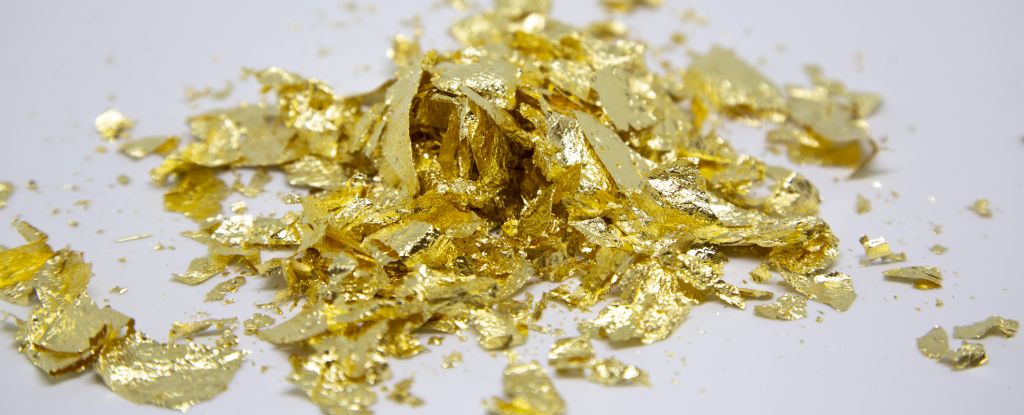
Strange New Form of Gold Exists as a Sheet That's Just One Atom Thick
16 April 2024

Image

For centuries, goldsmiths have sought ways to flatten gold into ever finer forms. An approach based in modern chemistry has finally created a gold material that literally can't get any thinner, consisting of a single layer of atoms.

Sticking to the naming conventions of materials science, researchers have named this new two-dimensional material 'goldene', and it has some interesting properties not seen in the three-dimensional form of gold.

"If you make a material extremely thin, something extraordinary happens – as with graphene," explains materials scientist Shun Kashiwaya of Linköping University in Sweden.

"The same thing happens with gold. As you know, gold is usually a metal, but if single-atom-layer thick, the gold can become a semiconductor instead."

Gold is quite challenging to coax into a two-dimensional configuration, due to its tendency to clump together. Previous attempts have resulted in either a thin sheet that is several atoms thick, or a monolayer sandwiched between or on another material, and unable to be detached.
https://www.sciencealert.com/strange-ne ... atom-thick
“In the quantum multiverse, every choice, every decision you've ever and never made exists in an unimaginably vast ensemble of parallel universes.”
weatheriscool
Posts: 24486
Joined: Sun May 16, 2021 6:16 pm
Contact:

Re: Material Science News and Discussions

Post by weatheriscool »

Novel material supercharges innovation in electrostatic energy storage
https://phys.org/news/2024-04-material- ... orage.html
by Shawn Ballard, Washington University in St. Louis
Electrostatic capacitors play a crucial role in modern electronics. They enable ultrafast charging and discharging, providing energy storage and power for devices ranging from smartphones, laptops and routers to medical devices, automotive electronics and industrial equipment. However, the ferroelectric materials used in capacitors have significant energy loss due to their material properties, making it difficult to provide high energy storage capability.

Sang-Hoon Bae, assistant professor of mechanical engineering and materials science in the McKelvey School of Engineering at Washington University in St. Louis, has addressed this long-standing challenge in deploying ferroelectric materials for energy storage applications.

In a study published April 18 in Science, Bae and his collaborators, including Rohan Mishra, associate professor of mechanical engineering & materials science, and Chuan Wang, associate professor of electrical & systems engineering, both at WashU, and Frances Ross, the TDK Professor in Materials Science and Engineering at MIT, introduced an approach to control the relaxation time—an internal material property that describes how long it takes for charge to dissipate or decay—of ferroelectric capacitors using 2D materials.

Working with Bae, doctoral student Justin S. Kim and postdoctoral researcher Sangmoon Han developed novel 2D/3D/2D heterostructures that can minimize energy loss while preserving the advantageous material properties of ferroelectric 3D materials.
weatheriscool
Posts: 24486
Joined: Sun May 16, 2021 6:16 pm
Contact:

Re: Material Science News and Discussions

Post by weatheriscool »

Researchers develop eggshell 'bioplastic' pellet as sustainable alternative to plastic
https://phys.org/news/2024-04-eggshell- ... ative.html
by Kristen McEwen, University of Saskatchewan

What if there was plastic-like material that could absorb excess nutrients from water and be used as a fertilizer when it decomposes? That product—a "bioplastic" material—has been created by University of Saskatchewan (USask) chemistry professor Dr. Lee Wilson and his research team, as detailed in a paper recently published in RSC Sustainability. The research team includes Ph.D. candidate Bernd G. K. Steiger, BSc student Nam Bui and postdoctoral fellow trainee Bolanle M. Babalola.

"We've made a bioplastic material that functions as an absorbent and it takes phosphate out of water, where elevated levels of phosphate in surface water is a huge global water security issue," he said. "You can harvest those pellets and distribute them as an agricultural fertilizer."

Wilson, a member of the Global Institute for Water Security (GIWS), and his research laboratory team, focus on developing forms of "bioplastic"—a material that looks like plastic but is made of biological materials (or biomaterials) that are designed to decompose.
Post Reply