
CRISPR & Genetic Engineering News and Discussions

Post Reply
User avatar
wjfox
Site Admin
Posts: 13586
Joined: Sat May 15, 2021 6:09 pm
Location: Essex, UK
Contact:

Re: CRISPR & Genetic Engineering News and Discussions

Post by wjfox »

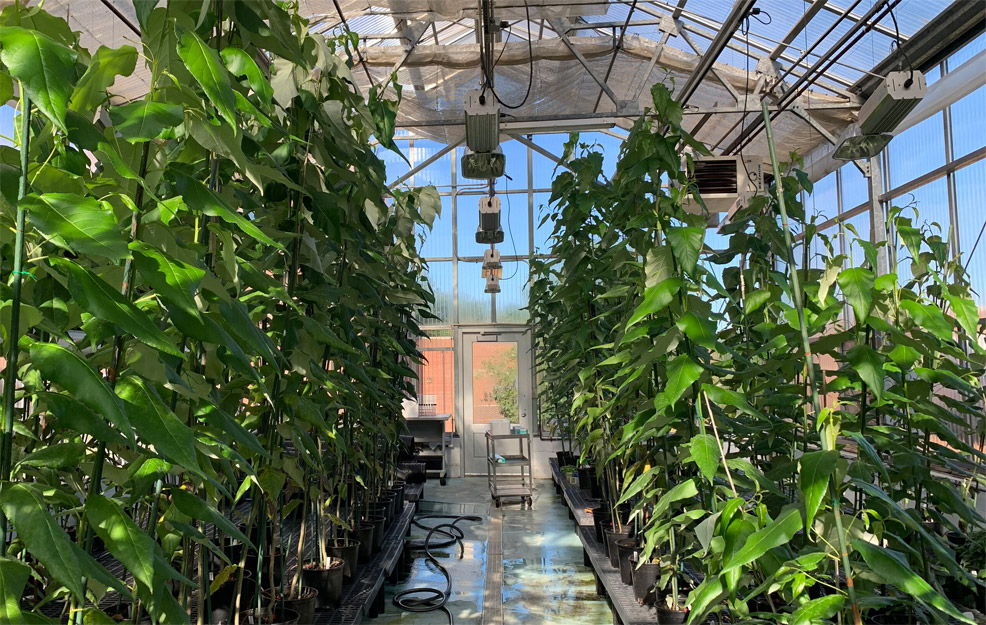
Gene-edited trees are more sustainable and can boost fibre production

17th July 2023

Scientists have used CRISPR gene editing to reduce the lignin content in poplar trees by as much as 50%, offering a potentially more sustainable and efficient method of fibre production.

[...]

Scientists at North Carolina State University (NCSU) have now used a CRISPR gene-editing system to breed poplar trees with reduced levels of lignin, the major barrier to sustainable production of wood fibres, while improving their wood properties. Their study, published in Science, could make fibre production greener, cheaper, and more efficient. This would improve a wide range of consumer items and materials, including paper, cardboard, textiles, hygiene products and more.

Read more: https://www.futuretimeline.net/blog/202 ... -trees.htm

Image
weatheriscool
Posts: 24487
Joined: Sun May 16, 2021 6:16 pm
Contact:

Re: CRISPR & Genetic Engineering News and Discussions

Post by weatheriscool »

Gene therapy eyedrops restored a boy's sight. Similar treatments could help millions
MIAMI (AP) — Dr. Alfonso Sabater pulled up two photos of Antonio Vento Carvajal’s eyes. One showed cloudy scars covering both eyeballs. The other, taken after months of gene therapy given through eyedrops, revealed no scarring on either eye.

Antonio, who’s been legally blind for much of his 14 years, can see again.

The teen was born with dystrophic epidermolysis bullosa, a rare genetic condition that causes blisters all over his body and in his eyes. But his skin improved when he joined a clinical trial to test the world’s first topical gene therapy. That gave Sabater an idea: What if it could be adapted for Antonio’s eyes?

This insight not only helped Antonio, it also opened the door to similar therapies that could potentially treat millions of people with other eye diseases, including common ones.
https://apnews.com/article/gene-therapy ... e0b7e4d2f1
weatheriscool
Posts: 24487
Joined: Sun May 16, 2021 6:16 pm
Contact:

Re: CRISPR & Genetic Engineering News and Discussions

Post by weatheriscool »

Gene therapy targeting sodium successfully reverses chronic pain
By Bronwyn Thompson
July 27, 2023
The National Institute of Health estimates that 100 million Americans, or around a third of the US population, live with a chronic pain condition. While the economic burden, more than US$500 billion annually, is well documented, increasingly studied is its wide-ranging impact on mental health and the growth in opioid addiction.

As such, scientists are eager to develop effective non-opioid, gene-based ways to disrupt the pain signaling experienced in chronic conditions, in the hope that it can vastly improve one's quality of life without any negative side effects.

The latest promising discovery comes out of the New York University (NYU) College of Dentistry’s Pain Research Center, which has developed a novel targeted therapy to alleviate pain delivered by an engineered virus.
https://newatlas.com/medical/gene-thera ... onic-pain/
weatheriscool
Posts: 24487
Joined: Sun May 16, 2021 6:16 pm
Contact:

Re: CRISPR & Genetic Engineering News and Discussions

Post by weatheriscool »

Gene therapy hope for children with kidney disease
https://medicalxpress.com/news/2023-08- ... sease.html
by University of Bristol
Researchers at the University of Bristol have made a remarkable step forward in finding a potential cure for a type of childhood kidney disease.

The research project has shown that just one dose of gene therapy targeting cells in the kidney has the potential to cure a condition known as steroid-resistant nephrotic syndrome.

The findings, which were published in the journal Science Translational Medicine by the team in Bristol led by Professor Moin Saleem, from the Bristol Medical School, suggested that replacing one faulty gene that codes for a protein known as podocin could cure the condition. Podocin is a protein essential for the functioning of cells called podocytes which have a critical role within the kidney's filtration system.

Nephrotic syndrome is a condition where the kidney's filtering units are damaged, allowing large amounts of protein that should be kept in the bloodstream to leak into the urine. This can lead to swelling, particularly in the eyes and legs, and an increased risk of infections and blood clots, and the risk of kidney damage. It can occur at any age but is most commonly diagnosed in children under five years old.
weatheriscool
Posts: 24487
Joined: Sun May 16, 2021 6:16 pm
Contact:

Re: CRISPR & Genetic Engineering News and Discussions

Post by weatheriscool »

New inhibitor for regulating the essential protein SMNDC1
https://phys.org/news/2023-08-inhibitor ... mndc1.html
by CeMM
The SMNDC1 gene controls key functions in the human body and is linked to diseases such as diabetes and cancer. Scientists in Stefan Kubicek's research group at the CeMM Research Center for Molecular Medicine of the Austrian Academy of Sciences have successfully pinpointed the exact location of the SMNDC1 protein within the cell nucleus and identified an inhibitor that opens up the potential for therapeutic applications of SMNDC1. The study has been published in Nature Communications.

The protein SMNDC1 is considered an essential gene in the human body, present in nearly every cell. Previous studies by Principal Investigator Stefan Kubicek's research group at CeMM had shown that knocking down SMNDC1 can stimulate alpha cells in the islets of Langerhans to produce insulin, potentially offering a new therapeutic target for treating diabetes.

To better understand the function of SMNDC1, the scientists in the Kubicek group investigated its precise cellular location and its interactions with molecules.

SMNDC1 is classified as a splicing factor, meaning it is involved in the process where RNA is transformed into the final messenger RNA that carries the genetic information. This messenger RNA is essentially the blueprint for building a specific protein in a cell. Consequently, SMNDC1 influences the expression of many other proteins.
weatheriscool
Posts: 24487
Joined: Sun May 16, 2021 6:16 pm
Contact:

Re: CRISPR & Genetic Engineering News and Discussions

Post by weatheriscool »

A DNA assembly kit to unlock the CRISPR-Cas9 potential for metabolic engineering
https://phys.org/news/2023-08-dna-kit-c ... bolic.html
by Thamarasee Jeewandara , Phys.org
The clustered regularly interspaced short palindrome repeats (CRISPR) and Crispr-associated protein 9 (CRISPR/Cas9) is now a well-known, revolutionary method to engineer microbial cells.

A key advantage of CRISPR remains in the strain design to facilitate chromosomal integration to enable the assembly of marker-free DNA. These editing systems are highly beneficial; however, their assembly is not quite straightforward and may prevent its use and applications.

In a new report in Nature Communications Biology, Tigran V. Yuzbashev and a research team identified the limits of the existing Cas9 toolkits designed to make CRISPR techniques easier to access and implement. They discussed three different well-established methods and combined them to form a comprehensive toolkit for efficient metabolic engineering by using CRISPR/Cas9.

A single toolkit comprised of 147 plasmids to generate and characterize a library of 137 promoters to build a homogentisic acid in the lab.
Genome modifications with CRISPR/Cas9

The CRISPR/Cas9 system can render quick, precise and scarless genomic modifications to provide significant scope to design microbial strains for bioproduction. Metabolic engineering of yeasts for instance provide a fast-growing area in engineering biology for the sustained production of chemicals, fuels, foods, and pharmaceuticals.

Yeasts have a metabolic potential like eukaryotic cells and are therefore easier to engineer and cultivate at scale. As a result, bioengineers have designed and developed CRISPR systems for yeasts.
weatheriscool
Posts: 24487
Joined: Sun May 16, 2021 6:16 pm
Contact:

Re: CRISPR & Genetic Engineering News and Discussions

Post by weatheriscool »

CRISPR used to 'reprogram' cancer cells into healthy muscle in the lab
Scientists have transformed cancer cells into healthy muscle tissue in the lab using CRISPR gene-editing technology — and they hope new cancer treatments can be built on the back of this experiment. In a study published Aug. 28 in the journal PNAS, researchers found that disabling a particular protein complex in cells of rhabdomyosarcoma (RMS) — a rare cancer in skeletal muscle tissue that mainly affects children under age 10 — in the laboratory causes the tumor cells to turn into healthy muscle cells.

Although the research is still in its early days, this process of "resetting" cancer cells into healthy cells, broadly known as differentiation therapy, has already been tested in other types of cancer, such as bone and blood cancer. Four drugs have been approved by the U.S. Food and Drug Administration (FDA) to treat the latter disease and generally work by inhibiting a specific protein in the cancer cells.

The protein complex pinpointed in the new research could serve as a target for such a therapy, the study authors wrote, and with further development, it could be a promising new treatment option for patients with RMS, which is normally treated with surgery, radiation and chemotherapy.

"This technology can allow you to take any cancer and go hunting for how to cause it to differentiate," or cause it to stop multiplying uncontrollably and turn into normal, noncancerous cells, Christopher Vakoc, lead author and professor at Cold Spring Harbor Laboratory, said in a statement. "This might be a key step toward making differentiation therapy more accessible."
https://www.livescience.com/health/canc ... in-the-lab
weatheriscool
Posts: 24487
Joined: Sun May 16, 2021 6:16 pm
Contact:

Re: CRISPR & Genetic Engineering News and Discussions

Post by weatheriscool »

A NICER approach to genome editing
https://phys.org/news/2023-09-nicer-app ... enome.html
by Osaka University
The gene editing technique CRISPR/Cas9 has allowed researchers to make precise and impactful changes to an organism's DNA to fix mutations that cause genetic disease. However, the CRISPR/Cas9 method can also result in unintended DNA mutations that may have negative effects. Recently, researchers in Japan have developed a new gene editing technique that is as effective as CRISPR/Cas9 while significantly reducing these unintended mutations.

In a new study published in Nature Communications, researchers led by Osaka University introduced a novel technique called NICER, which is based on the creation of multiple small cuts in single DNA strands by an enzyme called a nickase.
weatheriscool
Posts: 24487
Joined: Sun May 16, 2021 6:16 pm
Contact:

Re: CRISPR & Genetic Engineering News and Discussions

Post by weatheriscool »

New gene-editing tool reduces unintended mutations by more than 70%
By Paul McClure
September 21, 2023
View 1 Images
https://newatlas.com/medical/new-gene-e ... 0-percent/
Researchers have found that splitting the gene editor used in traditional CRISPR technology creates a more precise tool that can be switched on and off, with significantly less chance of causing unintended genome mutations. They say their novel tool can potentially correct around half of the mutations that cause disease.

CRISPR is one of those scientific terms that has made it into the everyday lexicon. Arguably one of the biggest discoveries of the 21st century, the gene-editing tool has revolutionized research and the treatment of genetic and non-genetic diseases. But the primary risk associated with CRISPR technology is ‘off-target edits,’ namely unexpected, unwanted, or even adverse alterations at locations in the genome other than the targeted site.

Now, researchers at Rice University have developed a new CRISPR-based gene-editing tool that’s more precise and significantly reduces the likelihood of off-target edits occurring.

“Our team set out to create a much-improved version that can be turned on or off as needed, providing an unparalleled level of safety and accuracy,” said Hongzhi Zeng, the study’s lead author. “This tool has the potential to correct nearly half of the disease-causing point mutations in our genome. However, current adenine base editors are in a constant ‘on’ state, which could lead to unwanted genome changes alongside the desired correction in the host genome.”

DNA consists of two linked strands that wind around each other, forming a double helix that resembles a twisted ladder. The ‘rungs’ of the ladder are made of base pairs, two complementary nucleotide bases held together by hydrogen bonds: adenine (A) pairs with thymine (T) and cytosine (C) with guanine (G).
User avatar
wjfox
Site Admin
Posts: 13586
Joined: Sat May 15, 2021 6:09 pm
Location: Essex, UK
Contact:

Re: CRISPR & Genetic Engineering News and Discussions

Post by wjfox »

Bird flu: Scientists see gene editing hope for immune chickens

1 hour ago

Researchers have developed gene-edited chickens that are partially resistant to bird flu.

Although the birds are not completely immune, the scientists say their work shows it might be possible to block the virus in three years.

The latest results suggest that making further changes to the birds' DNA could produce fully immune chickens.

Critics say gene editing tackles the symptoms of high-density farming rather than the root cause of animal diseases.

Professor Helen Sang, of the University of Edinburgh's Roslin Institute, said the team had made significant progress.

"We have got to the point where the results are very encouraging and we want to take this approach further."

https://www.bbc.co.uk/news/science-environment-67066892


Image
Credit: Edinburgh University
weatheriscool
Posts: 24487
Joined: Sun May 16, 2021 6:16 pm
Contact:

Re: CRISPR & Genetic Engineering News and Discussions

Post by weatheriscool »

Team looking at gene therapy for children paralyzed by rare mutations
https://medicalxpress.com/news/2023-10- ... lyzed.html
by University of Texas Health Science Center at San Antonio

The 50 families stretch from the Netherlands and the United Kingdom to the United States and China. Each family has a child who is paralyzed from a mutation in a single gene named Contactin-Associated Protein 1 (Cntnap1).

The children are locked inside their bodies, unable to move. The families feed them and change them, and someone monitors them 24/7.

Thousands of miles away in South Texas, Manzoor Bhat, MS, Ph.D., and his team at The University of Texas Health Science Center at San Antonio are making discoveries that point to a gene therapy for these profoundly affected children. The journal Cell Reports published the findings. Co-authors of the study are Cheng Chang, Lacey Sell and Qian Shi, Ph.D.

"We obtained genetic information from the families and created mouse models that recapitulated the human mutations and the human disease. Our mice developed phenotypes, or weaknesses, like the children," said Bhat, vice dean for research in the health science center's Joe R. and Teresa Lozano Long School of Medicine.
User avatar
raklian
Posts: 1981
Joined: Sun May 16, 2021 4:46 pm
Location: North Carolina

Re: CRISPR & Genetic Engineering News and Discussions

Post by raklian »

To know is essentially the same as not knowing. The only thing that occurs is the rearrangement of atoms in your brain.
weatheriscool
Posts: 24487
Joined: Sun May 16, 2021 6:16 pm
Contact:

Re: CRISPR & Genetic Engineering News and Discussions

Post by weatheriscool »

weatheriscool
Posts: 24487
Joined: Sun May 16, 2021 6:16 pm
Contact:

Re: CRISPR & Genetic Engineering News and Discussions

Post by weatheriscool »

Casgevy: UK approves gene-editing drug for sickle cell
15th November 2023, 10:30 PST
In a world first, medical regulators in the UK have approved a gene therapy that aims to cure two blood disorders.

The treatment for sickle cell disease and beta thalassemia is the first to be licensed using the gene-editing tool known as Crispr, for which its discoverers were awarded the Nobel prize in 2020.

This is a revolutionary advance for two inherited blood conditions, both triggered by errors in the gene for haemoglobin.

People with sickle cell disease produce unusually shaped red blood cells that can cause problems because they do not live as long as healthy blood cells and can block blood vessels, causing pain and life-threatening infections.

People with beta thalassaemia do not produce enough haemoglobin, which is used by red blood cells to carry oxygen around the body. Patients with beta thalassemia often need a blood transfusion every few weeks of their lives.
https://www.bbc.com/news/health-67435266
weatheriscool
Posts: 24487
Joined: Sun May 16, 2021 6:16 pm
Contact:

Re: CRISPR & Genetic Engineering News and Discussions

Post by weatheriscool »

Search algorithm reveals nearly 200 new kinds of CRISPR systems
https://phys.org/news/2023-11-algorithm ... rispr.html
by Allessandra DiCorato, Broad Institute of MIT and Harvard

Microbial sequence databases contain a wealth of information about enzymes and other molecules that could be adapted for biotechnology. But these databases have grown so large in recent years that they've become difficult to search efficiently for enzymes of interest.

Now, scientists at the Broad Institute of MIT and Harvard, the McGovern Institute for Brain Research at MIT, and the National Center for Biotechnology Information (NCBI) at the National Institutes of Health have developed a new search algorithm that has identified 188 kinds of new rare CRISPR systems in bacterial genomes, encompassing thousands of individual systems. The work appears in Science.

The algorithm, which comes from the lab of CRISPR pioneer Feng Zhang, uses big-data clustering approaches to rapidly search massive amounts of genomic data. The team used their algorithm, called Fast Locality-Sensitive Hashing-based clustering (FLSHclust) to mine three major public databases that contain data from a wide range of unusual bacteria, including ones found in coal mines, breweries, Antarctic lakes, and dog saliva.

The scientists found a surprising number and diversity of CRISPR systems, including ones that could make edits to DNA in human cells, others that can target RNA, and many with a variety of other functions.
weatheriscool
Posts: 24487
Joined: Sun May 16, 2021 6:16 pm
Contact:

Re: CRISPR & Genetic Engineering News and Discussions

Post by weatheriscool »

Algorithm identifies 188 new CRISPR gene-editing systems
By Michael Irving
November 26, 2023
https://newatlas.com/biology/new-crispr ... -bacteria/
CRISPR systems are powerful tools for genetic engineering, but they have their limitations. Now, scientists have discovered almost 200 new CRISPR systems in their native habitat of bacteria, and found that some can edit human cells even more precisely than existing ones.

The CRISPR-Cas9 gene-editing tool is one of the most important scientific developments of the past decade, earning its discoverers a Nobel Prize in Chemistry. Scientists can use it to make efficient cut-and-paste edits to human cells, potentially treating a huge range of diseases, as well as improving crops, controlling pests, and manipulating bacteria.

The system contains a guide RNA that targets a segment of DNA, such as one that causes disease, then uses an enzyme, usually Cas9, to snip out that sequence and replace it with something more beneficial. More recently, alternatives to Cas9 have been developed with other properties, including higher precision or larger edits.
weatheriscool
Posts: 24487
Joined: Sun May 16, 2021 6:16 pm
Contact:

Re: CRISPR & Genetic Engineering News and Discussions

Post by weatheriscool »

'One-and-Done' CRISPR Cholesterol Therapy Proves Cautiously Effective
A two-out-of-10 'serious adverse event' rate is concerning, to say the least.
By Adrianna Nine November 29, 2023
https://www.extremetech.com/science/one ... -effective
Verve Therapeutics, a Boston-based biotechnology firm, is on a mission to tackle cholesterol. One of its strategies involves editing the genes of those with high cholesterol, enabling their bodies to limit how much “bad” cholesterol forms in their blood. In a recent trial, Verve tested the viability of deactivating one cholesterol-regulating gene to produce long-term health effects. The therapy technically worked, but an alarming post-trial mortality rate now has the startup in hot water.

The human body can produce two types of cholesterol: high-density lipoprotein (HDL) cholesterol and low-density lipoprotein (LDL) cholesterol. While HDL is often referred to as “good cholesterol” in that it helps the liver flush plaque out of the body, LDL is considered “bad cholesterol” for its tendency to form said plaque. As cardiovascular plaque is strongly associated with heart disease and cardiac arrest, some pills and injectables aim to reduce the amount of plaque in the bloodstream—but their side effects and cost make them more of a last resort than a go-to form of treatment. Contrary to popular belief, carefully controlling one’s diet only influences roughly 30% of one’s cholesterol levels.
weatheriscool
Posts: 24487
Joined: Sun May 16, 2021 6:16 pm
Contact:

Re: CRISPR & Genetic Engineering News and Discussions

Post by weatheriscool »

weatheriscool
Posts: 24487
Joined: Sun May 16, 2021 6:16 pm
Contact:

Re: CRISPR & Genetic Engineering News and Discussions

Post by weatheriscool »

weatheriscool
Posts: 24487
Joined: Sun May 16, 2021 6:16 pm
Contact:

Re: CRISPR & Genetic Engineering News and Discussions

Post by weatheriscool »

Meet pAblo·pCasso: A new leap in CRISPR technologies for next-gen genome engineering
https://phys.org/news/2024-01-pablopcas ... enome.html
by Danmarks Tekniske Universitet The Novo Nordisk Foundation Center for Biosustainability
A new CRISPR-Cas toolkit, dubbed "pAblo·pCasso," is set to transform the landscape of bacterial genome editing, offering unprecedented precision and flexibility in genetic engineering. The new technology, developed by researchers at The Novo Nordisk Foundation Center for Biosustainability (DTU Biosustain), expands the range of genome sites available for base-editing and dramatically accelerates the development of bacteria for a wide range of bioproduction applications.

pAblo·pCasso sets a new standard in CRISPR-Cas technologies. A key innovation is to enable precise and reversible DNA edits within Gram-negative bacteria, a feat not achievable with previous CRISPR systems. The toolkit utilizes specialized fusion enzymes, modified Cas9 coupled with editor modules CBE or ABE, which act like molecular pencils to alter specific DNA nucleotides, thus accurately controlling gene function.

The development of pAblo·pCasso involved overcoming significant challenges. Traditional CRISPR-Cas systems were limited by their need for specific DNA sequences (PAM sequences) near the target site and were less effective in making precise, single-nucleotide changes. pAblo·pCasso transcends these limitations by incorporating advanced Cas-fusion variants that do not require specific PAM sequences, thereby expanding the range of possible genomic editing sites.
Post Reply