
wjfox: Describe a typical diet for a Londoner in the 17th century – breakfast, lunch, dinner, etc.
ChatGPT: During the 17th century, the diet of a typical Londoner was far from uniform and greatly depended on their social status and occupation. However, we can describe a general pattern.
Breakfast: The first meal of the day was usually served between 6 and 7 a.m. and often included bread, cheese, and sometimes leftovers from the previous day's meals. Occasionally, they might have eggs and beer. For wealthier individuals, breakfast could include a larger variety of foods such as cold meats, and fruits.
Midday Meal/Lunch: The midday meal was typically the largest meal of the day and was consumed around noon. For the working class, it often consisted of bread and cheese, or perhaps a stew or pottage (a thick soup/stew made from vegetables, grains, and often including meat). A wealthier person's midday meal might have included roasted or boiled meat, poultry, or fish, accompanied by bread and cheese, and beer or ale to drink. There would also be vegetables, though these were not as central to the diet as they are in modern times.
Dinner/Supper: Dinner (or supper, as it was often called), was a lighter meal eaten in the late afternoon or early evening. It typically consisted of leftovers from the midday meal or a simple dish like bread, cheese, and a small amount of meat. Wealthier individuals may have had more complex meals, but the general pattern was for dinner to be lighter than the midday meal.
There were also some notable foods and drinks popular during this time. Ale and beer were standard beverages for all social classes as the water quality was often poor and dangerous to drink. Meat was popular but more accessible to the upper classes, while the poorer classes ate more bread, cheese, and vegetables. Seasonal fruits and nuts were common, and sugar, introduced from the New World, was becoming more widespread, though still a luxury item for most.
One thing to note is that people's diets would vary greatly throughout the year based on what foods were in season and available, and the specific details could vary greatly depending on an individual's wealth, job, and location within the city.
This is a simplified description of a 17th-century Londoner's diet. It's also worth mentioning that historical diets are a complex topic with a lot of variety and regional differences, and the diet of a Londoner would have been different from someone living in a more rural part of England or in another country.
wjfox: Did they eat anything sweet, like a dessert? Did they have cake shops? Puddings? etc.
ChatGPT: While the 17th century wasn't as abundant in sweet treats as we know today, desserts certainly existed, especially among wealthier individuals. At this time, sugar was still relatively expensive, which limited its use to the upper classes. However, honey was commonly used as a sweetener among all classes.
Puddings were a traditional part of English cuisine and they were definitely eaten during the 17th century. These might have been similar to what we now call a bread pudding, which would use stale bread, milk, and eggs. Puddings could also be savory, incorporating suet and meat.
Cakes did exist but were quite different from the ones we know today. Without modern baking powder, they were often denser. Marchpane, a type of sweet cake made from almond paste, was a popular treat, often decorated with intricate designs.
Fruit tarts were also common, made with whatever fruits were in season. Gingerbread, made from rye flour and honey with spices, was another popular sweet item. Candied fruits and nuts were also enjoyed, especially by the wealthier classes.
As for cake shops, while there may not have been the specialized "cake shops" we think of today, bakers, confectioners, and pastry cooks certainly sold sweet goods. Cookshops and street vendors also provided prepared food for those who couldn't or didn't want to cook for themselves, and these would have included some sweet items.
Keep in mind that sweet foods were often considered a luxury, so the poorer classes would not have had access to them as frequently as the wealthy.
wjfox: What were food hygiene standards like? Did people wash their hands before cooking? Was soap in widespread use?
ChatGPT: During the 17th century, hygiene standards were significantly lower than they are today, and this was reflected in the way food was prepared and consumed. The understanding of germs and their relation to disease was not established until the 19th century, so practices that we consider essential today, such as washing hands before preparing food, were not widely understood or practiced.
Soap was indeed available during this time and was used for cleaning, but the regularity and extent of its use varied widely. While it was understood that cleanliness was beneficial, the correlation between cleanliness and disease prevention was not fully comprehended. Soap was often a luxury item, especially the finer, perfumed soaps. Coarser soaps were used for cleaning clothes or household items.
Food storage and preservation were also areas where the standards differed greatly from today. Without refrigeration, food spoilage was a common issue. Techniques such as salting, pickling, and smoking were widely used to preserve food, but these methods were not always completely effective. Often, food would be consumed even if it was on the verge of spoiling, especially among poorer classes.
As for cooking, it was mostly done over an open fire. Cookware was primarily iron or earthenware, and utensils were often made of wood or metal. Kitchens were frequently separate from the main house in case of fire and to keep the heat away from the living areas. The availability of running water in homes was limited, so water would have been fetched from a communal well or, in more affluent homes, from a private well.
While there were some basic standards of cleanliness, such as not selling rotten meat or spoiled food, these were not always effectively enforced, and the understanding of hygiene was far from modern standards. The quality and safety of food could vary greatly depending on who was preparing it and where it was being sold.
wjfox: How did they clean their dishes?
ChatGPT: In the 17th century, dishwashing was a much simpler and less hygienic process compared to today's standards. The dishes were typically washed in a large basin with hot water fetched from a well or nearby source. Soap, when used, was not the kind we're familiar with today; it was typically a more rudimentary form, often homemade from lye and animal fats.
Wooden utensils and dishes, which were common among the lower classes, were scrubbed with sand or a cloth and then rinsed with water. Metal, glass, or ceramic dishes owned by wealthier households would be handled more gently to prevent breakage. These might be cleaned with a cloth, hot water, and some form of soap or lye, then rinsed and set out to dry.
It's also worth noting that the concept of cleanliness was different during this period. While people generally aimed to keep their dishes and utensils visually clean, there was not yet a widespread understanding of bacteria or other microscopic pathogens, so practices we now consider essential, such as sterilizing dishes or washing one's hands with antibacterial soap before meals, were not yet common.
Finally, boiling water was occasionally used for cleaning, especially in wealthier households, which could unknowingly sterilize dishes and help prevent the spread of disease. However, this wasn't a universal practice.
Overall, while people in the 17th century did make efforts to clean their dishes, the methods used were less effective than modern dishwashing practices, and the level of cleanliness achieved would have varied greatly from household to household.
wjfox: When did running tap water start to become widespread in homes?
ChatGPT: The availability of running water in homes started to become more widespread in the late 19th and early 20th centuries, but the exact timing depended heavily on the location and socio-economic conditions.
In the United States, indoor plumbing and running water started to become common in urban areas by the late 19th century, especially in wealthier households. However, it took several more decades before this was the norm in most homes, and rural areas lagged significantly behind urban ones. Widespread access to running water in all homes, including those in rural areas, was not common until well into the 20th century.
In the UK, the Public Health Act of 1848 marked the beginning of significant improvements in sanitation, including the provision of clean water. By the late 19th century, many urban households had access to running water, although like in the U.S., rural areas and poorer urban districts lagged behind.
It's important to note that while running water started to become more common during these times, hot running water was still a luxury in many places until well into the 20th century. The infrastructure and resources needed to heat water and deliver it to homes was significant, and it took quite a while for this to become the norm.
Early Modern History (1500 – 1799 AD)
-
Time_Traveller

- Posts: 3025
- Joined: Sun May 16, 2021 4:49 pm
- Location: New York City, USA, November 5th 2032 C.E.
Re: Early Modern History (1500 – 1799 AD)
Excavation work at Gloucester's City Campus uncovers a new archaeological discovery
https://www.soglos.com/news/culture/exc ... ouYp0iOqhYThursday 13 July 2023
Archaeologists excavating the site of the University of Gloucestershire's new City Campus have uncovered the remains of St Aldate's Church, which dates back to around 1750.
The team from Cotswold Archaeology, which was commissioned by the university, uncovered an eight-metre stretch of the post-medieval church's external wall and porch during excavation works on the site of the former Debenhams building in the city centre.
The church is thought to have been named after the Bishop of Gloucester who died in battle in 577. Historians believe the building replaced a medieval church of the same name which pre-dated the Norman Conquest, but was demolished in the mid-17th century after being damaged during the English Civil War.
Other notable finds from the site include 12 burials, many of which are associated with the former medieval church, along with the remains of Roman buildings, mosaics and a Roman street just below the basement floor level.
Cliff Bateman, who has worked for Cotswold Archaeology since 1990 and is the senior project officer at the City Campus site, said: 'The footing we have discovered is only 20cm to 30cm below the current ground surface and it has survived very well.
“In the quantum multiverse, every choice, every decision you've ever and never made exists in an unimaginably vast ensemble of parallel universes.”
Re: Early Modern History (1500 – 1799 AD)
Death masks recreate face of Bonnie Prince Charlie
1 hour ago
Researchers say they have created the "most lifelike" reconstruction of the face of Bonnie Prince Charlie.
A team at the University of Dundee's Centre for Anatomy and Human Identification used death masks to recreate the Scottish prince's looks.
[...]
In 1745, Prince Charles Edward Stuart sought to regain the British throne for his father when he was aged just 24.
Despite some initial successes on the battlefield, his army was defeated at the Battle of Culloden, near Inverness, in April 1746.
https://www.bbc.co.uk/news/uk-scotland- ... l-66533482
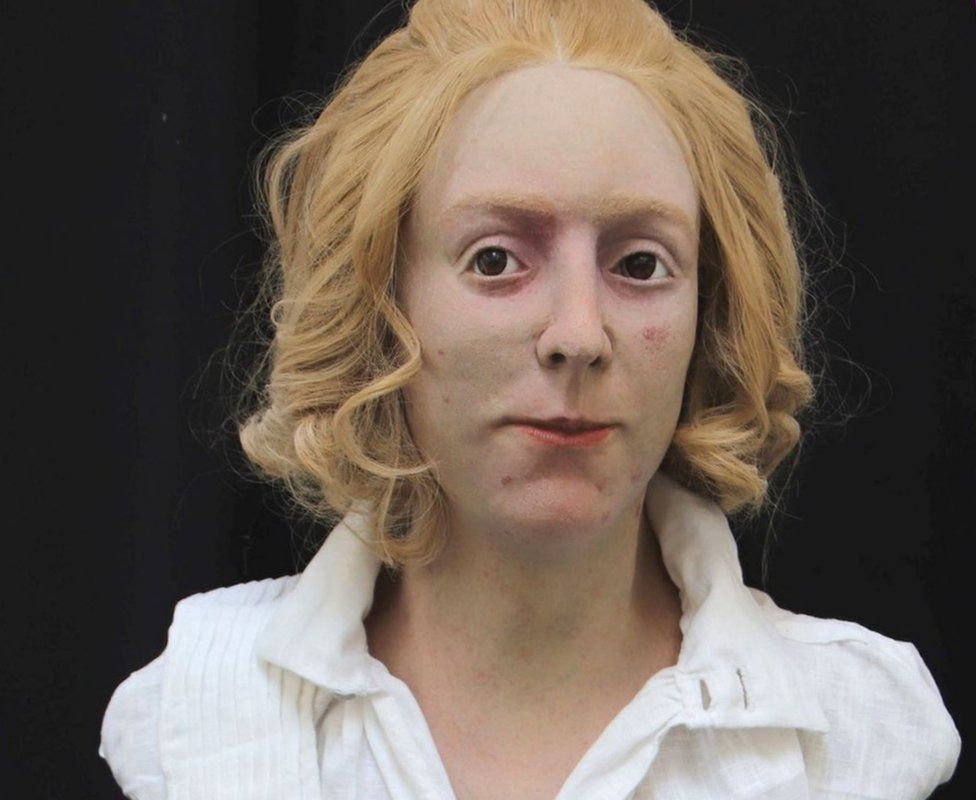
1 hour ago
Researchers say they have created the "most lifelike" reconstruction of the face of Bonnie Prince Charlie.
A team at the University of Dundee's Centre for Anatomy and Human Identification used death masks to recreate the Scottish prince's looks.
[...]
In 1745, Prince Charles Edward Stuart sought to regain the British throne for his father when he was aged just 24.
Despite some initial successes on the battlefield, his army was defeated at the Battle of Culloden, near Inverness, in April 1746.
https://www.bbc.co.uk/news/uk-scotland- ... l-66533482
-
weatheriscool
- Posts: 25737
- Joined: Sun May 16, 2021 6:16 pm
- Contact:
Re: Early Modern History (1500 – 1799 AD)
Researchers estimate anthropogenic mercury emissions from 1500 to 1900
https://phys.org/news/2023-08-anthropog ... sions.html
by Chris Packham , Phys.org
https://phys.org/news/2023-08-anthropog ... sions.html
by Chris Packham , Phys.org
Mercury, toxic to humans, is the only known metallic element that is liquid at standard Earth temperature and pressure and therefore comprises a hazard to children because it is so cool. But many historic human activities have involved the use of mercury, including gold and silver mining, the production of the red pigment vermilion, felt production, and manufacture of mechanical pressure gauges, thermometers and other devices. One guy even made a mercury fountain for the Spanish Pavilion at the 1937 World Exhibition in Paris, now on display at the Fundació Joan Miró in Barcelona.
So much mercury has been used industrially for centuries that researchers have sought to account for legacy mercury, as the element can endure essentially forever in the environment, presenting a toxic hazard to humans and other life. Saul Guerrero and Larissa Schneider of the Australian National University have now constructed a comprehensive, country-by-country historical dataset on the pre-1900 global trade and production of mercury. Their study is published in the Proceedings of the National Academy of Sciences.
As primary sources, the authors raided records archived by governments, documents from local trade associations, cargoes by ship reported in newspapers, and other sources. They compiled data for the mercury market for each country as equivalent to the net import/export balance, including the fraction of domestically produced mercury that was not exported. The researchers compiled all of this data into what they call a "mercury source pool" that accounts for the total historic anthropogenic mercury within and outside the global mercury biogeochemical cycle. The result, say the authors, is a chronological and regional report with unprecedented detail that establishes boundaries on the environmental magnitude of legacy mercury.

Re: Early Modern History (1500 – 1799 AD)
America's First Cowboys Were Likely Enslaved Peoples, New Analysis Reveals
by Dr. Russell Moul
September 30, 2023
Introduction:
Further Extract:
by Dr. Russell Moul
September 30, 2023
Introduction:
The article then explains some of what has been deducted about the history of cattle in the Western hemisphere through DNA analysis.(IFL Science) Contrary to popular portrayals in Hollywood movies, it seems the identities of the first cowboys of America were far more diverse than previously assumed. In fact, the evidence suggests the first examples of these Western icons were actually from Mexico and the Caribbean, and most of them were enslaved peoples.
Prior to 1492, so the established narrative explains, there were no cows in the Americas. These large mammals (Bos taurus) were first transported to the new continent during the 16th century when small numbers were carried to the Caribbean islands from the Iberian Peninsula (via the Canary archipelago). Once they arrived, domestic cows were bred locally and then imported to other areas, such as Mexico, Panama, and Colombia, as Europeans continued to colonize and explore.
However, the findings of a new study conducted by researchers from the Florida Museum of Natural History add new details to this idea.
Further Extract:
Read more here: https://www.iflscience.com/americas-fi ... s-70922"This finding supports recent trends in the history of slavery and the central role of African enslaved workers in the implementation of cattle ranching," Nicolas Delsol, a postdoctoral zooarchaeology specialist and co-author of the study told Live Science.
…
The working hypothesis at this stage is that, as cattle ranching expanded in the 16th century, the need for skilled ranchers who could handle cattle grew with it. The Indigenous populations had no experience with cattle, or any other domestic European animals, prior to Europeans arriving in the New World, so they were not suitable. As such, the historical record shows that slave traders turned to Western Africa where they abducted people with cattle herding experience. It is possible the cows and the enslaved people were taken together.
Don't mourn, organize.
-Joe Hill
-Joe Hill
Re: Early Modern History (1500 – 1799 AD)
Pleading the belly
Pleading the belly was a process in English common law which permitted a woman in the later stages of pregnancy to receive a reprieve of her death sentence until after she bore her child. The plea was available at least as early as 1387 and was eventually rendered obsolete by the Sentence of Death (Expectant Mothers) Act 1931, which stated that an expecting mother would automatically have her death sentence commuted to life imprisonment with hard labour.[1]
The plea did not constitute a defence and could only be made after a verdict of guilty was delivered. Upon making the plea, the convict was entitled to be examined by a jury of matrons, generally selected from the observers present at the trial. If she was found to be pregnant with a quick child (that is, a foetus sufficiently developed to render its movement detectable), the convict was granted a reprieve of sentence until the next hanging time after her delivery.[2]
Scholarly reviews of the Old Bailey Sessions Papers and Assize records from the reigns of Elizabeth I and James I have shown that women granted such reprieves were often subsequently granted pardons or had their sentences commuted to transportation. Even those women who were subsequently executed pursuant to their original sentences were often executed behind schedule.[3]
The pirates Anne Bonny and Mary Read both used this plea to delay execution, although Read died of fever in prison.
It appears that women were often fraudulently or erroneously found to be quick with child. Daniel Defoe's Moll Flanders includes a character who successfully pleaded her belly despite being "no more with child than the judge that tried [her]".[4] John Gay's The Beggar's Opera includes a scene where the character Filch picks up income working as a "child getter ... helping the ladies to a pregnancy against their being called down to sentence".[5]
As a check against this abuse of the system, the law held that no woman could be granted a second reprieve from the original sentence on the ground of subsequent pregnancy, even if the foetus had quickened. In the event that a prisoner became pregnant, her gaoler or the local sheriff was subject to a fine.
https://en.wikipedia.org/wiki/Pleading_the_belly
Pleading the belly was a process in English common law which permitted a woman in the later stages of pregnancy to receive a reprieve of her death sentence until after she bore her child. The plea was available at least as early as 1387 and was eventually rendered obsolete by the Sentence of Death (Expectant Mothers) Act 1931, which stated that an expecting mother would automatically have her death sentence commuted to life imprisonment with hard labour.[1]
The plea did not constitute a defence and could only be made after a verdict of guilty was delivered. Upon making the plea, the convict was entitled to be examined by a jury of matrons, generally selected from the observers present at the trial. If she was found to be pregnant with a quick child (that is, a foetus sufficiently developed to render its movement detectable), the convict was granted a reprieve of sentence until the next hanging time after her delivery.[2]
Scholarly reviews of the Old Bailey Sessions Papers and Assize records from the reigns of Elizabeth I and James I have shown that women granted such reprieves were often subsequently granted pardons or had their sentences commuted to transportation. Even those women who were subsequently executed pursuant to their original sentences were often executed behind schedule.[3]
The pirates Anne Bonny and Mary Read both used this plea to delay execution, although Read died of fever in prison.
It appears that women were often fraudulently or erroneously found to be quick with child. Daniel Defoe's Moll Flanders includes a character who successfully pleaded her belly despite being "no more with child than the judge that tried [her]".[4] John Gay's The Beggar's Opera includes a scene where the character Filch picks up income working as a "child getter ... helping the ladies to a pregnancy against their being called down to sentence".[5]
As a check against this abuse of the system, the law held that no woman could be granted a second reprieve from the original sentence on the ground of subsequent pregnancy, even if the foetus had quickened. In the event that a prisoner became pregnant, her gaoler or the local sheriff was subject to a fine.
https://en.wikipedia.org/wiki/Pleading_the_belly
Re: Early Modern History (1500 – 1799 AD)
The Litmus Test
From Chemistry by William Brock, page 178.In (Experimental History of Colours) Boyle reasoned that if dyers and artists could prepare widely different colours from a single plant extract merely by adding acid or alkali, it would be possible to use such extracts as "indicators" of acidity or alkalinty in unknown substances. It was from this deduction that the litmus test, using the natural dye from Rocella, was derived. Medieval painters are known to have soaked small pieces of linen cloth in the purple juice of the turnsole plane (Crozophora tinctoria). When the dried cloths, or folia, were soaked in water, a bright red solution was formed, which could be used as a water colour - especially if vinegar was added to strengthen the colour. If, instead, the folia were treated with lime water before soaking them in turnsole, the dried folia gave a violet paint, or if urine was used as a solvent, a blue paint was produced. Whether Boyle borrowed the idea of using small strips of paper saturated in litmus from the folium technique of modern painters is not known, although it seems entirely possible.
Don't mourn, organize.
-Joe Hill
-Joe Hill
-
weatheriscool
- Posts: 25737
- Joined: Sun May 16, 2021 6:16 pm
- Contact:
Re: Early Modern History (1500 – 1799 AD)
Use of decimal point is 1.5 centuries older than historians thought
https://phys.org/news/2024-02-decimal-c ... ought.html
by Bob Yirka , Phys.org
https://phys.org/news/2024-02-decimal-c ... ought.html
by Bob Yirka , Phys.org
A mathematical historian at Trinity Wester University in Canada, has found use of a decimal point by a Venetian merchant 150 years before its first known use by German mathematician Christopher Clavius. In his paper published in the journal Historia Mathematica, Glen Van Brummelen describes how he found the evidence of decimal use in a volume called "Tabulae," and its significance to the history of mathematics.
The invention of the decimal point led to the development of the decimal system, and that in turn made it easier for people working in multiple fields to calculate non-whole numbers (fractions) as easily as whole numbers. Prior to this new discovery, the earliest known use of the decimal point was by Christopher Clavius as he was creating astronomical tables—the resulting work was published in 1593.
-
Tadasuke
article on Josiah Wedgwood
~
Interesting to read or listen how pottery was being modernized in the 2nd half of the 18th century in some places:
Article about an underrated Industrialist - Josiah Wedgwood
[EDIT] The link somehow double inserted, resulting in wrong url.
Interesting to read or listen how pottery was being modernized in the 2nd half of the 18th century in some places:
Article about an underrated Industrialist - Josiah Wedgwood
[EDIT] The link somehow double inserted, resulting in wrong url.
Last edited by Tadasuke on Wed Feb 28, 2024 5:49 am, edited 1 time in total.
-
firestar464
- Posts: 8314
- Joined: Wed Oct 12, 2022 7:45 am
Re: Early Modern History (1500 – 1799 AD)
(your link is broken; not trying to steal your thunder or anything)
I found the original article from Libertarianism.org
https://www.libertarianism.org/articles ... h-wedgwood
I found the original article from Libertarianism.org
https://www.libertarianism.org/articles ... h-wedgwood
-
Powers

- Posts: 1183
- Joined: Fri Apr 07, 2023 7:32 pm
- Location: a.k.a Lurking, Member, Lorem Ipsum, ..., --- and ººº.
Re: Early Modern History (1500 – 1799 AD)
https://humanprogress.org/underrated-in ... -wedgwood/firestar464 wrote: ↑Wed Feb 28, 2024 12:08 am (your link is broken; not trying to steal your thunder or anything)
-
Tadasuke
Re: Early Modern History (1500 – 1799 AD)
firestar464 wrote: ↑Wed Feb 28, 2024 12:08 am (your link is broken; not trying to steal your thunder or anything)
I found the original article from Libertarianism.org
https://www.libertarianism.org/articles ... h-wedgwood

-
Time_Traveller
- Posts: 3025
- Joined: Sun May 16, 2021 4:49 pm
- Location: New York City, USA, November 5th 2032 C.E.
Re: Early Modern History (1500 – 1799 AD)
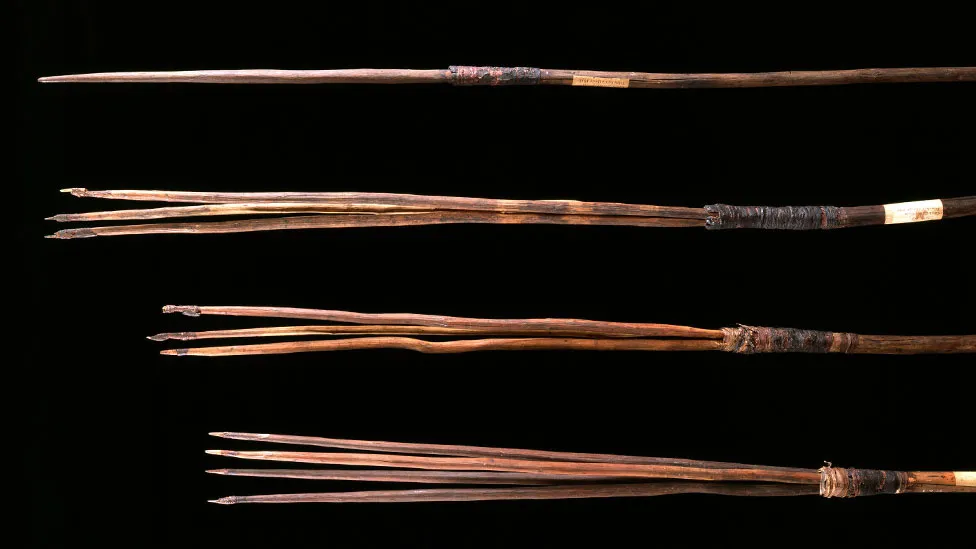
Cambridge college returns 18th Century Aboriginal spears
https://www.bbc.co.uk/news/uk-england-c ... e-688751584 hours ago
Four spears taken from an Aboriginal community by James Cook and Joseph Banks during their first contact with Australia are being repatriated.
They will be handed over at a ceremony at Trinity College, Cambridge, to representatives from the La Perouse and Gweagal Aboriginal communities.
Ray Ingrey, Gujaga Foundation director, said their return to "the rightful people" was a "momentous occasion".
The spears were taken in 1770 and given to Trinity College the following year.
Direct descendants of the Gweagal people who crafted the spears more than 250 years ago will be present at the ceremony in Trinity's Wren Library.
“In the quantum multiverse, every choice, every decision you've ever and never made exists in an unimaginably vast ensemble of parallel universes.”
-
Time_Traveller
- Posts: 3025
- Joined: Sun May 16, 2021 4:49 pm
- Location: New York City, USA, November 5th 2032 C.E.
Re: Early Modern History (1500 – 1799 AD)
Thames Estuary divers in amazing shipwreck discovery after a decade searching
https://www.independent.co.uk/news/scie ... 84597.html10 hours ago
A diver has made an amazing discovery on a shipwreck in the Thames Estuary.
A bronze cannon was found on the shipwreck of a warship that was destroyed by a gunpowder explosion and sank in 1665.
The find was made by Steve Ellis, one of Historic England’s licenced divers, who has been diving the nationally important wreck site in the Thames Estuary near a busy shipping lane for the last 14 years.
The 17th century ship the London formed part of a convoy sent in 1660 to collect Charles II from the Netherlands and restore him to the throne.
Its protected wreck lies in two parts off Southend Pier in Essex, and the cannon was discovered buried in silt and clay on the seabed.
“In the quantum multiverse, every choice, every decision you've ever and never made exists in an unimaginably vast ensemble of parallel universes.”
-
Time_Traveller
- Posts: 3025
- Joined: Sun May 16, 2021 4:49 pm
- Location: New York City, USA, November 5th 2032 C.E.
Re: Early Modern History (1500 – 1799 AD)
Missing portrait of Henry VIII discovered after historian spots it in background of post on X
https://www.independent.co.uk/arts-ente ... 86259.html1 day ago
A famous portrait of King Henry VIII, long considered lost, has been found after an art historian spotted it in the background of a photo shared on social media.
The painting in question was once part of a famous set of 22 portraits commissioned in the 1590s by tapestry maker Ralph Sheldon. The portrait hung originally in Weston House, Sheldon’s Warwickshire home, but barely a handful of paintings from the collection survive today.
Art historian Adam Busiakiewicz, who works as a consultant for famous auction house Sotheby’s, spotted the painting in the background of a picture posted by the Warwickshire Lieutenancy on X on 4 July. The account had shared a photo of a reception held at the Shire Hall, and the portrait is just about visible in the background.
“The fact I was lucky to piece together [what it was] in an hour is very exciting,” Mr Busiakiewicz told the BBC.
“I spend a lot of time thinking about paintings and looking at people’s walls.”
“In the quantum multiverse, every choice, every decision you've ever and never made exists in an unimaginably vast ensemble of parallel universes.”
-
Tadasuke
 life in the past was really, really bad
It baffles me how horribly nasty and unspeakably heinous the past was. The more I read about it, the more it disgusts me. I even read some books about it, and was honestly horrified. It's almost unreal how the universe or god(s) could permit that. Nearly everything was a constant disaster and tragedy. In most places it was like that very recently. Actually, most places on Earth were nearly extremely poor with approximately medieval-like living standards even in the first (or second!!) half of the 20th century.
Here are two articles which portray this:
Rural life in the past was a battle for survival - people in pre-industrial Europe generally lived a miserable, hand-to-mouth existence which would be foolish to romanticize
Coal dust, urban pigs and sewage – the grim reality of pre-industrial Europe
The number of motor vehicles and buildings which have been added since the year 2000 is amazingly high. I can look at photos or just remember. I recently compared 1916, 1966 and 2016 aerial photos of the city I live. 1916 photo shows a totally different city that is very small and poor. 1966 shows many relatively new buildings and more under construction. 2016 is much much more developed compared to 1966 and there are exponentially more cars and trucks. Interestingly, there has even been significant development between 2016 and 2024.
And by the way, it's very good to see truly bad people from history being properly disgraced and defamed in the 21st century. So that we don't have awful role models or "heroes". For example here is an article about Henry VIII:
'These women were innocent, and he was a monster': How history got Henry VIII wrong
And here's one about Christopher Columbus:
This is the monster celebrated on Columbus Day
Here are two articles which portray this:
Rural life in the past was a battle for survival - people in pre-industrial Europe generally lived a miserable, hand-to-mouth existence which would be foolish to romanticize
Coal dust, urban pigs and sewage – the grim reality of pre-industrial Europe
The number of motor vehicles and buildings which have been added since the year 2000 is amazingly high. I can look at photos or just remember. I recently compared 1916, 1966 and 2016 aerial photos of the city I live. 1916 photo shows a totally different city that is very small and poor. 1966 shows many relatively new buildings and more under construction. 2016 is much much more developed compared to 1966 and there are exponentially more cars and trucks. Interestingly, there has even been significant development between 2016 and 2024.
And by the way, it's very good to see truly bad people from history being properly disgraced and defamed in the 21st century. So that we don't have awful role models or "heroes". For example here is an article about Henry VIII:
'These women were innocent, and he was a monster': How history got Henry VIII wrong
And here's one about Christopher Columbus:
This is the monster celebrated on Columbus Day
Re: life in the past was really, really bad
Actually, this trend now looks like going into reverse (pun unintentional). We seem to have reached "peak car" in many countries. This is a good thing IMO as it should mean improved air quality, less noise, greater focus on public transport, more walkable/green spaces, more remote working, etc.
-
Tadasuke
Re: life in the past was really, really bad
In the country I currently live in there is probably "peak car" right now. Especially for cars running on fossil fuels. There are exponentially more electric vehicles of all kinds, especially relatively cheap scooters on which you stand. Traffic congestion is a major problem. At least we don't have smelly horse or mule droppings on roads and sewage is invisible.wjfox wrote: ↑Sat Sep 21, 2024 5:51 pm Actually, this trend now looks like going into reverse (pun unintentional). We seem to have reached "peak car" in many countries. This is a good thing IMO as it should mean improved air quality, less noise, greater focus on public transport, more walkable/green spaces, more remote working, etc.
-
firestar464
- Posts: 8314
- Joined: Wed Oct 12, 2022 7:45 am
 Re: Early Modern History (1500 – 1799 AD)
YUGE carparks, filled with literal SEXTILLIONS of cars with a size beyond beyond mortal baseline understanding. We only say that this is "bad urban planning" because we can't begin to comprehend the scale of these carparks
Re: Early Modern History (1500 – 1799 AD)
Warning: reading the information provided below may result in you becoming woke.
Accept Our King, Our God − or Else: The Senseless ‘Requirement’ Spanish Colonizers Used to Justify Their Bloodshed in the Americas
by
October, 2024
Introduction:
The Requerimiento
https://theconversation.com/accept-our ... cas-223527
Accept Our King, Our God − or Else: The Senseless ‘Requirement’ Spanish Colonizers Used to Justify Their Bloodshed in the Americas
by
October, 2024
Introduction:
Read more of The Conversation article here: https://theconversation.com/accept-our ... s-223527(The Conversation) Across the United States, the second Monday of October is increasingly becoming known as Indigenous Peoples Day. In the push to rename Columbus Day, Christopher Columbus himself has become a metaphor for the evils of early colonial empires, and rightly so.
The Italian explorer who set out across the Atlantic in search of Asia was a notorious advocate for enslaving the Indigenous Taínos of the Caribbean. In the words of historian Andrés Reséndez, he “intended to turn the Caribbean into another Guinea,” the region of West Africa that had become a European slave-trading hub.
By 1506, however, Columbus was dead. Most of the genocidal acts of violence that defined the colonial period were carried out by many, many others. In the long shadow of Columbus, we sometimes lose sight of the ideas, laws and ordinary people who enabled colonial violence on a large scale.
As a historian of colonial Latin America, I often begin such discussions by pointing to a peculiar document drafted several years after Columbus’ death that would have greater repercussions for Indigenous peoples than Columbus himself: the Requerimiento, or “Requirement.”
The Requerimiento
For the full text of The Requerimiento:The Requerimiento [Requirement] was written in 1510 by the Council of Castile to be read aloud as an ultimatum to conquered Indians in the Americas. It asserted the religious authority of the Roman Catholic pope over the entire earth, and the political authority of Spain over the Americas (except Brazil) from the 1493 papal bull that divided the western hemisphere between Spain and Portugal. It demanded that the conquered peoples accept Spanish rule and Christian preaching or risk subjugation, enslavement, and death. Often the Requerimiento was read in Latin to the Indians with no interpreters present, or even delivered from shipboard to an empty beach, revealing its prime purpose as self-justification for the Spanish invaders.
https://theconversation.com/accept-our ... cas-223527
Don't mourn, organize.
-Joe Hill
-Joe Hill