Batteries & Energy Storage news and discussions

Post Reply
weatheriscool
Posts: 24495
Joined: Sun May 16, 2021 6:16 pm
Contact:

Re: Batteries & Energy Storage news and discussions

Post by weatheriscool »

A new integrated solar battery based on carbon nitride photoanodes
https://techxplore.com/news/2023-03-sol ... tride.html
by Ingrid Fadelli , Tech Xplore
In recent years, researchers have been trying to create increasingly efficient solar technologies and more sustainable battery designs. Among emerging sustainable energy solutions are solar batteries, systems that can store the energy collected by solar cells or photovoltaic (PV) systems.

A research group at the Max Planck Institute for Solid State Research, supervised by Prof. Bettina Lotsch, recently introduced a sustainable integrated solar battery design based on materials that abundant on Earth. Their design, presented in a paper published in Energy & Environmental Science, is based on a bi-functional carbon nitride (K-PHI) photoanode that can both absorb light and store electric charge.

"The solar battery research field is still young and as such very diverse in concepts and ideas, with different levels of integration," Andreas Gouder, one of the researchers who carried out the study, told Tech Xplore. "Integration means, that the two functionalities—light energy conversion and energy storage—are built into a single device. This can be done via different approaches, e.g., by adding a photoactive electrode into a battery, or—as done here—by using a bifunctional electrode material. However, integration may also affect charge transfer."

User avatar
caltrek
Posts: 9280
Joined: Mon May 17, 2021 1:17 pm

Re: Batteries & Energy Storage news and discussions

Post by caltrek »

Across the Divide: Manufacturing Better Batteries
by Karyn Hede
March 30, 2023

Introduction:
(Pacific Northwest National Laboratory) Next generation lithium-based batteries provide a key component of the global strategy to meet decarbonization goals in transportation and beyond. We know lithium-based batteries provide high energy density. But there’s an elephant in the room. How will manufacturers not only meet greatly increased demand for more batteries for electric vehicles, but also produce advanced Li-ion and future batteries.

There is no shortage of ideas. New chemistries or discoveries are reported on nearly a daily basis. But then comes the real challenge: scaling laboratory materials and manufacturing processes to industry levels for commercial applications.

This scaling up is the elephant in the room, and it is faced head-on in a new Nature Energy review article led by battery researcher Jie Xiao and collaborators in academia and industry.

“We are asking the question, ‘how can we do research that is relevant to industry manufacturing?’” said Xiao. “We are accustomed to doing fundamental science. But how can the research community support manufacturing science? The questions and challenges are different. Industry doesn’t typically have the in-house resources to address these research questions raised during manufacturing.”

Cooking up millions of battery materials

Imagine the challenge of scaling up a recipe for a dozen cookies to one million cookies. The “dough” volume becomes much larger, and each batch has to be mixed and baked to an exact temperature and doneness each time, and then repeated exactly the same way day after day. That’s the challenge of scaling battery materials production from the lab to the factory floor.
Read more here: https://www.pnnl.gov/news-media/across ... atteries
Don't mourn, organize.

-Joe Hill
weatheriscool
Posts: 24495
Joined: Sun May 16, 2021 6:16 pm
Contact:

Re: Batteries & Energy Storage news and discussions

Post by weatheriscool »

Team finds major storage capacity in water-based batteries
https://techxplore.com/news/2023-04-tea ... based.html
by Raven Wuebker, Texas A&M University College of Engineering
Researchers at Texas A&M University have discovered a 1,000% difference in the storage capacity of metal-free, water-based battery electrodes.

These batteries are different from lithium-ion batteries that contain cobalt. The group's goal of researching metal-free batteries stems from having better control over the domestic supply chain since cobalt and lithium are outsourced. This safer chemistry would also prevent battery fires.

Chemical engineering professor Dr. Jodie Lutkenhaus and chemistry assistant professor Dr. Daniel Tabor has published their findings about lithium-free batteries in Nature Materials.

"There would be no battery fires anymore because it's water-based," Lutkenhaus said. "In the future, if materials shortages are projected, the price of lithium-ion batteries will go way up. If we have this alternative battery, we can turn to this chemistry, where the supply is much more stable because we can manufacture them here in the United States and materials to make them are here."

Lutkenhaus said aqueous batteries consist of a cathode, electrolyte and an anode. The cathodes and anodes are polymers that can store energy, and the electrolyte is water mixed with organic salts. The electrolyte is key to ion conduction and energy storage through its interactions with the electrode.
weatheriscool
Posts: 24495
Joined: Sun May 16, 2021 6:16 pm
Contact:

Re: Batteries & Energy Storage news and discussions

Post by weatheriscool »

An energy breakthrough: Tech researchers create new type of fuel cell

by Kimberly Geiger, Michigan Technological University
https://techxplore.com/news/2023-04-ene ... -cell.html
Like batteries, fuel cells produce energy through an electrochemical process. Unlike batteries, they don't run down or require recharging. However, the potential advantages of fuel cells are offset by challenges that include cost, performance and durability.

Michigan Technological University researcher Yun Hang Hu and two graduate students, Hanrui Su and Wei Zhang, took on those challenges, changing the conventional path of a fuel cell by creating an interface between the electrolyte and melted carbonate as an ultrafast channel for oxygen ion transfer.

"This allowed us to invent an entirely new type of fuel cell, a carbonate-superstructured solid fuel cell (CSSFC)," said Hu, who holds the Charles and Carroll McArthur Endowed Chair Professorship of Materials Science and Engineering in the Department of Materials Science and Engineering at Michigan Tech.

Like other fuel cells, CSSFCs have a wide array of potential uses, from providing energy to operate fuel cell vehicles and home power generation to entire power stations. Because CSSFCs are fuel flexible, they offer higher durability and energy conversion efficiency at lower operating temperatures than other types of fuel cells.
User avatar
wjfox
Site Admin
Posts: 13587
Joined: Sat May 15, 2021 6:09 pm
Location: Essex, UK
Contact:

Re: Batteries & Energy Storage news and discussions

Post by wjfox »

User avatar
wjfox
Site Admin
Posts: 13587
Joined: Sat May 15, 2021 6:09 pm
Location: Essex, UK
Contact:

Re: Batteries & Energy Storage news and discussions

Post by wjfox »

Ultra-tough battery survives hammer blows and being run over by a car

29 March 2023

A flexible battery made from hydrogel can withstand being run over by a car, blows from a hammer and temperatures as low as −77°C (-106.6°F). It could potentially be used in phones or wearable electronics.

Most commercial batteries are solid and based on lithium, but these can be easily damaged in accidents and cope badly at very cold temperatures.

https://www.newscientist.com/article/23 ... -by-a-car/
weatheriscool
Posts: 24495
Joined: Sun May 16, 2021 6:16 pm
Contact:

Re: Batteries & Energy Storage news and discussions

Post by weatheriscool »

10x EV Range Boost With Revolutionary Lithium-Ion Battery Technology
https://scitechdaily.com/10x-ev-range-b ... echnology/
By Pohang University of Science & Technology (POSTECH) April 5, 2023
Advanced Battery Technology Breakthrough
Researchers from POSTECH and Sogang University developed a functional polymeric binder for stable, high-capacity anode materials, offering 10 times the capacity of conventional graphite anodes. This breakthrough could significantly increase lithium-ion battery energy density and potentially extend electric vehicle driving range by at least tenfold.

POSTECH-Sogang University joint research team develops layering-charged, polymer-based stable high-capacity anode material.

The electric vehicle market has been experiencing explosive growth, with global sales surpassing $1 trillion (approximately 1,283 trillion Korean Won/KRW) in 2022 and domestic sales exceeding 108,000 units. Inevitably, demand is growing for high-capacity batteries that can extend EV driving range. Recently, a joint team of researchers from POSTECH and Sogang University developed a functional polymeric binder for stable, high-capacity anode material that could increase the current EV range at least 10-fold.

A research team led by POSTECH professors Soojin Park (Department of Chemistry) and Youn Soo Kim (Department of Materials Science and Engineering) and Professor Jaegeon Ryu (Department of Chemical and Biomolecular Engineering) of Sogang University developed charged polymeric binder for a high-capacity anode material that is both stable and reliable, offering a capacity that is 10 times or higher than that of conventional graphite anodes. This breakthrough was achieved by replacing graphite with Si anode combined with layering-charged polymers while maintaining stability and reliability. The research results were published as the Front Cover Article in Advanced Functional Materials.
User avatar
wjfox
Site Admin
Posts: 13587
Joined: Sat May 15, 2021 6:09 pm
Location: Essex, UK
Contact:

Re: Batteries & Energy Storage news and discussions

Post by wjfox »

weatheriscool wrote: Fri Apr 07, 2023 12:03 am 10x EV Range Boost With Revolutionary Lithium-Ion Battery Technology
https://scitechdaily.com/10x-ev-range-b ... echnology/
By Pohang University of Science & Technology (POSTECH) April 5, 2023
Advanced Battery Technology Breakthrough
Researchers from POSTECH and Sogang University developed a functional polymeric binder for stable, high-capacity anode materials, offering 10 times the capacity of conventional graphite anodes. This breakthrough could significantly increase lithium-ion battery energy density and potentially extend electric vehicle driving range by at least tenfold.

POSTECH-Sogang University joint research team develops layering-charged, polymer-based stable high-capacity anode material.

The electric vehicle market has been experiencing explosive growth, with global sales surpassing $1 trillion (approximately 1,283 trillion Korean Won/KRW) in 2022 and domestic sales exceeding 108,000 units. Inevitably, demand is growing for high-capacity batteries that can extend EV driving range. Recently, a joint team of researchers from POSTECH and Sogang University developed a functional polymeric binder for stable, high-capacity anode material that could increase the current EV range at least 10-fold.

A research team led by POSTECH professors Soojin Park (Department of Chemistry) and Youn Soo Kim (Department of Materials Science and Engineering) and Professor Jaegeon Ryu (Department of Chemical and Biomolecular Engineering) of Sogang University developed charged polymeric binder for a high-capacity anode material that is both stable and reliable, offering a capacity that is 10 times or higher than that of conventional graphite anodes. This breakthrough was achieved by replacing graphite with Si anode combined with layering-charged polymers while maintaining stability and reliability. The research results were published as the Front Cover Article in Advanced Functional Materials.
This is one of those breakthroughs that sounds too good to be true, but let's wait and see...
User avatar
wjfox
Site Admin
Posts: 13587
Joined: Sat May 15, 2021 6:09 pm
Location: Essex, UK
Contact:

Re: Batteries & Energy Storage news and discussions

Post by wjfox »

:roll:

weatheriscool
Posts: 24495
Joined: Sun May 16, 2021 6:16 pm
Contact:

Re: Batteries & Energy Storage news and discussions

Post by weatheriscool »

Nano-composite silicon anode promises EV range boost & 10-min charging
By C.C. Weiss
April 10, 2023

We've been covering the exploration and development of silicon battery anodes for well over a decade, but most of the breakthroughs have come at laboratory level. The past few years have seen the technology moving toward commercialization, and Silicon Valley battery materials company Sila announced this month that its Titan Silicon anode is now available. The new anode is already set to feature in the upcoming all-electric Mercedes-Benz G-Class and promises the potential for range increases of 20% and dramatic charging time decreases down to as low as 10 minutes.

Sila announced Titan Silicon availability last week, calling the technology a high-performance nano-composite silicon that's engineered to replace common graphite anodes on a mass scale. It estimates that the alternative anode tech could increase battery capacity enough to boost electric vehicle range by up to 20%, representing the potential addition of more than 100 miles (161 km) in current market range leaders like the 516-mile (830-km) 2023 Lucid Air Grand Touring. It believes future iterations could double those gains.
https://newatlas.com/automotive/sila-ti ... con-anode/
weatheriscool
Posts: 24495
Joined: Sun May 16, 2021 6:16 pm
Contact:

Re: Batteries & Energy Storage news and discussions

Post by weatheriscool »

Progress to Lithium Air Battery With 4X Energy Density of Lithium Batteries
April 11, 2023 by Brian Wang

The lithium-air battery has the highest projected energy density of any battery technology being considered for the next generation of batteries beyond lithium-ion. The Argonne Lab team’s lithium-air design is the first lithium-air battery that has achieved a four-electron reaction at room temperature. It also operates with oxygen supplied by air from the surrounding environment. The capability to run with air avoids the need for oxygen tanks to operate, a problem with earlier designs.
https://www.nextbigfuture.com/2023/04/p ... eries.html
weatheriscool
Posts: 24495
Joined: Sun May 16, 2021 6:16 pm
Contact:

Re: Batteries & Energy Storage news and discussions

Post by weatheriscool »

A scalable strategy to synthesize purer and highly performing single-crystal cathodes
https://techxplore.com/news/2023-04-sca ... ystal.html
by Ingrid Fadelli , Tech Xplore

Energy engineers and material scientists are continuously trying to create safe battery technologies that exhibit higher energy densities and efficiencies, along with longer life cycles. As lithium-ion batteries (LiBs) are among the most widespread battery technologies, many current research efforts focus on improving the individual components of these batteries, including cathodes, the positive electrodes inside battery cells.

Most proposed cathodes for LiBs have polycrystalline morphologies, meaning that they are comprised multiple different crystalline particles. While these cathodes are easy to fabricate on a large-scale, they are prone to cracking during battery cycling, which can isolate some active materials inside them, exposing them to liquid electrolytes and potentially degrading the battery's performance.
Researchers at Massachusetts Institute of Technology (MIT) and the Ulsan National Institute of Science and Technology (UNIST) in South Korea recently introduced a new scalable strategy for synthesizing single-crystalline cathodes with a high phase purity and good electrochemical performance. This strategy, introduced in Nature Energy, consists in using molten Li salts to corrode the boundaries between smaller grains and transform them into bigger crystals, resulting in single-crystal layered cathodes.

"Constrained by the accessible temperature range to prevent lithium evaporation, lattice defects and particle agglomerations, the production of single-crystalline cathodes with high phase purity, good electrochemical performance and scalability remains challenging," Moonsu Yoon, Yanhao Dong and their colleagues told Tech Xplore.
User avatar
caltrek
Posts: 9280
Joined: Mon May 17, 2021 1:17 pm

Re: Batteries & Energy Storage news and discussions

Post by caltrek »

Tiny Biobattery With 100-year Shelf Life Runs on Bacteria
April 18, 2023

Introduction:
(Eurekalert) BINGHAMTON, N.Y. -- A tiny biobattery that could still work after 100 years has been developed by researchers at Binghamton University, State University of New York.

Last fall, Binghamton University Professor Seokheun “Sean” Choi and his Bioelectronics and Microsystems Laboratory published their research into an ingestible biobattery activated by the Ph factor of the human intestine.

Now, he and PhD student Maryam Rezaie have taken what they learned and incorporated it into new ideas for use outside the body.

A new study in the journal Small, which covers nanotechnology, shares the results from using spore-forming bacteria similar to the previous ingestible version to create a device that potentially would still work after 100 years.

“The overall objective is to develop a microbial fuel cell that can be stored for a relatively long period without degradation of biocatalytic activity and also can be rapidly activated by absorbing moisture from the air,” said Choi, a faculty member in the Department of Electrical and Computer Engineering at the Thomas J. Watson College of Engineering and Applied Science.

Read more here: https://www.eurekalert.org/news-releases/986491
Don't mourn, organize.

-Joe Hill
User avatar
caltrek
Posts: 9280
Joined: Mon May 17, 2021 1:17 pm

Re: Batteries & Energy Storage news and discussions

Post by caltrek »

Scientists Create A Fully Rechargeable Battery, Made Entirely From Food
by David Nield
April 18 , 2023

Introduction:
(Science Alert) Scientists are continuing to make advances in electronics that can safely monitor and treat our health from inside the body. Unfortunately, powering these miniature medical gadgets isn't always straightforward.

There's now a new type of rechargeable battery that could help in that department. Made from fully edible substances, it can dissolve safely in the stomach once it's done whatever it needs to do.

The prototype device outlined in a new study operates at a harmless 0.65 volts and provides a current of 48 microamperes for 12 minutes – within the range needed to give tiny electronics a power supply.

"Future potential uses range from edible circuits and sensors that can monitor health conditions to the powering of sensors for monitoring food storage conditions," says senior author Mario Caironi, a molecular electronics researcher at the Italian Institute of Technology.

"Moreover, given the level of safety of these batteries, they could be used in children's toys, where there is a high risk of ingestion."

Read more here: https://www.sciencealert.com/scientist ... from-food
Don't mourn, organize.

-Joe Hill
User avatar
Powers
Posts: 1183
Joined: Fri Apr 07, 2023 7:32 pm
Location: a.k.a Lurking, Member, Lorem Ipsum, ..., --- and ººº.

Re: Batteries & Energy Storage news and discussions

Post by Powers »

caltrek wrote: Wed Apr 19, 2023 4:41 pm Scientists Create A Fully Rechargeable Battery, Made Entirely From Food
by David Nield
April 18 , 2023

Introduction:
(Science Alert) Scientists are continuing to make advances in electronics that can safely monitor and treat our health from inside the body. Unfortunately, powering these miniature medical gadgets isn't always straightforward.

There's now a new type of rechargeable battery that could help in that department. Made from fully edible substances, it can dissolve safely in the stomach once it's done whatever it needs to do.

The prototype device outlined in a new study operates at a harmless 0.65 volts and provides a current of 48 microamperes for 12 minutes – within the range needed to give tiny electronics a power supply.

"Future potential uses range from edible circuits and sensors that can monitor health conditions to the powering of sensors for monitoring food storage conditions," says senior author Mario Caironi, a molecular electronics researcher at the Italian Institute of Technology.

"Moreover, given the level of safety of these batteries, they could be used in children's toys, where there is a high risk of ingestion."

Read more here: https://www.sciencealert.com/scientist ... from-food
Waste too?
User avatar
wjfox
Site Admin
Posts: 13587
Joined: Sat May 15, 2021 6:09 pm
Location: Essex, UK
Contact:

Re: Batteries & Energy Storage news and discussions

Post by wjfox »

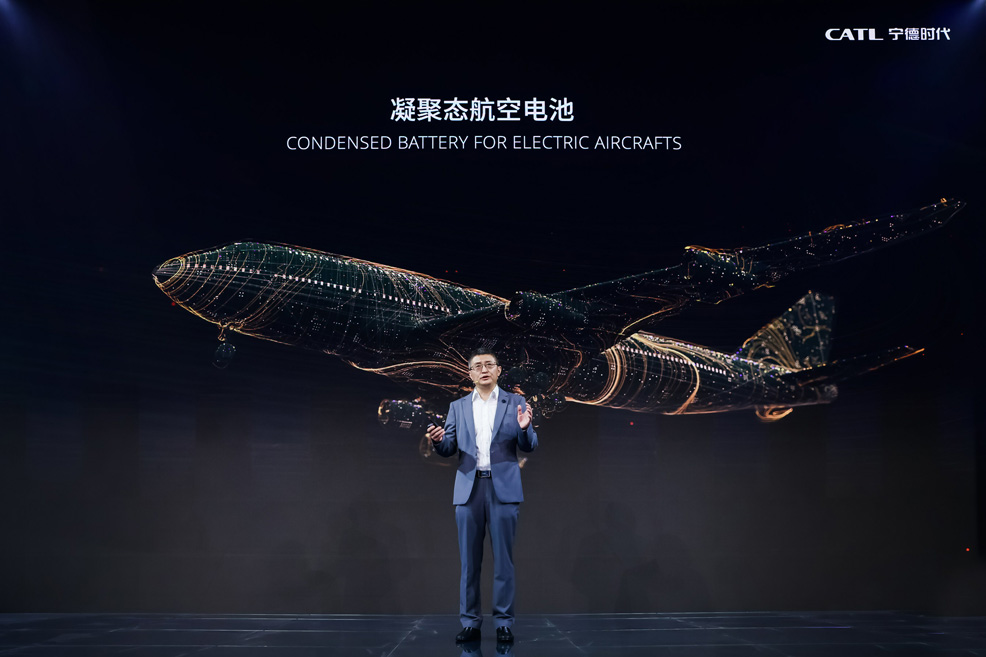
"Condensed battery" could power aircraft

19th April 2023

Contemporary Amperex Technology Co., Limited (CATL) has today launched a new "condensed battery" with up to 500 Wh/kg. This ultra-high energy density could enable the electrification of passenger aircraft.

Founded in 2011, CATL has grown to become the world's largest producer of lithium-ion (Li-ion) batteries, with a market share of nearly 35%. It has formed partnerships with many foreign automakers including BMW, Daimler, Tesla, and Volkswagen.

Today, at the Auto Shanghai exhibition, CATL has launched a new cutting-edge battery technology, offering both high energy density and safety, which the company says can achieve mass production in a short time.

The energy per unit mass of 500 Wh/kg is around twice that of typical Li-ion batteries. In addition to doubling the range of EVs, this could enable longer-haul electrified aviation, reducing air pollution.

https://www.futuretimeline.net/blog/202 ... meline.htm


Image
User avatar
caltrek
Posts: 9280
Joined: Mon May 17, 2021 1:17 pm

Re: Batteries & Energy Storage news and discussions

Post by caltrek »

Greener Batteries
April 21, 2023

Entire Article:
(Eurekalert) Our modern rechargeable batteries, such as lithium-ion batteries, are anything but sustainable. One alternative is organic batteries with redox-organic electrode materials (OEMs), which can be synthesized from natural “green” materials. In the journal Angewandte Chemie, a Chinese team has now introduced a new OEM for aqueous organic high-capacity batteries that can be easily and cheaply recycled.
Traditional inorganic electrode materials in commercial batteries involve a whole spectrum of problems: limited resources, toxic elements, environmental problems, partly unacceptable mining conditions, limited capacity, difficulties in recycling, and high costs. No sustainable batteries can be developed on a large scale based on these electrodes, though they are needed for an energy transition.

Organic batteries with OEMs are still at the very beginning of their long road toward practical application. A team led by Chengliang Wang at Huazhong University of Science and Technology has now taken a significant step in this direction. The goal is to use OEMs in batteries with aqueous electrolytes. These are “greener”, more sustainable, and less expensive than the conventional organic electrolytes in lithium-ion batteries.

The team chose to use azobenzene, a material that can be produced inexpensively on a large scale and is insoluble in water while being highly soluble in organic solvents. Whereas most other functional groups can only transfer one electron, the azo group (–N=N–) in this molecule is able to reversibly transfer two electrons, which contributes to a high capacity. Comprehensive analyses demonstrated that, during the discharge process, the azobenzene is converted to hydroazobenzene after absorbing two of the electrons—through the rapid, reversible binding of two protons (H+).

Prototype coin cells and laminated pouch cells of various sizes with azobenzene OEMs and zinc counter-electrodes reached capacities on the scale of ampere hours, which were retained over 200 charge/discharge cycles.

In contrast to polymeric OEMs, the small azobenzene molecules can be inexpensively recycled with a simple extraction using commercial organic solvents. The electrode material is air stable in both its charged and discharged states and can be recycled in yields of over 90% in every state of charge. The recycled products could be directly reused as OEMs with no loss of capacity.

Read more here: https://www.eurekalert.org/news-releases/986927
Don't mourn, organize.

-Joe Hill
weatheriscool
Posts: 24495
Joined: Sun May 16, 2021 6:16 pm
Contact:

Re: Batteries & Energy Storage news and discussions

Post by weatheriscool »

GM, Samsung plan new EV battery cell factory in US
Source: AP

By TOM KRISHER 21 minutes ago
DETROIT (AP) — General Motors and South Korea’s Samsung SDI plan to invest more than $3 billion in a new electric vehicle battery cell plant in the United States, the companies said Tuesday.

They did not announce the intended location of the new factory, which is expected to begin operations in 2026, GM and Samsung SDI said in a statement. GM and Samsung SDI plan to jointly operate the factory, which is expected to make nickel-rich prismatic and cylindrical cells. The companies said it was expected to create thousands of jobs.

The project is GM’s fourth joint venture battery cell factory. It has announced three others with South Korea’s LG Energy Solution. A 900-worker factory near Warren, Ohio, is starting to build cells, while plants in Spring Hill, Tennessee, and Lansing, Michigan, are in the works.

The announcement coincides with a visit to the United States by South Korean President Yoon Suk Yeol. The two countries are marking the 70th anniversary of their alliance with a summit that was also feature announcements on new nuclear deterence efforts, cyber security and other areas of cooperation.

Read more: https://apnews.com/article/gm-samsung-k ... 74ae33f746
User avatar
caltrek
Posts: 9280
Joined: Mon May 17, 2021 1:17 pm

Re: Batteries & Energy Storage news and discussions

Post by caltrek »

Zinc Batteries
by Fabio Bergamin
April 24, 2023

Introduction:
(Futurity) Maria Lukatskaya, professor of electrochemical energy systems at ETH Zurich, and colleagues in the US and Switzerland are searching for the ideal salt concentration for water-based zinc-ion batteries. Using experiments supported by computer simulations, they were able to reveal that the ideal salt concentration is not, as was previously assumed, the highest one possible, but a relatively low one: five to 10 water molecules per salt’s positive ion.

What’s more, the researchers didn’t use any environmentally harmful salts for their improvements, opting instead for environmentally friendly salts of acetic acid, called acetates.

“With an ideal concentration of acetates, we were able to minimize electrolyte depletion and prevent zinc dendrites just as well as other scientists previously did with high concentrations of toxic salts,” says Dario Gomez Vazquez, a doctoral student in Lukatskaya’s group and lead author of the study in the journal Energy & Environmental Science. “Moreover, with our approach, the batteries can be charged and discharged much faster.”
So far, the researchers have tested their new battery strategy on a relatively small laboratory scale. The next step will be to scale up the approach and see if it can also be translated for large batteries.

Ideally, these might one day be used as storage units in the power grid to compensate for fluctuations, say, or in the basements of single-family homes to allow solar power produced during the day to be used in the evening.

To read more of the Futurity article: https://pubs.rsc.org/en/content/articl ... 3EE00205E
Don't mourn, organize.

-Joe Hill
User avatar
caltrek
Posts: 9280
Joined: Mon May 17, 2021 1:17 pm

Re: Batteries & Energy Storage news and discussions

Post by caltrek »

New Concept for Lithium-air Batteries

May 5, 2023

Introduction:
(Eurekalert) Lithium-air batteries, also known as lithium-oxygen batteries, are candidates for the next generation of high-energy electricity storage devices. Their theoretical energy storage capacity is ten times that of conventional lithium-ion batteries of the same weight, but they are not yet chemically stable enough to provide a reliable solution. Now a newly launched collaborative research project in which a team from the University of Oldenburg, Germany, led by chemist Professor Dr. Gunther Wittstock is participating is testing a new concept to extend the life of these battery cells.

The project, entitled "Alternative materials and components for aprotic lithium-oxygen batteries: chemistry and stability of inactive components – AMaLiS 2.0", is led by IOLITEC Ionic Liquids Technologies, a company based in Heilbronn, Germany. The MEET (Münster Electrochemical Energy Technology) Battery Research Center at the University of Münster and the Fraunhofer Institute for Manufacturing Technology and Advanced Materials IFAM in Bremen are also taking part. The project will receive around 1.1 million euros in funding from the Federal Ministry of Education and Research over a three-year period.

Lithium-air batteries basically work in the same way as conventional battery types, but in this type of battery the reaction of lithium ions with oxygen from the air at the positive electrode is used to generate electricity. The big advantage is that lithium-air batteries can store almost as much energy per kilogram as fossil fuels. This means that they have a similar specific energy to today's batteries but weigh much less, which makes them attractive for use in electric cars as well as in stationary energy storage. "However, before we get that far there are still a number of technical problems to be solved," Wittstock underlines. One of these challenges is the lack of electrolyte that are chemically stable at both the positive and the negative electrode. These conductive fluids or solids are located in the area between the two electrodes.

Read more here: https://www.eurekalert.org/news-releases/988376
Don't mourn, organize.

-Joe Hill
Post Reply