Bering Land Bridge Formed Surprisingly Late During Last Ice Age December 27, 2022
Introduction:
(EurekAlert) A new study shows that the Bering Land Bridge, the strip of land that once connected Asia to Alaska, emerged far later during the last ice age than previously thought.
The unexpected findings shorten the window of time that humans could have first migrated from Asia to the Americas across the Bering Land Bridge.
The findings also indicate that there may be a less direct relationship between climate and global ice volume than scientists had thought, casting into doubt some explanations for the chain of events that causes ice age cycles. The study was published on December 27 in the Proceedings of the National Academy of Sciences.
“This result came totally out of left field,” said Jesse Farmer, postdoctoral researcher at Princeton University and co-lead author on the study. “As it turns out, our research into sediments from the bottom of the Arctic Ocean told us not only about past climate change but also one of the great migrations in human history."
Further Extract:
But the new data show that sea levels became low enough for the land bridge to appear only 35,700 years ago. This finding was particularly surprising because global temperatures were relatively stable at the time of the fall in sea level, raising questions about the correlation between temperature, sea level and ice volume.
Cult, Herding, and ‘Pilgrimage’ in the Late Neolithic of North-west Arabia: Excavations at a Mustatil East of AlUla March 15, 2023
Abstract:
(PLOS One) Since the 1970s, monumental stone structures now called mustatil have been documented across Saudi Arabia. However, it was not until 2017 that the first intensive and systematic study of this structure type was undertaken, although this study could not determine the precise function of these features. Recent excavations in AlUla have now determined that these structures fulfilled a ritual purpose, with specifically selected elements of both wild and domestic taxa deposited around a betyl. This paper outlines the results of the University of Western Australia’s work at site IDIHA-0008222, a 140 m long mustatil (IDIHA-F-0011081), located 55 km east of AlUla. Work at this site sheds new and important light on the cult, herding and ‘pilgrimage’ in the Late Neolithic of north-west Arabia, with the site revealing one of the earliest chronometrically dated betyls in the Arabian Peninsula and some of the earliest evidence for domestic cattle in northern Arabia.
Introduction:
Since the 1970s, monumental structures now called mustatil (previously known as ‘gates’) have been documented across Saudi Arabia [1–3]. Mustatil is the Arabic for rectangle (مستطيل), plural has been anglicised to mustatils. However, it was not until 2017 that the first intensive and systematic study of this structure type was undertaken by David Kennedy [4]. Kennedy’s [4] study was based on remote sensing data and was focused primarily upon the Harrat Khaybar and areas to the east. Due to the nature of the data-set, Kennedy was unable to hypothesise a precise function for these enigmatic structures. However, subsequent studies based on ground survey and preliminary excavation data revealed that the mustatil served a ritual purpose during the Arabian Late Neolithic [5–7]. In 2018, under the auspices of the Royal Commission for AlUla, the first mustatil was excavated by Wael Abu-Azizeh with Oxford Archaeology, with these excavations revealing offering chambers with in situ ritual faunal deposits [7].
Ancient DNA Sheds Light on Wooly Mammoth Evolution, And They Weren't Always So Fluffy by Russell McLendon
April 19, 2023
Introduction:
(Science Alert) As wooly mammoths grazed frigid Siberian steppes for more than half a million years, they evolved increasingly fluffy fur, large fat deposits, and smaller ears, according to a new study.
By comparing the genomes of modern elephants with those of multiple wooly mammoths – including individual mammoths that lived 600,000 years apart – researchers gained new insight into the evolution of these ice-age icons.
Distinctive features like fluffy fur and fat deposits were already genetically encoded in early wooly mammoths, the study found, but these and other characteristics seem to have grown more pronounced as the mammoths adapted to Siberia over hundreds of millennia.
"We wanted to know what makes a mammoth a wooly mammoth," says paleogeneticist and first author David Díez-del-Molino from the Center for Paleogenetics in Stockholm.
In addition to finding genetic evidence of fluffier fur and small ears, "there are also many other adaptations like fat metabolism and cold perception that are not so evident because they're at the molecular level," he adds.
This is where space travel gets interesting. Presuming humanity achieves in 100 years within solar system space travel even our own neighborhood will be different when we get there in real time. Wormhole instant travel like Mass Effect series presumes instant and very small lost time preserving how a galaxy is currently. The dangers of course would be like in Mass Effect 2 which is going to uncharted areas of space and not knowing what you will find!
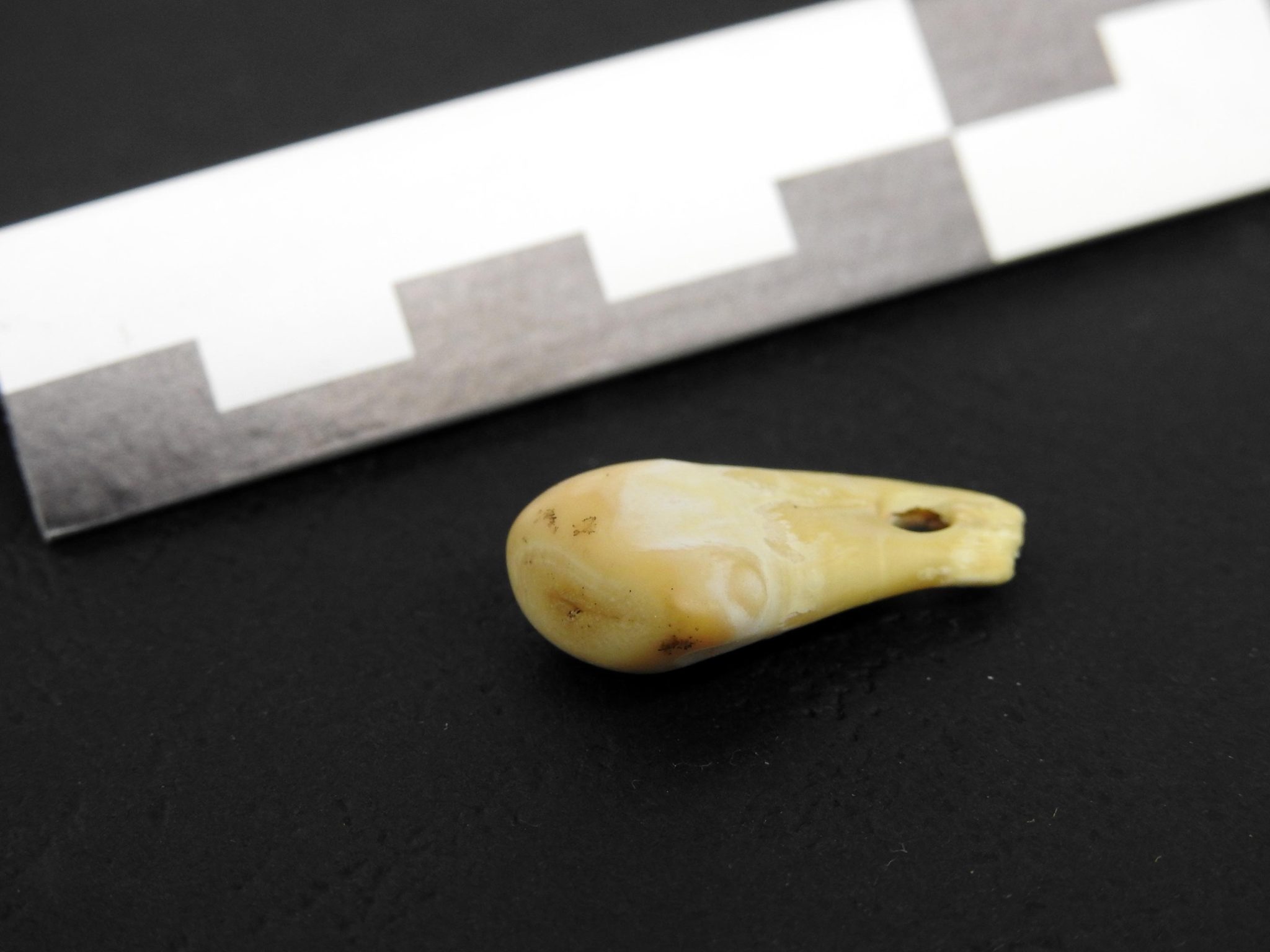
Researchers from the Max Planck Institute have successfully isolated ancient human DNA from a Paleolithic deer tooth pendant, paving the way for directly identifying the users of artifacts from the deep past and gaining deeper insights into Paleolithic societies.
An international research team led by the Max Planck Institute for Evolutionary Anthropology in Leipzig, Germany, has for the first time successfully isolated ancient human DNA from a Paleolithic artifact: a pierced deer tooth discovered in Denisova Cave in southern Siberia. To preserve the integrity of the artifact, they developed a new, non-destructive method for isolating DNA from ancient bones and teeth. From the DNA retrieved they were able to reconstruct a precise genetic profile of the woman who used or wore the pendant, as well as of the deer from which the tooth was taken. Genetic dates obtained for the DNA from both the woman and the deer show that the pendant was made between 19,000 and 25,000 years ago. The tooth remains fully intact after analysis, providing testimony to a new era in ancient DNA research, in which it may become possible to directly identify the users of ornaments and tools produced in the deep past.
Road Built 7,000 Years Ago Found at The Bottom of The Mediterranean Sea by Rebecca Dyer
May 10 , 2023
Introduction:
(Science Alert) Archaeologists have unearthed the remnants of a 7,000-year-old road hidden beneath layers of sea mud off the southern Croatian coast.
Made at the sunken Neolithic site of Soline, this exciting find may once have linked the ancient Hvar culture settlement to the now isolated island of Korčula.
Once an artificial island, the ancient site of Soline was discovered in 2021 by archaeologist Mate Parica of the University of Zadar in Croatia while he was analyzing satellite images of the water area around Korčula.
After spotting something he thought might be human-made on the ocean floor, Parica and a colleague dove to investigate.
At a depth of 4 to 5 meters (13 to 16 feet) in the Mediterranean's Adriatic Sea, they found stone walls that may have once been part of an ancient settlement. The landmass it was built upon was separated from the main island by a narrow strip of land.
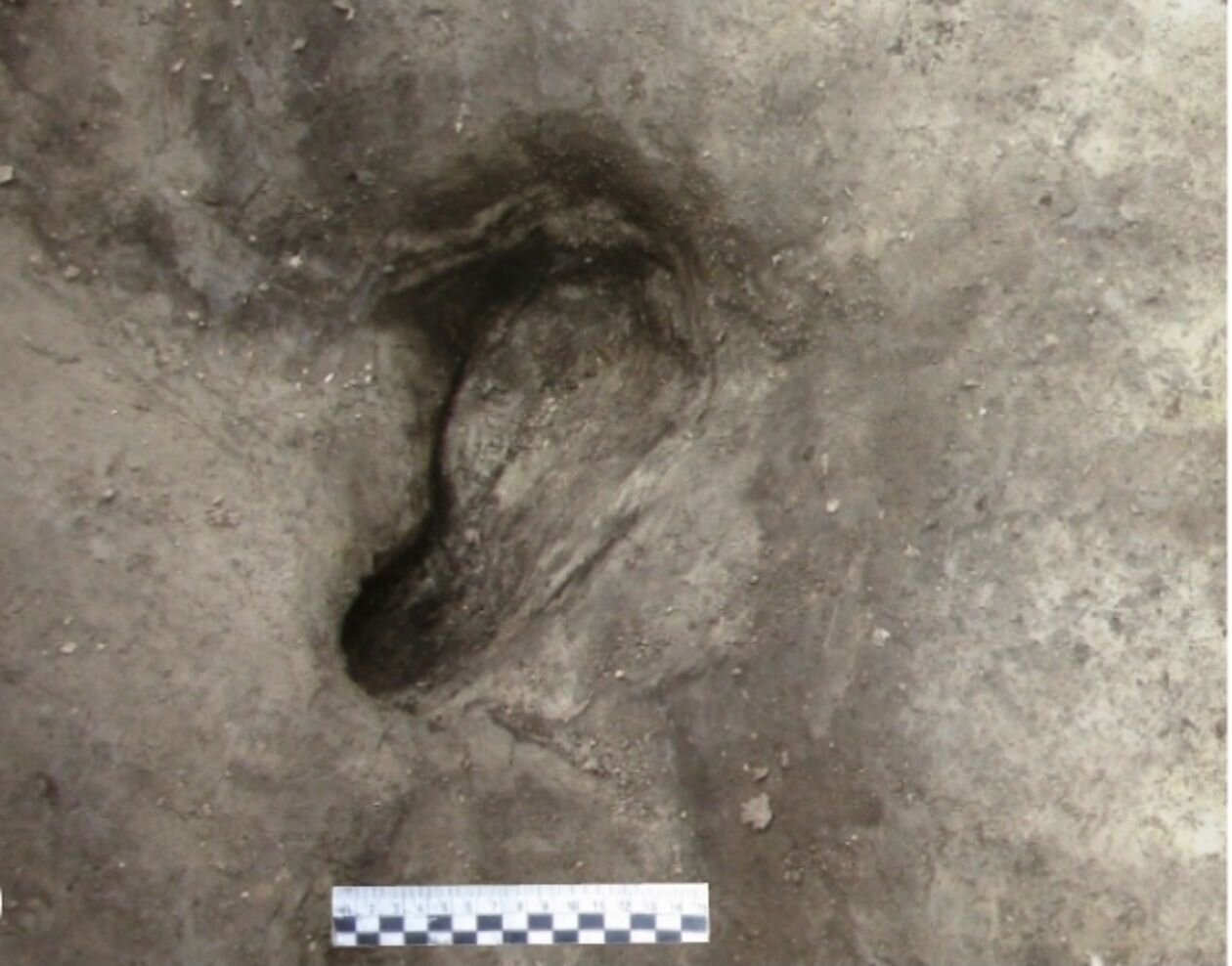
In a study published today in the journal Quaternary Science Reviews, an international research team led by scientists from the University of Tübingen and the Senckenberg Center for Human Evolution and Paleoenvironment presents the earliest human footprints known from Germany. The tracks were discovered in the roughly 300,000-year-old Schöningen Paleolithic site complex in Lower Saxony. The footprints, presumably from Homo heidelbergensis, are surrounded by several animal tracks—collectively, they present a picture of the ecosystem at that time.
In an open birch and pine forest with an understory of grasses sits a lake, a few kilometers long and several hundred meters wide. On its muddy shores, herds of elephants, rhinoceroses, and even-toed ungulates gather to drink or bathe. In the midst of this scenery stands a small family of "Heidelberg people," a species of human long since extinct.
A research team, composed of climatologists and an astronomer, have used an improved computer model to reproduce the cycle of ice ages (glacial periods) 1.6 to 1.2 million years ago. The results show that the glacial cycle was driven primarily by astronomical forces in quite a different way than it works in the modern age. These results will help us to better understand the past, present, and future of ice sheets and the Earth's climate.
Earth's orbit around the sun and its spin axis orientation change slowly over time, due to the pull of gravity from the sun, the moon, and other planets. These astronomical forces affect the environment on Earth due to changes in the distribution of sunlight and the contrast between the seasons. In particular, ice sheets are sensitive to these external forces resulting in a cycle between glacial and interglacial periods.
The present-day glacial-interglacial cycle has a period of about 100,000 years. However, the glacial cycle in the early Pleistocene (about 800,000 years ago) switched more rapidly, with a cycle of about 40,000 years. It has been believed that astronomical external forces are responsible for this change, but the details of the mechanism have not been understood. In recent years, it has become possible to investigate in more detail the role of astronomical forces through the refinement of geological data and the development of theoretical research.
Human Survival During an Ice Age in South Africa by Morgan Sherburne
May 23, 2023
Introduction:
(Futurity) Lining the Cape of South Africa and its southern coast are long chains of caves that nearly 200,000 years ago were surrounded by a lush landscape and plentiful food.
During a glacial phase that lasted between 195,000 to 123,000 years ago, these caves served as refuge to a group of humans that some researchers think were the only people to survive MIS6. A lot of archaeological research has taken place in this coastal region. Archaeologists have shown less interest in the interior of South Africa, which was thought to be an uninhabited, inhospitable place during at least two waves of ice ages, MIS3 and 2.
Now, a new study indicates that the region might have been more fertile and temperate during these two glacial periods than previously thought, and that the region likely played host to human populations living around a series of paleolakes.
The study, led by University of Michigan archaeologist Brian Stewart, provides a more comprehensive timeline of the age and stages of these lakes, and shows human fingerprints across the region. The research appears in the journal PNAS.
“There’s this perennial assumption that human population centers were always along the coast and that the interior, especially the southern interior of the Karoo Desert, were largely depopulated for long stretches of time,” Stewart says. “The funny thing is that one just has to go into the interior and walk around and notice that there’s archaeology everywhere.”
World's oldest human footprint identified in South Africa
Posted by
EarthSky Voices
May 25, 2023
Charles Helm, Nelson Mandela University and Andrew Carr, University of Leicester
Growing discoveries of ancient footprints
Just over two decades ago, as the new millennium began, it seemed that tracks left by our ancient human ancestors dating back more than about 50,000 years were excessively rare. We knew of only four sites in the whole of Africa at that time. Two were from East Africa: Laetoli in Tanzania and Koobi Fora in Kenya. Two were from South Africa (Nahoon and Langebaan). In fact, the Nahoon site, reported in 1966, was the first hominin tracksite ever described.
In 2023 the situation is very different. It appears that people were not looking hard enough or were not looking in the right places. Today the African tally for dated hominin ichnosites (a term that includes both tracks and other traces) older than 50,000 years stands at 14. We can conveniently divide these into an East African cluster (five sites) and a South African cluster from the Cape coast (nine sites). There are a further 10 sites elsewhere in the world including the UK and the Arabian Peninsula.
We’ve found relatively few skeletal hominin remains on the Cape coast. The traces left by our human ancestors as they moved about ancient landscapes are a useful way to complement and enhance our understanding of ancient hominins in Africa.
World’s oldest human footprint
In an April 25, 2023, article published in Ichnos, the international journal of trace fossils, we provided the ages of seven newly dated hominin ichnosites. We have identified them in the past five years on South Africa’s Cape south coast. These sites now form part of the “South African cluster” of nine sites.
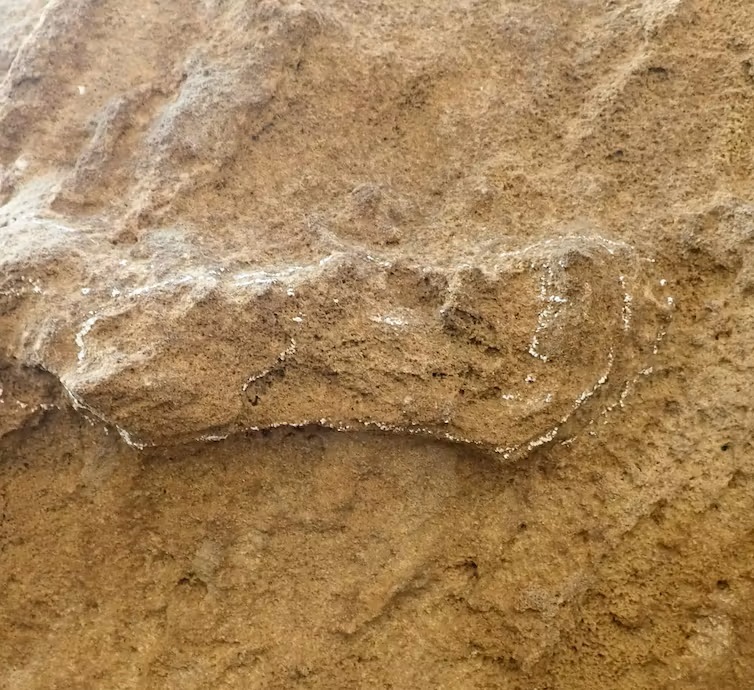
We found that the sites ranged in age. The most recent dates back about 71,000 years. The oldest, which dates back 153,000 years, is one of the more remarkable finds recorded in this study. It is the oldest footprint thus far attributed to our species, Homo sapiens.
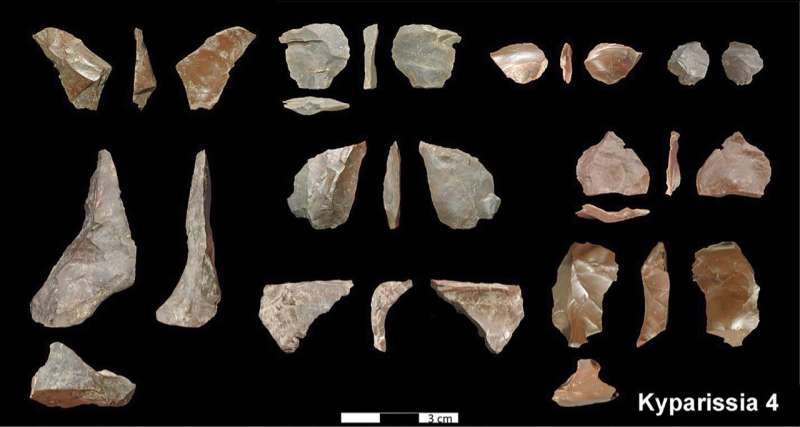
Deep in an open coal mine in southern Greece, researchers have discovered the antiquities-rich country's oldest archaeological site, which dates to 700,000 years ago and is associated with modern humans' hominin ancestors.
The find announced Thursday would drag the dawn of Greek archaeology back by as much as a quarter of a million years, although older hominin sites have been discovered elsewhere in Europe. The oldest, in Spain, dates to more than a million years ago.
The Greek site was one of five investigated in the Megalopolis area during a five-year project involving an international team of experts, a Culture Ministry statement said.
What's The Oldest Surviving City in The World? by Tom Hale
May 26, 2023
Introduction:
(IFL Science) There are dozens of cities across the world that have been lived in by humans for thousands upon thousands of years. However, when it comes to pinpointing the oldest continuously inhabited city, there is no straightforward answer.
The conundrum is a bit like the Ship of Theseus thought experiment: if a city is knocked down, restored, moved slightly, built on top of, knocked down again, and reconstructed, is it the same city or a new entity?
Without getting too bogged down in philosophical roundabouts, there are a number of places that could possibly take the crown of the world’s longest-standing city – almost all of which lay in the Middle East.
The city of Jericho, known for an infamous war in the Old Testament that probably didn’t happen, is often credited with being the earliest city that's still standing. Archaeological evidence has suggested the area has been the site of numerous successive settlements over the past millennia. Parts of the city and its famous walls are believed to have been first constructed around 9,000 BCE.
However, these structures should not be confused with modern-day Jericho, the Palestinian city in the West Bank. The ancient part of Jericho is actually known as Tell es-Sultan, around 2 kilometers (1.2 miles) north of the present-day city center. There is some debate about whether it can be considered continuously inhabited, but if you're asked what the oldest city is during a quiz, then it's likely they will be expecting the answer "Jericho."
The article goes on to discuss other “contenders for the crown” of oldest surviving city.
Paleontologists in South Africa said Monday they have found the oldest known burial site in the world, containing remains of a small-brained distant relative of humans previously thought incapable of complex behavior.
Led by renowned paleoanthropologist Lee Berger, researchers said they discovered several specimens of Homo naledi—a tree-climbing, Stone Age hominid—buried about 30 meters (100 feet) underground in a cave system within the Cradle of Humankind, a UNESCO world heritage site near Johannesburg.
Cave Beneath A Welsh Castle Reveals Extremely Rare Early Evidence Of Humans In Britain by Tom Hale
June 15, 2023
Introduction:
(IFL Science) Buried in a bat-ridden cave beneath a Welsh castle, archaeologists have uncovered extremely early evidence of prehistoric humans. Dating to the last Ice Age, the objects left by these people suggest they were among the very first Homo sapiens to dwell in Britain.
The discovery was made during ongoing excavations at Wogan Cavern beneath Pembroke Castle in southwest Wales. Due to the treasure trove of artifacts found here, which detail thousands of years of history, it’s been called the one of “most important archaeological caves in Britain.”
The mouth of the cave was shut off by a wall built around 800 years ago, although it's still accessible thanks to a spiral stairway from the castle above. It most likely served as a storeroom during the Middle Ages, while artifacts found in the cave show it was used throughout the Roman period.
Most intriguingly, there is strong evidence to suggest it was inhabited by Mesolithic hunter-gatherers during the middle of the last Ice Age. While prehistoric human skeletons have not yet been found at the site, analysis of stone tools found during the 2022 dig confirms that the tools found here were crafted by some of the earliest Homo sapiens to come to Britain.
Alongside the tools, they also uncovered the bones of reindeer, wild horses, and woolly mammoth, suggesting this cave was the site of a prehistoric butcher shop-cum-dining hall.
Markings on a cave wall in France are the oldest known engravings made by Neanderthals, according to a study published June 21, 2023, in the open-access journal PLOS ONE by Jean-Claude Marquet of the University of Tours, France and colleagues.
Research in recent decades has revealed a great deal about the cultural complexity of Neanderthals. However, relatively little is known about their symbolic or artistic expression. Only a short list of symbolic productions are attributed to Neanderthals, and the interpretation of these is often the subject of debate. In this study, Marquet and colleagues identified markings on a cave wall in France as the oldest known Neanderthal engravings.
The cave is La Roche-Cotard in the Center-Val de Loire of France, where a series of non-figurative markings on the wall are interpreted as finger-flutings, marks made by human hands. The researchers made a plotting analysis and used photogrammetry to create 3D models of these markings, comparing them with known and experimental human markings. Based on the shape, spacing, and arrangement of these engravings, the team concluded that they are deliberate, organized and intentional shapes created by human hands.
Markings on a cave wall in France are the oldest known engravings made by Neanderthals, according to a study published June 21, 2023, in the open-access journal PLOS ONE by Jean-Claude Marquet of the University of Tours, France and colleagues.
Research in recent decades has revealed a great deal about the cultural complexity of Neanderthals. However, relatively little is known about their symbolic or artistic expression. Only a short list of symbolic productions are attributed to Neanderthals, and the interpretation of these is often the subject of debate. In this study, Marquet and colleagues identified markings on a cave wall in France as the oldest known Neanderthal engravings.
The cave is La Roche-Cotard in the Center-Val de Loire of France, where a series of non-figurative markings on the wall are interpreted as finger-flutings, marks made by human hands. The researchers made a plotting analysis and used photogrammetry to create 3D models of these markings, comparing them with known and experimental human markings. Based on the shape, spacing, and arrangement of these engravings, the team concluded that they are deliberate, organized and intentional shapes created by human hands.