Rewilding & Conservation News and Discussions

Post Reply
weatheriscool
Posts: 24489
Joined: Sun May 16, 2021 6:16 pm
Contact:

Re: Rewilding & Conservation News and Discussions

Post by weatheriscool »

New study finds that 70% of Florida's coral reefs are eroding
https://phys.org/news/2022-12-florida-c ... oding.html
by University of Miami Rosenstiel School of Marine, Atmospheric, and Earth Science

A new study has found that 70% of Florida's reefs are eroding and experiencing net loss of reef habitat. The research, conducted by an interdisciplinary group of scientists through the NOAA Cooperative Institute for Marine and Atmospheric Studies at the University of Miami Rosenstiel School of Marine, Earth and Atmospheric Science, provides new information on the state of Florida's world-famous coral reefs.

The study, titled "Low net carbonate accretion characterizes Florida's coral reef," was published Nov. 15 in the journal Scientific Reports.

"This research helps us to better understand which reefs along Florida's reef tract are vulnerable to habitat loss and require management and restoration efforts to prevent further habitat loss," said the study's lead author John Morris, a researcher at NOAA's Atlantic Oceanographic and Meteorological Laboratory. "On the contrary, we also identified reefs that may be potential hold-outs to reef development and are more likely to persist in the future."

The researchers analyzed the benthic ecology, which is the assemblage of all living organisms inhabiting the sea floor, and parrotfish data from 723 reef sites in three biogeographic regions across the state's reef tract to calculate each site's carbonate budget. The reef tract extends 350 miles from the Dry Tortugas to the St. Lucie Inlet. A positive carbonate budget indicates a reef is growing over time, whereas a negative carbonate budget suggests the reef is losing structure.

The data, from NOAA's National Coral Reef Monitoring Program and National Geodetic Surveys, was used to calculate carbonate production and carbonate erosion throughout South Florida. The primary drivers of carbonate budgets along the Florida reef tract are the amount of coral cover and parrotfish biomass. The researchers found that 506 of the sites were losing reef habitat on an annual basis.

User avatar
wjfox
Site Admin
Posts: 13586
Joined: Sat May 15, 2021 6:09 pm
Location: Essex, UK
Contact:

Re: Rewilding & Conservation News and Discussions

Post by wjfox »

Biodiversity: 'Magical marine species' pushed to extinction

1 hour ago

A "sea cow" that evoked tales of mermaids is being driven to the edge of extinction, conservation experts warn.

According to an update of the official extinction list, the dugong is almost wiped out in some parts of the world.

Scientists have also sounded alarm over the loss of other marine creatures, including exotic coral and shellfish.

They said humans had created a "perfect storm" that threatens marine life across the globe.

The International Union for Conservation for Nature (IUCN), which compiles the official Red List of endangered species, revealed the latest findings at the UN biodiversity conference, COP 15.

https://www.bbc.co.uk/news/science-environment-63911045

:cry:
weatheriscool
Posts: 24489
Joined: Sun May 16, 2021 6:16 pm
Contact:

Re: Rewilding & Conservation News and Discussions

Post by weatheriscool »

Scientists freeze Great Barrier Reef coral in world-first trial
By Jill Gralow

SYDNEY, Dec 19 (Reuters) - Scientists working on Australia's Great Barrier Reef have successfully trialled a new method for freezing and storing coral larvae they say could eventually help rewild reefs threatened by climate change.

Scientists are scrambling to protect coral reefs as rising ocean temperatures destabilise delicate ecosystems. The Great Barrier Reef has suffered four bleaching events in the last seven years including the first ever bleach during a La Nina phenomenon, which typically brings cooler temperatures.

Cryogenically frozen coral can be stored and later reintroduced to the wild but the current process requires sophisticated equipment including lasers. Scientists say a new lightweight "cryomesh" can be manufactured cheaply and better preserves coral.
https://www.reuters.com/lifestyle/scien ... 022-12-19/
User avatar
caltrek
Posts: 9280
Joined: Mon May 17, 2021 1:17 pm

Re: Rewilding & Conservation News and Discussions

Post by caltrek »

A 'Weak' Global Biodiversity Pact Approved at COP15 Despite Objections of African Nations
by Jon Queally
December 19, 2022

Introduction:
(Common Drreams) Over the objections of the Democratic Republic of Congo and frustrations by other African nations, a final draft of The Kunming-Montreal Global Biodiversity Framework was adopted in the early hours of Monday that conservationists say is not strong enough to prevent industries and corporate behemoths from continuing their destructive, profit-driven attacks on the natural world and vulnerable species.

"The draft agreement is weak," said An Lambrechts, leader of Greenpeace International's delegation at the summit, following the release of the final draft text on Sunday. "This is an open invitation to greenwash. In its present shape, it won't halt biodiversity loss, much less reverse it."

Some NGOs praised the deal as a historic achievement that followed years of negotiations at the international level under the Convention of the Parties process and Inger Anderson, Under-Secretary-General of the United Nations and Executive Director of the UN Environment Programme, said the "adoption of this Framework and the associated package of ambitious targets, goals and financing represents but a first step in resetting our relationship with the natural world."

The key agreement under the Global Biodiversity Framework (GBF) is the goal of protecting 30 percent of all land and water vital to species and ecosystems by the year 2030. This compares to the current situation in which less than 17% of land and just 10% percent of marine environments are under formal protections...

But the approval of the deal was not without controversy.


Read more here: https://www.commondreams.org/news/2022 ... n-nations
Don't mourn, organize.

-Joe Hill
User avatar
caltrek
Posts: 9280
Joined: Mon May 17, 2021 1:17 pm

Re: Rewilding & Conservation News and Discussions

Post by caltrek »

The World Made a Biodiversity Pact, and the U.S. Is Not Part of It
by Phoebe Weston and Patrick Greenfield
December 22, 2022

Introduction:
(Mother Jones) Only two countries in the world have not joined the UN Convention on Biological Diversity: the Vatican and the US. Few have missed the Holy See, but the US not joining the CBD 30 years ago has been described as the “major holdout” among countries looking to support the convention’s goals.

In Montreal, where negotiations for this decade’s UN biodiversity targets are entering their frantic final stages, the absence of the US political machine is noticeable, changing the power dynamics in talks between the remaining 196 countries.

The EU is the main player from the global north and, as a result, weathers much of the criticism, accusations of hypocrisy and demands for money that the US is accustomed to getting in climate talks.

China holds the presidency of Cop15, the first time it has led on a major UN environment deal. A month ago, at Cop27, the US climate envoy, John Kerry, striding around the blue zone in Sharm El-Sheikh was ever-present before he caught Covid-19, and his face-offs with his Chinese counterpart, Xie Zhenhua, were always noteworthy. The US pavilion was a focal point for announcements, and the country’s scientists, campaigners and policymakers were important voices on the climate. All that is missing in Canada.

Further Extract:
Bill Clinton signed the CBD on the US’s behalf in 1993, but the Senate refused to ratify it. The Guardian columnist George Monbiot has criticized the US for not being a party to the convention, saying it provides other countries with a permanent excuse to participate in name only. But it is not expected to join any time soon, as international treaties need to be ratified by a two-thirds majority in the Senate.
Read more here: https://www.motherjones.com/politics/2 ... d-states/
Don't mourn, organize.

-Joe Hill
User avatar
wjfox
Site Admin
Posts: 13586
Joined: Sat May 15, 2021 6:09 pm
Location: Essex, UK
Contact:

Re: Rewilding & Conservation News and Discussions

Post by wjfox »

Bison rewilding in Kent gets boost as bull joins female herd,
12,000 years after the animals last roamed Britain


Saturday 24 December 2022 01:03, UK

A rewilding project to reintroduce bison to Britain now has "the missing piece of the jigsaw" after a bull finally arrived from Germany to join the all-female herd.

The male European bison is vital to swell the numbers at the Wilder Blean project in the ancient woodland near Canterbury in Kent.

It is a joint project between two charities - Kent Wildlife Trust and Wildwood Trust - and "a privilege" to be part of, according to the latter's director of zoological operations, Mark Habben.

"It's brilliant to see these animals out acting naturally in this incredible landscape, but it's been a slog to get here," he said.

"It's been challenging - paperwork, veterinary matters, discussion with the EU just to try and navigate the movement of animals into the UK in a post-Brexit world, but we're here now and incredibly happy to be."

https://news.sky.com/story/bison-rewild ... n-12773798


Image
User avatar
wjfox
Site Admin
Posts: 13586
Joined: Sat May 15, 2021 6:09 pm
Location: Essex, UK
Contact:

Re: Rewilding & Conservation News and Discussions

Post by wjfox »

Chester Zoo celebrates birth of world's rarest chimpanzee

4 hours ago

A critically endangered Western chimpanzee, which conservationists say is the "world's rarest chimpanzee", has been born at a zoo.

Chester Zoo said the birth was a "small but vital boost" to the global population of the species which is "under huge threat" in the wild.

The "baby boy" is in good health and has bonded well with its mother and the rest of the troop, it added.

In line with the zoo's tradition, it will be named after a rock or pop star.

Andrew Lenihan, from Chester Zoo, said: "We've previously welcomed Dylan (Bob), Alice (Cooper) and Annie (Lennox) - so watch this space.

"Mum ZeeZee and her new arrival instantly bonded and she's doing a great job of cradling him closely and caring for him."

https://www.bbc.co.uk/news/uk-england-m ... e-64241306


Image
Credit: Chester Zoo
User avatar
caltrek
Posts: 9280
Joined: Mon May 17, 2021 1:17 pm

Re: Rewilding & Conservation News and Discussions

Post by caltrek »

Britain’s Protected Natural Areas are Failing to stop Biodiversity Loss
by Jospeh Lee
January 25, 2023

Introduction:
(Grist) In the United Kingdom, some species of bees, ladybugs and spider populations are declining at faster rates in protected natural areas. That’s according to a new study that shows protected areas in the U.K. are as vulnerable to biodiversity loss as their unprotected counterparts.

The report from researchers at the United Kingdom Centre for Ecology and Hydrology and the University of Sheffield, shows that protected areas – which have been seen as key to protecting biodiversity – can be effective at protecting rare species, but have been unsuccessful in protecting common species.

“It is worrying, as you would expect species to show more positive trends in protected areas,” said Rob Cooke, lead author of the study. “It should serve as a warning as today’s common species can be tomorrow’s rare species.

In the U.K., data shows that on average, three species are lost each decade in protected areas while in unprotected areas, only two species per decade. Researchers say this phenomenon in protected areas could be explained by external factors like climate change and the steady encroachment of development along protected borders. However, researchers also say protected areas in the U.K. have nearly double the number of rare species than their unprotected counterparts.

The report comes amid a global push to protect 30 percent of the planet’s land and water by 2030, known as the 30X30 plan. Data on the U.K.’s protected areas suggest that as the country works toward that goal, how areas are protected is as important as their size. At the recent United Nations biodiversity conference, delegates from nearly 200 countries agreed to formalize 30X30. But many environmentalists say more ambitious targets should be set to protect the world’s remaining biodiversity while Indigenous peoples say a failure by world leaders to recognize Indigenous rights, territories and knowledge has led to land grabs and human rights abuses.
Read more of the Grist article here: https://grist.org/international/britai ... ty-loss/

For a presentation of the study results: https://www.sciencedirect.com/science/ ... hub#s0090
Don't mourn, organize.

-Joe Hill
weatheriscool
Posts: 24489
Joined: Sun May 16, 2021 6:16 pm
Contact:

Re: Rewilding & Conservation News and Discussions

Post by weatheriscool »

Biden protects vast wilderness area in Minnesota from mining
Source: Washington Post
The Biden administration is banning mining for 20 years in a giant watershed in Minnesota’s Boundary Waters Canoe Area Wilderness, the president’s latest effort to deliver on conservation pledges that would shape the future of America’s wild lands. The move, announced Thursday, extends a temporary decision from a year ago to block copper, nickel and other hardrock mining that the Trump administration had tried to greenlight near the Canadian border.

Officials said they determined the potential toxic leaching from mining would be too threatening to nature, local Native American communities and a growing recreation economy. Boundary Waters is the most heavily visited wilderness area in the country, according to the Interior Department. And Thursday’s decision will effect 225,000 acres of federal lands and waters in the Rainy River Watershed, about a fourth of the wilderness area northwest of Lake Superior.

It comes a day after the administration took action to protect Alaska’s Tongass National Forest, and as it faces other decisions on hotly fought over sites in Alaska and Nevada. The Biden administration has promised to set aside sacred tribal sites and to conserve 30 percent of America’s lands and waters by 2030, but has come under fire for how to balance that push with demand for oil, renewable energy and minerals.

“The Department of the Interior takes seriously our obligations to steward public lands and waters on behalf of all Americans,” Interior Secretary Deb Haaland said in a statement. “Protecting a place like Boundary Waters is key to supporting the health of the watershed and its surrounding wildlife, upholding our Tribal trust and treaty responsibilities, and boosting the local recreation economy.”
Read more: https://www.washingtonpost.com/climate- ... rs-mining/
User avatar
caltrek
Posts: 9280
Joined: Mon May 17, 2021 1:17 pm

Re: Rewilding & Conservation News and Discussions

Post by caltrek »

Tribe, Salmon Win in Fight Over Upper Klamath Lake Water
by Eric Burkett
February 6 , 2023

Introduction:
SAN FRANCISCO (Courthouse News) — Chalk up a victory for the Endangered Species Act, the Yurok Tribe, and the salmon fisheries of the California coast. And, of course, the Coho and Chinook salmon upon which the tribe and the fisheries depend.

U.S. District Judge William Orrick III issued a summary ruling in favor of the United States and a collection of fishing advocates and the tribe on Monday in a complex suit involving several tribal, governmental and quasi-governmental agencies in a complicated network of cross-claims from both California and Oregon.

“It’s complicated,” said plaintiffs’ attorney Patti Goldman with the environmental law firm Earthjustice. “And in a way it’s not complicated.”
First filed in 2019, the case ultimately came down to one issue: Must the U.S. Bureau of Reclamation comply with an order from the Oregon Water Resources Department blocking it from releasing water from the Upper Klamath Lake? Orrick ruled the answer is no and granted summary judgement in favor of the United States and the plaintiffs which in addition to the Yurok Tribe included the Institute for Fisheries Resources, and the Pacific Coast Federation of Fishermen’s Associations.

Since the bureau must comply with the Endangered Species Act, so too must Oregon's water agency. Another party in the Gordian knot of claims and counterclaims also lost out: the Klamath Water Users Association, an organization representing farmers and ranchers, as well as suburban and rural water districts. Their counterclaim that the Endangered Species Act didn’t require Reclamation to alter its management of the lake water to benefit endangered species was also denied.
Read more here: https://www.courthousenews.com/tribe-s ... ke-water/
Don't mourn, organize.

-Joe Hill
User avatar
caltrek
Posts: 9280
Joined: Mon May 17, 2021 1:17 pm

Re: Rewilding & Conservation News and Discussions

Post by caltrek »

Scientists' Warning to Humanity on Tree Extinctions
by Tessa Koumoundouros
February 9, 2023


Extract:
From soaring coastal redwoods to dinosaur-era Wollemi pines and firs that make the perfect Christmas trees, even our most revered woody plants are in an awful lot of trouble.
But it turns out that losing some species won't just endanger local forests; it will threaten entire ecosystems, research shows.
In 2021, a global assessment titled State of the World's Trees found a shocking one-third of all tree species are currently teetering on the edge of existence.

In a subsequent study from last year, the same researchers issued a "warning to humanity" about the consequences of these losses, backed by 45 other scientists from 20 different countries.
Conservation biologist Malin Rivers from Botanic Gardens Conservation International and colleagues outline the many impacts these losses will have on our economies, livelihoods, and food (see discussion and related link provided below).
Read more of the Science Alert article here: https://www.sciencealert.com/scientist ... -humanity


Malin Rivers, Adrian C. Newton, Sara Oldfield,
August 31, 2022

Abstract:
(Plants, People, Planet) Societal Impact Statement

Trees play vital roles in many of the world's ecosystems while providing many benefits to people. New evidence indicates that a third of tree species are threatened with extinction, representing a tree extinction crisis. Here we demonstrate how tree species extinction will lead to the loss of many other plants and animals and significantly alter the world's ecosystems. We also show how tree extinction will negatively affect billions of people through loss of livelihoods and benefits. We highlight a series of urgent actions needed to avert an ecological, cultural and socio-economic catastrophe caused by widespread extinction of tree species.

Summary
Trees are of exceptional ecological importance, playing a major functional role in the world's ecosystems, while also supporting many other plants, animals and fungi. Many tree species are also of direct value to people, providing a wide range of socio-economic benefits. Loss of tree diversity could lead to abrupt declines in biodiversity, ecosystem functions and services and ultimately ecosystem collapse. Here we provide an overview of the current knowledge regarding the number of tree species that are threatened with extinction, and the threats that affect them, based on results of the Global Tree Assessment. This evidence suggests that a third of the world's tree species are currently threatened with extinction, which represents a major ecological crisis. We then examine the potential implications of tree extinctions, in terms of the functioning of the biosphere and impacts on human well-being. Large-scale extinction of tree species will lead to major biodiversity losses in other species groups and substantially alter the cycling of carbon, water and nutrients in the world's ecosystems. Tree extinction will also undermine the livelihoods of the billions of people who currently depend on trees and the benefits they provide. This warning to humanity aims to raise awareness of the tree extinction crisis, which is a major environmental issue that requires urgent global attention. We also identify some priority actions that need to be taken to reduce the extinction risk of tree species and to avert the ecological and socio-economic catastrophe that will result from large-scale extinction of tree species.
Read more here: https://nph.onlinelibrary.wiley.com/do ... pp3.10314
Don't mourn, organize.

-Joe Hill
User avatar
caltrek
Posts: 9280
Joined: Mon May 17, 2021 1:17 pm

Re: Rewilding & Conservation News and Discussions

Post by caltrek »

Ninth Circuit Urges Mediation in Fight Over Livestock Grazing in Tonto National Forest
by Joe Duhownik
February 8, 2023

Introduction:
PHOENIX (Courthouse News) — A Ninth Circuit panel on Wednesday encouraged a community advocate group for Arizona’s Mogollon Rim to seek mediation with the U.S. Forest Service over expanded grazing allotment into a specific portion of the Tonto National Forest known as Bar X.

For 40 years, grazing wasn’t permitted in what’s known as the Colcord/Turkey pasture in the Bar X, until the Forest Service updated its management plan. Now it, along with four other pastures associated with the Bar X, is open to grazing if the Forest Service decides it’s safe. The plan doubles the number of livestock that’s allowed to graze on a specific pasture at a time.

The plan doesn’t open grazing indefinitely — the Forest Service retains the right to decide regularly whether the pastures should be opened or closed, depending on environmental conditions.

Neighbors of the Mogollon Rim, a community organization made up of homeowners in the area, claims the grazing will adversely affect the environment in multiple ways, like the permanent destruction of vegetation and damage to both the habitats and food sources of the Mexican spotted owl and the narrow-headed garter snake.

It also accused the Forest Service of violating the National Environmental Policy Act because the Forest Service didn’t consider their proposed alternative – that grazing be allowed in all the desired areas except for the Colcord/Turkey pasture. Instead, they claimed that the Forest Service only weighed two options – allowing grazing everywhere or allowing grazing nowhere.
Read more here: https://www.courthousenews.com/ninth-c ... l-forest/
Don't mourn, organize.

-Joe Hill
User avatar
wjfox
Site Admin
Posts: 13586
Joined: Sat May 15, 2021 6:09 pm
Location: Essex, UK
Contact:

Re: Rewilding & Conservation News and Discussions

Post by wjfox »

Dusky tetraka: Joy as bird feared extinct spotted in Madagascar

Published
18 hours ago

Bird lovers are celebrating after a species some feared extinct was spotted alive by scientists for the first time in 24 years.

The dusky tetraka is a songbird with a distinctive yellow throat that is native to Madagascar.

Three of them have been sighted in a rainforest in the island's north-east, but in an unexpected habitat.

The ground-dwelling birds were in thick vegetation near a rocky river - perhaps a good spot to find grubs and insects.

"If dusky tetraka always prefer areas close to rivers, this might help to explain why the species has been overlooked for so long," says ornithologist John Mittermeier who managed to take a photo of the rare bird.

https://www.bbc.co.uk/news/world-africa-64822787


Image
Credit: JOHN C MITTERMEIER
User avatar
wjfox
Site Admin
Posts: 13586
Joined: Sat May 15, 2021 6:09 pm
Location: Essex, UK
Contact:

Re: Rewilding & Conservation News and Discussions

Post by wjfox »

Global agreement to protect oceans by 2030

5th March 2023

UN member states have agreed on a legal framework for the High Seas Treaty, which aims to protect 30% of the world's oceans by 2030.

[...]

"This is a historic day for conservation and a sign that in a divided world, protecting nature and people can triumph over geopolitics," said Dr. Laura Meller, campaigner for Greenpeace Nordic, speaking from New York. "We praise countries for seeking compromises, putting aside differences and delivering a Treaty that will let us protect the oceans, build our resilience to climate change and safeguard the lives and livelihoods of billions of people."

"This Treaty will be the game-changer the ocean urgently needs," said Fabienne McLellan, Managing Director of OceanCare.

Read more: https://www.futuretimeline.net/blog/202 ... y-2030.htm


Image
Credit: damedias
User avatar
wjfox
Site Admin
Posts: 13586
Joined: Sat May 15, 2021 6:09 pm
Location: Essex, UK
Contact:

Re: Rewilding & Conservation News and Discussions

Post by wjfox »

Beavers to be reintroduced in Ealing as London rewilding projects funded

21 March 2023

Beavers, bees and bats are among the species set to benefit from new rewilding schemes in London.

The projects will share hundreds of thousands of pounds to help bring back nature in the UK's capital city.

Beavers are set to be reintroduced in west London as part of efforts to restore London's lost ecosystems.

A breeding pair of the rodents could be living in Paradise Fields, Ealing, as soon as this autumn as part of a project between the local council and wildlife groups. It follows a landmark reintroduction scheme in Enfield last year, which brought beavers back to London for the first time in 400 years.

The project will share in £850,000 of funding from the Rewild London Fund, which is funding a number of organisations to help boost biodiversity, restore habitat and reintroduce species.

https://www.nhm.ac.uk/discover/news/202 ... unded.html
User avatar
caltrek
Posts: 9280
Joined: Mon May 17, 2021 1:17 pm

Re: Rewilding & Conservation News and Discussions

Post by caltrek »

Lynx Reintroduction in Scotland? It’s Complicated
March 30, 2023

Introduction:
(EurekAlert) Plans to reintroduce the lynx in Scotland provoke a complex range of opinions, new research shows.

Lynx died out in Britain more than 1,000 years ago, but some conservation groups argue the species could help restore natural ecosystems.

The new study, by researchers from Vincent Wildlife Trust and the University of Exeter, investigated the views of stakeholders including farmers, land managers and conservationists.

“Our results show that views in Scotland about potential future lynx reintroduction are far more diverse, nuanced and complex than might have been assumed,” said lead author David Bavin, of Vincent Wildlife Trust.

“Rather than a simple binary split of ‘for’ and ‘against’, we found a spectrum of different perspectives.”
Read more here: https://www.eurekalert.org/news-releases/984170
Don't mourn, organize.

-Joe Hill
User avatar
caltrek
Posts: 9280
Joined: Mon May 17, 2021 1:17 pm

Re: Rewilding & Conservation News and Discussions

Post by caltrek »

A Surprisingly Uplifting, and Effective, Way to Sequester Carbon
by Gabriela Aoun Angueira
April 2, 2023

Introduction:
(Mother Jones) As the world increasingly turns toward natural climate solutions like reforestation and grassland restoration to sequester carbon, it may be overlooking a crucial ally: animals.

Protecting existing populations and restoring others to their natural habitats often improves the natural capture and sequestration of carbon dioxide within ecosystems, according to a study published today in the journal Nature Climate Change. Robust populations of just nine species, such as sea otters or gray wolves, or genera, including whales, could lead to the capture of 6.41 gigatons of CO₂ annually, the researchers found. That’s about 95 percent of the amount needed to be removed annually to ensure global warming remains below 1.5 degrees Celsius (2.7 degrees Fahrenheit).

In “Trophic rewilding can expand natural climate solutions,” led by the Yale School of the Environment and the Global Rewilding Alliance, 15 international experts compare the carbon content in savannas, forests, and other ecosystems when their wildlife populations were healthy and when they were below historical numbers. They found multiple cases in which thriving populations of certain species, particularly large vertebrates, through acts like foraging, burrowing, and trampling, increased an ecosystem’s carbon storage capacity by as much as 250 percent.

The researchers argue that these essential species disperse seeds, facilitating the growth of carbon-sequestering trees and plants. Others trample or eat the vegetation that would otherwise rob those trees of space and nutrients. Predators prey on herbivores that, without predation, might adversely impact that essential fauna.

“Ecological science has had a long history of overlooking the role of animals as an important driver of the biogeochemistry of ecosystems,” Oswald Schmitz, an ecologist at the Yale School for the Environment and an author of the study, told Grist. “What we say is that we know animals can change the vegetation makeup of ecosystems, and a lot of ecosystem ecologists say vegetation is important for ecosystem function and carbon cycling, then surely the animals must be important, too.”

Read more here: https://www.motherjones.com/author/gab ... angueira/
Don't mourn, organize.

-Joe Hill
User avatar
caltrek
Posts: 9280
Joined: Mon May 17, 2021 1:17 pm

Re: Rewilding & Conservation News and Discussions

Post by caltrek »

Mexico Sanctioned for Not Protecting Endangered Porpoise
March 27, 2023

Introduction:
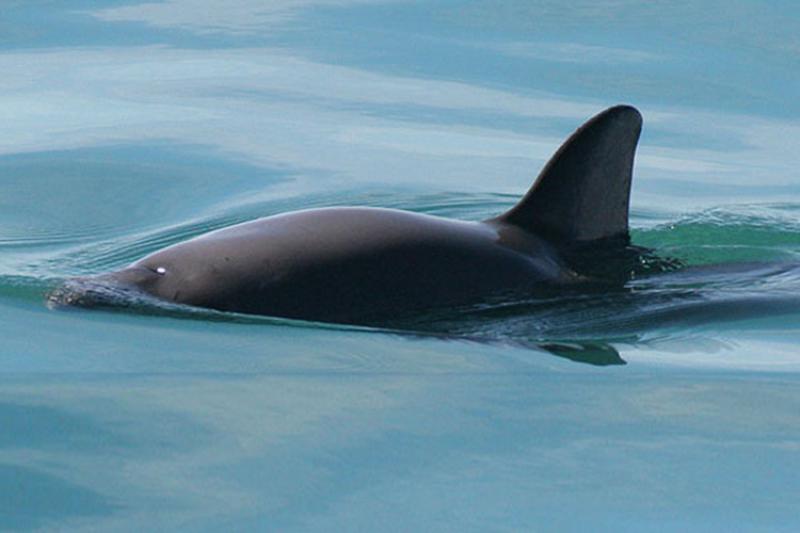
MEXICO CITY (AP via Latino Rebels) — Mexico acknowledged Saturday it faces sanctions from the international wildlife body known as CITES for not doing enough to protect the vaquita, a porpoise that is the world’s smallest cetacean and most endangered marine mammal.

The sanctions have not yet been announced, but they could make it difficult for Mexico to export some regulated animal and plant products like crocodile or snake skins, orchids, and cactuses. Commercial seafood species like shrimp would not be affected, but the ruling sets a precedent and some groups are pushing for seafood import bans.

“While no one relishes economically painful sanctions, all other efforts to prompt Mexico to save the vaquita have failed,” said Sarah Uhlemann, international program director at the Center for Biological Diversity. “We hope these strong measures wake up the Mexican government.”

Mexico’s Secretariat of Foreign Affairs said in a statement that CITES had ruled that Mexico’s protection plan for the vaquita was insufficient.

Studies estimate there may be as few as eight vaquitas remaining in the Gulf of California, the only place they exist and where they often become entangled in illegal gillnets and drown.

Read more here: https://www.latinorebels.com/2023/03/2 ... ovaquita/

Image
A vaquita.
NOAA
Don't mourn, organize.

-Joe Hill
User avatar
caltrek
Posts: 9280
Joined: Mon May 17, 2021 1:17 pm

Re: Rewilding & Conservation News and Discussions

Post by caltrek »

California Fish & Wildlife Moves to Protect Greater Sage Grouse
by Natalie Hanson
April 6 , 2023

Introduction:
SACRAMENTO, Calif. (Courthouse News) — The California Department of Fish and Wildlife has recommended that the greater sage grouse receive protections under the state's Endangered Species Act, after reviewing a 2022 petition from the Center for Biological Diversity.

The agency’s report, filed with the California Fish and Game Commission, found the center’s petition provided enough scientific evidence to persuade that protecting the birds as either threatened or endangered in California is warranted.

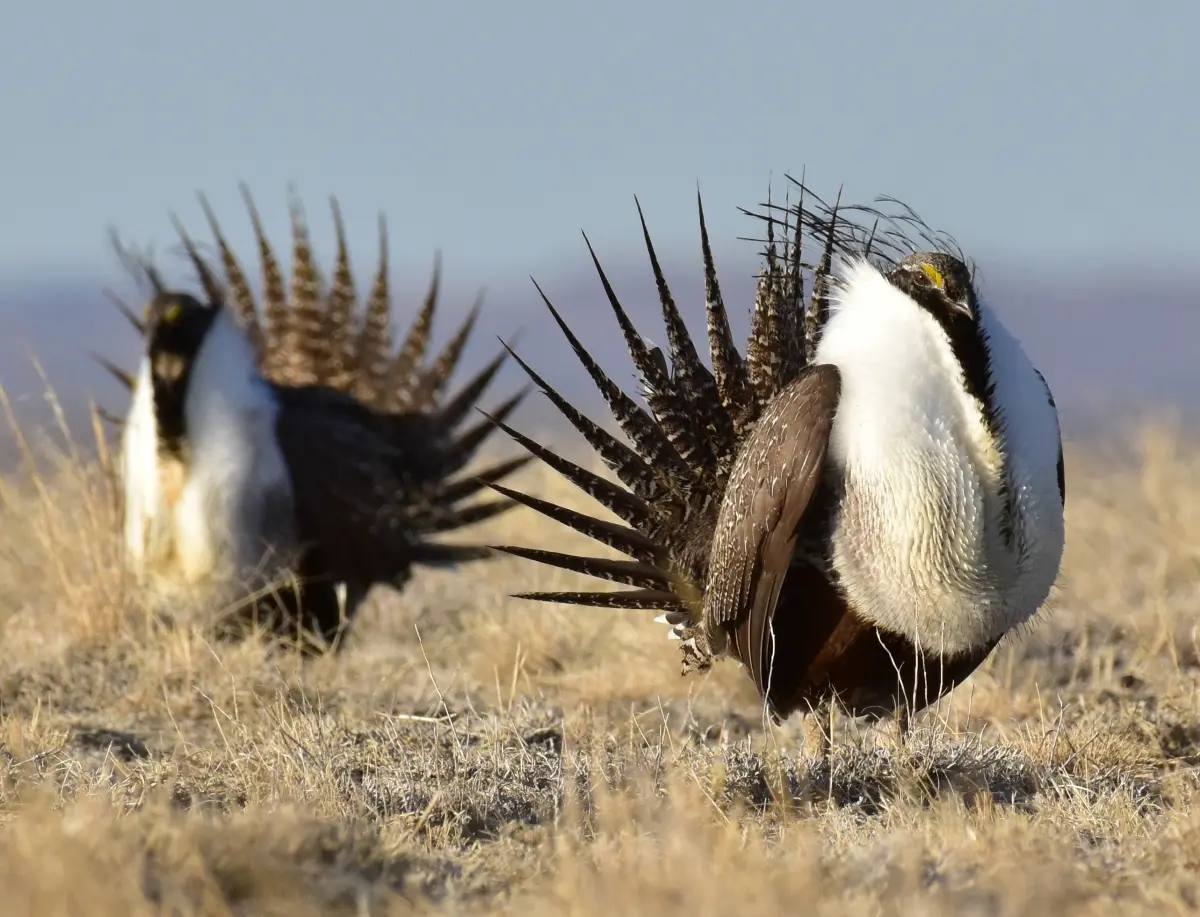
Scientists look to greater sage grouse as an indicator species in the sagebrush ecosystem. As lekking birds, they are known for their distinctive plumage and elaborate mating dances during which males use large, inflated air sacs in their chests to make popping sounds.

A Northern California population of the bird resides in Lassen and Modoc counties, and the separate bi-state sage-grouse population is found east of the Sierra Nevada Mountains along the California-Nevada border in Inyo and Mono counties.

But the sage grouse faces risk of disappearing in California due to habitat loss and fragmentation from land development, mining, invasive species, wildfire, climate change and off-road vehicle use. Many subpopulations have numbers below the minimum population threshold, which the state says makes them increasingly isolated and at imminent risk of disappearing.
Read more here: https://www.courthousenews.com/califor ... e-grouse/

Image
Greater Sage Grouse
Credit: Tom Koerner/USFWS
Don't mourn, organize.

-Joe Hill
User avatar
wjfox
Site Admin
Posts: 13586
Joined: Sat May 15, 2021 6:09 pm
Location: Essex, UK
Contact:

Re: Rewilding & Conservation News and Discussions

Post by wjfox »

India’s endangered tiger population is rebounding in triumph for conservationists

Published 1:10 AM EDT, Mon April 10, 2023

Tigers once roamed across Asia, their numbers as high as 100,000 at the start of the 20th century, before the species plummeted to the brink of extinction.

By 2006, their population in India – home to the majority of the world’s remaining wild tigers – hit a record low of just 1,411 individuals.

But decades of conservation efforts appear to have finally paid off. India’s tigers have more than doubled since then, reaching 3,167 last year, according to the latest tiger census released Sunday.

That’s about 70% of the world’s wild tiger population, which stands at around 4,500, according to the World Wildlife Fund (WWF).

The resurgence of Indian tigers represents a triumph for conservationists, and a ray of hope for other countries struggling to boost wildlife numbers.

https://edition.cnn.com/2023/04/10/indi ... index.html
Post Reply