Biology & Medicine News and Discussions

weatheriscool
Posts: 24523
Joined: Sun May 16, 2021 6:16 pm
Contact:

Re: Biology & Medicine News and Discussions

Post by weatheriscool »

Nanotech strategy shows promise for treating autoimmune disease
https://phys.org/news/2022-12-nanotech- ... sease.html
by The Scripps Research Institute
Scientists at Scripps Research have reported success in initial tests of a new, nanotech-based strategy against autoimmune diseases.

The scientists, who reported their results in ACS Nano, engineered cell-like "nanoparticles" that target only the immune cells driving an autoimmune reaction, leaving the rest of the immune system intact and healthy. The nanoparticles greatly delayed, and in some animals even prevented, severe disease in a mouse model of arthritis.

"The potential advantage of this approach is that it would enable safe, long-term treatment for autoimmune diseases where the immune system attacks its own tissues or organs—using a method that won't cause broad immune suppression, as current treatments do," says study senior author James Paulson, Ph.D., Cecil H. and Ida M. Green Chair of Chemistry in the Department of Molecular Medicine at Scripps Research.
weatheriscool
Posts: 24523
Joined: Sun May 16, 2021 6:16 pm
Contact:

Re: Biology & Medicine News and Discussions

Post by weatheriscool »

New potential mechanism for vision loss discovered
https://medicalxpress.com/news/2022-12- ... -loss.html
by Dresden University of Technology

Visual cells in the human retina may not simply die in some diseases, but are mechanically transported out of the retina beforehand. Scientists from the Deutsches Zentrum für Neurodegenerative Erkrankungen (DZNE) and the Center for Regenerative Therapies Dresden (CRTD) at TU Dresden have now discovered this.

For their research, they used miniature human retinas produced in the laboratory, so-called organoids. In the new issue of the journal Nature Communications, they report on their discovery, which paves the way for completely new research approaches, especially in connection with age-related macular degeneration (AMD).

"This principle, known as cell extrusion, has not yet been studied in neurodegenerative diseases," says Prof. Mike Karl, who heads the research group. AMD is the main cause of blindness and severe visual impairment in Germany. It is estimated that a quarter of people over the age of 60 suffer from AMD. The macula is a special region within the human retina that is needed, among other things, for high resolution color vision. In AMD, thousands of light-sensitive visual cells, the so-called photoreceptor cells, are lost in the macula.

"This was the starting point for our research project: we observed that photoreceptors are lost, but we could not detect any cell death in the retina," explains Mike Karl, who conducts research at the Dresden site of the DZNE and the CRTD at TU Dresden. "Half of all photoreceptors disappeared from the retinal organoid within ten days, but obviously they did not die in the retina. That made us curious."
weatheriscool
Posts: 24523
Joined: Sun May 16, 2021 6:16 pm
Contact:

Re: Biology & Medicine News and Discussions

Post by weatheriscool »

'Virtual pillars' separate and sort blood-based nanoparticles
https://phys.org/news/2022-12-virtual-p ... icles.html
by Duke University
Engineers at Duke University have developed a device that uses sound waves to separate and sort the tiniest particles found in blood in a matter of minutes. The technology is based on a concept called "virtual pillars" and could be a boon to both scientific research and medical applications.

Tiny biological nanoparticles called "small extracellular vesicles" (sEVs) are released from every type of cell in the body and are believed to play a large role in cell-to-cell communication and disease transmission. The new technology, dubbed Acoustic Nanoscale Separation via Wave-pillar Excitation Resonance, or ANSWER for short, not only pulls these nanoparticles from biofluids in under 10 minutes, it also sorts them into size categories believed to have distinct biological roles.

The results appeared online November 23 in the journal Science Advances.
weatheriscool
Posts: 24523
Joined: Sun May 16, 2021 6:16 pm
Contact:

Re: Biology & Medicine News and Discussions

Post by weatheriscool »

Clinical trial shows promising results for inciting production of neutralizing antibodies in HIV vaccine
https://medicalxpress.com/news/2022-12- ... ction.html
by Bob Yirka , Medical Xpress
A large team of researchers affiliated with a host of institutions across the U.S., working with two colleagues from Sweden, reports promising results in a phase I clinical trial aimed at testing the efficacy and safety of an HIV vaccine.

In their paper published in the journal Science, the group describes using a germline-targeting priming immunogen approach in developing the vaccine and how well it performed during its initial clinical trial. Penny Moore, with the National Institute for Communicable Diseases, in South Africa, has published a Perspectives piece in the same journal issue outlining germline targeting in vaccines and the work done by the researchers on this new effort.
weatheriscool
Posts: 24523
Joined: Sun May 16, 2021 6:16 pm
Contact:

Re: Biology & Medicine News and Discussions

Post by weatheriscool »

New drug a hopeful advance for incurable neurodegenerative myelin diseases
https://medicalxpress.com/news/2022-12- ... yelin.html
by University of Montreal
There's new hope for the future treatment of some leukodystrophies, neurodegenerative diseases in young children that progressively affect their quality of life, often leading to death before adulthood.

The development stems from the work of Benoit Coulombe, director of the Translational Proteomics Laboratory at the Clinical Research Institute of Montreal (IRCM) and a professor of biochemistry and molecular medicine in the Faculty of Medicine of Université de Montréal.

Published in the journal Molecular Brain, the new research shows that the drug Riluzole, approved by the U.S. Food and Drug Administration to treat certain forms of amyotrophic lateral sclerosis, can at least partially correct the molecular cause of some leukodystrophies.

"Indeed, we have shown that the causative mutations of some leukodystrophies affect the subunits of an important cellular enzyme, RNA polymerase III, preventing its normal assembly—it turned out that Riluzole can counteract this assembly defect," said Maxime Pinard, the researcher responsible for the project in Coulombe's lab.
weatheriscool
Posts: 24523
Joined: Sun May 16, 2021 6:16 pm
Contact:

Re: Biology & Medicine News and Discussions

Post by weatheriscool »

Researchers develop nano-based technology to fight osteoporosis
https://phys.org/news/2022-12-nano-base ... rosis.html
by University of Central Florida

University of Central Florida researchers have created unique technology for treating osteoporosis that uses nanobubbles to deliver treatment to targeted areas of a person's body.

The new technology was developed by Mehdi Razavi, an assistant professor in UCF's College of Medicine and a member of the Biionix Cluster at UCF, and UCF biomedical sciences student Angela Shar at the Biomaterials and Nanomedicine Lab, as part of the lab's focus on developing tools for diagnostics and therapeutics.

Osteoporosis is a disease marked by an imbalance between the body's ability to form new bone tissue, or ossification, and break down, or remove, old bone, known as resorption.

According to the Bone Health & Osteoporosis Foundation (BHOF), studies suggest that one in two women and up to one in four men aged 50 and older will break a bone due to osteoporosis. Also, experts predict that by 2025, osteoporosis will be responsible for about 3 million fractures and $25.3 billion in costs annually.

Razavi says that a healthy body continually replaces old or damaged bone tissue at a steady rate to ensure good bone quality and mass.

"But when the rate of bone resorption becomes higher than bone formation, then it leads to osteoporosis, a systemic disease of the skeletal system," he says.
User avatar
wjfox
Site Admin
Posts: 13588
Joined: Sat May 15, 2021 6:09 pm
Location: Essex, UK
Contact:

Re: Biology & Medicine News and Discussions

Post by wjfox »

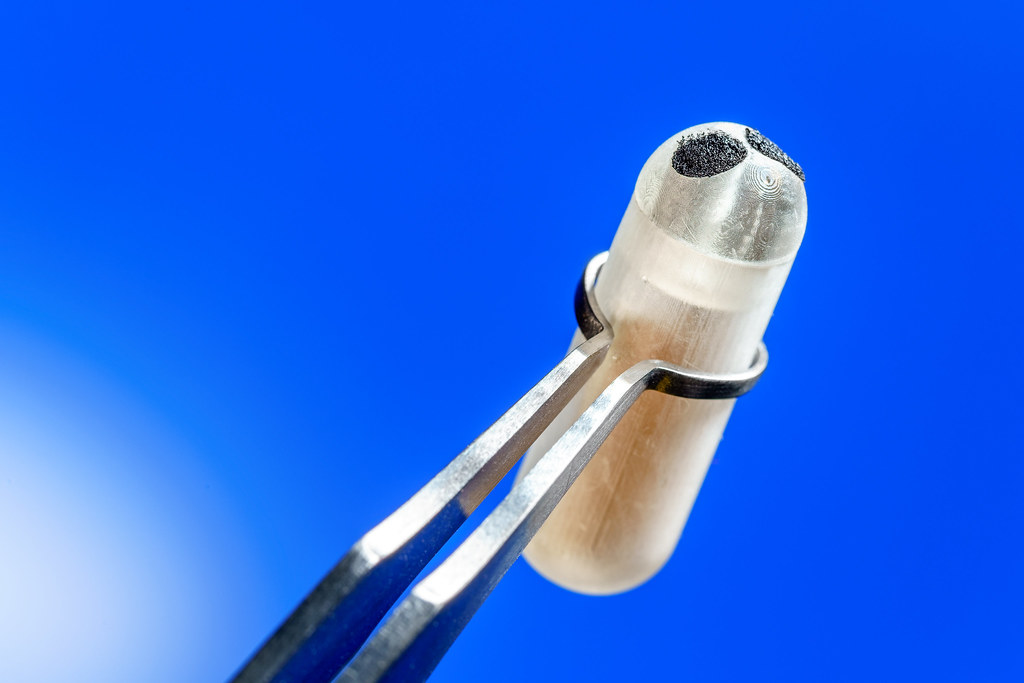
A New Self-Powered Ingestible Sensor Opens New Avenues for Gut Research

November 30, 2022

Engineering researchers have developed a battery-free, pill-shaped ingestible biosensing system designed to provide continuous monitoring in the intestinal environment. It gives scientists the ability to monitor gut metabolites in real time, which wasn’t possible before. This feat of technological integration could unlock new understanding of intestinal metabolite composition, which significantly impacts human health overall.

The work, led by engineers at the University of California San Diego, appears in the December issue of the journal Nature Communications.

The ingestible, biofuel-driven sensor facilitates in-situ access to the small intestine, making glucose monitoring easier while generating continuous results. These measurements provide a critical component of tracking overall gastrointestinal health, a major factor in studying nutrition, diagnosing and treating various diseases, preventing obesity, and more.

“In our experiments, the battery-free biosensor technology continuously monitored glucose levels in the small intestines of pigs 14 hours after ingestion, yielding measurements every five seconds for two to five hours,” said Ernesto De La Paz Andres, a nanoengineering graduate student at UC San Diego and one of the co-first authors on the paper. “Our next step is to reduce the size of the pills from the current 2.6 cm in length so they will be easier for human subjects to swallow.”

Older methods for directly monitoring the inside of the small intestine can cause significant discomfort for patients while generating only single short data recordings of an environment that continuously changes. By contrast, this biosensor provides access to continuous data readings over time. The platform could also be used to develop new ways to study the microbiome of the small intestine. The “smart pill” approach could lead to simpler and cheaper ways to monitor the small intestine, which could lead to significant cost savings in the future. 

https://today.ucsd.edu/story/a-new-self ... t-research


Image
User avatar
caltrek
Posts: 9285
Joined: Mon May 17, 2021 1:17 pm

Re: Biology & Medicine News and Discussions

Post by caltrek »

World-First Trial Transfusing Lab-Grown Red Blood Cells Begins
by Clare Watson
December 13, 2022

Introduction:
(Science Alert) A trial testing how long a teaspoon-sized transfusion of lab-grown red blood cells lasts in the body could revolutionize clinical care for people with blood disorders who require regular blood top-ups.

The world-first trial, underway in the UK, is studying whether red blood cells made in the laboratory last longer than blood cells made in the body.
Although the trial is only small, it represents a "huge stepping stone for manufacturing blood from stem cells," says University of Bristol cell biologist Ashley Toye, one of the researchers working on the study.

To generate the transfusions, the team of researchers isolated stem cells from donated blood and coaxed them into making more red blood cells, a process that takes around three weeks.

In the past, researchers showed they could transfuse lab-grown blood cells back into the same donor they were derived from. This time, they have infused the manufactured cells into another compatible person – a process known as allogeneic transfusion.
Read more here: https://www.sciencealert.com/world-fir ... ls-begins

Don't mourn, organize.

-Joe Hill
weatheriscool
Posts: 24523
Joined: Sun May 16, 2021 6:16 pm
Contact:

Re: Biology & Medicine News and Discussions

Post by weatheriscool »

Trial on safety and immunogenicity of Ebola vaccines yields promising results
https://medicalxpress.com/news/2022-12- ... cines.html
by Institut National de la Sante et de la Recherche Medicale
Ebola epidemics occur periodically in various sub-Saharan African countries. While vaccines exist and have already received WHO Prequalification against the Zaire ebolavirus species, it is essential to pursue and intensify efforts to supplement the available data to develop a safe and effective Ebola vaccine strategies in adults and children alike.

The PREVAC international consortium, which includes scientists from Inserm and from institutions in Africa, U.S. and UK, has published the results of a large-scale randomized clinical trial in West Africa in the New England Journal of Medicine. These results confirm the safety of three different vaccine regimens, and suggest that an immune response is induced and maintained for up to 12 months.

In a context where many sub-Saharan African countries regularly face Ebola outbreaks, vaccines are seen as a central tool to fight the spread of the disease. Since 2019, two vaccines have obtained WHO Prequalification against the Zaire ebolavirus species: the vaccine rVSVΔG-ZEBOV-GP developed by Merck, Sharpe & Dohme, Corp., and the Ad26.ZEBOV and MVA-BN-Filo vaccine regimen from Johnson & Johnson.

Beyond these advances, research on Ebola vaccines must continue. Indeed, additional data is needed in order to establish the most appropriate recommendations regarding the use of these vaccines, in different categories of the population.
GaryWatts
Posts: 5
Joined: Thu Nov 03, 2022 3:26 pm

Re: Biology & Medicine News and Discussions

Post by GaryWatts »

I still don't trust Ebola vaccines since look at what research universities claim: "The researchers noted that they were unable to assess the actual level of protection against the disease from the vaccines as no participants contracted Ebola during the trial, which began enrolment in 2017. But they said the vaccines were found to be safe for children and adults."
weatheriscool
Posts: 24523
Joined: Sun May 16, 2021 6:16 pm
Contact:

Re: Biology & Medicine News and Discussions

Post by weatheriscool »

As flu rages, U.S. releases medicine from national stockpile
Source: CNBC/AP

The Biden administration said Wednesday it will release doses of prescription flu medicine from the Strategic National Stockpile to states as flu-sickened patients continue to flock to hospitals and doctors’ offices around the country. This year’s flu season has hit hard and early. Some people are even noticing bare shelves at pharmacies and grocery stores when they make a run for over-the-counter medicines as cases have spiked.

The Centers for Disease Control and Prevention estimates that the flu has resulted in 150,000 hospitalizations and 9,300 deaths so far this season. “Jurisdictions will be able to get the support they need to keep Americans healthy as flu cases rise this winter,” Dawn O’Connell, an assistant secretary for preparedness and response at the Health and Human Services Department, which oversees the CDC, said in a statement.

States will be able to request doses of the prescription flu medication Tamiflu kept in the Strategic National Stockpile from HHS. The administration is not releasing how many doses will be made available. Last week, HHS also announced it would allow states to dip into statewide stockpiles for Tamiflu, making millions of treatment courses available. Tamiflu can be prescribed to treat flu in people over the age of 2 weeks old.

This flu season is coming on the heels of a nasty spike of RSV, or respiratory syncytial virus, cases in children and just as Covid-19 cases are climbing — again. Spot shortages of over-the-counter pain relievers and medicines have been reported at stores around the country, particularly for children.
Read more: https://www.cnbc.com/2022/12/21/as-flu- ... kpile.html
weatheriscool
Posts: 24523
Joined: Sun May 16, 2021 6:16 pm
Contact:

Re: Biology & Medicine News and Discussions

Post by weatheriscool »

Ultrafast and ultra-sensitive protein detection method allows for early disease diagnoses
https://phys.org/news/2022-12-ultrafast ... early.html
by Osaka Metropolitan University

Protein detection based on antigen–antibody reactions is vital in early diagnosis of a wide range of diseases. How to effectively detect proteins, however, has frequently bedeviled researchers. Osaka Metropolitan University scientists have discovered a new principle underlying light-induced acceleration of the antigen–antibody reaction, allowing for simple, ultrafast, and highly sensitive detection of proteins. Their findings were published in Communications Biology.

"The antigen–antibody reaction is a biochemical reaction that plays a crucial role in immunity, the body's defense function," explained lead researcher Professor Takuya Iida, Director of the Research Institute for Light-induced Acceleration System at Osaka Metropolitan University. Methods to analyze trace amounts of proteins based on the antigen–antibody reaction enable diagnosis at an early stage of many diseases, including cancer, dementia, and microbial infections. However, such methods either have limited sensitivity or require complex and time-consuming processing to allow antigen–antibody reactions to occur.

Aiming to accelerate antigen–antibody reactions, the researchers introduced target proteins and probe particles, with modified antibodies that selectively bind to the target proteins, into a channel that is as narrow as a human hair or artery and then applied irradiation with infrared laser light for 3 minutes, making it possible to carry out detection at a sensitivity approximately 100 times higher than that of conventional protein testing.

The researchers achieved, for the first time, the rapid measurement of trace amounts of target proteins on the order of tens of attograms (ag = 10-18 g; one quintillionth of a gram) after only 3 minutes of laser irradiation.

The study results demonstrate that rapid and highly sensitive detection can be achieved by condensing proteins through the simple operation of confining them in a small space and irradiating them with a laser to accelerate the reaction. These findings will facilitate the detection of disease-related substances from a small amount of body fluids, such as a single drop of blood, and will assist in the discovery of novel disease markers, potentially leading to breakthroughs in the development of systems for ultra-early diagnosis of various diseases.
weatheriscool
Posts: 24523
Joined: Sun May 16, 2021 6:16 pm
Contact:

Re: Biology & Medicine News and Discussions

Post by weatheriscool »

Immunologists uncover obesity-linked trigger to severe form of liver disease
https://medicalxpress.com/news/2022-12- ... evere.html
by UT Southwestern Medical Center
UT Southwestern immunologists have uncovered a key pathogenic event prompted by obesity that can trigger severe forms of nonalcoholic fatty liver disease and potential liver failure. The finding, published in Immunity, could pave the way for developing therapies to treat nonalcoholic steatohepatitis (NASH).

The team led by Zhenyu Zhong, Ph.D., and Shuang Liang, Ph.D., Assistant Professors of Immunology, revealed that persistent obesity can damage a macrophage receptor, called TREM2, thereby disabling a critical function that otherwise keeps liver inflammation in check. The imbalance then fuels chronic liver inflammation to enable NASH development.

NASH is an aggressive form of nonalcoholic fatty liver disease (NAFLD)—a spectrum of chronic liver disorders that start out as benign fatty liver but can progress into more advanced disease stages including NASH, cirrhosis and even hepatocellular carcinoma (HCC), the dominant form of primary liver cancer. The underlying molecular mechanisms that cause fatty liver disease to progress to NASH and beyond have eluded researchers, creating significant hurdles to developing effective therapies.

Bridging this knowledge gap, Drs. Zhong and Liang discovered that dietary obesity upregulates TREM2 expression in the liver-infiltrating macrophages—a critical population of immune cells responsible for removing lipid-damaged hepatocytes.

"The clearance of these damaged cells by macrophages (a process also referred to as efferocytosis) is key to maintaining liver immune silence in the fatty liver to prevent chronic inflammation and NASH," Dr. Liang said.
weatheriscool
Posts: 24523
Joined: Sun May 16, 2021 6:16 pm
Contact:

Re: Biology & Medicine News and Discussions

Post by weatheriscool »

Hepatitis C to be eliminated by 2025 thanks to new drugs and national campaign, NHS says
https://www.telegraph.co.uk/news/2022/1 ... -campaign/
‘Find and treat’ campaign and cheaper drugs has UK on target to be one of first to eradicate the liver disease
By Sarah Knapton, Science Editor 28 December 2022 • 6:00am

Hepatitis C will be eradicated in England by 2025, the NHS believes, following the successful roll-out of antiviral drugs, and programmes to find those unknowingly infected.

In 2019, NHS England signed a five-year contract with pharmaceutical companies to supply cheaper drugs to thousands, and ‘find and treat’ lost patients, such as homeless people and those with mental health problems.

It also launched an NHS screening programme in September to search health records and identify people at risk, such as those who had historic blood transfusions or those with HIV.

Since the launch of the scheme, deaths from Hepatitis C - including liver disease and cancer - have fallen by 35 per cent, while 70,000 people who were unaware they had the virus, have been found and cured.

The number of people seeking liver transplants due to the virus is also down by two-thirds and the number of annual registrations for a liver transplant has reduced from over 140 per year to less than 50 per year in 2020.
User avatar
wjfox
Site Admin
Posts: 13588
Joined: Sat May 15, 2021 6:09 pm
Location: Essex, UK
Contact:

Re: Biology & Medicine News and Discussions

Post by wjfox »

weatheriscool
Posts: 24523
Joined: Sun May 16, 2021 6:16 pm
Contact:

Re: Biology & Medicine News and Discussions

Post by weatheriscool »

Lab-grown retinal eye cells make successful connections, open door for clinical trials to treat blindness
January 4, 2023 By Chris Barncard
David Gamm’s laboratory developed a way to grow organoids that resemble the retina. UW–Madison

Retinal cells grown from stem cells can reach out and connect with neighbors, according to a new study, completing a “handshake” that may show the cells are ready for trials in humans with degenerative eye disorders.

Over a decade ago, researchers from the University of Wisconsin–Madison developed a way to grow organized clusters of cells, called organoids, that resemble the retina, the light-sensitive tissue at the back of the eye. They coaxed human skin cells reprogrammed to act as stem cells to develop into layers of several types of retinal cells that sense light and ultimately transmit what we see to the brain.

“We wanted to use the cells from those organoids as replacement parts for the same types of cells that have been lost in the course of retinal diseases,” says David Gamm, the UW–Madison ophthalmology professor and director of the McPherson Eye Research Institute whose lab developed the organoids. “But after being grown in a laboratory dish for months as compact clusters, the question remained — will the cells behave appropriately after we tease them apart? Because that is key to introducing them into a patient’s eye.”
https://phys.org/news/2023-01-smallpox- ... ptian.html
User avatar
raklian
Posts: 1981
Joined: Sun May 16, 2021 4:46 pm
Location: North Carolina

Re: Biology & Medicine News and Discussions

Post by raklian »

To know is essentially the same as not knowing. The only thing that occurs is the rearrangement of atoms in your brain.
User avatar
wjfox
Site Admin
Posts: 13588
Joined: Sat May 15, 2021 6:09 pm
Location: Essex, UK
Contact:

Re: Biology & Medicine News and Discussions

Post by wjfox »

raklian wrote: Sun Jan 22, 2023 6:04 am

[The Last of Us - spoiler warning]
User avatar
wjfox
Site Admin
Posts: 13588
Joined: Sat May 15, 2021 6:09 pm
Location: Essex, UK
Contact:

Re: Biology & Medicine News and Discussions

Post by wjfox »

Head injury is associated with doubled mortality rate long-term, Penn study finds

23 Jan 2023

Adults who suffered any head injury during a 30-year study period had two times the rate of mortality than those who did not have any head injury, and mortality rates among those with moderate or severe head injuries were nearly three times higher, according to new research from the Perelman School of Medicine at the University of Pennsylvania, published today in JAMA Neurology.

In the United States, over 23 million adults age 40 or older report a history of head injury with loss of consciousness. Head injury can be attributed to a number of causes, from motor vehicle crashes, unintentional falls, or sports injuries. What’s more, head injury has been linked with a number of long-term health conditions, including disability, late-onset epilepsy, dementia, and stroke.

Studies have previously shown increased short-term mortality associated with head injuries primarily among hospitalized patients. This longitudinal study evaluated 30 years of data from over 13,000 community-dwelling participants (those not hospitalized or living in nursing home facilities) to determine if head injury has an impact on mortality rates in adults over the long term. Investigators found that 18.4 percent of the participants reported one or more head injuries during the study period, and of those who suffered a head injury, 12.4 percent were recorded as moderate or severe. The median period of time between a head injury and death was 4.7 years.

Death from all causes was recorded in 64.6 percent of those individuals who suffered a head injury, and in 54.6 percent of those without any head injury. Accounting for participant characteristics, investigators found that the mortality rate from all-causes among participants with a head injury was 2.21 times the mortality rate among those with no head injury. Further, the mortality rate among those with more severe head injuries was 2.87 times the mortality rate among those with no head injury.

“Our data reveals that head injury is associated with increased mortality rates even long-term. This is particularly the case for individuals with multiple or severe head injuries,” explained the study’s lead author, Holly Elser, MD, PhD, MPH a Neurology resident at Penn. “This highlights the importance of safety measures, like wearing helmets and seatbelts, to prevent head injuries.”

https://www.eurekalert.org/news-releases/977437

weatheriscool
Posts: 24523
Joined: Sun May 16, 2021 6:16 pm
Contact:

Re: Biology & Medicine News and Discussions

Post by weatheriscool »

FDA to ease blood donation ban on gay men, allow monogamous to give
Source: Washington Post
Gay and bisexual men in monogamous relationships will no longer be forced to abstain from sex to donate blood under federal guidelines to be proposed in coming days, ending a vestige of the earliest days of the AIDS crisis.

The planned relaxation of restrictions by the Food and Drug Administration follows years of pressure by blood banks, the American Medical Association and LGBT rights organizations to abandon rules some experts say are outdated, homophobic and ineffective at keeping the nation’s blood supply safe.

The new approach eliminates rules that target men who have sex with men and instead focuses on sexual behaviors by people, regardless of gender, that pose a higher risk of contracting and transmitting HIV, according to an official with direct knowledge of the plan who spoke on the condition of anonymity because they were not authorized to comment. The FDA is expected to adopt the proposal after a period of public comment. Other countries including Canada and the United Kingdom have made similar changes in recent years.

For decades, gay men said they were made to feel like pariahs as they were barred from performing a widely lauded act of community service, sidelined from joining friends and family giving blood after national disasters. The rigidity of the FDA rules — making no exceptions for those who are in monogamous relationships — made some feel as though they could not be trusted or are viewed as disease vectors, no matter what steps they take to protect their health.
Read more: https://www.washingtonpost.com/health/2 ... ation-ban/
Post Reply