Synthetic Media & Generative AI News and Discussions

Re: Synthetic Media & Deepfakes News and Discussions
And remember my friend, future events such as these will affect you in the future
Re: Synthetic Media & Deepfakes News and Discussions
Facebook Researchers Say They Can Detect Deepfakes And Where They Came From
Facebook researchers say they've developed artificial intelligence that can identify so-called "deepfakes" and track their origin by using reverse engineering.
Deepfakes are altered photos, videos, and still images that use artificial intelligence to appear like the real thing. They've become increasingly realistic in recent years, making it harder to detect the real from the fake with just the naked eye.
The technological advances for deepfake productions have concerned experts that warn these fake images can be used by malicious actors to spread misinformation.
Examples of deepfake videos that used the likeness of Tom Cruise, Former President Barack Obama, and House Speaker Nancy Pelosi went viral and have shown the development of the technology over time.
And remember my friend, future events such as these will affect you in the future
Re: Synthetic Media & Deepfakes News and Discussions
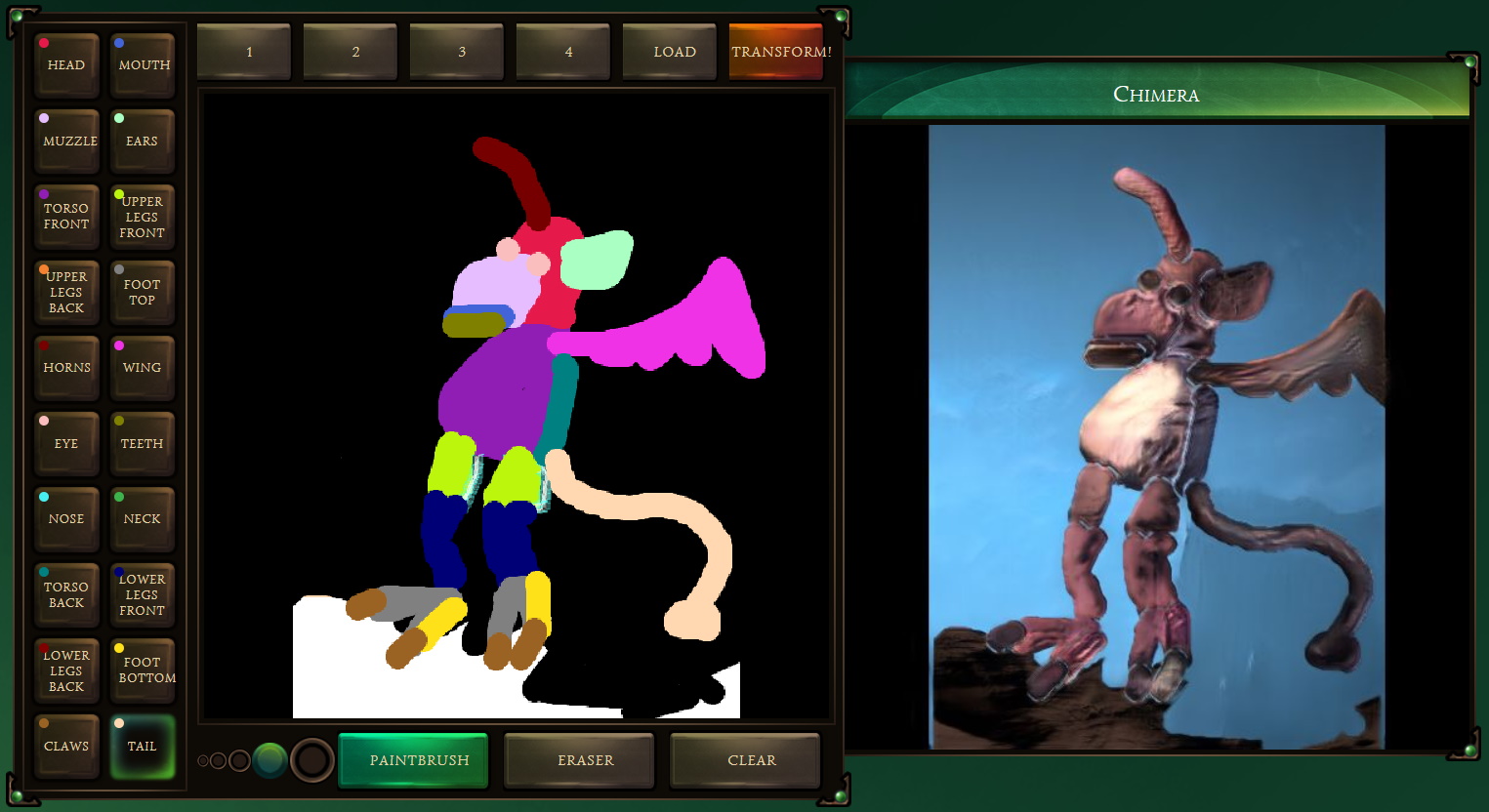
It's the next generation of GauGAN!
And remember my friend, future events such as these will affect you in the future
Re: Synthetic Media & Deepfakes News and Discussions
What.
And remember my friend, future events such as these will affect you in the future
Re: Synthetic Media & Deepfakes News and Discussions
OKAY!
SO. REMEMBER ON THE ORIGINAL FORUM the inciting post I made for this thread's first version about how AI would one day be able to generate video games?
We're in the early days of just that.
And remember my friend, future events such as these will affect you in the future
Re: Synthetic Media & Deepfakes News and Discussions
And remember my friend, future events such as these will affect you in the future
Re: Synthetic Media & Deepfakes News and Discussions
Voice AI is scary good now. Video game actors hate it.
Fans of the game were stoked to have a new, albeit unofficial addition to The Witcher 3 to play. Voice actors and some other observers, however, were less than thrilled. You see, A Night to Remember not only features new content, it features new voice lines. Specifically, the modder used AI trained on voice actor Doug Cockle’s speech to generate brand new voice lines for Geralt, the character he portrays.
“If this is true, this is just heartbreaking,” tweeted Jay Britton, a voice actor with credits in Divinity: Original Sin 2 and Pathfinder. “Yes, AI might be able to replace things but should it? We literally get to decide. Replacing actors with AI is not only a legal minefield but an utterly soulless choice.”
And remember my friend, future events such as these will affect you in the future
Re: Synthetic Media & Deepfakes News and Discussions
FitVid: Overfitting in Pixel-Level Video Prediction


An agent that is capable of predicting what happens next can perform a variety of tasks through planning with no additional training. Furthermore, such an agent can internally represent the complex dynamics of the real-world and therefore can acquire a representation useful for a variety of visual perception tasks. This makes predicting the future frames of a video, conditioned on the observed past and potentially future actions, an interesting task which remains exceptionally challenging despite many recent advances. Existing video prediction models have shown promising results on simple narrow benchmarks but they generate low quality predictions on real-life datasets with more complicated dynamics or broader domain.
There is a growing body of evidence that underfitting on the training data is one of the primary causes for the low quality predictions. In this paper, we argue that the inefficient use of parameters in the current video models is the main reason for underfitting. Therefore, we introduce a new architecture, named FitVid, which is capable of severe overfitting on the common benchmarks while having similar parameter count as the current state-of-the-art models. We analyze the consequences of overfitting, illustrating how it can produce unexpected outcomes such as generating high quality output by repeating the training data, and how it can be mitigated using existing image augmentation techniques. As a result, FitVid outperforms the current state-of-the-art models across four different video prediction benchmarks on four different metrics.
And remember my friend, future events such as these will affect you in the future
Re: Synthetic Media & Deepfakes News and Discussions
And remember my friend, future events such as these will affect you in the future
Re: Synthetic Media & Deepfakes News and Discussions
And remember my friend, future events such as these will affect you in the future
Re: Synthetic Media & Deepfakes News and Discussions
And remember my friend, future events such as these will affect you in the future
Re: Synthetic Media & Deepfakes News and Discussions
This TikTok Lawsuit Is Highlighting How AI Is Screwing Over Voice Actors
Voice actors are rallying behind Bev Standing, who is alleging that TikTok acquired and replicated her voice using AI without her knowledge
Voice actors are rallying behind Bev Standing, who is alleging that TikTok acquired and replicated her voice using AI without her knowledge
With only 30 minutes of audio, companies can now create a digital clone of your voice and make it say words you never said.
Using machine learning, voice AI companies like VocaliD can create synthetic voices from a person's recorded speech—adopting unique qualities like speaking rhythm, pronunciation of consonants and vowels, and intonation.
For tech companies, the ability to generate any sentence with a realistic-sounding human voice is an exciting, cost-saving frontier. But for the voice actors whose recordings form the foundation of text-to-speech (TTS) voices, this technology threatens to disrupt their livelihoods, raising questions about fair compensation and human agency in the age of AI.
At the center of this reckoning is voice actress Bev Standing, who is suing TikTok after alleging the company used her voice for its text-to-speech feature without compensation or consent. This is not the first case like this; voice actress Susan Bennett discovered that audio she recorded for another company was repurposed to be the voice of Siri after Apple launched the feature in 2011. She was paid for the initial recording session but not for being Siri. Rallying behind Standing, voice actors donated to a GoFundMe that has raised nearly $7,000 towards her legal expenses and posted TikTok videos under the #StandingWithBev hashtag warning users about the feature.
Standing's supporters say the TikTok lawsuit is not just about Standing's voice—it's about the future of an entire industry attempting to adapt to new advancements in the field of machine learning.
And remember my friend, future events such as these will affect you in the future
Re: Synthetic Media & Deepfakes News and Discussions
AI voice actors sound more human than ever—and they’re ready to hire
A new wave of startups are using deep learning to build synthetic voice actors for digital assistants, video-game characters, and corporate videos
A new wave of startups are using deep learning to build synthetic voice actors for digital assistants, video-game characters, and corporate videos
The company blog post drips with the enthusiasm of a ’90s US infomercial. WellSaid Labs describes what clients can expect from its “eight new digital voice actors!” Tobin is “energetic and insightful.” Paige is “poised and expressive.” Ava is “polished, self-assured, and professional.”
Each one is based on a real voice actor, whose likeness (with consent) has been preserved using AI. Companies can now license these voices to say whatever they need. They simply feed some text into the voice engine, and out will spool a crisp audio clip of a natural-sounding performance.
WellSaid Labs, a Seattle-based startup that spun out of the research nonprofit Allen Institute of Artificial Intelligence, is the latest firm offering AI voices to clients. For now, it specializes in voices for corporate e-learning videos. Other startups make voices for digital assistants, call center operators, and even video-game characters.
Not too long ago, such deepfake voices had something of a lousy reputation for their use in scam calls and internet trickery. But their improving quality has since piqued the interest of a growing number of companies. Recent breakthroughs in deep learning have made it possible to replicate many of the subtleties of human speech. These voices pause and breathe in all the right places. They can change their style or emotion. You can spot the trick if they speak for too long, but in short audio clips, some have become indistinguishable from humans.
And remember my friend, future events such as these will affect you in the future
Re: Synthetic Media & Deepfakes News and Discussions
AI Generated Art Scene Explodes as Hackers Create Groundbreaking New Tools
I'm pleased that AI-generated art is taking off.
Over the last few months, an AI-generated art scene has exploded as hackers have been modifying an OpenAI model to make astonishing image generation tools.
All you have to do to guide these systems is to prompt them with the image you want. For example, you might prompt them with the text: ‘a fantasy world.’ With that prompt, the author of this article generated the image that you see above.
The crisp, coherent, and high-resolution quality of the images that these tools create differentiate them from AI art tools that have come before. The tools are highly iterative—in the video below, you can see the generation of an image based on the words “a man being tortured to death by a demon.”
I'm pleased that AI-generated art is taking off.
And remember my friend, future events such as these will affect you in the future
Re: Synthetic Media & Deepfakes News and Discussions
And remember my friend, future events such as these will affect you in the future
Re: Synthetic Media & Deepfakes News and Discussions
New Anthony Bourdain documentary deepfakes his voice
‘We can have a documentary-ethics panel about it later’
‘We can have a documentary-ethics panel about it later’
In a new documentary, Roadrunner, about the life and tragic death of Anthony Bourdain, there are a few lines of dialogue in Bourdain’s voice that he might not have ever said out loud.
Filmmaker Morgan Neville used AI technology to digitally re-create Anthony Bourdain’s voice and have the software synthesize the audio of three quotes from the late chef and television host, Neville told the New Yorker.
The deepfaked voice was discovered when the New Yorker’s Helen Rosner asked how the filmmaker got a clip of Bourdain’s voice reading an email he had sent to a friend. Neville said he had contacted an AI company and supplied it with a dozen hours of Bourdain speaking.
“ ... and my life is sort of shit now. You are successful, and I am successful, and I’m wondering: Are you happy?” Bourdain wrote in an email, and an AI algorithm later narrated an approximation of his voice.
You can hear the line in the documentary’s trailer linked below, right around the 1:30 mark. The algorithm’s generation of Bourdain’s voice is especially audible when it says, “and I am successful.”
And remember my friend, future events such as these will affect you in the future
Re: Synthetic Media & Deepfakes News and Discussions
And remember my friend, future events such as these will affect you in the future
Re: Synthetic Media & Deepfakes News and Discussions
And remember my friend, future events such as these will affect you in the future
Re: Synthetic Media & Deepfakes News and Discussions
And remember my friend, future events such as these will affect you in the future
Re: Synthetic Media & Deepfakes News and Discussions
How Fake News Could Lead to Real War
2019 article. Advances in AI could lead to fake video and other media leading to war. It can also cause people not to trust *real* evidence when they see it, which also can be disastrous.Who really bombed the oil tankers in the Gulf of Oman three weeks ago? Was it Iran, as the Trump administration assured us? Or was it Saudi Arabia, the United Arab Emirates or Israel—or some combination of the three?
Here’s a confession from two former senior government officials: For days after the attacks, we weren’t sure. Both of us believed in all sincerity there was a good chance these actions were part of a false flag operation, an effort by outsiders to trigger a war between the United States and Iran. Even the film of Iranians hauling in an unexploded limpet mine from near the side of tanker, we reasoned, might be a fabrication—deep fake footage just like the clip of House Speaker Nancy Pelosi staggering around drunkenly.
Perhaps you felt that way too. But for the two of us, with 30 years of government service and almost 20 more as think tankers between us, this was shocking. Yes, we are card-carrying members of the "Blob," the all-too-conventionally minded Washington foreign policy establishment, but we weren’t sure whether to believe our government.
This was more than a little disconcerting. Imagine waking up one morning and catching yourself thinking that alt-right conspiracy theorist Alex Jones was making good sense, that perhaps the Sandy Hook shooting was faked or that the 9/11 attacks were really an inside job? Imagine what it might be like to be in the grip of a conspiracy theory, when you’ve spent your whole professional life being one of those policy mandarins who could smell a conspiracy theory a mile away?
And we weren’t alone.
And remember my friend, future events such as these will affect you in the future