Physics News and Discussions

weatheriscool
Posts: 24503
Joined: Sun May 16, 2021 6:16 pm
Contact:

Re: Physics News and Discussions

Post by weatheriscool »

Quantum sensor can detect electromagnetic signals of any frequency
https://phys.org/news/2022-06-quantum-s ... uency.html
by David L. Chandler, Massachusetts Institute of Technology
Quantum sensors, which detect the most minute variations in magnetic or electrical fields, have enabled precision measurements in materials science and fundamental physics. But these sensors have only been capable of detecting a few specific frequencies of these fields, limiting their usefulness. Now, researchers at MIT have developed a method to enable such sensors to detect any arbitrary frequency, with no loss of their ability to measure nanometer-scale features.

The new method, for which the team has already applied for patent protection, is described in the journal Physical Review X, in a paper by graduate student Guoqing Wang, professor of nuclear science and engineering and of physics Paola Cappellaro, and four others at MIT and Lincoln Laboratory.

Quantum sensors can take many forms; they're essentially systems in which some particles are in such a delicately balanced state that they are affected by even tiny variations in the fields they are exposed to. These can take the form of neutral atoms, trapped ions, and solid-state spins, and research using such sensors has grown rapidly. For example, physicists use them to investigate exotic states of matter, including so-called time crystals and topological phases, while other researchers use them to characterize practical devices such as experimental quantum memory or computation devices. But many other phenomena of interest span a much broader frequency range than today's quantum sensors can detect.

weatheriscool
Posts: 24503
Joined: Sun May 16, 2021 6:16 pm
Contact:

Re: Physics News and Discussions

Post by weatheriscool »

Chicago Quantum Exchange takes first steps toward a future that could revolutionize computing and medicine

by Robert McCoppin
https://phys.org/news/2022-06-chicago-q ... onize.html
Flashes of what may become a transformative new technology are coursing through a network of optic fibers under Chicago.

Researchers have created one of the world's largest networks for sharing quantum information—a field of science that depends on paradoxes so strange that Albert Einstein didn't believe them.

The network, which connects the University of Chicago with Argonne National Laboratory in Lemont, is a rudimentary version of what scientists hope someday to become the internet of the future. For now, it's opened up to businesses and researchers to test fundamentals of quantum information sharing.

The network was announced this week by the Chicago Quantum Exchange—which also involves Fermi National Accelerator Laboratory, Northwestern University, the University of Illinois and the University of Wisconsin.
weatheriscool
Posts: 24503
Joined: Sun May 16, 2021 6:16 pm
Contact:

Re: Physics News and Discussions

Post by weatheriscool »

Physicists reinvestigate nuclear excitation by electron capture using isomer beam
https://phys.org/news/2022-06-physicist ... pture.html
by Zhang Nannan, Chinese Academy of Sciences
A "dark" environment was created at the Radioactive Ion Beam Line in Lanzhou (RIBLL), China, to look for a faint flash of light as evidence of isomer depletion. Such depletion is required to harness nuclear energy stored in long-lived isomeric states through the process of nuclear excitation by electron capture (NEEC).

However, in this independent experiment, evidence of isomer depletion was not observed. Results were published in Physical Review Letters on June 17, with the NEEC probability measured at less than 2×10⁻⁵, thus casting doubt on the first reported experimental observation of NEEC in 2018.

Several million electron volts can be stored in one atomic nucleus. Therefore, long-lived isomers with high excitation energies are considered to be ideal energy storage materials, with high energy density, long storage periods, and excellent stability.

Nevertheless, artificially controlling the energy release process is a great challenge. Scientific consensus expects the rapid release of isomeric energy to be achieved by isomer depletion, that is, by exciting the isomer to an adjacent excited state that decays to the ground state immediately. Scientists have proposed several methods, among which NEEC has attracted particular attention.
weatheriscool
Posts: 24503
Joined: Sun May 16, 2021 6:16 pm
Contact:

Re: Physics News and Discussions

Post by weatheriscool »

Study identifies a tidal disruption event that coincides with the production of a high-energy neutrino
https://phys.org/news/2022-06-tidal-dis ... ction.html
by Ingrid Fadelli , Phys.org
High-energy neutrinos are highly fascinating subatomic particles produced when very fast charged particles collide with other particles or photons. IceCube, a renowned neutrino detector located at the South Pole, has been detecting extragalactic high-energy neutrinos for almost a decade.

While many physicists have examined the observations gathered by the IceCube detector, the origin of most of the high-energy neutrinos it detected has not yet been determined. These neutrinos were detected beyond our galaxy and could result from various cosmological events.

Researchers at Deutsches Elektronen Synchrotron DESY, Humboldt-Universität zu Berlin and other academic institutes in Europe and the U.S. have recently carried out a study focusing on a specific violent cosmological event, which is referred to as AT2019fdr. Their paper, published in Physical Review Letters, shows that this event could be the origin of a high-energy neutrino.

"Our team has been conducting a systematic study for 3 years, where we used the optical survey telescope of the Zwicky Transient Facility (ZTF) to scan the sky region of each new high-energy neutrino that we can observe," Simeon Reusch, one of the researchers who carried out the study, told Phys.org. "Our recent paper examines a possible source for one of these neutrinos, a huge optical outburst in a very distant galaxy, which has been called AT2019fdr."
weatheriscool
Posts: 24503
Joined: Sun May 16, 2021 6:16 pm
Contact:

Re: Physics News and Discussions

Post by weatheriscool »

Keeping the energy in the room
https://phys.org/news/2022-07-energy-room.html
by Harrison Tasoff, University of California - Santa Barbara

It may seem like technology advances year after year, as if by magic. But behind every incremental improvement and breakthrough revolution is a team of scientists and engineers hard at work.

UC Santa Barbara Professor Ben Mazin is developing precision optical sensors for telescopes and observatories. In a paper published in Physical Review Letters, he and his team improved the spectra resolution of their superconducting sensor, a major step in their ultimate goal: analyzing the composition of exoplanets.

"We were able to roughly double the spectral resolving power of our detectors," said first author Nicholas Zobrist, a doctoral student in the Mazin Lab.

"This is the largest energy resolution increase we've ever seen," added Mazin. "It opens up a whole new pathway to science goals that we couldn't achieve before."

The Mazin lab works with a type of sensor called an MKID. Most light detectors—like the CMOS sensor in a phone camera—are semiconductors based on silicon. These operate via the photo-electric effect: a photon strikes the sensor, knocking off an electron that can then be detected as a signal suitable for processing by a microprocessor.
weatheriscool
Posts: 24503
Joined: Sun May 16, 2021 6:16 pm
Contact:

Re: Physics News and Discussions

Post by weatheriscool »

Large Hadron Collider revs up to unprecedented energy level
https://phys.org/news/2022-07-large-had ... ented.html
by Pierre CELERIER
The world's largest and most powerful particle collider started back up in April after a three-year break.

Ten years after it discovered the Higgs boson, the Large Hadron Collider is about to start smashing protons together at unprecedented energy levels in its quest to reveal more secrets about how the universe works.

The world's largest and most powerful particle collider started back up in April after a three-year break for upgrades in preparation for its third run.

From Tuesday it will run around the clock for nearly four years at a record energy of 13.6 trillion electronvolts, the European Organization for Nuclear Research (CERN) announced at a press briefing last week.

It will send two beams of protons—particles in the nucleus of an atom—in opposite directions at nearly the speed of light around a 27-kilometer (17-mile) ring buried 100 meters under the Swiss-French border.

The resulting collisions will be recorded and analyzed by thousands of scientists as part of a raft of experiments, including ATLAS, CMS, ALICE and LHCb, which will use the enhanced power to probe dark matter, dark energy and other fundamental mysteries.
weatheriscool
Posts: 24503
Joined: Sun May 16, 2021 6:16 pm
Contact:

Re: Physics News and Discussions

Post by weatheriscool »

ATLAS and CMS release results of most comprehensive studies yet of Higgs boson's properties
https://phys.org/news/2022-07-atlas-cms ... higgs.html
by CERN
Today, exactly ten years after announcing the discovery of the Higgs boson, the international ATLAS and CMS collaborations at the Large Hadron Collider (LHC) report the results of their most comprehensive studies yet of the properties of this unique particle. The independent studies, described in two papers published today in Nature, show that the particle's properties are remarkably consistent with those of the Higgs boson predicted by the Standard Model of particle physics. The studies also show that the particle is increasingly becoming a powerful means to search for new, unknown phenomena that—if found—could help shed light on some of the biggest mysteries of physics, such as the nature of the mysterious dark matter present in the universe.

The Higgs boson is the particle manifestation of an all-pervading quantum field, known as the Higgs field, that is fundamental to describe the universe as we know it. Without this field, elementary particles such as the quark constituents of the protons and neutrons of atomic nuclei, as well as the electrons that surround the nuclei, would not have mass, and nor would the heavy particles (W bosons) that carry the charged weak force, which initiates the nuclear reaction that powers the Sun.
User avatar
wjfox
Site Admin
Posts: 13588
Joined: Sat May 15, 2021 6:09 pm
Location: Essex, UK
Contact:

Re: Physics News and Discussions

Post by wjfox »

User avatar
caltrek
Posts: 9282
Joined: Mon May 17, 2021 1:17 pm

Re: Physics News and Discussions

Post by caltrek »

Large Hadron Collider Finds Evidence of 3 Never-Before-Seen Particles
by Alan Boyle
July 6, 2022

Introduction:
(Science Alert) Physicists say they've found evidence in data from Europe's Large Hadron Collider for three never-before-seen combinations of quarks, just as the world's largest particle-smasher is beginning a new round of high-energy experiments.

The three exotic types of particles – which include two four-quark combinations, known as tetraquarks, plus a five-quark unit called a pentaquark – are totally consistent with the Standard Model, the decades-old theory that describes the structure of atoms.

In contrast, scientists hope that the LHC's current run will turn up evidence of physics that goes beyond the Standard Model to explain the nature of mysterious phenomena such as dark matter. Such evidence could point to new arrays of subatomic particles, or even extra dimensions in our Universe.

The LHC had been shut down for three years to upgrade its systems to handle unprecedented energy levels. That shutdown ended in April, and since then, scientists and engineers at the CERN research center on the French-Swiss border have been getting ready for today's resumption of scientific operations.

CERN's control center was abuzz as the LHC began its third run of data collection and analysis.
Read more here: https://www.sciencealert.com/large-had ... particles
Don't mourn, organize.

-Joe Hill
weatheriscool
Posts: 24503
Joined: Sun May 16, 2021 6:16 pm
Contact:

Re: Physics News and Discussions

Post by weatheriscool »

Study sets new constraints on dark photons using a new dielectric optical haloscope

by Ingrid Fadelli , Phys.org
https://phys.org/news/2022-07-constrain ... tical.html
Researchers at the National Institute of Standards and Technology (NIST), Massachusetts Institute of Technology (MIT) and the Perimeter Institute recently set new constraints on dark photons, which are hypothetical particles and renowned dark matter candidates. Their findings, presented in a paper published in Physical Review Letters, were attained using a new superconducting nanowire single-photon detector (SNSPD) they developed.

"There's a close collaboration between our research groups at NIST and MIT, run by Dr. Sae Woo Nam and Prof. Karl Berggren, respectively" Jeff Chiles, one of the researchers who carried out the study, told Phys.org. "We work together to advance the technology and applications for ultra-sensitive devices called superconducting nanowire single-photon detectors or SNSPDs. "

Over the past few years, Chiles and his colleagues have been considering potential applications that would benefit from the SNSPD detectors they have been working on, which have virtually no background noise among other advantageous characteristics. They were eventually introduced to a group of theoretical physicists from the Perimeter Institute for Theoretical Physics in Canada.
weatheriscool
Posts: 24503
Joined: Sun May 16, 2021 6:16 pm
Contact:

Re: Physics News and Discussions

Post by weatheriscool »

Scientists invent 'quantum flute' that can make particles of light move together
https://phys.org/news/2022-07-scientist ... icles.html
By Louise Lerner, University of Chicago

University of Chicago physicists have invented a "quantum flute" that, like the Pied Piper, can coerce particles of light to move together in a way that's never been seen before.

Described in two studies published in Physical Review Letters and Nature Physics, the breakthrough could point the way towards realizing quantum memories or new forms of error correction in quantum computers, and observing quantum phenomena that cannot be seen in nature.

Assoc. Prof. David Schuster's lab works on quantum bits—the quantum equivalent of a computer bit—which tap the strange properties of particles at the atomic and sub-atomic level to do things that are otherwise impossible. In this experiment, they were working with particles of light, known as photons, in the microwave spectrum.
weatheriscool
Posts: 24503
Joined: Sun May 16, 2021 6:16 pm
Contact:

Re: Physics News and Discussions

Post by weatheriscool »

Mathematical calculations show that quantum communication across interstellar space should be possible
https://phys.org/news/2022-07-mathemati ... space.html
by Bob Yirka , Phys.org
A team of physicists at the University of Edinburgh's School of Physics and Astronomy has used mathematical calculations to show that quantum communications across interstellar space should be possible. In their paper published in the journal Physical Review D, the group describes their calculations and also the possibility of extraterrestrial beings attempting to communicate with us using such signaling.

Over the past several years, scientists have been investigating the possibility of using quantum communications as a highly secure form of message transmission. Prior research has shown that it would be nearly impossible to intercept such messages without detection. In this new effort, the researchers wondered if similar types of communications might be possible across interstellar space. To find out, they used math that describes that movement of X-rays across a medium, such as those that travel between the stars. More specifically, they looked to see if their calculations could show the degree of decoherence that might occur during such a journey.

With quantum communications, engineers are faced with quantum particles that lose some or all of their unique characteristics as they interact with obstructions in their path—they have been found to be quite delicate, in fact. Such events are known as decoherence, and engineers working to build quantum networks have been devising ways to overcome the problem. Prior research has shown that the space between the stars is pretty clean. But is it clean enough for quantum communications? The math shows that it is. Space is so clean, in fact, that X-ray photons could travel hundreds of thousands of light years without becoming subject to decoherence—and that includes gravitational interference from astrophysical bodies. They noted in their work that optical and microwave bands would work equally well.
weatheriscool
Posts: 24503
Joined: Sun May 16, 2021 6:16 pm
Contact:

Re: Physics News and Discussions

Post by weatheriscool »

Researchers achieve record entanglement of quantum memories

by Ludwig Maximilian University of Munich
https://phys.org/news/2022-07-entanglem ... ories.html
A network in which data transmission is perfectly secure against hacking? If physicists have their way, this will become reality one day with the help of the quantum mechanical phenomenon known as entanglement. For entangled particles, the rule is: If you measure the state of one of the particles, then you automatically know the state of the other. It makes no difference how far away the entangled particles are from each other. This is an ideal state of affairs for transmitting information over long distances in a way that renders eavesdropping impossible.

A team led by physicists Prof. Harald Weinfurter from LMU and Prof. Christoph Becher from Saarland University have now coupled two atomic quantum memories over a 33-kilometer-long fiber optic connection. This is the longest distance so far that anyone has ever managed entanglement via a telecom fiber.

The quantum mechanical entanglement is mediated via photons emitted by the two quantum memories. A decisive step was the researchers' shifting of the wavelength of the emitted light particles to a value that is used for conventional telecommunications. "By doing this, we were able to significantly reduce the loss of photons and create entangled quantum memories even over long distances of fiber optic cable," says Weinfurter.
weatheriscool
Posts: 24503
Joined: Sun May 16, 2021 6:16 pm
Contact:

Re: Physics News and Discussions

Post by weatheriscool »

The LHCb experiment leads to the observation of an exotic tetraquark
https://phys.org/news/2022-07-lhcb-exot ... quark.html
by Ingrid Fadelli , Phys.org
Over the course of the 20th century, physicists have discovered numerous elementary particles. The largest family of these particles are the so-called hadrons, subatomic particles that take part in strong interactions.

This broad family of particles contains numerous sub-sets of particles with similar properties. In 1964, M. Gell-Mann and G. Zweig introduced a renowned theory known as the "Quark Model," which clearly outlined the internal structure of hadrons.

The Quark Model suggests that hadrons consist of either three quarks (baryons) or quark-antiquark pairs (mesons). While many uncovered hadrons fall into one of these two categories, the model also hypothesizes the existence of hadrons with more complex structures, such as pentaquarks (i.e., four quarks and an antiquark) and tetraquarks (i.e., two quark-antiquark pairs).

Many studies in the 1970s theorized about the possible mechanisms underpinning the formation of these complex hadron structures. All the hadrons uncovered up until 2003 had structures that match one of the two main types described by the Quark Model, yet some of the particles observed after that date are difficult to explain using the model.
weatheriscool
Posts: 24503
Joined: Sun May 16, 2021 6:16 pm
Contact:

Re: Physics News and Discussions

Post by weatheriscool »

Researchers record successful startup of dark matter detector at underground research facility
https://phys.org/news/2022-07-successfu ... round.html
by William Schultz, Lawrence Berkeley National Laboratory

Deep below the Black Hills of South Dakota in the Sanford Underground Research Facility (SURF), an innovative and uniquely sensitive dark matter detector—the LUX-ZEPLIN (LZ) experiment, led by Lawrence Berkeley National Lab (Berkeley Lab)—has passed a check-out phase of startup operations and delivered first results.

The take-home message from this successful startup: "We're ready and everything's looking good," said Berkeley Lab senior physicist and past LZ spokesperson Kevin Lesko. "It's a complex detector with many parts to it and they are all functioning well within expectations," he said.

In a paper posted online today on the experiment's website, LZ researchers report that with the initial run, LZ is already the world's most sensitive dark matter detector. The paper will appear on the online preprint archive arXiv.org later today. LZ spokesperson Hugh Lippincott of the University of California Santa Barbara said, "We plan to collect about 20 times more data in the coming years, so we're only getting started. There's a lot of science to do and it's very exciting."
weatheriscool
Posts: 24503
Joined: Sun May 16, 2021 6:16 pm
Contact:

Re: Physics News and Discussions

Post by weatheriscool »

Shining a light on dark matter one particle at a time
https://phys.org/news/2022-07-dark-particle.html
by Crispin Savage, University of Adelaide

University of Adelaide experts are trying to unlock the secrets of dark matter, which makes up 84% of the matter in the universe, but we know little about it. Researchers are using a new tool that could signal the existence of a new particle.

"We are trying to solve the problem of understanding one of the grand challenges facing modern science—how to find what type of particle dark matter is composed of," said Professor Anthony Thomas, Elder Professor of Physics, University of Adelaide.

"Dark matter is five times more plentiful than the visible matter that physicists have explored so successfully and of which we are composed.

"We do not know what kind of particle makes up dark matter but we, along with a very large number of people around the world, want to understand this."

Professor Thomas is one of the team at the ARC Center of Excellence for Dark Matter Particle Physics which aims to discover more about this mysterious substance.
weatheriscool
Posts: 24503
Joined: Sun May 16, 2021 6:16 pm
Contact:

Re: Physics News and Discussions

Post by weatheriscool »

Using thermodynamic geometry to optimize microscopic finite-time heat engines
https://phys.org/news/2022-07-thermodyn ... -time.html
by Ingrid Fadelli , Phys.org

Image
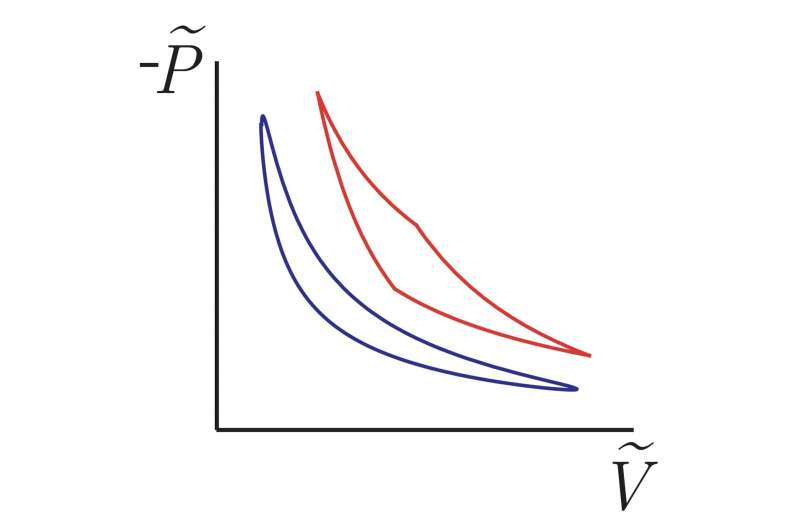
Stochastic thermodynamics is an emerging area of physics aimed at better understanding and interpreting thermodynamic concepts away from equilibrium. Over the past few years, findings in these fields have revolutionized the general understanding of different thermodynamic processes operating in finite time.

Adam Frim and Mike DeWeese, two researchers at the University of California, Berkeley (UC Berkeley), have recently carried out a theoretical study exploring the full space of thermodynamic cycles with a continuously changing bath temperature. Their results, presented in a paper published in Physical Review Letters, were obtained using geometric methods. Thermodynamic geometry is an approach to understanding the response of thermodynamic systems by means of studying the geometric space of control.

"For instance, for a gas in a piston, one coordinate in this space of control could correspond to the experimentally controlled volume of the gas and another to the temperature," DeWeese told Phys.org. "If an experimentalist were to turn those knobs, that plots out some trajectory in this thermodynamic space. What thermodynamic geometry does is assign to each curve a 'thermodynamic length' corresponding to the minimum possible dissipated energy of a given path."
Last edited by weatheriscool on Fri Jul 15, 2022 6:59 am, edited 1 time in total.
weatheriscool
Posts: 24503
Joined: Sun May 16, 2021 6:16 pm
Contact:

Re: Physics News and Discussions

Post by weatheriscool »

New technique allows physicists to study interactions of neutrons inside of an atom
https://phys.org/news/2022-07-technique ... -atom.html
by Bob Yirka , Phys.org
Image
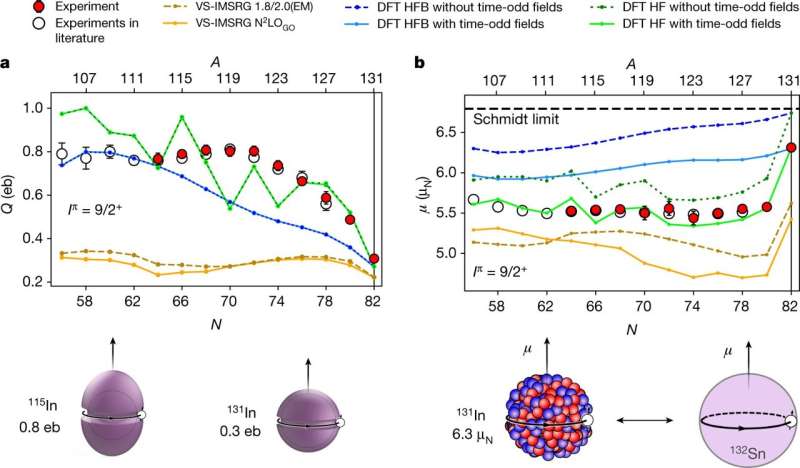
An international team of physicists has developed a new technique that allows researchers to study the interactions between neutrons inside of an atom. In their paper published in the journal Nature, the group describe their laser spectroscopy measurement technique and how it can be used.

It has been nearly 100 years since scientists discovered that inside of every atom are protons—which give atoms their atomic number—as well as neutrons. And despite much study of subatomic particles, scientists still do not know what sorts of interactions go on inside of an atom. In this new effort, the researchers modified laser spectroscopy measurement techniques to study such interactions.

In this new work, the researchers began by looking at elements with a magic number—those that have highly stable protons and neutrons—and wound up using indium-131, which has a magic number of neutrons, and also a proton hole, in which a nuclide has one fewer proton than a traditional magic number element. Indium-131 is, unfortunately, also notoriously unstable, which means that it only exists for a short time before breaking down—it tends to last for just 0.28 seconds.
Last edited by weatheriscool on Fri Jul 15, 2022 6:58 am, edited 1 time in total.
weatheriscool
Posts: 24503
Joined: Sun May 16, 2021 6:16 pm
Contact:

Re: Physics News and Discussions

Post by weatheriscool »

Researchers learn to control electron spin at room temperature to make devices more efficient and faster
https://phys.org/news/2022-07-electron- ... cient.html
by Katie Malatino, Rensselaer Polytechnic Institute
Image
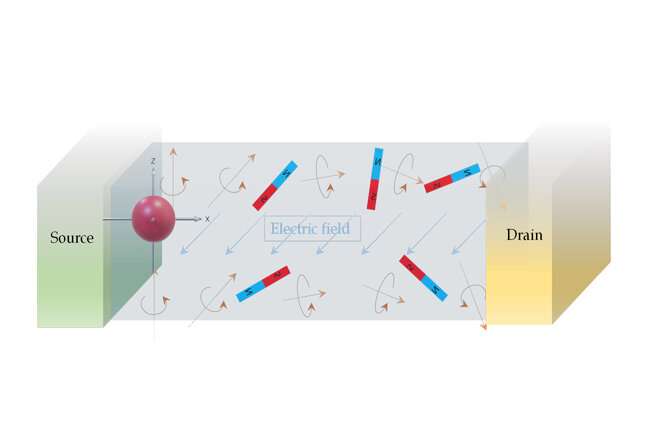
As our devices become smaller, faster, more energy efficient, and capable of holding larger amounts of data, spintronics may continue that trajectory. Whereas electronics is based on the flow of electrons, spintronics is based on the spin of electrons.

An electron has a spin degree of freedom, meaning that it not only holds a charge but also acts like a little magnet. In spintronics, a key task is to use an electric field to control electron spin and rotate the north pole of the magnet in any given direction.

The spintronic field effect transistor harnesses the so-called Rashba or Dresselhaus spin-orbit coupling effect, which suggests that one can control electron spin by electric field. Although the method holds promise for efficient and high-speed computing, certain challenges must be overcome before the technology reaches its true, miniature but powerful, and eco-friendly, potential.
weatheriscool
Posts: 24503
Joined: Sun May 16, 2021 6:16 pm
Contact:

Re: Physics News and Discussions

Post by weatheriscool »

A primary standard for measuring vacuum

by National Institute of Standards and Technology
https://phys.org/news/2022-07-primary-s ... acuum.html
A novel, quantum-based vacuum gauge system invented by researchers at the National Institute of Standards and Technology (NIST) has passed its first test to be a true primary standard—that is, intrinsically accurate without the need for calibration.

Precision pressure measurement is of urgent interest to semiconductor fabricators who make their chips layer by layer in vacuum chambers operating at or below one hundred-billionth the pressure of air at sea level and must rigorously control that environment to ensure product quality.

"The next generations of semiconductor manufacturing, quantum technologies, and particle acceleration-type experiments will all require exquisite vacuum and the ability to measure it accurately," said NIST senior project scientist Stephen Eckel.

Today, most commercial and research facilities use conventional high-vacuum sensors based on electrical current detected when rarefied gas molecules in a chamber are ionized (electrically charged) by an electron source. These ionization gauges can become unreliable over time and require periodic re-calibration. And they are not compatible with the new worldwide effort to base the International System of Units (SI) on fundamental, invariant constants and quantum phenomena.
Post Reply