(Vox) The seeds of this story were planted in a steaming pile of elephant dung somewhere in the African savanna. Elephants love to stuff their faces with fruit, and fruit trees like marulas need a way to spread their seeds, so the two species have developed an intimate and symbiotic relationship. A single African savanna elephant is capable of dumping seeds up to 65 kilometers (40 miles) from the site of its feast, making them the most impressive seed transporters in the animal kingdom.
It may not be a luxurious form of travel — via digestive tract, that is — but for roughly half of all plants, animals are a way to branch out over great distances. They can ride in the stomach of a tusked mammal, the pincers of an insect, or on the fur of your dog. Some seeds even hitch rides with multiple animals before arriving at their final destination.
Movement is essential to survival, especially in a changing climate. As plants are scorched by heatwaves and battered by extreme rainfall, their best shot at avoiding extinction can be to spread to new areas where the climate still fits their needs. Research suggests that some plant populations may need to travel kilometers a year to remain in the same conditions in which they evolved — a phenomenon known as “climate tracking.”
But this strategy has a major drawback: It rides on wildlife, and wildlife is disappearing around the world. That means many plants are losing their mode of transportation, according to a new study published in the journal Science, leaving them stranded in areas that are becoming less hospitable to their kind and at a greater risk of dying out.
The ongoing decline of wildlife could also trigger a frightening feedback loop: If some tree and plant species wither because they can no longer hitch a ride on wildlife, that could worsen climate change, which makes it harder for both plants and animals to survive.
Arsenic has been leaching into the lake from tailings at the abandoned Long Lake Gold Mine, which operated intermittently until 1937 and produced approximately 200,000 metric tons of tailings, discharged directly to the environment without containment.
Now a team of researchers from the University of Waterloo has shown that a passive form of remediation that uses common waste materials can remove virtually all of the arsenic from samples of the lake water. Their results are published in the Journal of Hazardous Materials.
The scientists found that mixing wood chips, leaf mulch, and iron filings (left over from manufacturing car engines) with limestone creates conditions that encourage bacteria to grow. The bacteria pull the arsenic from the water by converting it to a solid form that is essentially trapped within the waste material filter.
(Land Trust Alliance) Land trusts have already conserved 61 million acres of private land across the nation — more than all of the national parks combined. Help us conserve another 60 million acres by the end of the decade.
A land trust is a nonprofit that conserves land by acquiring and stewarding land or conservation easements.
Land Trust Alliance members commit to adopting Land Trust Standards and Practices as their guiding principles.
Accredited land trusts undergo a thorough review of their practices in governance, finance, transactions and stewardship.
The link provided above the quote box is to a site that provides all sorts of additional facts and statistics concerning land trusts in the Unitid States.
(Packard Foundation) A sustainable future requires protecting our environment while building thriving local economies. Small-scale, or smallholder, farmers and communities who depend on the natural resources of tropical forests have the power to protect the planet’s resources and contribute to sustainable development in rural communities. The Packard Foundation’s Agriculture, Livelihoods, and Conservation (ALC) grantmaking strategy aims to support tropical forest communities in strengthening resilience and economic opportunities while protecting tropical forests and biodiversity. We believe that conservation and development goals in tropical regions can be most effectively achieved through policies and actions that support smallholder farmer livelihoods and community wellbeing, combined with effective regional planning and natural resource management that engages local communities who know the forests best. This work builds upon the Foundation’s grantmaking experience in climate, land use, and reproductive health.
A well networked community of actors and advocates is necessary to influence policymakers and development and conservation decision makers at local, national, and global levels. To support knowledge sharing and networking efforts, the Packard Foundation’s Agriculture Livelihoods and Conservation (ALC) program is issuing a targeted request for proposals for projects, organizations, and collaboratives that strengthen relationships among individuals and institutions aiming to improve the livelihoods of smallholder farmers and/or forest dependent communities while also conserving forest resources in tropical forest areas.
ALC will support new or existing projects, organizations, and coalitions that address the needs of smallholder farmers and or/forest dependent communities and tropical forest conservation and whose core objectives include relationship building and knowledge sharing. Applicants must be headquartered in one of the following countries: Brazil, Cambodia, Colombia, Guatemala, Indonesia, Laos, Papua New Guinea, Paraguay, Peru, Philippines. Organizations and coalitions that are led by women, young people, and Indigenous people are strongly encouraged to apply.
(Mother Jones) At first glance, there’s nothing remarkable about Mexico’s tequila splitfin fish. Only two and a half inches long, the fish aren’t colorful or poisonous. They aren’t particularly fast. They don’t change colors or exhibit other strange behaviors. In many ways, they are forgettable. So when the fish, endemic to only a single spring-fed river near the Tequila volcano in the Mexican state of Jalisco, went extinct from the wild in 2003, there was no international outcry or even an article in a local newspaper to bid the fish adieu.
But scientists at Michoacán University’s Aquatic Biology Unit knew the tequila fish, as it is commonly called, played an important role in the river’s delicate ecosystem—eating dengue-spreading mosquitoes and serving as a food source for larger fish and birds. When it became clear the fish were dying off in the 1990s, an international team of scientists joined forces to save the fish. After the fish went extinct in 2003, the team would attempt something that had never been done before in Mexico—reintroduce an extinct species back into its native habitat. Now, almost two decades on, a thriving population of tequila fish, some 2,000 strong, once again call the Teuchitlán River home, swimming in the crystalline waters in the shadow of the tree-covered hillside.
The ambitious conservation translocation project began in 1998 when English aquarist Ivan Dibble arrived at Michoacán University with some very precious cargo—five pairs of tequila fish from England’s Chester Zoo. No one knows exactly why the tequila fish went extinct in the wild, but it was likely a combination of pollution and invasive species moving in, according to scientists at the zoo. In captivity, scientists could provide a controlled environment for the fish.
For 15 years, biologists at Michoacán University cared for the tequila fish. “At the beginning, all these people said we were crazy,” says biologist Omar Domínguez, who worked on the project. While reintroduction programs have been done successfully elsewhere, this was the first time scientists attempted such a project in Mexico. If the project failed, Dominguez worried, “all the people [would] say, ‘okay, it’s impossible to reintroduce fish.’”
(Courthouse News) — A Ninth Circuit panel ruled Tuesday a lower court erred when it declined to stop several logging operations in a portion of a California national forest that is home to the endangered fisher, a small weasel-like mammal that displays agility and climbing prowess.
A three-judge panel issued ruled a lower court should have granted a preliminary injunction to wildlife advocacy groups dedicated to the conservation and recovery of the Pacific fisher in the Sierra Nevada mountains, where their populations have diminished due to hunting, logging and other forms of habitat encroachment.
“We agree that the denial of injunction was premature as to the fisher population and should not stand at this time,” the panel wrote in a terse 8-page decision. .
Unite the Parks, the plaintiffs in the case, claimed that the U.S. Forest Service should not have allowed the logging projects in the Sierra National Forest and the Sequoia National Forest where Pacific fishers roam, because they had incomplete data at the time when they made the decision.
Namely, wildlife groups say the Forest Service failed to account for a new population account that was performed after the devastating wildfire seasons that may have even further reduced the population levels of the vulnerable animal.
Surprisingly, two of the judges on the panel are Trump appointees.
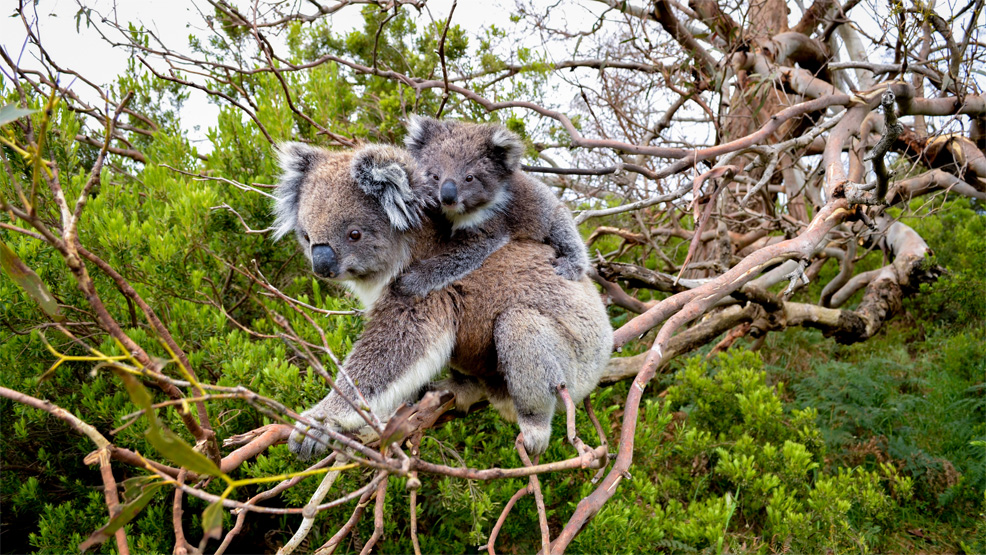
The Australian government has changed the conservation status of the koala from vulnerable to endangered, due to its rapidly shrinking habitats and climate change.
[...]
Estimates of their exact numbers vary considerably, but the Australian government has just published a new detailed analysis, showing the rapid and ongoing decline of koala populations in Eastern Australia. Following the disastrous wildfires of 2019–2020, they have now dipped below 100,000 to approximately 92,000 and are projected to fall by another third in this region during the next decade, possibly reaching 63,000 by 2032.
(Investigate Midwest) Before approving new pesticides for use on crops or around homes, the Environmental Protection Agency (EPA) is supposed to determine what impact they'll have on endangered species. But, for decades, usually the only way to ensure the agency would start the process was to sue. can endanger federally species.
In January, however, the EPA announced it plans to assess whether new pesticides will harm plants and animals protected by the Endangered Species Act. If it finds the products do, in fact, endanger protected species, the agency said it would prevent the harm.
Essentially, the agency said — for the first time — it will take a systematic approach to regulating pesticides' harmful effects instead of being forced to comply one-by-one by different lawsuits. The new approach only applies to new pesticides, not ones already on the market.
"Before (the) announcement," the EPA said in its statement, "in most cases, EPA did not consistently assess the potential effects of conventional pesticides on listed species. This resulted in insufficient protections for listed species, as well as resource-intensive litigation against EPA for registering new (pesticides) prior to assessing potential effects on listed species."
It’s a sign of progress, said Brett Hartl, government affairs director for the Center for Biological Diversity, which has repeatedly sued the EPA over its enforcement of the Endangered Species Act.
(Courthouse News) — A coalition of wildlife advocacy organizations filed a petition with the U.S. Fish and Wildlife Service on Thursday, requesting the agency consider whether the hippopotamus should be added to the endangered species list.
There are no hippopotamuses in North America, but advocates argue the wildlife trade around hippo parts, which includes their prized ivory tusks, would be greatly diminished if the species were added to the list.
“Hippos are being needlessly slaughtered for commercial trade and trophy hunting,” said Adam Peyman, director of wildlife programs for Humane Society International. “As the leading importer of hippo parts, the United States should be ashamed of the role they play in the decline of this iconic species. If we don’t protect them now, hippos may disappear forever.”
The United States has imported more hippo parts, which include teeth, tusks, leather products made from the animal’s skins and other forms of trophy, than any other country on the globe, the advocates say.
Humane Society International says import records kept by federal agencies indicate that a little more than 3,000 hippos have been slaughtered as part of the legal wildlife trade program in the United States over the course of the last decade.
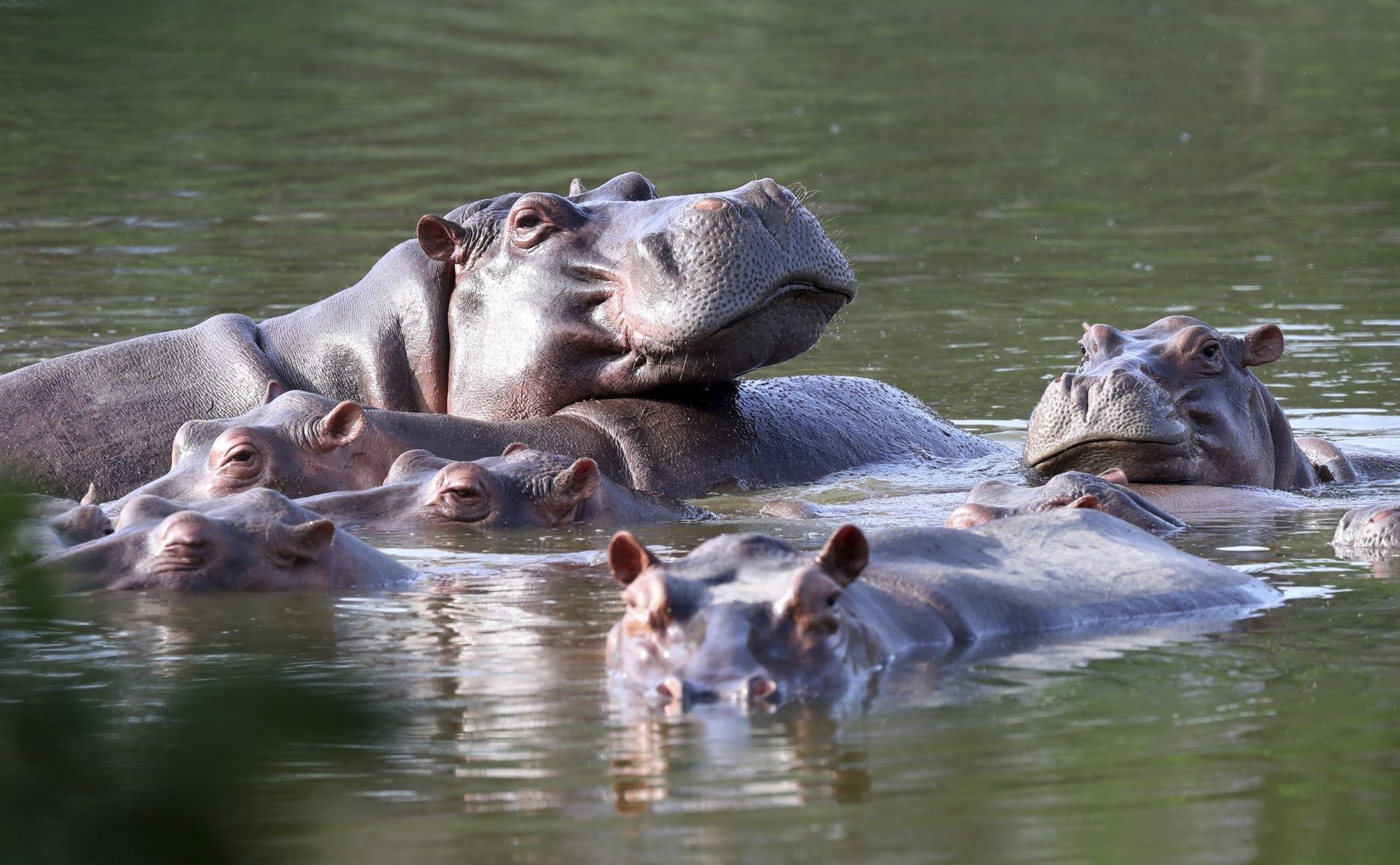
Hippos float in the lake at Hacienda Napoles Park, once the private estate of drug kingpin Pablo Escobar who imported three female hippos and one male decades ago, in Puerto Triunfo, Colombia, Thursday, Feb. 4, 2021. AP Photo/Fernando Vergara
(EurekAlert) Climate and land use changes are major threats to biodiversity. As the nation looks for solutions, a fundamental examination of our approach to conservation planning becomes essential, prompting the latest collaborative research from the University of Tennessee. The research team have been awarded a $650,000 grant to develop a dynamic solution that addresses uncertainties inherent with conservation planning.
The National Climate Task Force recently revealed a conservation strategy for achieving the goal of protecting 30% of the nation’s lands and waters by 2030, also known as the 30×30 goal that was announced last year by President Joe Biden. Conservation objectives such as these highlight the pressing need to improve our ability to forecast likely shifts in specie ranges and to identify types of species and areas to target for protection.
Drawing on lessons learned from managing portfolios of financial assets, the project team will build conservation portfolios to manage climate change risk. Specifically, researchers will address previous limitations by creating a dynamic series of portfolios of target sites for biodiversity conservation over time.
The responsive portfolios can accommodate updated information, providing conservation agencies with opportunities to update and adjust conservation plans accordingly. Further, the dynamic framework is easily adaptable for use in other regions to determine where and when to target a variety of forest-based ecosystems, such as conservation of carbon storage, nutrient cycling and mitigation of water and air pollution.
“When people consider conservation planning, they tend to think more about where to protect. However, as much as where to focus is important, the question of when to invest needs to be taken into account,” said Seong-Hoon Cho, lead researcher and professor in the Department of Agricultural and Resource Economics. “The project builds around this idea and further highlights how conservation programs can integrate risk diversification as they confront an era of change and uncertainty. We are hoping the outcome of the project offers conservation agencies a novel series of portfolios for conservation over time that is adaptable to future uncertainties based on updated information, with opportunities to revisit the initial planning.”
At least hundreds of so-far unidentified species of mammals are hiding in plain sight around the world, a new study suggests.
Researchers found that most of these hidden mammals are small bodied, many of them bats, rodents, shrews, and moles.
These unknown mammals are hidden in plain sight partly because most are small and look so much like known animals that biologists have not been able to recognize they are actually a different species, said study co-author Bryan Carstens, a professor of evolution, ecology and organismal biology at The Ohio State University.
"Small, subtle differences in appearance are harder to notice when you're looking at a tiny animal that weighs 10 grams than when you're looking at something that is human-sized," Carstens said.
(Science) In early March, Naomi Owens-Beek sat bundled against the cold, as her sled whizzed through the snow in the mountains of central British Columbia. In her hands, she clutched precious cargo: a sedated caribou—one of 114 of a herd facing extinction.
The caribou—a female belonging to the Klinse-Za herd—and 18 others will spend 5 months in a mountain enclosure known as the maternal pen. Here, they’ll be safe from wolves, bears, and other predators as the pregnant cows give birth and begin to rear their calves. The work is part of an unusual, costly, and labor-intensive experiment led by two First Nations to bring one of Canada’s many dwindling caribou herds back from the brink.
New research suggests it’s working. Since 2013, the Klinse-Za herd has tripled in size.
The results point to what it could take to revive the fortunes of ailing caribou elsewhere on the continent—some of the last herds of large, migratory mammals in the Americas (also known as reindeer). The work is not for the faint of heart. It has included killing hundreds of wolves, expensive coddling of pregnant caribou cows, and hard-won protections for land in mountainous central British Columbia covering an area larger than the state of Delaware.
The lesson is that “it takes all the levers to recover caribou,” says Rob Serrouya, a caribou biologist with the Alberta Biodiversity Monitoring Institute. He has worked for years on caribou recovery in British Columbia but was not part of the Klinse-Za research.
Nevada toad declared endangered at site of geothermal plant
Source: AP
By SCOTT SONNER
RENO, Nev. (AP) — In a rare emergency move, the U.S government temporarily declared a northern Nevada toad endangered Monday, saying a geothermal power plant in the works could result in its extinction.
The Fish and Wildlife Service announced it is formally proposing a rule to list the Dixie Valley toad as an endangered species subject to 60 days of public comment under the Endangered Species Act’s normal rulemaking process.
But it said the emergency listing goes into effect immediately and will continue for eight months while more permanent protections are considered for the toad at the only place it is known to exist in the world.
It marks only the second time in 20 years the service has listed a species as endangered on an emergency basis.
Scotland’s forests are the largest they have been for 900 years
8 April 2022
A quiet revolution is taking place north of the river Tweed. Scotland’s forests are expanding at breakneck speed: the share of Scotland that is forested has increased from just under 6 per cent a century ago, to around 18 per cent today. The country now has nearly as much forest as it did 1,000 years ago, according to data from researchers at Our World in Data.
[...]
The Scottish government has a target for 21 per cent forest cover by 2032. The rewilding and climate movements mean that reforestation is now wildly popular: some 80 per cent of Scottish people supported the reforestation of the Highlands in a 2021 survey.
(University of Plymouth via EurekAlert) Scientists have published a series of recommendations to enable communities and managers to minimise the impact of lionfish in the Mediterranean Sea.
The invasive species was first noticed off the coast of the Lebanon in 2012, with sightings since recorded as far west as Sicily, and north into the Adriatic Sea off Croatia.
More entered in 2015 due to the enlargement and deepening of the Suez Canal, with their spread unimpeded due to a lack of common predators.
Researchers in the UK and Cyprus have said increasing lionfish densities – combined with the species’ generalist diet and consumption of ecologically and socio-economically important fish – has the potential to result in further disruption of an already stressed marine environment.
They have now published a Guide to Lionfish Management in the Mediterranean, which features a series of recommendations through which they hope lionfish populations can be managed.
(Penosoft Publishers via EurekAlert) Over the last century, emerging diseases have progressively been recognised by the scientific community as the main threat to forest ecosystems. With increasing international trade and globalisation, the introduction of non-native species into new environments has exacerbated the problems of emerging pests and diseases worldwide. Additionally, other factors, such as climate change, further complicate matters by altering host-pathogen interactions, thus promoting the spread of diseases caused by native or non-native pathogens.
In this complex context, the EU-funded research project HOMED (HOlistic Management of Emerging forest pests and Diseases, grant agreement No. 771271) is dedicated to developing evidence-based policy recommendations that ensure the effective prevention, detection, identification, eradication, containment or control of emerging pests and diseases. As part of this effort, the project has a collection of policy briefs, specifically addressing policy-makers, and presenting them with well-defined insights, guidelines and possible solutions for different risks related to invasive forest pests and pathogens in Europe. HOMED’s collection of policy briefs has recently doubled in size, thanks to the publication of briefs number four, five and six.
Conclusion:
With these three new policy briefs, HOMED now has six briefs available on its website (see linked article to find this link to the referenced website), providing policy- and decision-makers with practical and comprehensive insights on how to employ innovative solutions in order to manage potential risks of emerging or invasive forest pests and pathogens in Europe.
(Common Dreams) Environmental campaigners on Tuesday cautiously embraced the Biden administration's historic new blueprint to guard endangered species from pesticides as a much-needed step forward while also calling for more concrete moves to protect wildlife, people, and the planet.
Welcoming the Environmental Protection Agency's "first-ever comprehensive workplan" on the topic, Center for Biological Diversity environmental health director Lori Ann Burd said in a statement that "I'm encouraged that the EPA has finally acknowledged the massive problem it created by refusing, for decades, to consider the impacts of chemical poisons on our most vulnerable plants and animals."
"The agency's refusal to consider how pesticides affect endangered species has pushed countless species closer to extinction," Burd continued. "I'm hopeful the EPA will back up its words with concrete actions to fix these historic wrongs and move quickly to implement real, on-the-ground protections to stop species from going extinct and finally protect our incredible wildlife and plants from pesticides."
(Science Alert) Researchers at the University of Wisconsin–Madison developed the maps at a fine-enough resolution to help conservation managers focus their efforts where they are most likely to help birds — in individual counties or forests, rather than across whole states or regions.
The maps span the contiguous U.S. and predict the diversity of birds that live in a given area, related by traits such as nesting on the ground or being endangered. Those predictions are based on both detailed observations of birds and environmental factors that affect bird ranges, such as the degree of forest cover or temperature in an area.
"With these maps, managers have a tool they didn’t have before that allows them to get both a broad perspective as well as information at the level of detail that’s necessary for their action plans," says Anna Pidgeon, a professor of forest and wildlife ecology at UW–Madison who helped lead the development of the maps.
Pidgeon worked with UW–Madison professor Volker Radeloff, postdoctoral researcher and lead author Kathleen Carroll and others to publish the research and the final maps April 11 in the journal Ecological Applications. The maps are available for public download from the open-access website Dryad.
Abstract:
(Dryad) Human activities alter ecosystems everywhere, causing rapid biodiversity loss and biotic homogenization. These losses necessitate coordinated conservation actions guided by biodiversity and species distribution spatial data that cover large areas yet have fine-enough resolution to be management-relevant (i.e., ≤ 5 km). However, most biodiversity products are too coarse for management or are only available for small areas. Furthermore, many maps generated for biodiversity assessment and conservation do not explicitly quantify the inherent tradeoff between resolution and accuracy when predicting biodiversity patterns. Our goals were to 1) generate predictive models of overall breeding bird species richness and species richness of different guilds based on nine functional or life history-based traits across the conterminous US at three resolutions (0.5, 2.5, and 5 km), and 2) quantify the tradeoff between resolution and accuracy, and hence relevance for management, of the resulting biodiversity maps. We summarized eighteen years of North American Breeding Bird Survey data (1992-2019) and modeled species richness using random forests, including 66 predictor variables (describing climate, vegetation, geomorphology, and anthropogenic conditions), 20 of which we newly derived. Among the three spatial resolutions, the percent variance explained ranged from 27% to 60% (median = 54%; mean = 57%) for overall species richness and 12% to 87% (median = 61%; mean = 58%) for our different guilds. Overall species richness and guild-specific species richness were best explained at 5-km resolution using approximately 24 predictor variables based on percent variance explained, symmetric mean absolute percentage error, and root mean squared error values. However, our 2.5-km resolution maps were almost as accurate and provided more spatially detailed information, which is why we recommend them for most management applications. Our results represent the first consistent, occurrence-based, and nationwide maps of breeding bird richness with a thorough accuracy assessment that are also spatially detailed enough to inform local management decisions. More broadly, our findings highlight the importance of explicitly considering tradeoffs between resolution and accuracy to create management-relevant biodiversity products for large areas.
(EurekAlert) Scientific names get chosen for lots of reasons-- they can honor an important person, or hint at what an organism looks like or where it’s from. For a tropical wildflower first described by scientists in 2000, the scientific name “extinctus” was a warning. The orange wildflower had been found 15 years earlier in an Ecuadorian forest that had since been largely destroyed; the scientists who named it suspected that by the time they named it, it was already extinct. But in a new paper in PhytoKeys, researchers report the first confirmed sightings of Gasteranthus extinctus in 40 years.
“Extinctus was given its striking name in light of the extensive deforestation in western Ecuador,” says Dawson White, a postdoctoral researcher at Chicago’s Field Museum and co-lead author of the paper. “But if you claim something's gone, then no one is really going to go out and look for it anymore. There are still a lot of important species that are still out there, even though overall, we're in this age of extinction.”
The rediscovered plant is a small forest floor-dweller with flamboyant neon-orange flowers. “The genus name, Gasteranthus, is Greek for ‘belly flower.’ Their flowers have a big pouch on the underside with a little opening top where pollinators can enter and exit,” says White.
G. extinctus is found in the foothills of the Andes mountains, where the land flattens to a plane that was once covered in cloud forest. The region, called the Centinela Ridge, is notorious among biologists for being home to a unique set of plants that vanished when its forests were almost completely destroyed in the 1980s. The late biologist E. O. Wilson even named the phenomenon of organisms instantly going extinct when their small habitat is destroyed “Centinelan extinction.”
The story of Centinela was also an alarm to draw attention to the fact that over 97% of the forests in the western half of Ecuador have been felled and converted to farmland. What remains is a fine mosaic of tiny islands of forest within a sea of bananas and a handful of other crops.