New wind turbines could be cost-competitive with fossil fuels – even without subsidies 5th December 2012 Wind power could soon be cost-competitive with traditional fossil fuels, even without government subsidies. General Electric (GE), Virginia Tech and the National Renewable Energy Laboratory will begin work on a project that could fundamentally change how wind blades are designed, manufactured and installed.
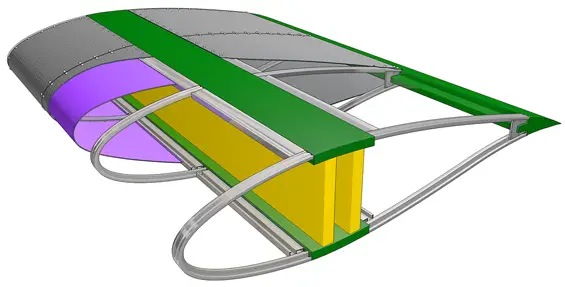
Most of the electricity costs for wind are tied up in the initial capital investments made in the wind turbines themselves. New technology advancements that reduce these costs could substantially lower the overall cost of wind energy. “GE’s weaving an advanced wind blade that could be the fabric of our clean energy future,” said Wendy Lin, a GE Principal Engineer and leader on the U.S. Department of Energy’s Advanced Research Projects Agency (ARPA-E) project. “The fabric we’re developing will be tough, flexible, and easier to assemble and maintain. It represents a clear path to making wind even more cost competitive with fossil fuels.” According to GE, this new blade design could reduce blade costs by 25%-40%, making wind energy as economical as fossil fuels without government subsidies. GE’s research will focus on the use of architectural fabrics, which would be wrapped around a metal spaceframe, resembling a fishbone. Fabric would be tensioned around ribs which run the length of the blade and specially designed to meet the demands of wind blade operations.
Conventional wind blades are constructed out of fibreglass, which is heavier and more labour and time-intensive to manufacture. Advances in blade technology will help spur the development of larger, lighter turbines that can capture more wind at lower wind speeds. Current technology doesn’t easily allow for construction of turbines that have rotor diameters exceeding 120 metres because of design, manufacturing, assembly and transportation constraints. Wider, longer wind blades are tougher to move and manoeuvre, and molds which form the clamshell fiberglass structure cost millions of dollars to acquire. GE’s new fabric-based technology would eliminate these barriers. With this new approach to making wind blades, components could be built and assembled on site, meaning design engineers no longer have to concern themselves with manufacturing and transportation limitations. Taken together, these improvements will help reduce start-up costs and the cost of wind-generated electric in general. It’s estimated that to achieve the national goal of 20% wind power in the U.S., wind blades would need to grow by 50% – a figure that would be virtually impossible to realise given the size constraints imposed by current technology. Lighter fabric blades could make this goal attainable. “Developing larger wind blades is the key to expanding wind energy into areas we wouldn’t think of today as suitable for harvesting wind power. Tapping into moderate wind speed markets – in places like the Midwest – will only help grow the industry in the years to come,” Lin went on to say. The use of fabrics to reduce weight and provide a cost-effective cover dates back to the World War I era, when it was used on airplanes. Over the years, fabric has proved to be rugged and reliable and GE has already begun using this spaceframe/tension fabric design in the construction of wind towers for better aesthetics, cost, and protection. The $5.6M ARPA-E project will span three years. GE’s blade architecture will be built to achieve a 20 year lifespan, with no regular maintenance to tension fabrics required.
Comments »
|