![[+]](https://www.futuretimeline.net/images/buttons/expand-symbol.gif)
|
|
|
|
|
|
2048-2058
Glacier volume in the Everest region has declined by half
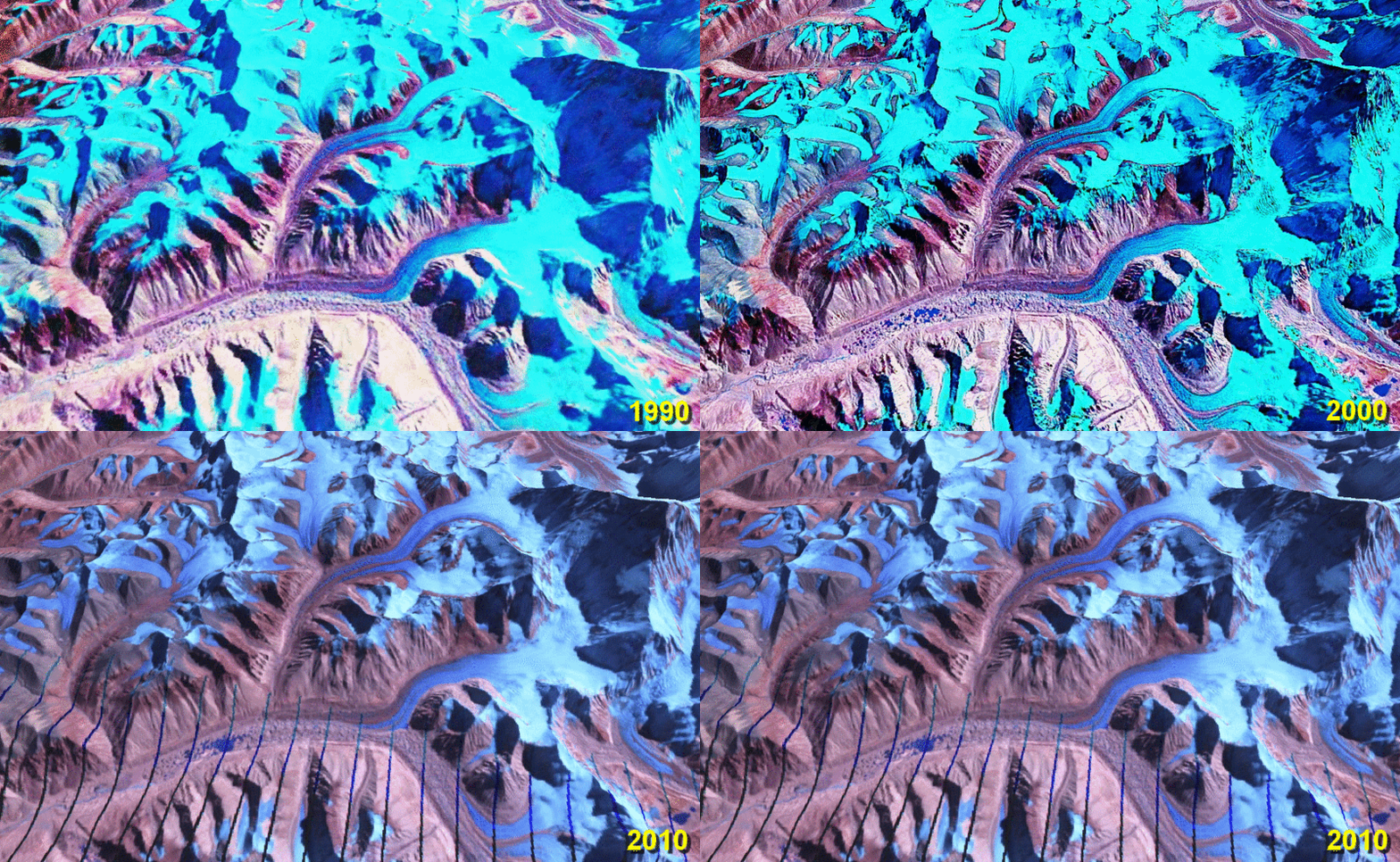
At some point during this period (2048-2058), glacier volume in the Mount Everest region falls below 50% of its 2015 level.* The Earth had continued to warm in recent decades and High Mountain Asia – an area that included the Himalayas – was especially sensitive to temperature changes. The glaciers here contained the largest volume of ice outside the polar regions. With global temperatures now 2°C (3.6°F) higher than the pre-industrial average,* melting rates by mid-century have accelerated. In addition to more rapid ice loss, precipitation has changed from snow to rain at critical elevations where glaciers are concentrated. This has acted to reduce glacier growth and increase the areas exposed to melt.
The resulting changes in glacier volume have major impacts on the availability of water for local populations. Initially, the increased melting results in greater flows of water – but the ongoing retreat leads to a decline in warmer months before the monsoon, when rainfall is scarce. Another effect is the formation and growth of temporary lakes dammed by glacial debris. Avalanches and earthquakes can breach these dams, causing catastrophic floods in the basins downstream, with river flows 100 times greater than normal.
This has serious consequences for agriculture and hydroelectric power generation. Of particular concern is the effect on Pakistan and its relationship with neighbouring India,* both dependent on the glacier-fed water resources of the Himalayas. Tensions between the nuclear-armed countries are escalating markedly during this time,* as the water crisis deepens, made worse by ongoing population growth and ever-increasing demand.
A key aspect of these changes has been a steady increase in the freezing level, the elevation where mean monthly temperatures are 0°C. As of 2015, this varied between 3200m in January and 5500m in August. If global average temperatures were to continue rising, the potential increase in height of the freezing level was 800-1200m by 2100, causing a glacier volume loss of between 70% and 99%. However, massive geoengineering projects are perfected in the second half of the century* that will stabilise and eventually reduce the warming.
2048
The Antarctic Treaty comes up for review
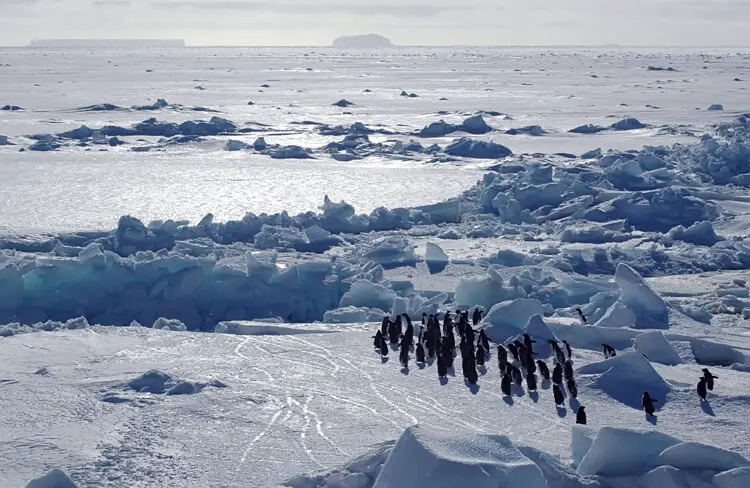
Antarctica is the last remaining unspoilt wilderness; untouched by the massive industrialisation common everywhere else on the planet. It covers an area of 13.7 million sq km (5.3 million sq miles) and is covered by an ice sheet 4 km (2.5 miles) deep. It has no human inhabitants, other than a small number of scientists in research stations.
The vast, icy continent is governed by the terms of the Antarctic Treaty, which came into effect in 1961. This was signed by Argentina, Australia, Chile, France, New Zealand, Norway, the UK, Belgium, Japan, South Africa, the USA and Russia. The first seven of these countries have historic claims to the continent (none of which are generally recognised) and the Treaty preserves the status quo, neither recognising nor repudiating the old claims, but forbidding their expansion in any way. The terms of the Treaty also forbid the assertion of new claims.
The discovery of a hole in the ozone layer, and other concerns, led to the addition of a new environmental protocol agreed in 1991. This entered force in 1998. It was intended to protect Antarctica's environment and ecosystems, and included a total ban on the exploitation of mineral and energy resources, as well as strict regulation of pollution and other damaging activities. The protocol is open for review in 2048, exactly 50 years after it was implemented.*
Much has changed in the last half century. Earth's population is over 50% larger, placing a substantial drain on the Earth's resources which has become alarmingly obvious by now. Metal and mineral supplies continue to be an issue, even with large-scale recycling systems in place.* Despite objections from environmentalists, there is general consensus among the international community that some limited exploitation of Antarctica should be permitted within certain specially controlled areas. Over the next few years, a new treaty is drawn up with modified clauses, though disputes continue over territorial boundaries.
There are significant logistical challenges to mining and mineral extraction in the region – such as the isolation, extreme cold, rough seas and thick ice sheet. However, new technologies look set to mitigate these problems, including the use of robots, heavy automation and alternative methods of drilling. In addition, climate change and the melting of ice is making it possible to exploit some previously inaccessible areas of the western ice sheet.
© Staphy | Dreamstime.com
King crabs are infesting Antarctic marine ecosystems
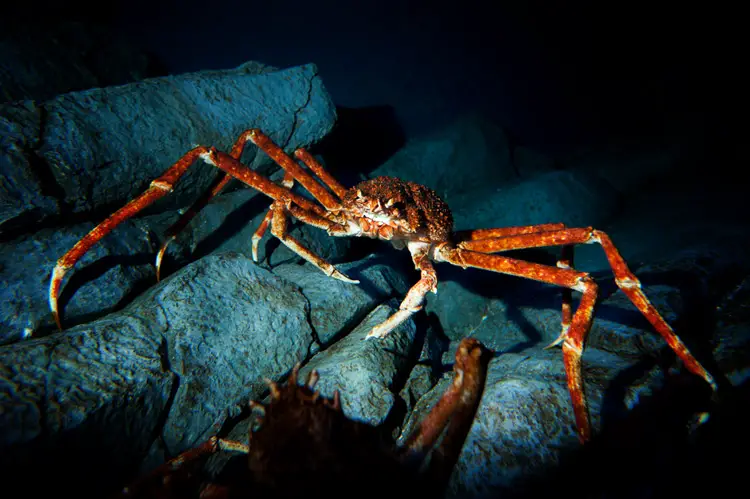
In addition to humanity's increased presence resulting from the Antarctica Treaty review described above, certain animal species have also begun to move into and exploit the continent due to changing environmental conditions. King crabs are one such species. For tens of millions of years, icy cold waters had excluded shell-crushing fish and crustaceans from the continental shelf surrounding Antarctica. Rapid warming has now allowed predatory crustaceans to return. From the 1950s to the 2010s, the west coast of the Antarctic Peninsula witnessed a 3.2°C temperature rise – several times the global average. This allowed king crabs to move up the outer shelf, into shallower waters just 200 metres in depth. By the middle of the 21st century,* they are infesting many coastal areas along the Western Antarctic Peninsula. This is causing severe disruption to the food chain, with catastrophic consequences for unique seafloor communities in the region.*
Leukaemia mortality falls below 1 per 100,000 in developed countries
By 2048, leukaemia has become a rare cause of death in developed countries.* The age-standardised mortality rate – once above 5 per 100,000 in the 1960s – had already fallen to under 3 by the early 2020s. It has now dropped below 1 for the first time, marking one of the most important milestones in the long fight against blood cancer.
Leukaemia is not a single disease, but a group of cancers that begin in blood-forming tissues, especially the bone marrow. They cause the body to produce excessive numbers of abnormal white blood cells, disrupting immunity and crowding out healthy blood cells. In the early 21st century, leukaemia remained a major medical challenge. Globally, it caused more than 305,000 deaths in 2022, representing 3% of all cancer-related deaths worldwide, and was notable for being the most common cancer in children. Although survival had improved over the decades, outcomes varied greatly by subtype and age, with older adults still facing particularly poor prospects.
This complexity made leukaemia harder to defeat than some solid tumours. Acute forms could progress within weeks, while chronic forms often evolved slowly and then later transformed into a more aggressive type. Some patients responded well to chemotherapy, stem cell transplantation, targeted therapies, or immunotherapy, but relapses could occur, especially if small numbers of leukaemia cells survived treatment, escaped detection as minimal residual disease, or acquired resistance.
Overcoming these problems became a major focus of research during the 2020s and 2030s. Targeted therapies expanded beyond the earlier generations of tyrosine kinase inhibitors, which helped switch off faulty growth signals in leukaemia cells, and BCL-2 inhibitors, which made cancer cells more likely to die by removing one of their survival mechanisms. Early examples in chronic lymphocytic leukaemia had already shown how blood cancers could begin moving beyond chemotherapy, with combinations of targeted drugs providing better tolerated and increasingly personalised treatment. Other approaches also gained ground: CAR-T cell therapy reprogrammed a patient's immune cells to recognise and attack cancer; bispecific antibodies helped immune cells lock onto leukaemia cells; and antibody-drug conjugates delivered toxic drugs directly to malignant cells while sparing healthy tissue. These treatments moved beyond last-resort use for relapsed disease and into earlier lines of therapy. Researchers worked to overcome resistance and extend these approaches to harder subtypes, such as acute myeloid leukaemia.
By the late 2040s, diagnosis has become vastly more sensitive. Liquid biopsies, single-cell sequencing, and AI-assisted blood monitoring now detect high-risk blood cell clones long before they would once have produced symptoms. Instead of waiting for full disease, clinicians increasingly intercept pre-leukaemic states, reducing or eliminating dangerous cell populations before they develop into life-threatening cancer. For high-risk patients, gene-editing tools now correct inherited vulnerabilities and, in some cases, repair or replace haematopoietic stem cells carrying dangerous acquired mutations. Safer stem cell replacement procedures also reduce, and in some cases eliminate, the need for harsh pre-transplant conditioning regimens. These had once relied on high-dose chemotherapy or radiotherapy, carrying major risks of infection, bleeding, and long-term damage.
The result has been a transformation in survival. Childhood leukaemias, already among the great success stories of 20th-century and early 21st-century oncology, are now curable in the overwhelming majority of cases. Adult leukaemias, historically more difficult because of age, frailty, and genetic complexity, are increasingly controlled before they become aggressive. Relapses still occur, and some subtypes remain dangerous, but most are now detected far sooner and treated with much greater precision.
Leukaemia has not yet disappeared. It remains a stubborn and biologically diverse set of diseases, with rare resistant cases continuing to test clinicians. However, its decline below 1 death per 100,000 marks the beginning of the end. In developed countries, leukaemia is no longer a common killer, but a shrinking frontier of cancer medicine.

« 2047 |
⇡ Back to top ⇡ |
2049 » |
If you enjoy our content, please consider sharing it:
References
1 Modelling glacier change in the Everest region, Nepal Himalaya, The Cryosphere:
http://www.the-cryosphere.net/9/1105/2015/tc-9-1105-2015.html
Accessed 16th June 2015.
2 See 2049.
3 Indus Waters Treaty, Wikipedia:
https://en.wikipedia.org/wiki/Indus_Waters_Treaty
Accessed 16th June 2015.
4 Climate Wars: The Fight for Survival as the World Overheats, by Gwynne Dyer:
http://www.amazon.com/Climate-Wars-Fight-Survival-Overheats/dp/1851688145
Accessed 16th June 2015.
5 See 2060-2100.
6 Protocol on Environmental Protection to the Antarctic Treaty, Wikipedia:
http://en.wikipedia.org/wiki/Protocol_on_Environmental_Protection_to_the_Antarctic_Treaty
Accessed 8th August 2010.
7 5 Valuable Metals That Could Vanish by 2055, Scribol:
http://scribol.com/environment/waste-and-recycling/5-valuable-metals-that-could-vanish-by-2055/
Accessed
31st December 2017.
8 No barrier to emergence of bathyal king crabs on the Antarctic shelf, PNAS:
http://www.pnas.org/content/early/2015/09/24/1513962112.long
Accessed 7th October 2015.
9 King crabs threaten Antarctic ecosystem due to warming ocean, Science Daily:
http://www.sciencedaily.com/releases/2015/09/150928155847.htm
Accessed 7th October 2015.
10 Extrapolated from the following dataset, and based on a Gompertz trend.
Age-standardized rate (World) per 100 000, mortality, both sexes, Australia + Austria + Canada + France (metropolitan) + Greece + Hungary + Ireland + Italy + Japan + The Netherlands + Singapore + Spain + Switzerland, United Kingdom, USA – Leukaemia, Cancer Over Time:
https://gco.iarc.fr/overtime/en/dataviz/trends
Accessed 18th May 2026.