
![[+]](https://www.futuretimeline.net/images/buttons/expand-symbol.gif)
|
|
|
|
|
|
2022
The first exascale computer is deployed
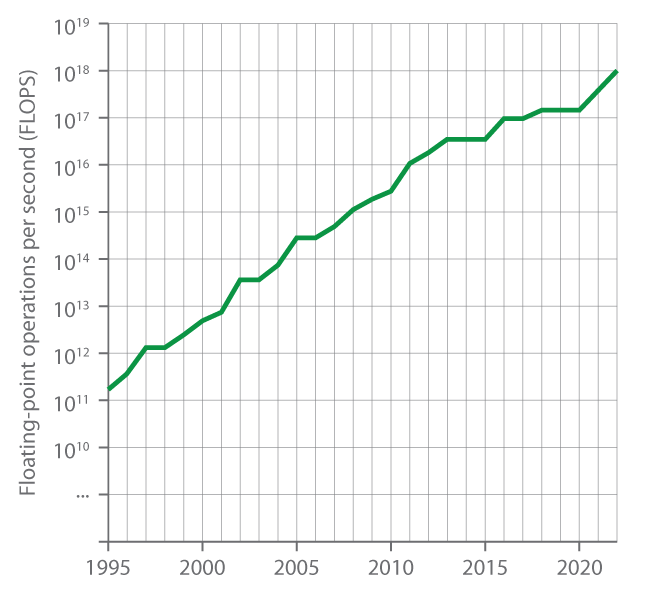
An exaFLOP is 1,000,000,000,000,000,000 (a million trillion, or one quintillion) floating point operations per second. In 2022, a supercomputer reached this speed for the first time, representing a 1,000-fold improvement over a petaFLOP machine of 2008.
The growth of computing power had followed an exponential trend for many years. However, a slowdown in the rate of progress occurred during the second half of the 2010s. It had earlier been predicted that exaFLOP machines would arrive by the end of the decade, but this schedule appeared to slip as technical and funding issues became apparent, leading to a shortage of the required chips.
IBM unveiled "Summit" – featuring a peak performance of 200 petaFLOPS – which became the world's fastest supercomputer in June 2018, until surpassed by Japan's "Fugaku" in June 2020 with 513 petaflops, or about 0.51 exaflops. New challengers waiting in the wings included three exaFLOP machines being developed by China, three by the USA and others by the European Union, India, Japan and Taiwan.
Rumours emerged that China had secretly tested an exaFLOP system – possibly two – in early 2021. But this remained unconfirmed. The United States became the first country to officially confirm an exaFLOP machine, called Frontier. Revealed in May 2022,* this featured 1.1 exaFLOPS of performance and would be succeeded the following year by an even more powerful machine with 2 exaFLOPS, called Aurora.
Exascale computing leads to major advances in astronomy, climate and weather predictions, materials science, medicine, nanotechnology and other fields – allowing simulations of greater scale, complexity and duration than ever before. Subsequent upgrades to existing machines, along with entirely new machines, enable further orders of magnitude gains in performance and pave the way to zettaFLOP supercomputers in the 2030s.
Level 3 autonomous cars go on sale in Europe
In 2022, the first cars with Level 3 autonomy are introduced to Europe.* This follows approval by German authorities the previous year. While vehicles featuring Level 2 autonomy have only partial hands-free driving and require human supervision at all times, Level 3 systems can drive autonomously in certain settings (such as highways) and can make decisions without urging a driver to take control.
Mercedes-Benz redesigned its S-Class sedan to include "Drive Pilot" and in 2021 obtained technical approval from the German Federal Motor Transport Authority, based on the internationally valid UN Regulation 157 for automated lane-keeping systems. The new technology utilised an array of cameras, radars, and sensors to monitor the vehicle's situation, controlling its speed and distance from other road users, and independently performing evasive or braking manoeuvres without human driver intervention. Real-time information gathered on road geometries, route profiles, traffic events, and traffic signs combined with a high-precision GPS and digital 3D map enabled the car to drive itself for extended periods. Tests showed it could also place an emergency call and unlock doors and windows to give first responders access in case of a health emergency.
Drive Pilot is a much more advanced version of the earlier "Driver Assistance Package" on the S-Class. It adds a new Lidar with 120° operating angle and a camera in the rear window, as well as microphones to detect the lights and sirens from approaching emergency vehicles.
Initially, the system is limited to a top speed of 60 km/h (37 mph) on 13,200 km (8,200 mi) of motorway in Germany. However, it later becomes available in other countries such as the USA and China.*
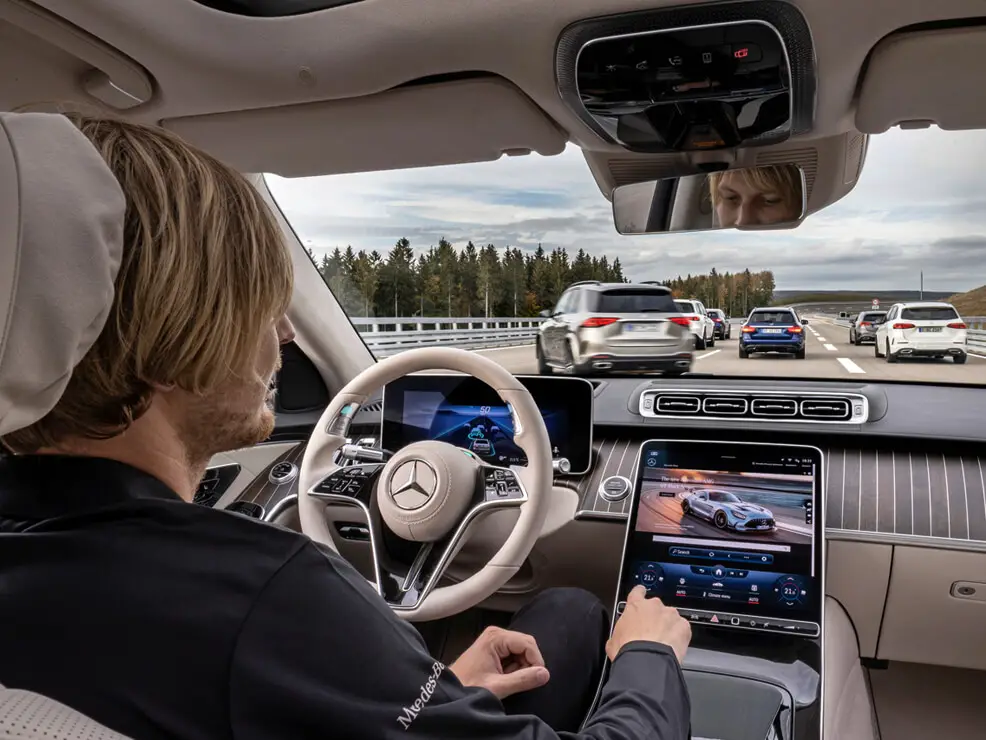
2022: Level 3 autonomous cars go on sale in Europe. Credit: Mercedes-Benz
Crossrail opens in London
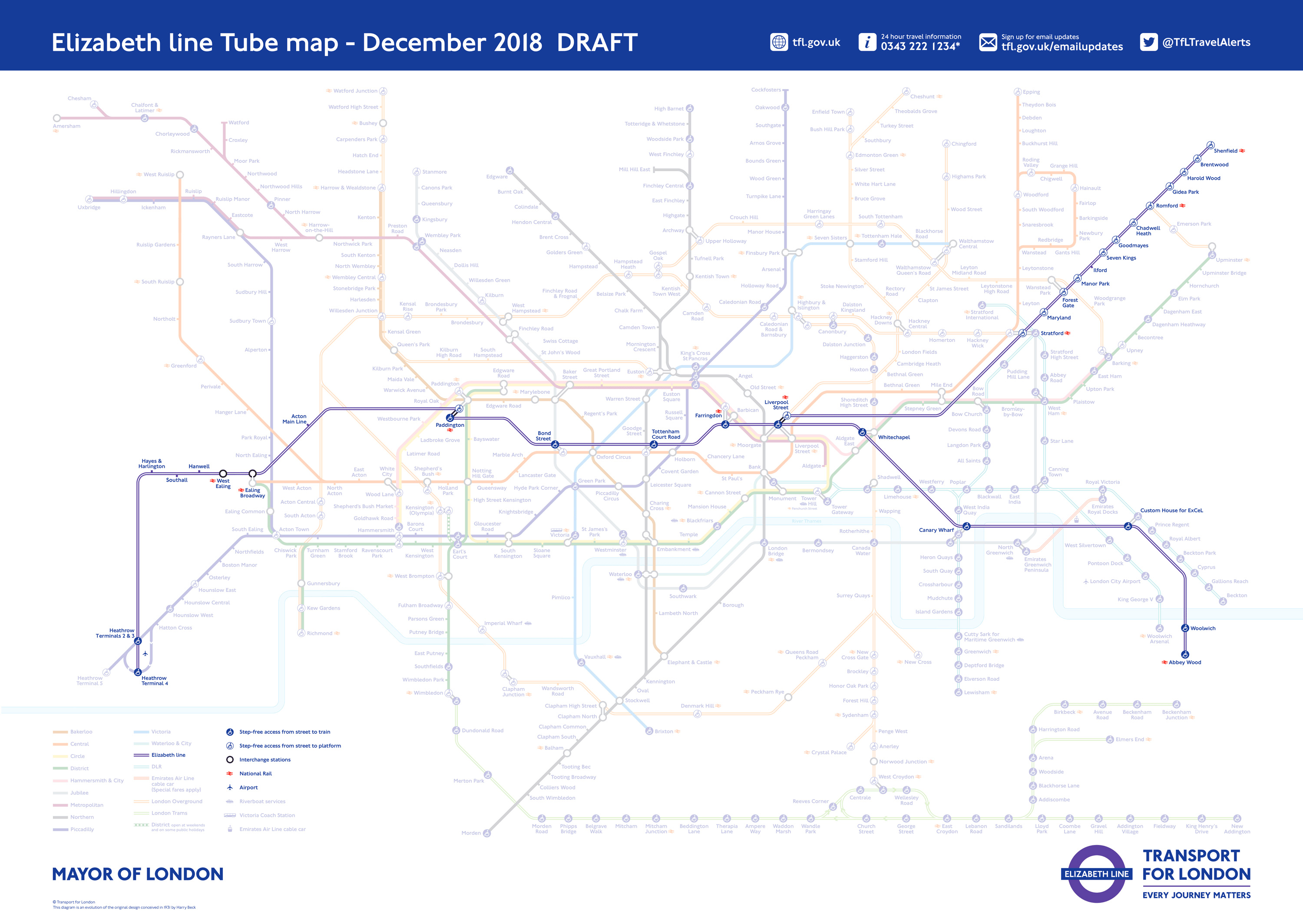
Crossrail is a major new rail line built for London and southeast England. In development since 1974, it is one of Europe's largest ever transport projects – designed to boost London's subway capacity by over 10% and bringing widespread regenerative benefits. It is officially named as the Elizabeth Line in honour of Queen Elizabeth II.
The line has a total length of 118 km (73 miles), which includes 42 km (26 miles) of tunnels. It runs from the county of Berkshire in the west, through to Essex in the east, linking together all the main economic hubs in the UK capital: Heathrow Airport, the West End, the City of London and Canary Wharf. Nine-coach trains – each 200 metres (660 ft) long and carrying up to 1,500 people – run at frequencies of 24 per hour at peak periods. These brand new, longer trains feature walk-through air-conditioned carriages, live travel information and free Wi-Fi. In addition to the rail line itself, the project includes ten new state-of-the-art stations.*
The original planned schedule was for the first trains to run during 2017. A Comprehensive Spending Review in 2010 – saving over £1bn of the estimated £16bn projected costs – meant that the first trains to run on the central section would be delayed until December 2018. This timeline was further delayed until the Autumn of 2019, then again until 2021, and yet again until 2022.*
Click to enlarge
Beijing hosts the Winter Olympics
The 2022 Winter Olympics take place from 4th February to 20th February 2022, in Beijing, China. The elected host city was announced by the International Olympic Committee (IOC) in July 2015.* Beijing, along with Almaty in Kazakhstan, had been considered an outsider before the bidding process began. However, many European cities later withdrew for political or financial reasons. Beijing eventually beat Almaty by 44 votes to 40 with a single abstention. It becomes the first city to host both a summer and winter Games, having hosted the summer games in 2008. It is the third consecutive Olympic Games to be held in Asia, following Pyeongchang 2018 and Tokyo 2021. In addition to Beijing itself there is another city, Zhangjiakou – located 118 miles to the north-west, which hosts the snow events. As with Beijing's previous games, there are protesters concerned with the country's human rights record.
Northeast Corridor high-speed train upgrade
In August 2016, U.S. Vice President Joe Biden announced a $2.5 billion federal loan package to pay for upgrades to Acela – the flagship service of America's national railroad corporation, Amtrak. This route, also known as the Acela Express, ran along the Northeast Corridor (NEC) between Washington, D.C., and Boston via 14 intermediate stops, including Baltimore, Philadelphia, and New York City.
Avelia Liberty – a model of high-speed train marketed by French company Alstom – was chosen to replace the existing Bombardier-Alstom trainsets on the Northeast Corridor, adapted for North American railroad standards. This would occur alongside track, signalling and station improvements.
A total of 28 new trainsets were ordered, 40% more than the previous fleet, providing a half-hourly service between Washington, D.C. and New York City during peak times and an hourly service between New York City and Boston. An improvement in maximum regular speed to 160 miles per hour (257 km/h) would be possible on some portions of the route, with future track and signalling upgrades enabling a maximum of 186 mph (299 km/h).
Each train had more carriages (two power cars and nine passenger cars), one-third more seats and featured a new "anticipative tilting system" to ensure a smoother ride quality. Their lightweight design, combined with minimal aerodynamic drag, would cut energy consumption by 20%. Onboard amenities included adjustable reading lights, disability access, an enhanced food service car, power sockets, USB ports, Wi-Fi, and other conveniences.
Engineers built prototype Avelia Liberty trains for testing in 2020 and Amtrak received delivery of the first trainset in 2021. Customers in the northeastern U.S. began riding these new high-speed trains in 2022.*
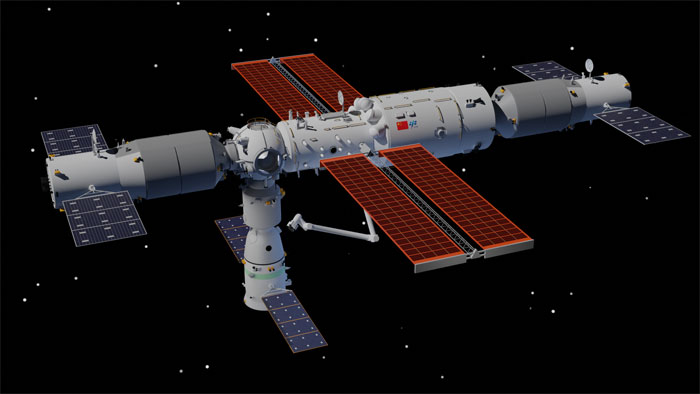
China's first space station is complete
China's efforts to develop low Earth orbit (LEO) space station capabilities began with a space laboratory phase, consisting of three "Tiangong" space modules launched in 2011, 2013 and 2015, respectively. These were small and experimental modules intended to demonstrate the rendezvous and docking capabilities needed for a much larger space station complex. They were designed for short stays with crews of three.
The larger, modular space station began to take shape in 2020, using the previous separate components which are arranged as a Core Cabin Module (CCM), Laboratory Cabin Module I (LCM-1) and Module II (LCM-2), a "Shenzhou" crewed vessel and a cargo craft for transporting supplies and lab facilities.
The multiphase construction program was completed in 2022. The complex weighs approximately 60,000 kilograms (130,000 lb) and supports three astronauts for long-term habitation. It has a design lifetime of ten years.*
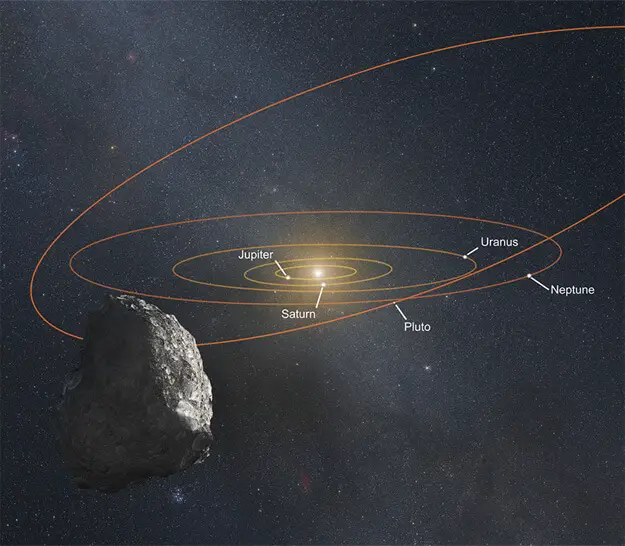
New Horizons completes its study of the Kuiper Belt
In 2015, after a nine year journey across 3 billion km of space, the New Horizons probe arrived at Pluto. It surveyed this region for several months, returning a treasure trove of data and imagery from this previously unexplored world and its five moons. NASA intended to go even further, however, with plans for a close flyby of a Kuiper Belt Object (KBO)* measuring 30–45 km (19–28 mi) in size. This phase of the mission would start in 2019* at a distance of 43.4 astronomical units (AU) from the Sun. By 2022, the KBO study is complete, and New Horizons is heading towards the outermost reaches of the Solar System. By 2038, it will be 100 AU from the Sun.*
The AIDA mission arrives at Didymos
The Asteroid Impact & Deflection Assessment (AIDA) is a joint NASA/ESA mission to study an Apollo asteroid – Didymos – and its small moon.* It is the first spacecraft to target an asteroid known to have a moon (243 Ida was visited by Galileo, but its moon was a surprise). The Apollo asteroids are a group of near-Earth asteroids that orbit within about 1 AU of the Sun.
The objectives of AIDA are:
• to study and demonstrate the kinetic effects of crashing an impactor into an asteroid moon.
• to test whether a spacecraft could successfully deflect an asteroid on a collision course with Earth.
• to gain new insights into the relationship between an asteroid's surface and its interior.
• to gain new understanding of how asteroids and binary asteroids form.
The mission consists of two spacecraft: Double Asteroid Redirection Test (DART) and Hera. The former was launched in 2021, arriving in 2022. The latter is a follow-up study launched in 2024 and arriving in 2027.
DART, the first half of the mission, was an impactor spacecraft that targeted and deliberately crashed into the small moon of Didymos. The primary asteroid is about 800 m (2,600 ft) in diameter, while its satellite is 170 m (558 ft) in diameter and orbits 1.1 km from the primary. Didymos is not an Earth-crossing asteroid and there is no possibility that the deflection experiment could create an impact hazard.
The DART spacecraft weighed 500 kg (1,100 lb) and impacted at 6 km/s (3.7 mi/s), producing a velocity change of around 0.4 mm per second, leading to a significant alteration in the mutual orbit of these two objects, but only a minimal change in the heliocentric orbit of the system. DART had a 20-cm aperture CCD camera to autonomously guide itself to the target site.
A secondary spacecraft – a small six-unit CubeSat known as Light Italian CubeSat for Imaging of Asteroids (LICIA) – accompanied DART and separated shortly before impact to acquire images of the crash and resulting ejecta as it drifted past. DART and its LICIA payload launched together in November 2021, and the impact of the Didymos moon occurred on 26th September 2022.*
This is followed by Hera in 2027, which provides a more detailed analysis of the aftermath, including confirmation of change in the binary system orbit, characterisation of the moon's volume and surface properties, as well as measurements of the volume and morphology of the DART impact crater.
Didymos made a relatively close approach to Earth in 2003, at a distance of 7.18 million km (4.46 million miles). It makes another close approach in 2123, at a distance of 5.9 million km (3.66 million miles). It also passes close to Mars: 4.69 million km (2.91 million miles) in 2144.
Qatar hosts the FIFA World Cup
Qatar is a tiny Persian Gulf nation of just 1.7 million people. It has the second highest GDP per capita in the world, owing to its massive natural gas deposits. It becomes the first country in the Middle East to host the World Cup.
Summers in Qatar can reach 50°C. However, each stadium employs state-of-the-art cooling technology, capable of reducing temperatures by over 20 degrees celsius. The upper tiers can be disassembled after the tournament and donated to countries with less developed sports infrastructure.
One of the stadia includes a 420,000 sq ft media facade, covering almost the whole exterior. This futuristic screen displays news, adverts, tournament information and live matches to viewers outside.*
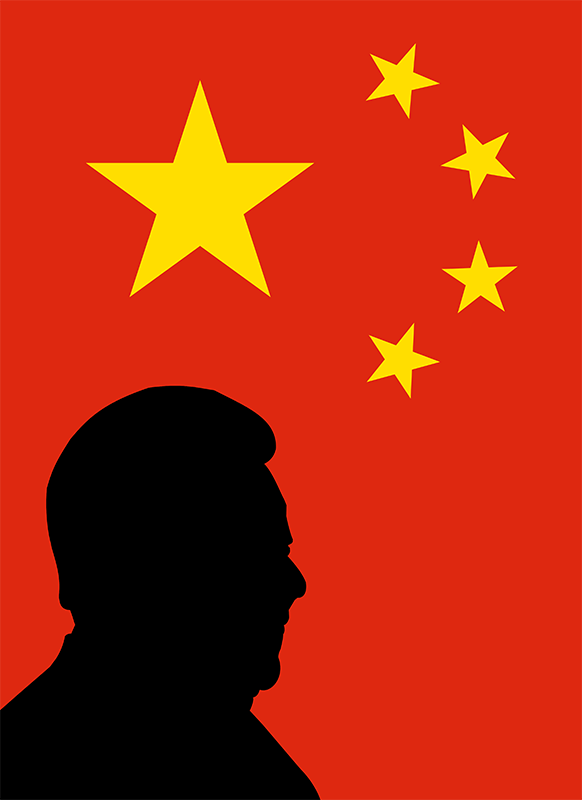
Xi Jinping extends his presidency
On 15th November 2012, Xi Jinping was elected as General Secretary of China's Communist Party, replacing Hu Jintao. In his opening speech, he mentioned the aspirations of the average person, remarking, "Our people ... expect better education, more stable jobs, better income, more reliable social security, medical care of a higher standard, more comfortable living conditions, and a more beautiful environment."
Xi also vowed to root out corruption at the highest levels and warned that it could threaten the Party's survival. This move subsequently led to the downfall of prominent Communist Party officials – including members of the Politburo Standing Committee, China's highest decision-making body.
On 14th March 2013, Xi was elected President of the People's Republic of China, in a confirmation vote by the 12th National People's Congress, once again replacing Hu Jintao, who retired after serving two terms.
Xi introduced far-ranging measures to enforce party discipline and ensure unity. He significantly centralised institutional power by taking on a wide range of leadership positions – including chairing the newly formed National Security Commission. In addition to his anti-corruption campaign, he tightened restrictions over civil society and ideological discourse, advocating Internet censorship across China. He called for further socialist market economic reforms, for governing according to the law and for strengthening legal institutions, with an emphasis on individual and national aspirations under the slogan "Chinese Dream".
Xi espoused a more assertive foreign policy, particularly with regard to China–Japan relations, China's claims in the South China Sea, and its role as a leading advocate of free trade and globalisation. The 2015 meeting between Xi and Taiwanese President Ma Ying-jeou marked the first time the political leaders of both sides of the Taiwan Strait had met since the end of the Chinese Civil War in 1950.
In 2018, Forbes ranked Xi as the most powerful and influential person in the world, dethroning Russian President Vladimir Putin who held the accolade for five consecutive years. Viewed as one of the most important leaders in modern Chinese history, Xi amended the state constitution to abolish term limits, allowing him to secure a third term as CCP General Secretary in October 2022 (the second leader to do so after Mao).*
Among the major challenges facing China in the 2020s is a slowdown in population growth. The country had abandoned its one-child policy in 2015.* However, the relaxation of family planning laws did little to reverse this trend. Combined with rapid increases in life expectancy, China is therefore now experiencing the same problems that its rival, Japan, underwent in earlier decades. Substantial investments are being made for elderly care, along with measures to increase the economic productivity of its shrinking worker base.
To consolidate his power, President Xi takes advantage of the ongoing progress in artificial intelligence (AI), leading to a further crackdown on civil liberties as surveillance methods become ever more advanced. These and other technologies are also employed in foreign operations such as hacking, industrial espionage, spying, and general cyber activities.
Other developments in his third term include further attempts at colonisation of islands in the South China Sea, plus additional pressure on Taiwan (though stopping short of all-out war), and progress on the Belt and Road Initiative.* China also continues its effort against climate change, with additional large-scale closures of coal-fired plants and a huge increase in clean energy capacity. By the middle of this decade, 50% of the country's electricity is produced from renewable sources, more than twice the amount in 2015.
China continues its move away from being the world's factory floor (cheap goods and low quality) to higher value products and services (e.g. aerospace, automotive, IT, pharmaceutical, robotics and semiconductors). Despite various economic, demographic and other challenges, it continues to increase its share of global GDP.
First uncrewed maiden flight of NASA's Space Launch System (SLS)
The Space Launch System (SLS) is an expendable launch vehicle in the "super heavy-lift" class, developed from 2011 onwards and intended to supersede the retired Space Shuttle as NASA's flagship vehicle.
Initially designed to carry 70 metric tons (150,000 lb) into low Earth orbit (LEO), the SLS later exceeded that requirement by a significant margin, with a rated payload capacity of 95 metric tons (209,000 lb). Future versions, known as Block 2, would have upgrades including advanced boosters, with an even greater LEO capability of more than 130 metric tons (290,000 lb). For comparison, the earlier Space Shuttle program of 1981 to 2011 had a maximum payload capacity of only 27.5 tons (60,600 lb), or about 21% of the SLS Block 2.
NASA intended for the SLS to become the primary launch vehicle of its deep space exploration plans – including crewed lunar flights of the Artemis program and a subsequent follow-on human mission to Mars.
A first uncrewed maiden flight occurred in November 2022,* followed by crewed lunar flybys in subsequent years. The human missions to lunar orbit and beyond make use of a partially reusable module, known as the Orion Multi-Purpose Crew Vehicle (Orion MPCV), which can support a crew of six on long-duration missions.
While the SLS is extremely powerful (featuring the highest ever total thrust at launch), the project is criticised for its cost, in comparison to new and emerging commercial rockets, which can also provide greater reusability – such as those developed by SpaceX and Blue Origin. This forces a rethink of NASA's funding as the private sector takes on an increasingly large role in spaceflight, contributing to an industry worth $1 trillion by the late 2030s.
« 2021 |
⇡ Back to top ⇡ |
2023 » |
If you enjoy our content, please consider sharing it:
References
1 World's first exascale supercomputer is officially confirmed, Future Timeline Blog:
https://www.futuretimeline.net/blog/2022/05/30-supercomputer-future-timeline.htm
Accessed 26th December 2022.
2 Mercedes-Benz receives world's first internationally valid system approval for conditionally automated driving, Mercedes-Benz:
https://mercedes-benz-media.co.uk/en-gb/releases/1455
Accessed 14th December 2021.
3 Mercedes-Benz to launch Level 3 self-driving system in 2022 after gaining regulatory approval, Motor Authority:
https://www.motorauthority.com/news/1134400_mercedes-benz-to-launch-level-3-self-driving-system-in-2022
Accessed 14th December 2021.
4 Central and South East Stations, Crossrail official website:
https://www.crossrail.co.uk/route/stations/
Accessed 13th September 2020.
5 Crossrail needs extra £450m and delayed until 2022, BBC News:
https://www.bbc.co.uk/news/uk-england-london-53847738
Accessed 13th September 2020.
6 Beijing to host 2022 Winter Olympics and Paralympics, BBC:
http://www.bbc.co.uk/sport/0/winter-olympics/33730477
Accessed 31st July 2015.
7 Amtrak's First New Acela Train Leaves Factory, Jalopnik:
https://jalopnik.com/amtraks-first-new-acela-train-leaves-factory-1848010522
Accessed 3rd January 2022.
8 China Details Ambitious Space Station Goals, Space.com:
http://www.space.com/11048-china-space-station-plans-details.html
Accessed 9th December 2011.
9 Beyond Pluto: New Horizons targets identified, Future Timeline Blog:
https://www.futuretimeline.net/blog/2014/10/17.htm
Accessed 18th July 2015.
10 Solar System Exploration: Missions to the Kuiper Belt, NASA:
https://solarsystem.nasa.gov/solar-system/kuiper-belt/overview/
Accessed 18th July 2015.
11 See 2038.
12 The Double Asteroid Redirection Test (DART): Hitting an Asteroid Head On, YouTube:
https://www.youtube.com/watch?v=aNSYuY6N1Rs
Accessed 22nd December 2019.
13 AIDA (mission), Wikipedia:
https://en.wikipedia.org/wiki/AIDA_(mission)
Accessed 3rd January 2022.
14 Qatar 2022 Fifa World Cup: artist's impressions of futuristic stadiums in Doha and beyond, The Telegraph:
https://www.telegraph.co.uk/sport/football/picturegalleries/8006624/Qatar-2022
Accessed 2nd December 2010.
15 Xi Jinping announces third term in power and new top team, BBC News:
https://www.bbc.co.uk/news/live/world-asia-china-63199761
Accessed 26th December 2022.
16 China ends one-child policy after 35 years, Future Timeline Blog:
https://www.futuretimeline.net/blog/2015/10/30.htm
Accessed 23rd January 2019.
17 Belt and Road Initiative, Wikipedia:
https://en.wikipedia.org/wiki/Belt_and_Road_Initiative
Accessed 23rd January 2019.
18 Space Launch System, Wikipedia:
https://en.wikipedia.org/wiki/Space_Launch_System
Accessed 2nd January 2021.
 |
|||||||||||||||||||||||||||||||
|
Latest predictions |
Timeline » 21st century |
Blogs » AI & Robotics |
Features » |
About us
|
|||||||||||||||||||||||||||
|
|
|||||||||||||||||||||||||||||||


