
![[+]](https://www.futuretimeline.net/images/buttons/expand-symbol.gif)
|
|
|
|
|
|
2011-2014
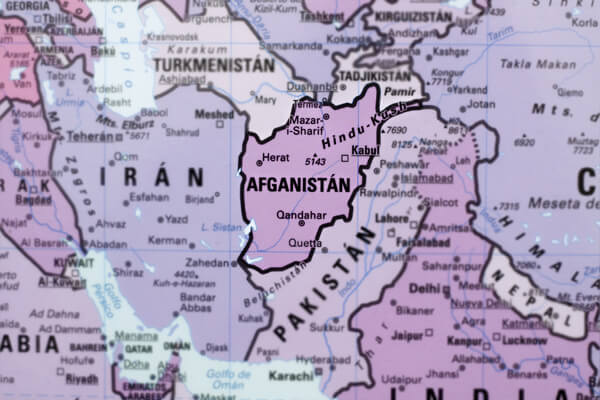
British forces withdraw from Afghanistan
The British Armed Forces played a major role in the Afghanistan War, second only to the U.S. in terms of troop numbers. Between 2001 and 2010, over 325 British forces personnel and MOD civilians were killed, exceeding the death toll of the Falklands War, with some 4,000 injured. A phased withdrawal began from 2011, with a gradual transition of districts and provinces which saw Afghan forces slowly taking over the security operations. The last remaining British troops would be gone by 2014.*
2011
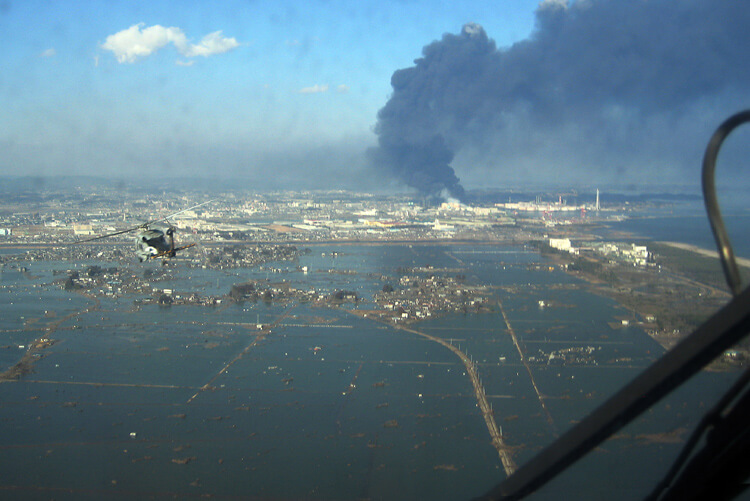
Japan is devastated by a 9.0 magnitude earthquake and tsunami
On 11th March 2011, a 9.0-magnitude quake and subsequent tsunami hit the east of Japan, killing nearly 16,000 and leaving another 2,600 missing. Tsunami warnings were issued in 50 nations and territories, while emergencies were declared at four nuclear power plants.
The earthquake was the most powerful ever known to hit Japan, and among the five most powerful in the world since modern record-keeping began in 1900. It triggered extremely destructive tsunami waves, in some cases travelling up to 10 km (6 mi) inland. The earthquake moved the entire Honshu region 2.4 m (8 ft) east and shifted the Earth on its axis by 10 cm (4 in).
As well as loss of life and destruction of infrastructure, the tsunami caused several nuclear incidents. By far the most serious was a level 7 event and 20 km (12 mi) evacuation zone around the Fukushima I Plant. This became the worst nuclear disaster since Chernobyl.*
The overall cost exceeded $300 bn, making it the most expensive natural disaster on record. Over 125,000 buildings were damaged or destroyed, while heavy damage was inflicted on roads and rail routes. 4.4 million households in northeastern Japan were left without electricity and 1.5 million without water.
Japanese Prime Minister Naoto Kan said, "In the 65 years after the end of World War II, this is the toughest and the most difficult crisis for Japan." The Bank of Japan offered ¥15 trillion (US$183 bn) to the banking system in an effort to normalise market conditions.
2011: Japan
earthquake and tsunami | Credit: US
Navy
The death of Osama bin Laden
Following the attacks of September 11th – which he had largely masterminded – Osama bin Laden became the most internationally hunted fugitive in history. Aside from occasional videos of him living in unidentifiable wilderness locations, he essentially vanished off the radar. After a decade of false leads and high body counts, many began to think the search was hopeless.
During this time, however, the CIA had been working to identify any possible couriers of bin Laden, and, in 2007, one was positively identified and then tracked. In 2010, a wire-tapped conversation between the courier – commonly referred to as Abu Ahmed al-Kuwaiti, and another man – helped the CIA to deduce the precise location of bin Laden's compound, which was in Abbottabad, Pakistan.
After several months of gathering intelligence, it was decided that a mission could be carried out to either capture or kill bin Laden. Operation Neptune Spear was conducted on 2nd May 2011 by a team of 79 Navy SEAL commandos after the go-ahead was given by Barack Obama. A complex raid on the compound was carried out with SEALs approaching from all sides and from a helicopter hovering above the roof. The team was met with some resistance, but overcame the al-Qaeda operatives defending the building. After four others were killed (including the courier), the SEAL team discovered bin-Laden inside the house in his sleeping quarters. After a short confrontation, he was shot once in the chest and again above the eye.
No American operatives were killed in the raid, but a helicopter was crashed and had to be destroyed in order to cover up top secret flight technology. Several hours later, the news of bin-Laden's death was announced publicly. The event was heralded around the world as a major blow to al-Qaeda and one of the most important events of the decade. In America, the public reaction was extremely positive, with parties and parades actually being held. This behavior raised eyebrows from other nations however. Some also questioned the actual impact bin-Laden's death would have on terrorism and whether the SEALs were right in killing him.
Conspiracy theories regarding the operation quickly sprung up, while the American-Pakistani relationship came under stress, as many Americans doubted Pakistan's supposed ignorance of bin-Laden's location. Meanwhile, Osama bin Laden's body was taken by American forces and buried at sea within 24 hours, in accordance with Muslim tradition.
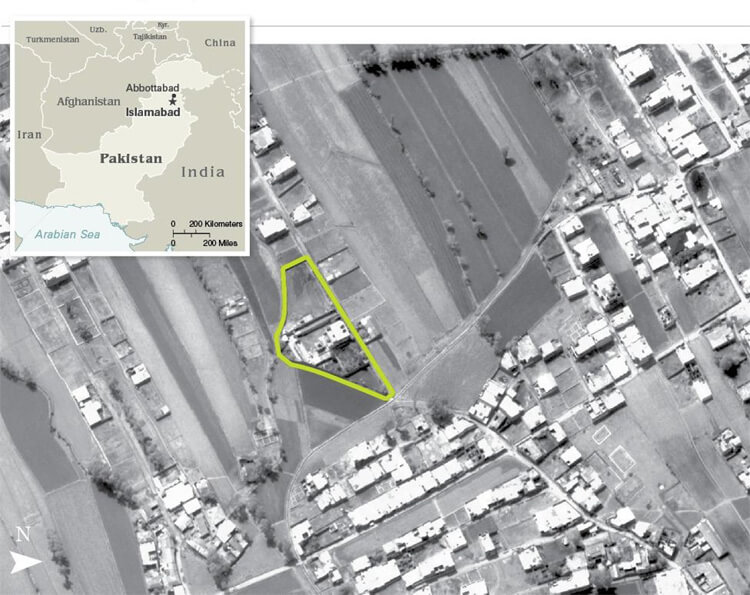
Aerial view of Osama bin Laden's compound in the Pakistani
city of Abbottabad made by the CIA.
Worsening economic crisis in Greece
For years, the successive governments of Greece had spent money they didn't have. These governments took advantage of the good economic times in the early 2000s to borrow and spend at a greater rate than taxes were being collected. As a result, the country ran up a massive deficit, reaching an estimated 13.6% by 2010.*
Being part of the eurozone, this level of deficit spending was outside the EU's economic regulations. In order to deal with it, Greece continually misreported its official financial statistics. In fact, the government actually paid hundreds of millions of dollars to banks such as Goldman Sachs, specifically to have them initiate baseless financial transactions that would hide the true level of spending and debt.*
These factors made Greece extremely vulnerable to a financial crisis – such as the major recession which struck the world in 2007. Subsequent reductions in Greece's tourism and shipping industries stressed its economy to near break-point. By 2009, the country had begun to collapse under its crushing debts, which had grown 20% larger than the entire economy and were now estimated at over US$410 billion. The banks Greece had borrowed money from were only making the problem worse. In order to hide the fact that Greece could soon go bankrupt, they were now charging the nation higher rates when it tried to borrow more.
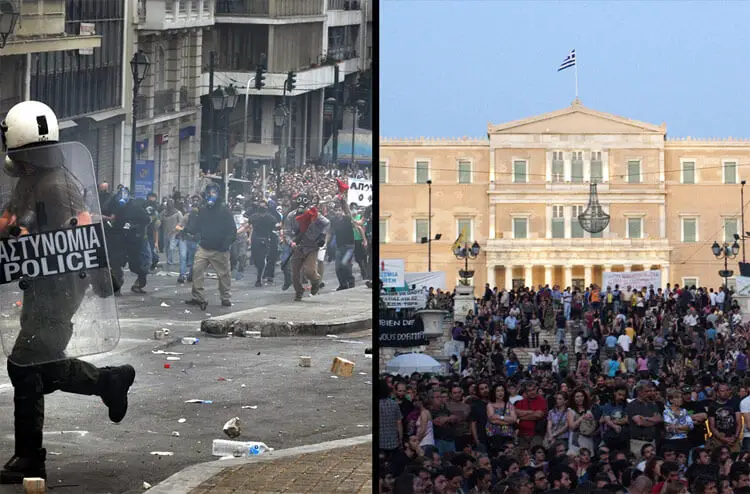
By 2010, Greece was forced to ask for outside assistance, revealing the true levels of spending and deficit that had accumulated. As a result, it was downgraded to the lowest credit rating in the eurozone. This made it difficult for the government to receive outside help, with investors viewing the country as a financial black hole. The EU allowed Greece to borrow from other European countries as well as the International Monetary Fund (IMF), in what became the largest bailout package in recent history. In return, Greece was forced to drastically cut back its spending. Government corruption, large increases in taxes, and cuts to public social programs resulted in widespread civil unrest during 2011.*
Credit: Philly boy92 (CC BY-SA 3.0)
The world's first synthetic organ transplant
In June 2011, surgeons in Sweden carried out the world's first synthetic organ transplant.* A 36 year old man, suffering from terminal cancer of the trachea, received a completely new replacement windpipe. This was achieved with a nanotechnology scaffold made from spongy, flexible polymer and seeded with his own stem cells in a bioreactor. The scaffold was based on 3D scans moulded to the exact dimensions of his trachea. The cells were grown on the scaffold for just two days before transplantation into the patient. Since the cells used to regenerate the trachea were the patient's own, there was no chance of rejection by his immune system.
This was a major breakthrough in regenerative medicine. Future transplants using this method had the potential to be faster, more efficient and more accessible – requiring no human donation, taking just two days and being customised for a perfect fit. It could particularly benefit children, for whom trachea donors are less available compared to adults.
Other recent progress in this area of science includes tooth regeneration, synthetic arteries and the growing of thigh muscles and fingertips. In the 2020s, more complex organs and body parts will be grown, such as hearts. Later in the 21st century, entire synthetic humans will become a reality (though not without controversy).
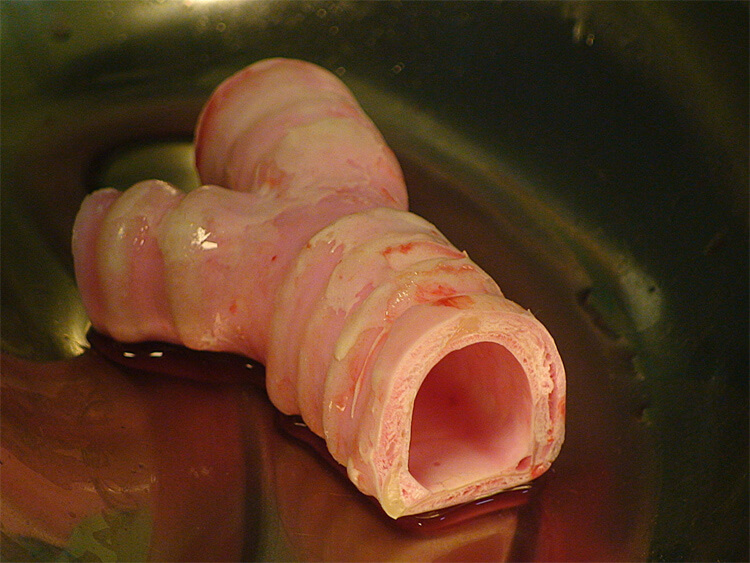
Credit: Harvard Bioscience
South Sudan becomes an independent nation
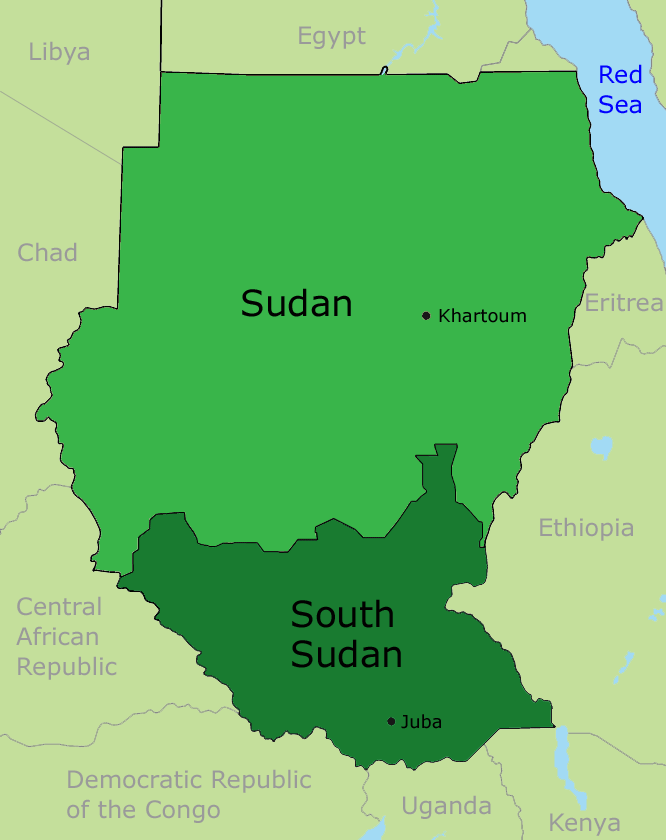
Following decades of conflict with the north – in which 1.5 million people died – South Sudan in 2011 seceded from Sudan, becoming the 193rd country recognised by the UN and the 54th member state in Africa.*
A referendum was held from 9–15th January 2011. The results released on 30th January were that 98.8% had voted for independence. This led to formal independence on 9th July, although certain disputes still remained such as the sharing of oil revenues. An estimated 80% of the oil in the nation was secured from South Sudan, which would represent amazing economic potential for one of the world's most deprived areas.
South Sudan has a population of 8 million. Its capital and largest city is Juba. It is divided into ten states, corresponding to three historical regions of the Sudan: Bahr el Ghazal, Equatoria and Greater Upper Nile. Prior to this secession, Sudan was the largest country in Africa, with an area of 2.5 million km².
The Space Shuttle fleet is retired
This year saw the last of the Space Shuttle missions to the International Space Station and the subsequent retirement of the fleet. Two private companies – SpaceX and Orbital Sciences Corporation – took over the remaining work, using cheaper disposable rockets. These would provide cargo delivery to the ISS up to 2016.
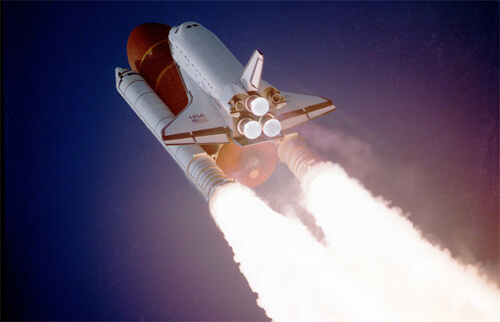
Credit: NASA
Global population reaches 7 billion
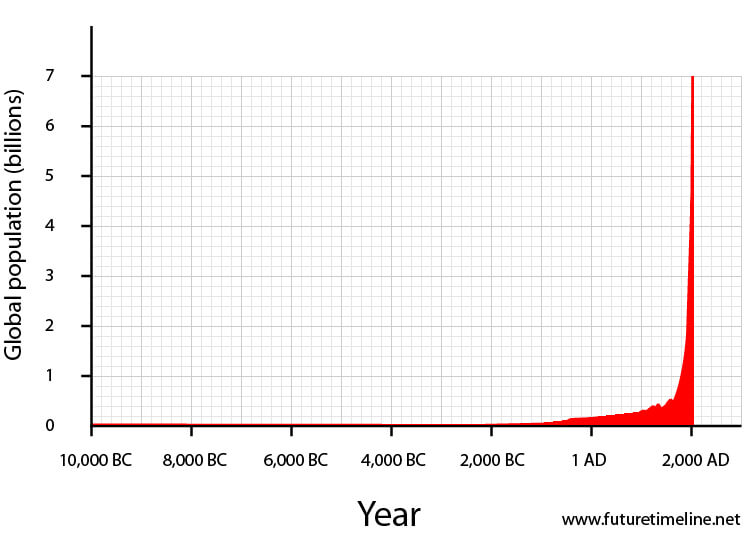
In October 2011, the global population reached 7 billion. Over 74 million people were now being added to the world each year – equivalent to the entire population of Turkey. On current trends, the population was forecast to reach 10 billion by 2100. Most of the increase was coming from high-fertility nations in sub-Saharan Africa.*
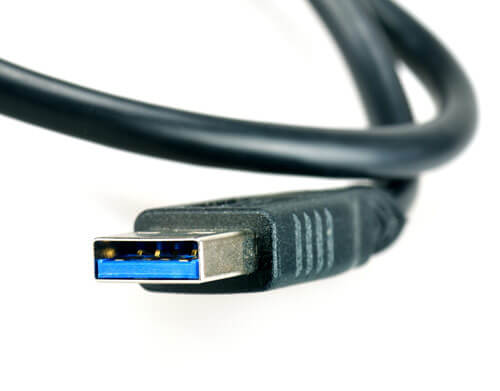
USB 3.0 is widely available
USB 3.0 was the third major revision of the Universal Serial Bus (USB) standard for computer connectivity. Transmission speeds of 5 Gbit/s made it 10 times faster than USB 2.0 (480 Mbit/s), greatly reducing the time required for data transmission while cutting power consumption. It was downward compatible with USB 2.0.
22 nanometre chips enter mass production
In 2011, Intel began production of a new 22 nanometre (nm) processor. Codenamed Ivy Bridge, it was the first high-volume chip to use 3D transistors. These new "Tri-Gate" transistors were a fundamental departure from the two-dimensional "planar" structure used in the past. They could operate at lower voltage, with lower leakage, providing an unprecedented combination of improved performance and energy efficiency. Dramatic innovations across a wide range of electronics – from computers to cellphones, household appliances to medical devices – would now be possible.*
Consumer-level robotics are booming
Thanks to falling costs, this year saw major growth in consumer robotics. Between 2008 and 2011, sales of professional and personal service robots more than doubled, from 5.5 million to over 11.5 million. Initially popular in Japan, Korea and the Far East, they were now spreading to many Western homes too. Robots were now available that cleaned carpets and mowed lawns; others could help busy professionals entertain children or pets; some machines could feed and bathe the elderly or incapacitated.*
World's first commercial spaceport
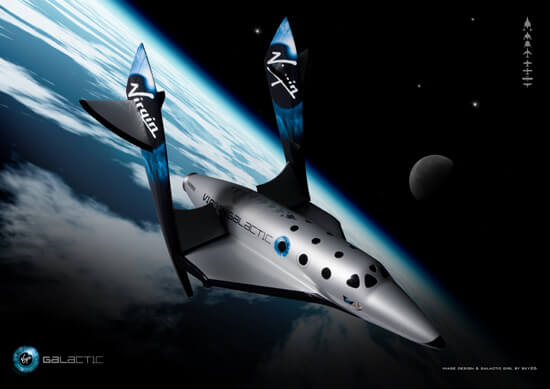
A new chapter in space exploration began in 2011 with the opening of Spaceport America – the world's first purpose-built commercial spaceport.* This was intended to offer sub-orbital spaceflights to the paying public. Costing over $200 million, the facility was built on 27 square miles (70 km²) of state-owned desert near Upham, an uninhabited part of New Mexico.
Among the various companies involved was Sir Richard Branson's Virgin Galactic and "SpaceShipTwo" which had achieved its first glide flight in 2010. Travelling at over 2,600 mph (4,200 km/h), the spacecraft was designed to carry up to six passengers, to a height of approximately 70 miles (112 km), using a single hybrid rocket motor. When maximum altitude was reached, the engines would then be switched off, and the passengers could experience up to six minutes of zero-G whilst looking down on the Earth. Using a feathered re-entry system, feasible due to low speed of re-entry, SpaceShipTwo could re-enter the atmosphere safely at any angle.
However, during a test flight in 2014, VSS Enterprise, the first SpaceShipTwo craft, broke up in flight and crashed in the Mojave desert. A preliminary investigation suggested the feathering system, the craft's descent device, deployed too early. One pilot was killed; the other was treated for a serious shoulder injury after parachuting from the stricken spacecraft. The second SpaceShipTwo spacecraft, VSS Unity, was unveiled in February 2016.
Over the next decade, with improved safety and other features, a new generation of ships would be developed, capable of higher orbits. Though initially starting at $200,000 each, competition between space tourism companies would eventually bring down costs, making trips affordable to middle-income citizens in subsequent decades.
China's Three Gorges Dam is fully operational
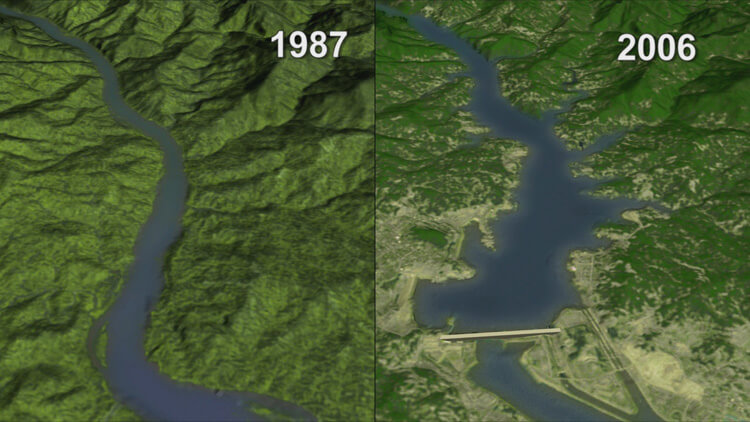
In planning for nearly a century, and costing almost $30 billion, this became the largest power plant ever built. The main body of the dam was completed in 2006 and the originally planned components of the project were finished in 2008. Six additional generators were installed underground in 2011 – taking its total electric generating capacity to over 22 gigawatts.
The project management team and the Chinese state regarded the project as a historic engineering, social and economic success: a breakthrough in the design of large turbines and a significant move toward the reduction of greenhouse gas emissions. It removed some 100 million tonnes of CO2 and 2 million tonnes of SO2 that would otherwise have been generated by coal-fired power stations.
However, the dam also flooded archaeological and cultural sites, displaced 1.4 million people and caused significant ecological changes, including an increased risk of landslides. The building of the dam was a controversial topic, both in China and abroad.*
« 2010 |
⇡ Back to top ⇡ |
2012 » |
If you enjoy our content, please consider sharing it:
References
1 "The move from Nad-e Ali is a significant step in the UK's plans for a complete withdrawal of combat forces by the end of 2014."
See Afghanistan: Last UK Troops Leave Nad-e Ali Base, Sky News:
http://news.sky.com/story/1137810/afghanistan-last-uk-troops-leave-nad-e-ali-base
Accessed 10th November 2013.
2 Fukushima I nuclear accidents, Wikipedia:
http://en.wikipedia.org/wiki/Fukushima_I_nuclear_accidents
Accessed 14th May 2011.
3 Q&A: Greece's economic woes, BBC:
http://news.bbc.co.uk/1/hi/business/8508136.stm
Accessed 6th July 2011.
4 How the Monsters at Goldman Sachs Caused a Greek Tragedy, AlterNet:
http://www.alternet.org/economy/145884/how_the_monsters_at_goldman_sachs_caused_a_greek_tragedy
Accessed 6th July 2011.
5 Violent anti-cut riots in Greece spark coalition talks, The Metro:
http://www.metro.co.uk/news/866478-violent-anti-cut-riots-in-greece-spark-coalition-talks
Accessed 6th July 2011.
6 Harvard Bioscience's Bioreactor Grows a
Synthetic Tissue-Engineered Trachea Used in World's First Successful Human Transplantation, Global Newswire:
http://globenewswire.com/news-release/2011/07/07/450829/226034/en/Photo-Release-Harvard-Bioscience-s-Bioreactor-Grows-a-Synthetic-Tissue-Engineered-Trachea-Used-in-World-s-First-Successful-Human-Transplantation.html
Accessed 31st December 2017.
7 South Sudan becomes an independent nation, BBC:
http://www.bbc.co.uk/news/world-africa-14089843
Accessed 10th July 2011.
8 World population to surpass 7 billion in 2011, Harvard:
http://www.hsph.harvard.edu/news/press-releases/world-population-7-billion/
Accessed 10th November 2013.
9 Intel Reinvents Transistors Using New 3-D Structure, Intel:
http://newsroom.intel.com/community/intel_newsroom/blog/2011/05/04/intel-reinvents-transistors-using-new-3-d-structure
Accessed 15th May 2011.
10 Robot Wars: The Rise of Artificial Intelligence, The
Independent:
http://www.independent.co.uk/news/science/robot-wars-the-rise-of-artificial-intelligence-1203693.html
Accessed 29th Dec 2008.
11 Spaceport America, Wikipedia:
https://en.wikipedia.org/wiki/Spaceport_America
Accessed 7th January 2018.
12 "There are many new and old hidden ecological and environmental
dangers concerning the Three Gorges dam. If preventive measures are not
taken, the project could lead to a catastrophe."
See China warns of 'urgent problems' facing Three Gorges dam, The Guardian:
http://www.guardian.co.uk/world/2011/may/20/three-gorges-dam-china-warning?INTCMP=SRCH
Accessed 21st May 2011.
 |
|||||||||||||||||||||||||||||||
|
Latest predictions |
Timeline » 21st century |
Blogs » AI & Robotics |
Features » |
About us
|
|||||||||||||||||||||||||||
|
|
|||||||||||||||||||||||||||||||


