

Human Prehistory (3.3 million years BC – 3500 BC)
Human Prehistory (3.3 million years BC – 3500 BC)
General news, articles and discussions regarding early humans, the Pleistocene Epoch, the first technologies, the birth of civilisation, and the emergence of the Holocene.
-
Time_Traveller

- Posts: 3025
- Joined: Sun May 16, 2021 4:49 pm
- Location: New York City, USA, November 5th 2032 C.E.
Re: Human Prehistory (3.3 million years BC – 3500 BC)
Ancestors may have created 'iconic' sounds as bridge to first languages
https://www.sciencedaily.com/releases/2 ... 083414.htmThe 'missing link' that helped our ancestors to begin communicating with each other through language may have been iconic sounds, rather than charades-like gestures -- giving rise to the unique human power to coin new words describing the world around us, a new study reveals.
It was widely believed that, in order to get the first languages off the ground, our ancestors first needed a way to create novel signals that could be understood by others, relying on visual signs whose form directly resembled the intended meaning.
However, an international research team, led by experts from the University of Birmingham and the Leibniz-Centre General Linguistics (ZAS), Berlin, have discovered that iconic vocalisations can convey a much wider range of meanings more accurately than previously supposed.
The researchers tested whether people from different linguistic backgrounds could understand novel vocalizations for 30 different meanings common across languages and which might have been relevant in early language evolution.
“In the quantum multiverse, every choice, every decision you've ever and never made exists in an unimaginably vast ensemble of parallel universes.”

Re: Human Prehistory (3.3 million years BC – 3500 BC)
A child’s 78,000-year-old grave marks Africa’s oldest known human burial
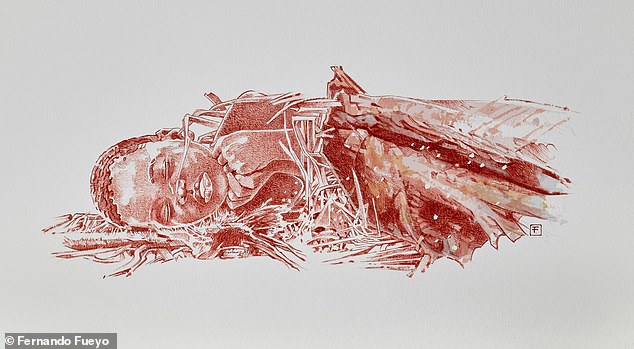
Pictured, an artist’s impression of Mtoto’s burial. Experts believe the child was around three years old when they died and was likely wrapped in a shroud and had their head on a pillow
The oldest known grave in Africa is that of a three-year-old child who died about 78,000 years ago. The find explores how people in the area treated their dead at the time.
Archaeologists discovered the top of a bundle of bones in Kenya’s Panga ya Saidi cave in 2017.
Pictured, an artist’s impression of Mtoto’s burial. Experts believe the child was around three years old when they died and was likely wrapped in a shroud and had their head on a pillow
And remember my friend, future events such as these will affect you in the future
Re: Human Prehistory (3.3 million years BC – 3500 BC)
And remember my friend, future events such as these will affect you in the future
-
weatheriscool
- Posts: 25737
- Joined: Sun May 16, 2021 6:16 pm
- Contact:
Re: Human Prehistory (3.3 million years BC – 3500 BC)
The oldest known tattoo tools were found at an ancient Tennessee site
https://www.sciencenews.org/article/old ... e-american
May 25, 2021 at 6:00 am
https://www.sciencenews.org/article/old ... e-american
May 25, 2021 at 6:00 am
Ancient tattooing tools are tough to find or even recognize as implements for creating skin designs. But new microscopic studies of two turkey leg bones with sharpened ends indicate that Native Americans used these items to make tattoos between around 5,520 and 3,620 years ago.
These pigment-stained bones are the world’s oldest known tattooing tools, say archaeologist Aaron Deter-Wolf of the Tennessee Division of Archaeology in Nashville and his colleagues. The find suggests that Native American tattoo traditions in eastern North America extend back more than a millennium earlier than previously thought (SN: 3/4/19). Ötzi the Iceman, who lived around 5,250 years ago in Europe, displays the oldest known tattoos (SN: 1/13/16), but researchers haven’t found any of the tools used to make the Iceman’s tattoos.
-
weatheriscool
- Posts: 25737
- Joined: Sun May 16, 2021 6:16 pm
- Contact:
Re: Human Prehistory (3.3 million years BC – 3500 BC)
Tiny tools point to specialist skills of ancient Indonesians
https://phys.org/news/2021-05-tiny-tool ... cient.html
by Griffith University
https://phys.org/news/2021-05-tiny-tool ... cient.html
by Griffith University
New research has questioned theories that a mysterious group of hunter-gatherers from Indonesia interacted with Aboriginal Australians thousands of years ago and provides a basis for future understanding of the people who made tiny, but precise implements out of stone.
The study, published in PLOS ONE, was led by Griffith University researchers at the Australian Research Center for Human Evolution and Indonesian counterparts from Pusat Penelitian Arkeologi Nasional (Puslit Arkenas), who examined a collection of stone and bone 'point' tools made by the Toalean people on the Indonesian island of Sulawesi.
According to the study's lead author, Ph.D. student Yinika Perston, the Toaleans were a group of 'hunter-gatherer' people who lived in southernmost Sulawesi around 1500-8000 years ago. During this time, they produced several distinctive small tools that have not been found elsewhere on the island, including the so-called "Maros points," which were possibly used as arrowheads and have fine tooth-like serrations.
-
weatheriscool
- Posts: 25737
- Joined: Sun May 16, 2021 6:16 pm
- Contact:
Re: Human Prehistory (3.3 million years BC – 3500 BC)
Hunter-gatherers first launched violent raids at least 13,400 years ago
https://www.sciencenews.org/article/hun ... bel-sahaba
May 27, 2021 at 11:00 am
https://www.sciencenews.org/article/hun ... bel-sahaba
May 27, 2021 at 11:00 am
More than 8,000 years before the rise of Egyptian civilization, hunter-gatherers went on the attack in the Nile Valley.
Skeletons of adults, teens and children excavated in the 1960s at an ancient cemetery in Sudan known as Jebel Sahaba display injuries incurred in repeated skirmishes, raids or ambushes, say paleoanthropologist Isabelle Crevecoeur and her colleagues. The site, which dates to between 13,400 and 18,600 years ago, provides the oldest known evidence of regular, small-scale conflicts among human groups, says Crevecoeur, of the University of Bordeaux in France.
-
Time_Traveller
- Posts: 3025
- Joined: Sun May 16, 2021 4:49 pm
- Location: New York City, USA, November 5th 2032 C.E.
Re: Human Prehistory (3.3 million years BC – 3500 BC)
Prehistoric carvings of red deer found in Scottish neolithic tomb
https://www.theguardian.com/uk-news/202 ... ithic-tombMon 31 May 2021
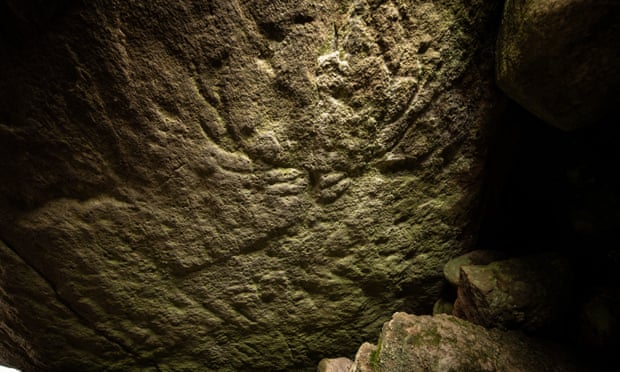
Delicate prehistoric carvings of adult red deer, thought to be the oldest of their type in the UK, have been found in a tomb in one of Scotland’s most famous neolithic sites.
The carvings, which depict two male red deer with full-grown antlers and several thought to be young deer, were discovered by chance in Kilmartin Glen in Argyll, home to one of the UK’s richest accumulations of neolithic and bronze age sites.
Archaeologists estimate the carvings are between 4,000 and 5,000 years old, a period which spans the neolithic and early bronze age, and are the first in the UK located alongside prehistoric cup and ring markings found throughout Kilmartin Glen.
“In the quantum multiverse, every choice, every decision you've ever and never made exists in an unimaginably vast ensemble of parallel universes.”
-
weatheriscool
- Posts: 25737
- Joined: Sun May 16, 2021 6:16 pm
- Contact:
Re: Human Prehistory (3.3 million years BC – 3500 BC)
Shock Discovery Suggests Humans Were in The Americas 20,000 Years Earlier Than Thought
MIKE MCRAE
4 JUNE 2021
MIKE MCRAE
4 JUNE 2021
https://www.sciencealert.com/shocking-n ... 1622790827Coxcatlan Cave in Mexico's Tehuacan Valley is a time capsule like no other. Its dusty floor is a history book, its pages detailing thousands of years of food and technology of the land's inhabitants.
Archaeologists from the US and Mexico have finally dug into its earliest chapter, using advanced dating techniques to determine the age of animal bones buried among the rock shelter's oldest layers.
The results were astonishing, hinting at a human presence in the area as far back as 33,000 years ago – thousands of years before ice sheets stretched to their peak, and around 20,000 years earlier than currently accepted evidence suggests.
Re: Human Prehistory (3.3 million years BC – 3500 BC)
Amazon-dwellers lived sustainably for 5,000 years
5 hours ago
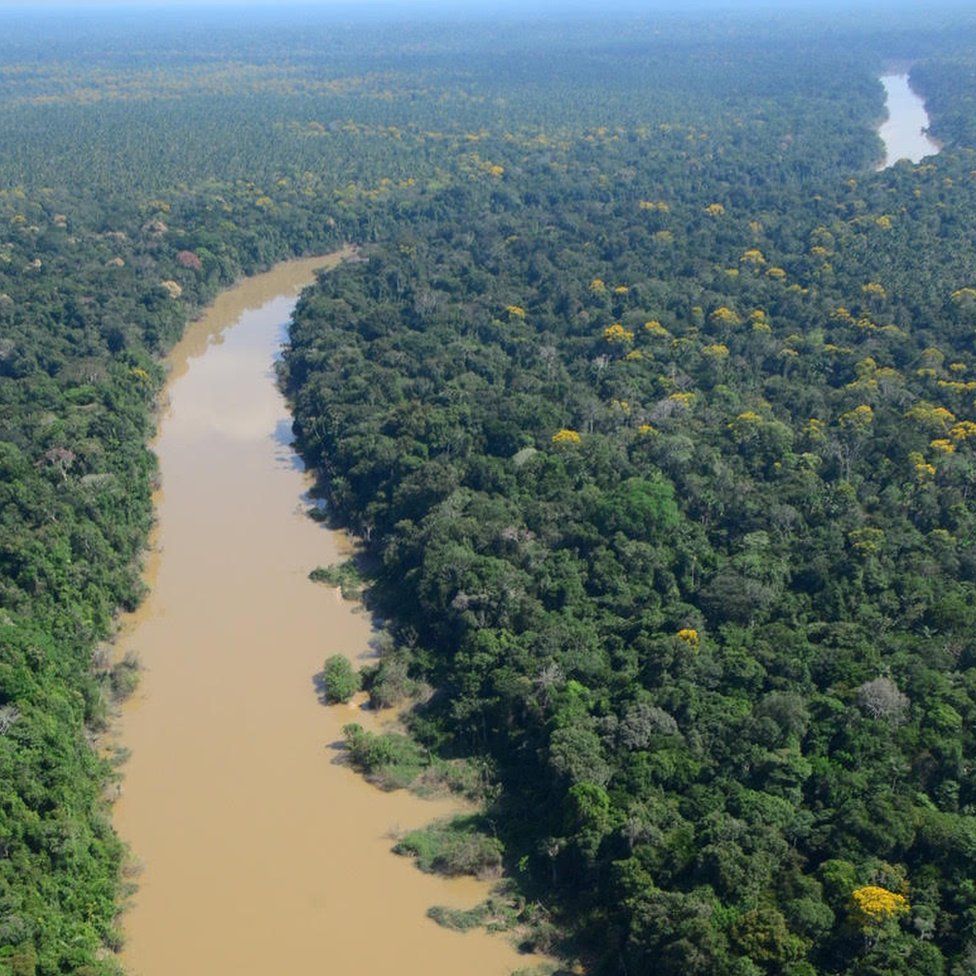
A study that dug into the history of the Amazon Rainforest has found that indigenous people lived there for millennia with "causing no detectable species losses or disturbances".
Scientists working in Peru searched layers of soil for microscopic fossil evidence of human impact.
They found that forests were not "cleared, farmed, or otherwise significantly altered in prehistory".
The research is published in the journal PNAS.
Dr Dolores Piperno, from the Smithsonian Tropical Research Institute in Balboa, Panama, who led the study, said the evidence could help shape modern conservation - revealing how people can live in the Amazon while preserving its incredibly rich biodiversity.
Read more: https://www.bbc.co.uk/news/science-environment-57388939
Credit: Alvaro del Campo
5 hours ago
A study that dug into the history of the Amazon Rainforest has found that indigenous people lived there for millennia with "causing no detectable species losses or disturbances".
Scientists working in Peru searched layers of soil for microscopic fossil evidence of human impact.
They found that forests were not "cleared, farmed, or otherwise significantly altered in prehistory".
The research is published in the journal PNAS.
Dr Dolores Piperno, from the Smithsonian Tropical Research Institute in Balboa, Panama, who led the study, said the evidence could help shape modern conservation - revealing how people can live in the Amazon while preserving its incredibly rich biodiversity.
Read more: https://www.bbc.co.uk/news/science-environment-57388939
Credit: Alvaro del Campo
-
weatheriscool
- Posts: 25737
- Joined: Sun May 16, 2021 6:16 pm
- Contact:
Re: Human Prehistory (3.3 million years BC – 3500 BC)
New method could reveal what genes were inherited from Neanderthals
https://phys.org/news/2021-06-method-re ... thals.html
by University of Copenhagen
https://phys.org/news/2021-06-method-re ... thals.html
by University of Copenhagen
Thousands of years ago, archaic humans such as Neanderthals and Denisovans went extinct. But before that, they interbred with the ancestors of present-day humans, who still to this day carry genetic mutations from the extinct species.
Over 40 percent of the Neanderthal genome is thought to have survived in different present-day humans of non-African descent, but spread out so that any individual genome is only composed of up to two percent Neanderthal material. Some human populations also carry genetic material from Denisovans—a mysterious group of archaic humans that may have lived in Eastern Eurasia and Oceania thousands of years ago.
The introduction of beneficial genetic material into our gene pool, a process known as adaptive introgression, often happened because it was advantageous to humans after they expanded across the globe. To name a few examples, scientists believe some of the mutations affected skin development and metabolism. But many mutations are yet still undiscovered.
-
weatheriscool
- Posts: 25737
- Joined: Sun May 16, 2021 6:16 pm
- Contact:
Re: Human Prehistory (3.3 million years BC – 3500 BC)
Bronze Age Scandinavia's trading networks for copper settled
https://phys.org/news/2021-06-bronze-ag ... opper.html
by Aarhus University
https://phys.org/news/2021-06-bronze-ag ... opper.html
by Aarhus University
New research presents over 300 new analyses of bronze objects, raising the total number to 550 in 'the archaeological fingerprint project.' This is roughly two thirds of the entire metal inventory of the early Bronze Age in southern Scandinavia. For the first time, it was possible to map the trade networks for metals and to identify changes in the supply routes, coinciding with other socio-economic changes detectable in the rich metal-dependent societies of Bronze Age southern Scandinavia.
The magnificent Bronze Age in southern Scandinavia rose from copper traded from the British Isles and Slovakia 4000 years ago. 500 years later these established trade networks collapsed and fresh copper was then traded from the southern Alps, the so-called Italian Alps. This large-scale study could show that during the first 700 years of the Nordic Bronze Age the metal supplying networks and trade routes changed several times. These 700 years of establishment and change led to a highly specialized metalwork culture boasting beautiful artwork such as the Trundholm Sun wagon and spiral decorated belt plates branding high-ranking women; even depicted on today's Danish banknotes.
-
Time_Traveller
- Posts: 3025
- Joined: Sun May 16, 2021 4:49 pm
- Location: New York City, USA, November 5th 2032 C.E.
Re: Human Prehistory (3.3 million years BC – 3500 BC)
Archaeologists recreated three common kinds of Paleolithic cave lighting
https://arstechnica.com/science/2021/06 ... -lighting/6/19/2021
In 1993, a media studies professor at Fordham University named Edward Wachtel visited several famous caves in southern France, including Lascaux, Font-de-Gaume, Les Combarelles, and La Mouthe. His purpose: to study the cave art that has justly made these caves famous. Wachtel was puzzled by what he called "spaghetti lines" on the drawings, partially obscuring them. There were also images of, say, an ibex with two heads, a mammal with three trunks, or a bull drawing superimposed over the drawing of a deer.
His guide for the La Mouthe tour was a local farmer, and since there were no electric lights in this cave, the farmer brought along a gas lantern. When the farmer swung the lantern inside the cave, the color schemes shifted, and the engraved lines seemed to animate. "Suddenly, the head of one creature stood out clearly," Wachtel recalled. "It lived for a second, then faded as another appeared." As for those mysterious spaghetti lines, "they became a forest or a bramble patch that concealed and then reveled the animals within."
Wachtel subsequently published a paper entitled, "The First Picture Show: Cinematic Aspects of Cave Art," in which he concluded that the cave drawings were meant to be perceived in three dimensions—one of them being time. These could have been the first "protomovies," he thought.
It's an intriguing take, although it must be said that Wachtel's ideas are speculative. There is no way to definitively prove what those prehistoric cave artists intended, and therefore it's unwise to draw strong inferences about these being cinematic in nature, or to assume that this tells us anything about prehistoric artists' conception of time. But his point about the importance of viewing cave paintings under the lighting conditions in which they were created and viewed in prehistoric times is sound.
“In the quantum multiverse, every choice, every decision you've ever and never made exists in an unimaginably vast ensemble of parallel universes.”
Re: Human Prehistory (3.3 million years BC – 3500 BC)
New prehistoric human unknown to science discovered in Israel
A new type of early human previously not known to scientists has been discovered in Israel, Tel Aviv University and Hebrew University researchers announced Thursday as their extraordinary findings appeared in the prestigious academic journal Science.
Researchers believe the new “Homo” species intermarried with Homo sapiens and was an ancestor of the Neanderthals.
And remember my friend, future events such as these will affect you in the future

Re: Human Prehistory (3.3 million years BC – 3500 BC)
^^^Dang. Lately, Yuli ban and WeatherisCool keep beating me to certain articles. In this case, I just found an article in Science on the same subject:
https://www.sciencemag.org/news/2021/06 ... hal-israel
https://www.sciencemag.org/news/2021/06 ... hal-israel
Don't mourn, organize.
-Joe Hill
-Joe Hill
Re: Human Prehistory (3.3 million years BC – 3500 BC)
Scientists Discovered a 'Dragon Man' Species That May Be Our Closest Relative
A skull from Harbin City, China, dates back at least 146,000 years and is “one of the most complete archaic human fossils” ever found.
25.6.21
An ancient human skull with a murky backstory represents an entirely new species, nicknamed “Dragon Man,” that may be an even closer relative of modern humans than Neanderthals, reports a trio of new studies that could rewrite the evolutionary history of our family tree.
The exquisitely preserved cranium was reportedly found in 1933 during the construction of the Dongjiang Bridge in Harbin City, China, but it has remained inaccessible to the public and to scientists for nearly a century. The person who first discovered the skull concealed it in an abandoned well, where it remained safely hidden throughout many tumultuous decades until his descendants discovered the family secret and donated the specimen to the Geoscience Museum at Hebei GEO University in Shijiazhuang.
This fortuitous recovery has now enabled scientists to at last identify the skull as “one of the most complete archaic human fossils” which “provides critical evidence for studying the diversification of the Homo genus and the origin of Homo sapiens,” the name for our own modern species, according to the new research packet, which was published on Friday in The Innovation, a Cell Press journal set up in partnership with the Youth Innovation Promotion Association, a part of the Chinese Academy of Sciences.
https://www.vice.com/en/article/m7e9vn/ ... t-relative

A skull from Harbin City, China, dates back at least 146,000 years and is “one of the most complete archaic human fossils” ever found.
25.6.21
An ancient human skull with a murky backstory represents an entirely new species, nicknamed “Dragon Man,” that may be an even closer relative of modern humans than Neanderthals, reports a trio of new studies that could rewrite the evolutionary history of our family tree.
The exquisitely preserved cranium was reportedly found in 1933 during the construction of the Dongjiang Bridge in Harbin City, China, but it has remained inaccessible to the public and to scientists for nearly a century. The person who first discovered the skull concealed it in an abandoned well, where it remained safely hidden throughout many tumultuous decades until his descendants discovered the family secret and donated the specimen to the Geoscience Museum at Hebei GEO University in Shijiazhuang.
This fortuitous recovery has now enabled scientists to at last identify the skull as “one of the most complete archaic human fossils” which “provides critical evidence for studying the diversification of the Homo genus and the origin of Homo sapiens,” the name for our own modern species, according to the new research packet, which was published on Friday in The Innovation, a Cell Press journal set up in partnership with the Youth Innovation Promotion Association, a part of the Chinese Academy of Sciences.
https://www.vice.com/en/article/m7e9vn/ ... t-relative
-
Time_Traveller
- Posts: 3025
- Joined: Sun May 16, 2021 4:49 pm
- Location: New York City, USA, November 5th 2032 C.E.
Re: Human Prehistory (3.3 million years BC – 3500 BC)
Same here Caltrek.caltrek wrote: ↑Fri Jun 25, 2021 3:07 pm ^^^Dang. Lately, Yuli ban and WeatherisCool keep beating me to certain articles. In this case, I just found an article in Science on the same subject:
https://www.sciencemag.org/news/2021/06 ... hal-israel
“In the quantum multiverse, every choice, every decision you've ever and never made exists in an unimaginably vast ensemble of parallel universes.”
-
weatheriscool
- Posts: 25737
- Joined: Sun May 16, 2021 6:16 pm
- Contact:
Re: Human Prehistory (3.3 million years BC – 3500 BC)
This 5,000-year-old man had the earliest known strain of plague
https://phys.org/news/2021-06-year-old- ... lague.html
https://phys.org/news/2021-06-year-old- ... lague.html
The oldest strain of Yersinia pestis—the bacteria behind the plague that caused the Black Death, which may have killed as much as half of Europe's population in the 1300s—has been found in the remains of a 5,000-year-old hunter-gatherer. A genetic analysis publishing June 29 in the journal Cell Reports reveals that this ancient strain was likely less contagious and not as deadly as its medieval version.
"What's most astonishing is that we can push back the appearance of Y. pestis 2,000 years farther than previously published studies suggested," says senior author Ben Krause-Kyora, head of the aDNA Laboratory at the University of Kiel in Germany. "It seems that we are really close to the origin of the bacteria."
The plague-carrying hunter-gatherer was a 20- to 30-year old man called "RV 2039." He was one of two people whose skeletons were excavated in the late 1800s in a region called Rinnukalns in present-day Latvia. Soon after, the remains of both vanished until 2011, when they reappeared as part of German anthropologist Rudolph Virchow's collection. After this re-discovery, two more burials were uncovered from the site for a total of four specimens, likely from the same group of hunter-fisher-gatherers.
-
weatheriscool
- Posts: 25737
- Joined: Sun May 16, 2021 6:16 pm
- Contact:
Re: Human Prehistory (3.3 million years BC – 3500 BC)
Ancient bone carving could change the way we think about Neanderthals
https://phys.org/news/2021-07-ancient-b ... thals.html
Archaeologists determined the artifact to be at least 51,000 years old—before the arrival of Homo Sapiens in central Europe.
The design may be simple, but a chevron pattern etched onto a deer bone more than 50,000 years ago suggests that Neanderthals had their own artistic tradition before modern humans arrived on the scene, researchers said Monday.
The engraving, discovered at a German cave where Neanderthals lived tens of thousands of years ago, has no obvious utility according to researchers who say the artifact sheds new light on the ill-fated species' capacity for creativity.
The vast majority of Stone-Age artworks discovered in Europe are attributed to Homo sapiens and experts have long suggested that Neanderthals, among our closest relatives, only began creating symbolic objects after mixing with them.
But using radiocarbon dating, archaeologists determined the recently-unearthed artifact to be at least 51,000 years old—pre-dating the arrival of Homo sapiens in central Europe by some 10,000 years, according to the research published in the journal Nature Ecology and Evolution.
-
weatheriscool
- Posts: 25737
- Joined: Sun May 16, 2021 6:16 pm
- Contact:
Re: Human Prehistory (3.3 million years BC – 3500 BC)
Oldest known cosmetics found in ceramic bottles on Balkan Peninsula
https://phys.org/news/2021-07-oldest-co ... alkan.html
by Bob Yirka , Phys.org
https://phys.org/news/2021-07-oldest-co ... alkan.html
by Bob Yirka , Phys.org
A trio of researchers from Slovenia's Institute for the Protection of Cultural Heritage of Slovenia at the Centre for Preventive Archaeology and Eberhard Karls Universität Tübingen, in Germany, has found evidence of the oldest known use of cosmetics at a dig site in the Balkans. In their paper published in the Journal of Archaeological Science: Reports, Bine Kramberger, Christoph Berthold and Cynthianne Spiteri describe the ceramic bottles that held the cosmetics and what they found inside them.
Back in 2014, team member Bine Kramberger uncovered a small bottle at a dig site in Zgornje Radvanje, Slovenia. Soon thereafter other diggers uncovered similar bottles. Over the next several years, over a hundred of the bottles were discovered in the region. Initial review of the bottles suggested that they were some type of children's toy, or perhaps medicine vials, due to their small size. Also, it was noted that the bottles had holes in their handles, which suggests they would have been strung and hung on the waist or perhaps around the neck. In this new effort, the researchers took a close look inside some of the bottles to learn more about what they might have once held.