That's his only purpose here.firestar464 wrote: ↑Sat Jul 27, 2024 4:12 am Nah he just wants to downplay anything Russia does, that's it. He doesn't believe in much else
Modern History (1800 – present)
-
Powers

- Posts: 1183
- Joined: Fri Apr 07, 2023 7:32 pm
- Location: a.k.a Lurking, Member, Lorem Ipsum, ..., --- and ººº.
Re: Modern History (1800 – present)
Re: Modern History (1800 – present)
He's a Putin propagandist, whether a dishonest mole or a brainwashed believer it's hard to say, but that doesn't change the fact the only interest he has in this forum, the only thing he has posted about since I've joined this site, is in service to Putin and Russia and trying to get Western opinion against helping Ukraine or punishing Russia. That is all he has done, and all he will ever do. Propaganda.
There's only one thing to do when faced with a propagandist - turn away as to deprive them of an audience. I've finally figured that, so I've put him on my ignore list. I recommend you all do the same too. Propaganda that goes unseen or unheard loses its threat and purpose.
There's only one thing to do when faced with a propagandist - turn away as to deprive them of an audience. I've finally figured that, so I've put him on my ignore list. I recommend you all do the same too. Propaganda that goes unseen or unheard loses its threat and purpose.
-
Time_Traveller

- Posts: 3025
- Joined: Sun May 16, 2021 4:49 pm
- Location: New York City, USA, November 5th 2032 C.E.
Re: Modern History (1800 – present)
'Atomic bomb hell must never be repeated' say Japan's last survivors
https://www.bbc.co.uk/news/articles/crg5lyd25jno5 hours ago
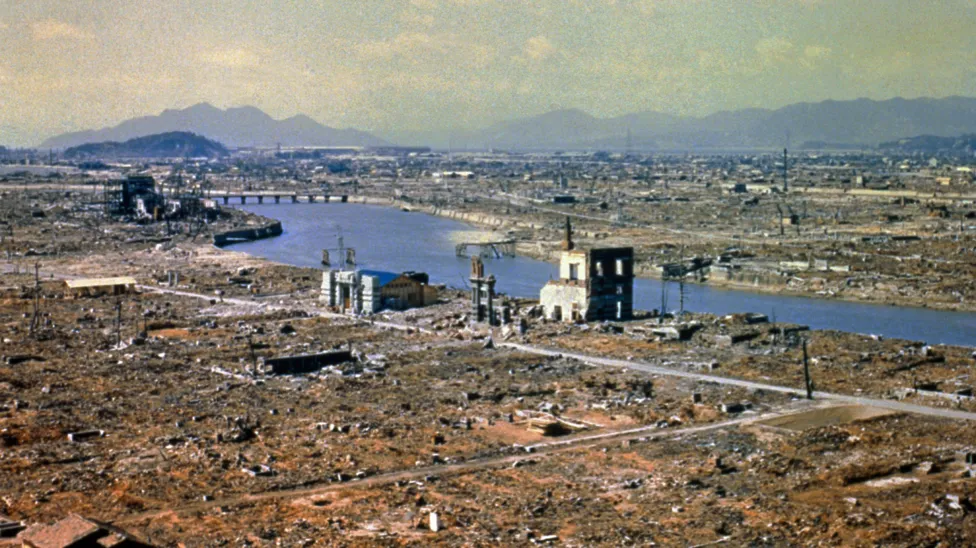
It was early in the day, but already hot. As she wiped sweat from her brow, Chieko Kiriake searched for some shade. As she did so, there was a blinding light - it was like nothing the 15-year-old had ever experienced. It was 08:15 on 6 August 1945.
“It felt like the sun had fallen - and I grew dizzy,” she recalls.
The United States had just dropped an atomic bomb on Chieko's home city of Hiroshima - the first time a nuclear weapon had ever been used in warfare. While Germany had surrendered in Europe, allied forces fighting in World War Two were still at war with Japan.
Chieko was a student, but like many older pupils, had been sent out to work in the factories during the war. She staggered to her school, carrying an injured friend on her back. Many of the students had been badly burnt. She rubbed old oil, found in the home economics classroom, onto their wounds.
“That was the only treatment we could give them. They died one after the next,” says Chieko.
“Us older students who survived were instructed by our teachers to dig a hole in the playground and I cremated [my classmates] with my own hands. I felt so awful for them.”
“In the quantum multiverse, every choice, every decision you've ever and never made exists in an unimaginably vast ensemble of parallel universes.”

Re: Modern History (1800 – present)
Technology yes, evolution no. I will ask again, how much has evolved the brain of an US senator compare to that of a Roman senator?caltrek wrote: ↑Sat Jul 27, 2024 12:55 amI think you are overlooking one obvious and very important fact. That is the onset of democracy. Something we have only really seen in the last half of the twentieth century. Something that has taken hold in countries such as Germany, much of the rest of Western Europe, Japan, and some other Asian countries such as South Korea. Even Latin America seems to be taking baby steps in that direction.
In turn, these countries have formed international courts (although the United States has held off on recognizing their jurisdiction) participated in things like the European Union and the United Nations. Such countries and have found ways of exerting their national interest that do not involve wars, invasions, and terrorism. Sure, one can always point to exceptions in their conduct, but it is interesting that one often has to go back to the middle of the twentieth century for such examples. Seen in this light, the invasion of Iraq was the last dying gasp of colonialist power based on force. Even that war had as its target a leader who had commanded the invasion of not one but two of its neighbors and utilized methods of extreme repression to maintain its power.
I think it is good that you have taken this debate to the modern history thread where we can finally compare and contrast. A part of that comparison can include other places and other times. Back in the sixties and the seventies there was a truism that made the rounds that if you are not a part of the solution, then you are part of the problem. This "we...will never change" attitude is very much a part of the problem. It has recently been pointed out to me that it is a form of nihilism. Of believing in nothing. As such, it is very close to the form of nihilism practiced by Putin. In Putin's case, it is believing in nothing except the idea that power flows from the barrel of a gun. If you believe in nothing, then there is nothing to defend when somebody like Putin comes to the front.
Now, maybe a prolonged war in the Ukraine was not the best response. Yet, when faced with that power flowing from a barrel of a gun mentality, it is hard to imagine an alternative form of resistance that is likely to be effective. Still, if you have some ideas in that regard, great, let them come forth. If all you have is nihilism, a belief in nothing or absence of belief in anything, then don't expect to persuade the rest of us.
In 1956 USSR invaded Hungary. That same year,UK, France and Israel invaded Suez. US said no on that occasion and later on invaded Panama, I see all of them defending their interest.
I cannot share your optimism. I look at the past and I see those acts and the strong US (and everyone else reaction about S. Arabia invading Yemen or Israel invading Gaza tends to confirm that.
I don't think is "the last gasp", it is just the last (not really) intervention until a new one "needed".
I am going to use some imagination here and look into the future.
There is a revolution in Egypt. Of course, we tried to influence the elections, to organize a coup, to bribe our dictator (Iran?), but the end result is an "extremely hostile regime to the West"; and how "friendly" are we towards them? I see us invading Suez again. What US President is not, with "international trade in danger" and "a threat to the world economy", going to intervene? We will use "hostile", "danger" and "threat" and our only option will be to intervene. It happened before.
"Belief", in itself, is a dangerous word. God? The tooth Fairy? Anything and everything? Logic, maybe? I do not "believe" in Philosophy: my human brain can rationalize past actions, actions and consequences.
Persuade? "Oh, cursed spite that ever I was born to set it right!" I don't think I am in this world to "persuade" or to make friends (or to go around shooting people, as they are so fond of doing in US).
Yes, after the end of the USSR the world is different, Humans are not. You may call it nihilism, I call it informed pessimism. I have neither belief nor hope.
For those about... Putin, Putin, Putin, Russia, Russia, Russia... Yes, a label (ad hominen?) is a lot easier than looking into History; and faster.
elmundo (a Spanish newspaper), today's front page: "One missile kills 12 Israelis in the Golan. Hours earlier an Israeli attack killed 30 people in Gaza." Is that newspaper justifying any of those attacks or stating facts?
'I still need help pointing me to those words about "justify", "defend" and "let's never".'
Re: Modern History (1800 – present)
For some, the war in Ukraine is a return to the barbarism of early 20th-century industrial slaughter. It serves as an indictment of Putin’s war and regime, but also stresses our own modernity: this should not be happening in 2023.
But that is a dangerous and misleading thought, as it isolates what is happening in Ukraine from our own times. What we see in Ukraine is not a historical horror show, it is the ugly face of full-scale modern war. Over the past decades, western society has become strangely unaware of what happens in a modern war. The war in Ukraine confronts us with these horrors.
It’s not that western powers or other powers haven’t fought wars over the past 50 years. But since most of these were relatively small scale, and have been fought beyond the west (with the exception of the 1990s Balkan wars) and against non-western powers (or among non-western powers), coverage of those people and societies on the receiving end of modern weapons of war has been limited. Now, with war so much closer to home (as far as Europe is concerned) and between comparably equipped forces, we are starting to see the costs of a modern war.
theconversation April 18, 2023
(Obviously, Russian propaganda).
But that is a dangerous and misleading thought, as it isolates what is happening in Ukraine from our own times. What we see in Ukraine is not a historical horror show, it is the ugly face of full-scale modern war. Over the past decades, western society has become strangely unaware of what happens in a modern war. The war in Ukraine confronts us with these horrors.
It’s not that western powers or other powers haven’t fought wars over the past 50 years. But since most of these were relatively small scale, and have been fought beyond the west (with the exception of the 1990s Balkan wars) and against non-western powers (or among non-western powers), coverage of those people and societies on the receiving end of modern weapons of war has been limited. Now, with war so much closer to home (as far as Europe is concerned) and between comparably equipped forces, we are starting to see the costs of a modern war.
theconversation April 18, 2023
(Obviously, Russian propaganda).
Re: Modern History (1800 – present)
I noticed an article about the German economy in 1939, conclusion: Russian economy will crash.
I am actually reading a book (R. Overy, not an article) about the German economy during the war, where the German economy was in good enough shape to withstand war and losses until 1945. The economy of the British Empire (not of the Tory BE) was surviving on American loans; just like Ukraine. A possible conclusion could be: no loans, no Ukraine.
Zelensky was talking about a diplomatic solution, I was talking about Egypt before; was Egypt talking to Switzerland to reach the peace agreement with Israel (BFF).
I am actually reading a book (R. Overy, not an article) about the German economy during the war, where the German economy was in good enough shape to withstand war and losses until 1945. The economy of the British Empire (not of the Tory BE) was surviving on American loans; just like Ukraine. A possible conclusion could be: no loans, no Ukraine.
Zelensky was talking about a diplomatic solution, I was talking about Egypt before; was Egypt talking to Switzerland to reach the peace agreement with Israel (BFF).

Re: Modern History (1800 – present)
Probably not much. Yet, that is a different question from how much has society evolved. Yes, a part of that evolution is due to technology. That technology allows for "mass media" as well as for a way to address such problems as hunger and disease. Part of what many of us have discovered is that as a species we can better address those problems through cooperation. Such cooperation may not be entirely absent of force, yet it is also not entirely dependent upon force alone. This discovery is underlined by technology and the application of that technology to the problems I have enumerated. [/i]
All examples from the middle of the twentieth century.In 1956 USSR invaded Hungary. That same year,UK, France and Israel invaded Suez. US said no on that occasion and later on invaded Panama, I see all of them defending their interest.
It is not optimism, it is realism. A realism that fully recognizes the possibility of a return to barbarism. That recognizes that our collective future depends upon the many choices that we humans will be making. The results may very well be "good' or "bad" depending upon those choices. Yet, there are possibilities that exist now that did not exist in the past. Possibilities made real by the change in exiting underlining material conditions brought in part by developing technology as well as by the development of social institutions.I cannot share your optimism. I look at the past and I see those acts and the strong US (and everyone else reaction about S. Arabia invading Yemen or Israel invading Gaza tends to confirm that.
I think you are right in the sense that there is a certain faction that is more than willing to pursue that course of action. That is one possible outcome. It is not inevitable.I don't think is "the last gasp", it is just the last (not really) intervention until a new one "needed".
If new technologies mean that the Suez Canal no longer has the strategic significance that was once an attribute, then another possibility not only opens up but almost becomes inevitable in such circumstances. Almost.I am going to use some imagination here and look into the future.
There is a revolution in Egypt. Of course, we tried to influence the elections, to organize a coup, to bribe our dictator (Iran?), but the end result is an "extremely hostile regime to the West"; and how "friendly" are we towards them? I see us invading Suez again. What US President is not, with "international trade in danger" and "a threat to the world economy", going to intervene? We will use "hostile", "danger" and "threat" and our only option will be to intervene. It happened before.
Technology means that we are now becoming more interdependent. It can also mean that we become more self-reliant. Just think of the difference between a nuclear power plant and solar energy. Admittedly, solar panels need to be constructed which implies a certain centralization of construction. Yet, once they are constructed, they can be deployed in a highly decentralized manner. Moreover, because of the flexibility in needed raw materials, a country like the United States has more than enough within its boundaries that there is no need for an imperialistic policy to maintain that high standard of living.
Sure, pure greed might demand otherwise, but pure greed can be called out for what it is.
"Belief", in itself, is a dangerous word. God? The tooth Fairy? Anything and everything? Logic, maybe? I do not "believe" in Philosophy: my human brain can rationalize past actions, actions and consequences.
Whether you think you "believe in philosophy" or not. Your whole statement here is philosophical in nature. You cannot escape philosophy that easily.
For a person who does not want to "persuade" anybody of anything, you sure do spend a lot of time on this forum trying to persuade.Persuade? "Oh, cursed spite that ever I was born to set it right!" I don't think I am in this world to "persuade" or to make friends (or to go around shooting people, as they are so fond of doing in US).
Whatever (as to what you call "it").Yes, after the end of the USSR the world is different, Humans are not. You may call it nihilism, I call it informed pessimism. I have neither belief nor hope.
Well, we seem to be taking different lessons from history. That does not mean that those who hold a different opinion for you do not study history.For those about... Putin, Putin, Putin, Russia, Russia, Russia... Yes, a label (ad hominen?) is a lot easier than looking into History; and faster.
elmundo (a Spanish newspaper), today's front page: "One missile kills 12 Israelis in the Golan. Hours earlier an Israeli attack killed 30 people in Gaza." Is that newspaper justifying any of those attacks or stating facts?
I thought you might bring up Gaza to reinforce your argument. Notice how many have criticized Israel for its excessive use of force?
Such a newspaper usually attempts to provide some context to help its readers understand the situation. That understanding can either lead to a condemnation or a justification, depending on how it is put forth.
Your past posts did more than "state facts." They also often indulged in "what about" comparisons and related distractions.
Since others have made that complaint about your posts, I will leave it to them to respond to your request here, if they choose to do so.'I still need help pointing me to those words about "justify", "defend" and "let's never".'
Don't mourn, organize.
-Joe Hill
-Joe Hill
Re: Modern History (1800 – present)
I actually agree with most of your post here. What I disagree with is this notion that because there have been conflicts that entirely negates my argument. My argument is not that one day somebody waved a magic wand and that suddenly (almost) everybody believed in democracy and the resolution of conflict through relatively nonviolent means. Rather, it was a relatively slow and incremental process made visible over the course of time. As such, there were plenty of areas of the globe where democracy and the nonviolent resolution of conflicts had not yet taken hold. Put another way, democracies rarely wage war on each other. Further, not all countries are democracies. So, there were plenty of countries still stuck in conflict.ibm9000 wrote: ↑Sun Jul 28, 2024 12:20 pm For some, the war in Ukraine is a return to the barbarism of early 20th-century industrial slaughter. It serves as an indictment of Putin’s war and regime, but also stresses our own modernity: this should not be happening in 2023.
But that is a dangerous and misleading thought, as it isolates what is happening in Ukraine from our own times. What we see in Ukraine is not a historical horror show, it is the ugly face of full-scale modern war. Over the past decades, western society has become strangely unaware of what happens in a modern war. The war in Ukraine confronts us with these horrors.
It’s not that western powers or other powers haven’t fought wars over the past 50 years. But since most of these were relatively small scale, and have been fought beyond the west (with the exception of the 1990s Balkan wars) and against non-western powers (or among non-western powers), coverage of those people and societies on the receiving end of modern weapons of war has been limited. Now, with war so much closer to home (as far as Europe is concerned) and between comparably equipped forces, we are starting to see the costs of a modern war.
theconversation April 18, 2023
(Obviously, Russian propaganda).
I pretty much agree with you that Western powers were often not very helpful to the process. Yes, it was often national interests as projected by an elite that drove these colonialist type levels of interference. (Including the sale of armaments). One dynamic at play was that underlying populations became increasingly aware of the negative role of such elites. Consequences were often quite literally brought home to them in dealing with immigration issues. First-hand accounts could be obtained simply by listening to such immigrants. So much so that even "the media" or at least "the liberal media" no longer ignored these developments and presented a somewhat more balanced account of these conflicts. If troops were actively engaged, they also came home with a story to tell.
Moreover, there were often two underlying motivations at work for continued interference:
1) a genuine horror at genocidal practices and the failure of democratic institutions to take hold.
2) national interests of a neocolonial nature.
The first was often used as a disguise for the second. For that and other reasons it has gained force in policy making matters. Sincerity was needed to make the "disguise" more convincing. I don't mean sincerity in a cynical sort of way, but rather something woven into the decision-making process.
The cynic can look solely at and detect the natural interests at play. The naive can believe in the first as the sole motivating force. Both are wrong if not seen as coexisting and if therefore taken to an extreme.
Don't mourn, organize.
-Joe Hill
-Joe Hill
Re: Modern History (1800 – present)
Meanwhile, back at the ranch:
Until 1968, Presidential Candidates Were Picked by Party Conventions – a Process Revived by Biden’s Withdrawal from Race
by Philip Kinkner
July 21, 2024
Introduction:
Until 1968, Presidential Candidates Were Picked by Party Conventions – a Process Revived by Biden’s Withdrawal from Race
by Philip Kinkner
July 21, 2024
Introduction:
Read more here: https://theconversation.com/until-1968 ... e-235082(The Conversation) Now that Joe Biden has dropped out of the 2024 presidential race and endorsed Vice President Kamala Harris to be the nominee, it will ultimately be up to Democratic National Convention delegates to formally select a new nominee for their party. This will mark the first time in over 50 years that a major party nominee was selected outside of the democratic process of primaries and caucuses.
Many Democrats had already begun discussing how to replace Biden. They worried that having the convention delegates, the majority of whom were pledged at first to Biden, select the nominee would appear undemocratic and illegitimate.
The Republican Speaker of the House has claimed that having the convention replace Biden would be “wrong” and “unlawful.” Others have conjured up the image of the return of the “smoke-filled room.” This term was coined in 1920 when Republican party leaders gathered in secret in Chicago’s Blackstone Hotel and agreed to nominate Warren G. Harding, a previously obscure and undistinguished U.S. senator from Ohio, for the presidency. He won that year, becoming a terrible president.
The tradition of picking a nominee through primaries and caucuses – and not through what is called the “convention system” – is relatively recent. In 1968, after President Lyndon B. Johnson announced he would not run for reelection, his vice president, Hubert Humphrey, was able to secure the Democratic nomination despite not entering any primaries or caucuses. Humphrey won because he had the backing of party leaders like Chicago Mayor Richard Daley, and these party leaders controlled the vast majority of the delegates.
Don't mourn, organize.
-Joe Hill
-Joe Hill
Re: Modern History (1800 – present)
Can a Brush with Death Change Politicians? It Did for Notorious Alabama Segregationist George Wallace
by Donald Neiman
July 24, 2024
Introduction:
caltrek’s comment: It is very sad that Wallace is most remembered for his role as an antagonist to the Civil Rights Movement. Very few remember or realize the transformation that occurred in the latter part of his life as discussed in the uncited portion of the linked article.
Especially poignant for me is the apparent effect on Wallace of Civil Rights leader Shirley Chisolm’s words “I wouldn’t want what happened to you to happen to anyone.”
by Donald Neiman
July 24, 2024
Introduction:
Read more here: https://theconversation.com/can-a-brus ... ce-235357(The Conversation) Donald Trump’s narrow escape from an assassin’s bullet led me – a historian who has written about political polarization and the Civil Rights Movement – to think back to another norm-smashing populist who encountered death on the campaign trail: former Alabama governor and U.S. presidential candidate George Wallace.
By 1972, Wallace’s image was fixed in most Americans’ minds as the face of the white South’s violent response to the Civil Rights Movement. Wallace had skillfully deployed divisive, racially tinged attacks against liberals, government and protesters to become a serious contender for the presidency.
So, Wallace turned heads when he publicly apologized and pleaded for forgiveness for his segregationist past after a 1972 assassination attempt at a campaign rally in Maryland left him paralyzed.
Facing death and seeking redemption
It’s impossible to look into Wallace’s heart and understand what moved him. Yet three factors probably loomed large.
First, the brush with death. It upended Wallace’s life and forced him to end his 1972 bid for the presidency. It also left a pugnacious man who had been a boxer in his youth and was proud of his physical prowess bound to a wheelchair. He underwent frequent surgeries and lived in constant pain.
caltrek’s comment: It is very sad that Wallace is most remembered for his role as an antagonist to the Civil Rights Movement. Very few remember or realize the transformation that occurred in the latter part of his life as discussed in the uncited portion of the linked article.
Especially poignant for me is the apparent effect on Wallace of Civil Rights leader Shirley Chisolm’s words “I wouldn’t want what happened to you to happen to anyone.”
Don't mourn, organize.
-Joe Hill
-Joe Hill
Re: Modern History (1800 – present)
The point seems to be caltrek is optimistic, I am not. We never left barbarism, look at football fans in Europe; you just need to give them a bit of "circumstances".
Maybe, I am a cynic and caltrek is not. And History helps a lot.
A pause is not change. You choose a random date and draw conclusions. Still, could you remind me the dates of Iran, Falklands, Panama and Yemen invasions? Could you share the list of wars prevented (or stopped) by "how many have criticized" them?
I think the word "comparison" (context?) is older than the word "whataboutism". Certainly, you can see whataboutism in whatever you choose.
Persuade.
I find it annoying when, in a film, someone gets shot and falls forward, through a window. I cannot call that important, but after 227 times, it annoys me. Maybe I want to point out that things are not like that.
There was a post about about a bubble of information, a comfort zone, in all events. Maybe I want to point out that things are not like that, consider more possibilities.
Loudly denouncing the guilt of someone else is not going to make you innocent. I find that disgusting.
Maybe it's just my country. There was a dictatorship and we still find people proud of it and whitewashing those crimes. It is easy to ignore what you don't like.
Maybe there is more than one possibility, even if reading the possibility you like is easier.
Maybe, I am a cynic and caltrek is not. And History helps a lot.
A pause is not change. You choose a random date and draw conclusions. Still, could you remind me the dates of Iran, Falklands, Panama and Yemen invasions? Could you share the list of wars prevented (or stopped) by "how many have criticized" them?
I think the word "comparison" (context?) is older than the word "whataboutism". Certainly, you can see whataboutism in whatever you choose.
Persuade.
I find it annoying when, in a film, someone gets shot and falls forward, through a window. I cannot call that important, but after 227 times, it annoys me. Maybe I want to point out that things are not like that.
There was a post about about a bubble of information, a comfort zone, in all events. Maybe I want to point out that things are not like that, consider more possibilities.
Loudly denouncing the guilt of someone else is not going to make you innocent. I find that disgusting.
Maybe it's just my country. There was a dictatorship and we still find people proud of it and whitewashing those crimes. It is easy to ignore what you don't like.
Maybe there is more than one possibility, even if reading the possibility you like is easier.
Re: Modern History (1800 – present)
I only wish to point out that another world is possible. Optimism and pessimism are more a matter of whether that other world can be realized. Of all things, a silly science fiction hero (Dr. Who) may have said it best: "Give me one good solid hope over a thousand certainties."ibm9000 wrote: ↑Tue Jul 30, 2024 11:29 am The point seems to be caltrek is optimistic, I am not. We never left barbarism, look at football fans in Europe; you just need to give them a bit of "circumstances".
Maybe, I am a cynic and caltrek is not. And History helps a lot.
A pause is not change. You choose a random date and draw conclusions. Still, could you remind me the dates of Iran, Falklands, Panama and Yemen invasions? Could you share the list of wars prevented (or stopped) by "how many have criticized" them?
I think the word "comparison" (context?) is older than the word "whataboutism". Certainly, you can see whataboutism in whatever you choose.
No, but ignoring that guilt certainly does not help matters.Persuade.
I find it annoying when, in a film, someone gets shot and falls forward, through a window. I cannot call that important, but after 227 times, it annoys me. Maybe I want to point out that things are not like that.
There was a post about about a bubble of information, a comfort zone, in all events. Maybe I want to point out that things are not like that, consider more possibilities.
Loudly denouncing the guilt of someone else is not going to make you innocent. I find that disgusting.
I pretty much agree with you here.Maybe it's just my country. There was a dictatorship and we still find people proud of it and whitewashing those crimes. It is easy to ignore what you don't like.
Maybe there is more than one possibility, even if reading the possibility you like is easier.
Don't mourn, organize.
-Joe Hill
-Joe Hill
Re: Modern History (1800 – present)
The military files of Operation Banner will be close for 50 years (2018). UK is trying to pass its own Full Stop Law, so that crimes committed by the British armed forces against British citizens on British soil go unpunished... Forever.
Nothing to do with what is done in faraway countries
The difference between a dictatorship and a democracy being...
The difference between Crimea and NI being...
Nothing to do with what is done in faraway countries
The difference between a dictatorship and a democracy being...
The difference between Crimea and NI being...
Re: Modern History (1800 – present)
I was watching the news (RTVE): The Taliban have been torturing people and carrying out extra judiciary executions.
That is the definition of the United States of America, isn't it? Maybe the Taliban are not kidnapping people in Europe because they don't have the infrastructure...
A food warehouse, a machine tool plant, 3.000 miles from the front line is a legitimate military objective as a pillbox is.
J. Landis, US Office of Civilian Defence 1943.
That is the definition of the United States of America, isn't it? Maybe the Taliban are not kidnapping people in Europe because they don't have the infrastructure...
A food warehouse, a machine tool plant, 3.000 miles from the front line is a legitimate military objective as a pillbox is.
J. Landis, US Office of Civilian Defence 1943.


Re: Modern History (1800 – present)
New Research Solves Crystal Palace Mystery
September 16, 2024
Introduction:
To read the study as published in The International Journal for the History of Engineering & Technology: https://www.tandfonline.com/doi/full/ ... 84#d1e154
September 16, 2024
Introduction:
Read more of the Eurekalert article here: https://www.eurekalert.org/news-releases/1058094(Eurekalert) New research has answered the mystery of how the Crystal Palace in London, which at the time was the world’s largest building, was constructed in only 190 days.
The study, led by Professor John Gardner of Anglia Ruskin University (ARU) in Cambridge, England, has discovered that the Crystal Palace was the first building known to have made use of a standard screw thread – something that’s now taken for granted in modern construction and engineering.
Completed just in time for the start of the Great Exhibition of 1851, the Crystal Palace was a powerful symbol of Victorian Britain’s industrial might. Over 560 metres long and with a giant glass roof supported by 3,300 cast iron columns, it was so large that it would expand by up to 12 inches on a warm day.
However, with the successful design for the Crystal Palace only approved in July 1850, historians have puzzled over the speed of its construction.
That has now been answered by a new study, published in The International Journal for the History of Engineering & Technology, revealing that the Crystal Palace is the earliest known building to use Whitworth screw threads, later known as British Standard Whitworth (BSW), the world’s first national screw thread standard.
To read the study as published in The International Journal for the History of Engineering & Technology: https://www.tandfonline.com/doi/full/ ... 84#d1e154
Don't mourn, organize.
-Joe Hill
-Joe Hill
Re: Modern History (1800 – present)
Trump’s Second Assassination Attempt is Shocking, but Attempts on Presidents’ Lives are Not Rare in U.S. history
by Shannon Bow O'Brien
September 17, 2024
Introduction:
by Shannon Bow O'Brien
September 17, 2024
Introduction:
Read more here: https://theconversation.com/profiles/s ... n-1129136(The Conversation) Former President Donald Trump survived his second assassination attempt on Sept. 15, 2024, marking the latest chapter in a long history book. Presidential assassination attempts, whether successful or not, are fairly commonplace in American history.
There have been 45 men elected president since the country’s founding. And 40% of them have experienced known attempts on their lives. Four presidents – Abraham Lincoln, James A. Garfield, William McKinley and John F. Kennedy – have been assassinated.
While Trump and Theodore Roosevelt were both former presidents when they were shot, Ronald Reagan was injured while in office, with a would-be assassin almost ending Reagan’s life in 1981.
Thirteen others – Andrew Jackson, William Howard Taft, Herbert Hoover, Franklin Delano Roosevelt, Harry Truman, Richard Nixon, Gerald Ford, Jimmy Carter, George H.W. Bush, Bill Clinton, George W. Bush, Barack Obama and Joe Biden – have had known plots or failed attempts to end their lives.
Many were subject to multiple attempts, and it is likely the public was never informed of other attempts upon them or other presidents.
Don't mourn, organize.
-Joe Hill
-Joe Hill
Re: Modern History (1800 – present)
Understanding the Minnesota Democratic-Farmer-Labor Party Can Help Make Sense of the Vice Presidential Candidate Tim Walz
by Gabriel Paxton
September 26, 2024
Extract:
by Gabriel Paxton
September 26, 2024
Extract:
Read more here: https://theconversation.com/who-is-tim ... te-239027(The Conversation) The Minnesota Democratic-Farmer-Labor Party is one of the first major recognized political parties in the state. It began more than 100 years ago as a form of populist protest to the harm industrialization and urbanization brought to rural farmers at the turn of the 20th century.
In the late 1800s, political movements like the Grangers and the Farmers’ Alliances organized to bring attention to falling crop prices, increases in railroad fees for transporting crops and the monopolization of agribusiness.
In Minnesota, these farmer protest groups joined forces with American labor unions to build a third-party alternative to the Democrats and Republicans. This new group, known as the Farmer-Labor Party, formed in 1918 as a way to represent rural people’s interests. The Farmer-Labor Party challenged state officials to legalize union protections and offer farmer subsidies, and unsuccessfully tried to place private utilities and natural resource industries under state control.
The Farmer-Labor Party was ideologically diverse – sometimes to a fault – and brought together a range of activists, even socialists, under the common goal of protecting working people. In 1936, the Farmer-Labor Party’s momentum captured President Franklin D. Roosevelt’s attention, and it became a key member of his New Deal coalition.
For most of the 1920s and 1930s, Farmer-Labor challenged the Democratic Party with its more progressive ideas. However, under the guidance of former vice president Hubert Humphrey, the party merged in 1944 with the more moderate Minnesota Democratic Party to form the Minnesota Democratic-Farmer-Labor Party.
Don't mourn, organize.
-Joe Hill
-Joe Hill