This sort of thing has already been tried in experiments on the ISS, but is now reaching the commercial sector, as my blog explains.
Space-based manufacturing could achieve a market value of $21.8 billion by 2032, according to industry forecasts.
----------
Breakthrough in space-based manufacturing
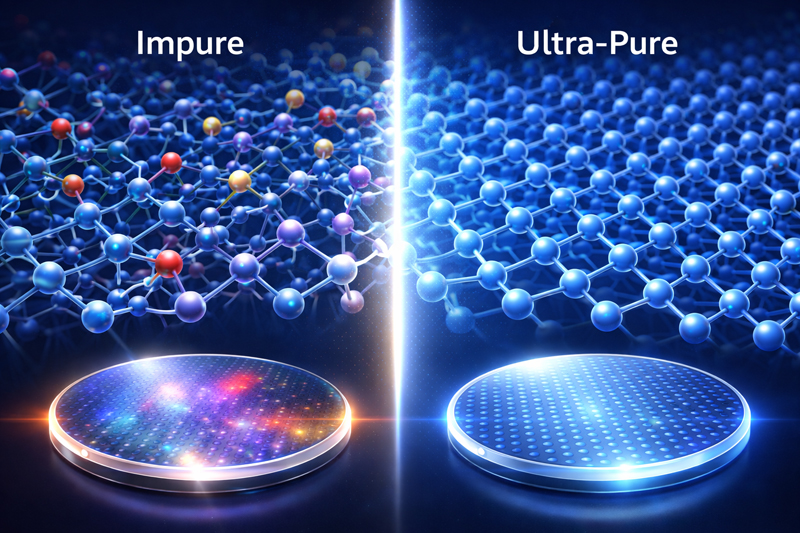
British aerospace company Space Forge has reported a major milestone in orbital semiconductor production, potentially enabling materials with 4,000 times fewer defects than those made on Earth.
1st January 2026
For decades, researchers have studied how manufacturing processes behave in space, inspired by the unique advantages of microgravity, ultra-clean vacuums, and stable thermal environments. This work has generally taken the form of scientific experimentation, rather than sustained production, typically conducted on government-funded platforms such as the Space Shuttle, Mir, and later the International Space Station (ISS), or during short-duration microgravity missions.
That picture now seems to be changing, as commercial spacecraft begin to demonstrate the ability to initiate complex industrial processes independently in orbit. UK company Space Forge has reached a major milestone in this emerging field by successfully generating plasma aboard its ForgeStar-1 satellite. This marks a world-first for private in-space manufacturing and confirms that the extreme conditions required for advanced crystal growth can now operate on a free-flying, autonomous platform in low Earth orbit.
Space Forge launched ForgeStar-1 in June 2025 aboard a SpaceX Falcon 9 rideshare mission, placing the UK's first dedicated orbital manufacturing satellite into low Earth orbit (LEO). The spacecraft – ten times larger than an earlier prototype – has since operated independently as a compact micro-factory, running a sequence of preparatory tests ahead of its high-temperature furnace activation.
This builds on earlier research carried out aboard the International Space Station, but it represents the first time a dedicated commercial spacecraft has demonstrated such capability on its own platform. By generating and controlling plasma, Space Forge has shown that gas-phase crystal growth, a core step in semiconductor production, can take place beyond Earth's gravity and without human intervention. Yesterday, the company announced that its furnace had reached a crucial temperature of 1,000 °C (1,832 °F).
https://www.futuretimeline.net/blog/202 ... turing.htm