28th April 2026 Asteroid mining could help sustain a future Mars colony A new logistical study suggests that metals mined from asteroids could one day support construction, repairs, and manufacturing for a permanent human presence on Mars.
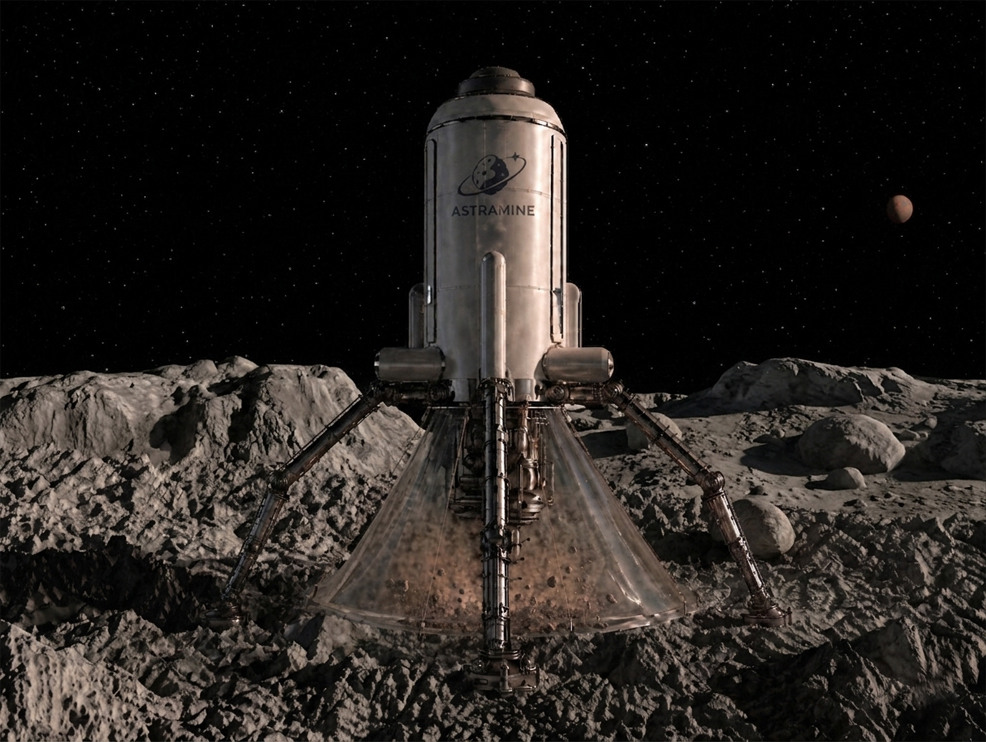
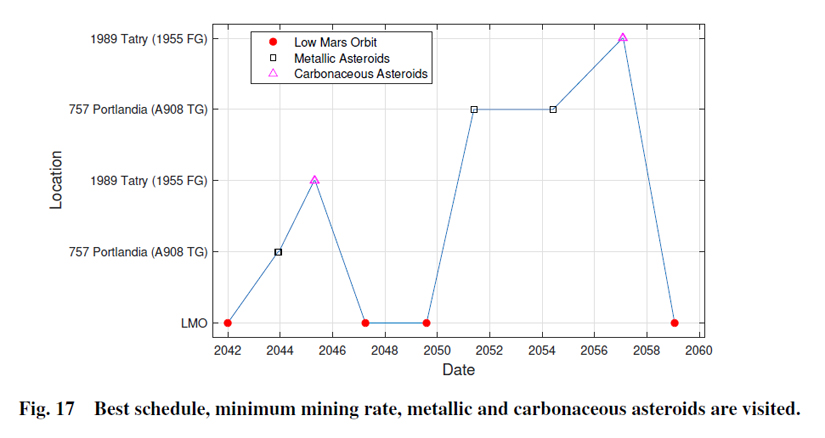
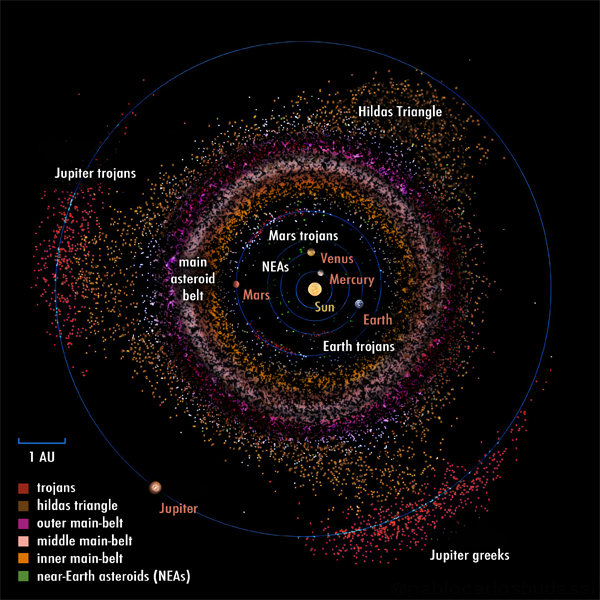
A new study posted to arXiv has explored how asteroid mining could one day support a future human colony on Mars, not by returning precious metals to Earth, but by supplying practical industrial materials where they may be needed most: in space. The paper, Asteroid Mining to Sustain a Mars Colony: A Logistics Point of View, examines whether cargo spacecraft based at Mars could travel to nearby asteroids, mine metals, and deliver those resources to Low Mars Orbit. From there, the material could support construction, spare parts, rovers, and other infrastructure needed by a growing settlement. The authors model a future period beginning in 2040, exploring launch windows and transfer schedules over a 20-year interval. They do not claim that asteroid mining will definitely begin by then, but the projections may still be relevant to long-term Mars planning, illustrating how such a system might operate during the decades when a permanent base could begin to expand. A key point is that asteroid mining for Mars looks very different from the popular idea of mining asteroids for rare metals to sell on Earth. Previous concepts have often struggled with economics, since returning large masses of material to Earth is extremely difficult and costly. By contrast, a Mars colony would already be far from Earth and would face high costs for every imported kilogram. In that setting, nearby asteroids could become valuable sources of bulk material. The study considers metallic asteroids as sources of iron-nickel alloys, sulphide minerals, olivine, and trace amounts of platinum group metals. Its main focus is on useful construction metals. These could feed additive manufacturing systems on Mars, allowing colonists to print replacement components, build rover parts, and eventually contribute to habitat construction. Orbital mechanics play a central role. The authors model transfers from Low Mars Orbit to metallic asteroids, then onward to carbonaceous asteroids, and finally back to Mars. This multi-stage route is needed because the assumed cargo spacecraft, based on present-day Starship-like capabilities, cannot complete many direct round trips within its available delta-v budget. In simple terms, the spacecraft can reach some metallic asteroids, but it often cannot get back to Mars without refuelling. This is where carbonaceous asteroids become important. Unlike metallic asteroids, these bodies may contain water and other volatile materials that could support in-situ propellant production. In the proposed supply chain, a spacecraft mines metal from one asteroid, then travels to a carbonaceous asteroid to manufacture the fuel needed for the return journey. The selection process narrows the target list significantly. From a much wider set of near-Earth, Mars-crossing, and main-belt asteroids, the study identifies 122 metallic asteroids that meet the initial reachability constraints. Once the need to pair them with suitable carbonaceous asteroids is included, this falls to 22 viable metallic-carbonaceous pairs.
The results are cautiously optimistic. In one scenario using a single spacecraft, the model finds that two asteroid pairs could be visited over 20 years, delivering 111.6 tonnes of metal at a lower mining rate, or 203 tonnes at a higher rate. The authors estimate that the latter amount could support the construction of one housing module and around 70 rovers, assuming masses comparable to NASA's Perseverance rover. Scaling the system up gives a glimpse of a much larger future. In a more ambitious fleet scenario, using 70 spacecraft assigned across the optimised schedules, the study estimates that more than 12,000 tonnes of metallic material could be delivered to Low Mars Orbit. This would be enough for multiple housing complexes for up to 120 people, alongside repairs and hundreds of rovers. However, the biggest barrier is not simply reaching the asteroids. It is producing enough propellant away from Earth. Current in-situ propellant production concepts remain far below the rate needed for this architecture. The paper notes that, while studies of early Mars missions consider production rates of around 2 kg per day, asteroid refuelling may require hundreds of kilograms per day if spacecraft are to avoid waiting too long at carbonaceous asteroids. Mining rate is another major factor. The study examines rates from 100 to 800 kg per day, with the higher end requiring more power, larger solar arrays, and more capable mining equipment. The mission therefore depends on several technologies maturing together: autonomous mining, asteroid anchoring, resource processing, propellant production, orbital logistics, and additive manufacturing on or near Mars. Even with these caveats, the overall conclusion is encouraging. Asteroid mining may not replace Earth as a supplier of advanced equipment, electronics, or specialised components. But it could reduce the burden of shipping heavy, bulky metals across interplanetary distances. Earth-launched cargo could then focus on items that cannot yet be made locally, while asteroids provide raw material for an increasingly self-sufficient Martian economy. If these technologies mature during the coming decades, asteroid mining could become more than a speculative industry. It could form part of the industrial backbone of Mars settlement, helping humanity move from short scientific expeditions to a permanent presence on another world.
Comments »
If you enjoyed this article, please consider sharing it:
|